Guide
Celestial pearl danios (galaxy rasboras): discovery and care
One of the most striking nano fish in the hobby - and a relatively recent discovery. Their story, care needs, and why they're worth the attention.
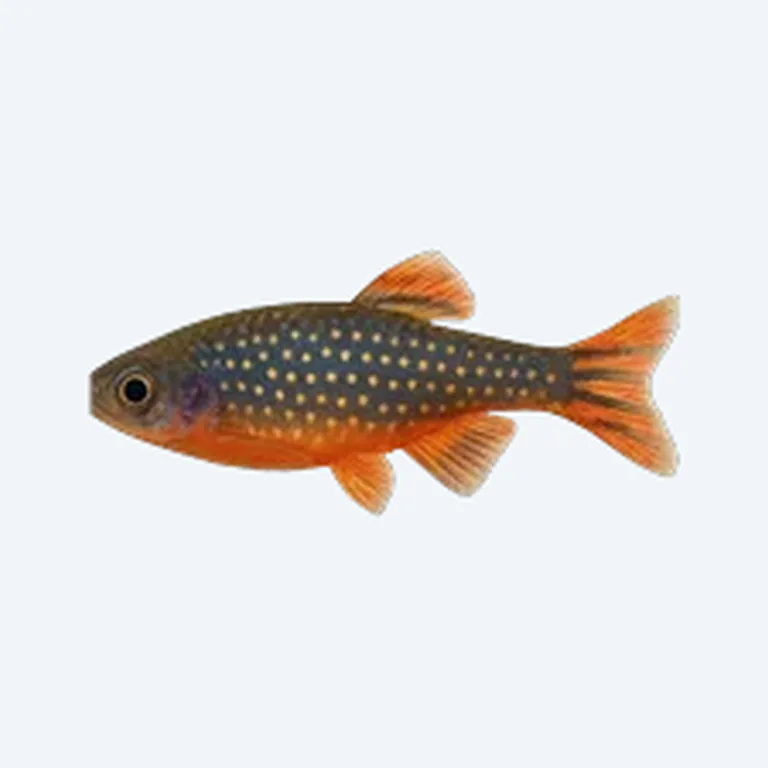
- Discovered in 2006-2007: Found in a tiny area of Myanmar's Shan State and formally described in 2007 - one of the hobby's most dramatic introductions in recent memory.
- Tank size: 40-60 litres (10-15 gallons) minimum for a group; a longer footprint matters more than height.
- Water: 20-24°C (68-75°F), pH 6.5-7.5, soft to moderately hard - cooler than most tropical fish.
- Groups: Keep at least six, ideally eight to ten. Solo or paired fish are stressed, dull, and rarely breed.
- Buy captive-bred: Widely available, hardier than wild-caught, and better for wild populations.
- Not a true beginner fish: They need a fully cycled, well-planted tank and stable parameters - they're unforgiving of new-tank mistakes.
The discovery that shook the hobby
Danio margaritatus - the celestial pearl danio, still widely called the galaxy rasbora - was formally described in 2007 by Tyson Roberts, based on specimens collected in 2006 from shallow, weedy ponds in Myanmar's Shan Plateau. The species had somehow gone unnoticed by science in a region that wasn't exactly unexplored. When photographs reached Western fishkeepers online, the reaction was immediate and intense: a fish this colourful, this small, and this new? The aquarium trade moved fast.
Within months of the first exports, collectors were descending on the known sites in numbers that alarmed conservationists. Early reports suggested localised wild populations were being hammered. The good news is that D. margaritatus proved straightforward to breed in captivity, and the trade shifted to captive-produced fish relatively quickly. Today, virtually everything sold in Europe and North America is captive-bred, and the wild populations have had some breathing room - though they remain limited in range.
The name margaritatus is Latin for "adorned with pearls," which suits the fish perfectly. The pearlescent white spots scattered across the deep blue-green flanks are what catch your eye first. The fins - particularly on males - add splashes of red and black that look almost painted on.
The "galaxy rasbora" name is wrong taxonomically - these are danios, not rasboras - but it's so embedded in the hobby that arguing about it is pointless. You'll find them listed under both names at shops. Searching for Danio margaritatus when buying online gets you the right fish every time.
Where they actually come from - and why it matters for your tank
Wild celestial pearl danios live in very specific conditions: shallow ponds, rice paddies, and drainage ditches in the Shan State, typically at elevations above 1,000 metres. The water is clear, heavily vegetated, and - critically - cool. At that altitude, temperatures rarely push above 22°C (72°F) even in the warm season.
This is the single fact most care guides gloss over. These are not standard tropical fish. Running your tank at 26-28°C (79-82°F) - perfectly fine for neons or guppies - is too warm for celestial pearl danios long-term. They'll survive it, but you'll see shorter lifespans, reduced colour, and less breeding activity. Most home aquariums without a heater sit between 18-22°C (64-72°F) in a centrally heated room, which is actually close to ideal for this species.
The sweet spot is 20-24°C (68-75°F) - cooler than most tropical fish, but easy to achieve in a typical home.
The other habitat detail worth knowing: wild fish live among dense aquatic vegetation. This isn't just a preference - it's tied to their sense of security. In bare or sparsely planted tanks, celestial pearl danios spend most of their time hiding, colours fade, and males fight more aggressively because there's nowhere to retreat. Get the planting right and you'll see completely different behaviour.
Setting up the tank
Size and layout
A 40-litre (10-gallon) tank is the practical minimum for a group of six, but a 60-litre (15-gallon) is a much better starting point. These fish are small - around 2.5-3 cm (1 inch) as adults - but they're active, and males need space to display without constantly being in each other's faces. More importantly, a longer tank gives you the planting density they need without turning the whole thing into a green wall with no swimming room.
Go for a horizontal footprint rather than height. Celestial pearl danios are mid-water to surface fish and rarely visit the substrate. A tall, narrow tank wastes most of its volume for this species.
Plants and decor
Dense background and midground planting with some open swimming space in the front third is the layout that works. Good plant choices include Eleocharis (hairgrass), Microsorum pteropus (Java fern), Taxiphyllum barbieri (Java moss), and fast-growing stem plants like Rotala or Bacopa. Floating plants - frogbit, dwarf water lettuce, or even a layer of floating moss - diffuse the light and make the fish much more confident.
Dark substrate shows their colours off dramatically. Fine black sand or a dark-coloured planted tank substrate both work well.
Add a thin layer of dried Indian almond leaves or oak leaves to the substrate. They release tannins that slightly soften and acidify the water, replicate the natural environment, and seem to encourage spawning behaviour.
Filtration and flow
Celestial pearl danios come from slow-moving or still water. Strong flow stresses them and makes feeding harder - they're small-mouthed fish that need a moment to aim at food. A sponge filter or a hang-on-back filter with a spray bar angled at the glass surface gives you adequate turnover without blasting the fish around. Aim for a turnover of around 4-6× tank volume per hour, delivered gently.
Water parameters
These fish are more adaptable than some sources suggest, but they have a ceiling. Keep the parameters within these ranges and you'll have few problems:
- Temperature: 20-24°C (68-75°F)
- pH: 6.5-7.5
- Hardness: 2-12 dGH (soft to moderately hard)
- Ammonia / nitrite: Zero, always
- Nitrate: Below 20 ppm ideally; they're sensitive to accumulated nitrates
The biggest parameter mistake is neglecting nitrates. Celestial pearl danios react badly to chronic nitrate buildup - you'll see clamped fins, loss of colour, and increased susceptibility to disease before fish start dying. Regular water changes are non-negotiable. See our guide on how often to do water changes if you're unsure what "regular" means for your tank size and stocking level.
Never add celestial pearl danios to an uncycled tank. They're sensitive to ammonia and nitrite spikes that a hardier fish might shrug off. If you're new to the hobby, read the guide on how to cycle a fish tank before buying these fish.
Behaviour, groups, and tank mates
Social dynamics
Males display constantly - spreading fins, intensifying colours, chasing each other in short bursts. It looks alarming the first time you see it, but in a well-planted tank with enough fish, it's normal and mostly harmless. The problems start when you keep too few fish in too sparse a setup: one or two dominant males will fixate on the same subordinate fish and harass it relentlessly.
The fix is simple: more fish, more plants. In a group of eight or ten with good cover, aggression is spread thin and no single fish takes the brunt. The minimum of six is a floor, not a target.
Keeping two or three celestial pearl danios "to see if you like them." Too few fish means chronic stress, poor colour, and more aggression - not a fair trial of the species. Buy six or more from the start. Use the free stocking calculator to check your tank can handle the group size you're planning.
Tank mates
Celestial pearl danios are genuinely peaceful toward other species - the male-on-male displaying almost never extends to fish of different species. Good tank mates are other small, non-aggressive fish that share similar water parameters: Boraras species, small rasboras, pygmy corydoras (Corydoras pygmaeus or C. hastatus), and small loaches like Yunnanilus cruciatus. Dwarf shrimp - neocaridina and caridina - coexist well and clean up leftover food.
Avoid anything larger than about 5 cm (2 inches) that might see the danios as a snack, and avoid boisterous or nippy fish that will outcompete them at feeding time. Bettas are a common pairing question - it can work in a well-planted tank, but it's a risk, particularly with elaborate-finned males that may be nipped.
Feeding
These are small-mouthed fish. Standard tropical flake is often too large and they'll ignore or spit it out. You need:
- Micro pellets or nano granules - 0.5-1 mm diameter is ideal
- Baby brine shrimp (live or frozen) - triggers strong feeding and breeding behaviour
- Daphnia - frozen works fine, and it acts as a natural laxative to keep fish healthy
- Micro worms or vinegar eels - if you're keen to breed them, live foods make a significant difference
Feed small amounts twice a day, and remove uneaten food after a couple of minutes. In a planted tank with shrimp, a small amount of debris isn't a crisis - but consistently overfeeding in a small tank will spike your nitrates fast.
Breeding celestial pearl danios
This is one of the more accessible species to breed in a home aquarium, which is part of why captive populations took off so quickly. Males display to females with fins fully spread; a receptive female leads the male into dense vegetation or moss where eggs are scattered and fertilised. There's no parental care - both parents will eat the eggs if given the chance.
To breed them intentionally, set up a small separate tank (20-30 litres) with a bare bottom, a clump of java moss or spawning mops, and a sponge filter. Condition the adults on live or frozen foods for a week, then move a pair or a small group in. Eggs hatch in 3-4 days at 22°C. Remove adults once you see eggs, or the eggs will be eaten. Fry are tiny and need infusoria or commercial fry food initially, graduating to baby brine shrimp after about a week.
In a well-planted community tank, you'll often find fry surviving without any intervention - dense vegetation and shrimp-heavy tanks give eggs and fry enough hiding spots. Don't be surprised to spot juveniles if your tank is set up well.
Health and common problems
Celestial pearl danios are reasonably hardy once settled in a stable, cycled tank. The problems most people encounter trace back to three causes: temperature too high, nitrates creeping up, or a tank that wasn't properly cycled before the fish went in.
Velvet (Oodinium) is the disease most commonly reported in this species - a parasitic infection that causes a gold-dust appearance on the skin and rapid, shallow breathing. It spreads fast. If you see it, move quickly: raise temperature slightly (to 25°C / 77°F briefly - not ideal long-term but tolerable for treatment), dim the lights, and treat with a copper-based medication or proprietary velvet treatment. Quarantining new fish for two to three weeks before adding them to a display tank is the simplest prevention.
Fin clamping and lethargy without obvious disease is almost always a water quality issue. Test your parameters - and if you're logging them in App-aquatic, look for a trend of rising nitrates or a temperature drift. Check your aquarium water parameters guide if you're unsure what your test results mean.
Track your parameters and get care reminders with App-aquatic.
Get the free appAre celestial pearl danios hard to keep?
They're intermediate, not beginner. They need a fully cycled tank, stable cool temperatures, and good planting. If you've successfully kept a planted community tank before, they're straightforward. If you're brand new to the hobby, get some experience with hardier fish first - see our guide to best fish for beginners.
Can I keep celestial pearl danios in a 5-gallon (20-litre) tank?
Technically possible for a very small group, but not recommended. These fish need groups of at least six to behave normally, and six active fish in 20 litres creates water quality pressure that's hard to manage. A 40-litre (10-gallon) tank is the realistic minimum; 60 litres gives you much more margin.
Why are my celestial pearl danios hiding all the time?
Almost always one of three things: the tank is too sparsely planted (they need cover to feel secure), the group is too small (fewer than six means chronic stress), or there's a water quality issue. Check your parameters, add floating plants if you haven't already, and consider adding more fish to the group.
Do celestial pearl danios need a heater?
In most centrally heated homes, no - or only a low-wattage heater set to 20-22°C (68-72°F) as a safety net against cold winter nights. Unheated tanks in a heated room usually sit around 18-22°C (64-72°F), which is close to ideal. What you should avoid is running them at typical tropical temperatures of 26-28°C (79-82°F), which is too warm for them long-term.
More guides · Beginner fish · Nano tanks · Fish origins · App features