Guide
Combining fish: why it's important to understand your species
Mixing the wrong fish leads to stress, injury, or death. Here's why species knowledge matters - and a classic example: two male bettas.
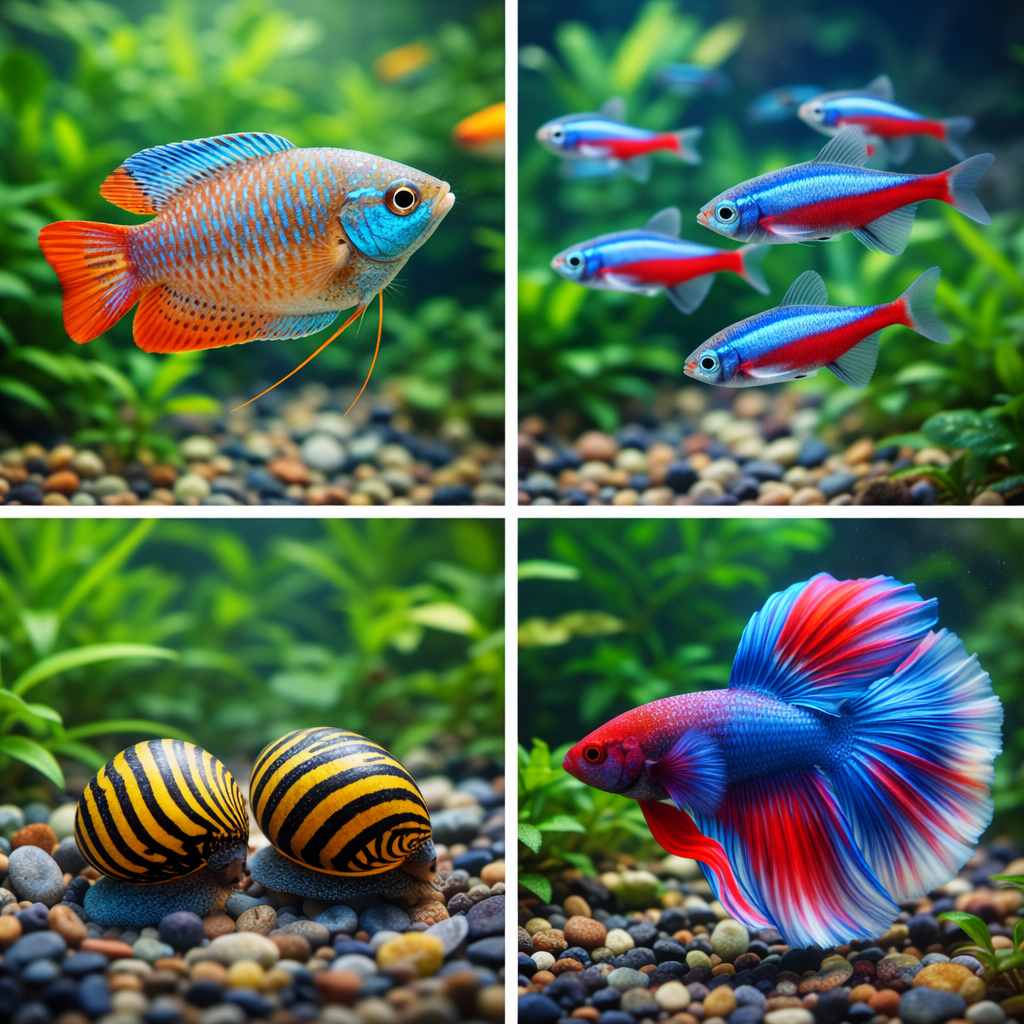
- Research before you buy: every species has specific needs around temperament, size, diet, group size, and water chemistry - ignoring any one of these causes problems.
- Never keep two male bettas together: they will fight, and in a closed tank there is nowhere to escape. Serious injury or death is almost guaranteed.
- Size mismatch kills: if a fish can fit another fish in its mouth, it eventually will - even species sold as "peaceful."
- Schooling fish need numbers: keeping a single neon tetra or danio causes chronic stress; most schoolers need a minimum of six.
- Water parameters must overlap: a discus at 29-31°C (84-88°F) and a goldfish at 15-20°C (59-68°F) cannot share a tank, full stop.
- Plan before you stock: use a stocking calculator to check compatibility and bioload before fish go in the water.
Why species compatibility is the foundation of a working tank
Most aquarium problems - injured fish, unexplained deaths, chronic stress, disease outbreaks - trace back to one cause: fish were put together without proper research. The aquarium trade makes this easy to get wrong. Fish are sold by size and colour, displayed in community tanks that often mix incompatible species, and labelled with care cards that are vague at best.
The reality is that "tropical freshwater fish" covers species from wildly different environments: blackwater rivers in South America with pH 4.5-5.5, hard alkaline lakes in East Africa at pH 8.0-8.5, fast-moving Himalayan streams, sluggish Southeast Asian rice paddies. Treating them as interchangeable is how tanks fail.
Before you add any fish, you need to understand four things about each species: its temperament, its adult size, its social requirements, and its water parameter needs. Get all four right and your community tank will thrive. Miss one and you're dealing with consequences.
The betta example - and what it teaches you
The clearest case study in fish compatibility is the Siamese fighting fish, Betta splendens. Male bettas are literally named for what happens when you put two of them together. In the wild, males hold territories and will challenge any intruder - fights are usually brief because the loser can flee. In an aquarium, there is no escape. Two males in the same tank will fight until one is dead or so damaged by fin shredding and infection that it dies shortly after.
This is not a matter of tank size or hiding spots. It is hardwired behaviour. One male betta per tank. That is the rule, and there are no clever workarounds.
Divided tanks with a transparent partition still cause problems. Male bettas can see through glass and acrylic, and a male that spends hours flaring at his reflection or a rival on the other side is under constant stress. Use an opaque divider, or better yet, separate tanks entirely.
Female bettas are different. They can sometimes be kept in groups of five or more in a well-planted tank of at least 80 litres (21 US gallons) - these are called sorority tanks. The key word is sometimes. Sorority tanks require careful setup, dense planting to break sightlines, and close monitoring. Occasional females are simply too aggressive for group living and need to be separated. If you are new to bettas, start with a single fish in its own tank.
The betta situation illustrates a broader principle: you cannot override a species' instinct with tank design. You can manage aggression through environment, but you cannot eliminate it. Understanding this saves fish lives.
Temperament: matching fish that can actually coexist
Temperament is the first filter to apply when building a community tank. The broad categories are peaceful, semi-aggressive, and aggressive - but within those, the details matter more than the label.
Fin-nippers
Tiger barbs (Puntigrus tetrazona) are sold in almost every fish shop and described as community fish. They are not, reliably. In groups of fewer than eight, they establish a pecking order by shredding fins - and their preferred targets are long-finned, slow-moving fish like angelfish, bettas, and fancy guppies. Keep tiger barbs in groups of ten or more, and keep them with robust, short-finned species. Or keep them in a species-only tank. Either works; mixing them carelessly does not.
Other known fin-nippers include serpae tetras (Hyphessobrycon eques) and some of the larger barb species. Black skirt tetras can also be nippy in smaller groups.
Aggressive and territorial species
Cichlids are the most obvious example. A single pair of convict cichlids (Amatitlania nigrofasciata) will dominate and terrorise a 200-litre community tank when spawning. Jack Dempseys, Oscars, green terrors - these are large, aggressive fish that belong in species or dedicated cichlid tanks, not mixed communities. Even among African cichlids, you need to match species from the same lake with similar aggression levels, not mix Malawi species with Tanganyikan ones at random.
Dwarf cichlids are a better fit for community tanks - German blue rams (Mikrogeophagus ramirezi), apistogrammas, and kribensis (Pelvicachromis pulcher) can work in well-planned setups - but they still need territories and will defend spawning sites.
Shy and easily stressed species
Otocinclus catfish, ember tetras, scarlet badis, and most small rasboras are genuinely peaceful but easily bullied. Pair them with boisterous species like giant danios or large, active barbs and they will spend their lives hiding, eat poorly, and sicken. Peaceful does not mean compatible with everything - it means compatible with other peaceful, similarly-sized species.
Assuming "peaceful" means universally compatible. A peaceful fish can still be outcompeted for food, harassed by faster tankmates, or stressed into immune suppression by a busy, noisy environment. Always match energy levels, not just aggression ratings.
Size: the rule most guides understate
If a fish can fit another fish in its mouth, at some point it will try. This applies even to species with "peaceful" reputations. Common plecs (Hypostomus plecostomus) are sold as algae eaters and peaceful bottom dwellers. They are - until they grow to 45 cm (18 inches) and start rasping the slime coat off your larger fish at night. Convicts sold at 3 cm become 15 cm territorial cichlids within a year.
Always research adult size, not shop size. A fish shop sells fish young. The question to ask is: what does this species look like at full size, and does my tank accommodate that?
Sold at 3-5 cm in most shops, this species is routinely bought for small community tanks it will outgrow within 18 months.
Social requirements: schooling, shoaling, and solitary species
Some fish are obligate social animals. Keep them alone or in too-small groups and they suffer - not metaphorically, but measurably. Neon tetras (Paracheirodon innesi), harlequin rasboras (Trigonostigma heteromorpha), cardinal tetras, and most danios need a minimum of six individuals, and they genuinely do better in groups of ten or more. A school of twelve neons is dramatically more confident and more active than a school of four.
Corydoras catfish are the same. A single cory will hide, barely move, and decline slowly. Six cories of the same species will carpet-bomb the substrate together, display natural foraging behaviour, and be one of the most entertaining things in your tank.
Then there are species that want to be alone. The male betta is the obvious example. Dwarf puffer fish (Carinotetraodon travancoricus) are another - they are fin-nippers and aggressive despite their small size, and most do best as the only fish in a small species tank.
When you add schooling fish, add the full group at once rather than buying two or three at a time. A small group of tetras introduced into an established tank will often be bullied by existing fish. A confident school of ten introduced together commands more space immediately.
Water parameters: the compatibility check people skip
You can get temperament, size, and social needs exactly right and still kill your fish by ignoring water chemistry. Every species has a preferred temperature range, pH range, and hardness range. In a community tank, all your fish need to overlap on all three.
The most common mismatch beginners make is mixing coldwater and tropical species. Goldfish thrive at 15-20°C (59-68°F). Tropical fish like platies, mollies, and guppies want 22-28°C (72-82°F). These ranges technically overlap at the margins, but goldfish kept at 25°C become prone to disease, and tropicals kept at 18°C are constantly stressed. They do not belong together.
Similarly, South American species like cardinal tetras and German blue rams prefer soft, acidic water: pH 5.5-7.0, hardness under 10 dGH. African Rift Lake cichlids want pH 7.8-8.6 and hard water above 15 dGH. Mixing them is not a compromise - it means both groups are in unsuitable conditions.
Read our guide to aquarium water parameters if you need a full breakdown of what to measure and what the numbers mean for different species groups.
Most "community tank" fish in shops are kept in a middle-ground water chemistry that suits no species perfectly but keeps them alive for sale. When you get them home, they may be more demanding than the care card suggests. Research the species' natural habitat - river, lake, rainforest stream - and you will understand its actual needs far better than any generic label.
Practical steps for building a compatible community
Start with your water. Test your tap water's pH and hardness before you choose any fish. It is far easier to select species suited to your local water than to constantly battle chemistry trying to keep unsuitable fish alive. If your tap water is hard and alkaline at pH 7.8, consider livebearers, African cichlids, or hard-water tetras rather than fighting to keep discus.
Choose your largest or most demanding fish first. If you want a centerpiece species - a pair of rams, a school of larger tetras, a single betta - build the rest of the tank around it. The centerpiece defines your temperature, pH, and temperament requirements. Everything else needs to work within those constraints.
Make sure your tank is fully cycled before adding any fish. An uncycled tank has no biological filtration, and ammonia spikes kill fish and make aggression worse as fish are already stressed. If you are not sure how cycling works, read our guide on how to cycle a fish tank.
Add fish gradually. Stocking a tank all at once spikes ammonia and bioload. Add a few fish, wait two to three weeks, test your water, then add more. This also gives you time to observe behaviour and catch aggression problems early before they become serious.
Use a stocking calculator to check whether your planned combination is likely to work before you spend money. App-aquatic's stocking tool lets you log your species list and flag known incompatibilities and bioload issues - genuinely useful when you are planning a new tank or adding to an existing one.
Rearrange your tank decor when introducing new fish to an established community. Moving ornaments and plants disrupts existing territories, which reduces the advantage resident fish have over newcomers and cuts down on aggressive chasing during the settling-in period.
What most guides miss: diet and feeding dynamics
Compatibility is not just about aggression. A tank stocked with fish that have incompatible feeding styles will result in some species being chronically underfed even if no one is actively fighting.
Fast, surface-feeding fish like danios will intercept sinking food before slower bottom-dwellers get to it. If your corydoras rely on wafers reaching the substrate, make sure you are feeding after lights out when surface fish are less active - or use a feeding tube to deliver food directly to the bottom. Territorial fish will defend feeding spots and prevent shy species from eating. Predatory species that take live food should never be mixed with small fish that happen to be the right size to count as prey.
Check the adult diet of every species you plan to keep. Carnivores, omnivores, and herbivores can coexist, but you need to meet each group's nutritional needs separately. A tank of mixed cichlids where you feed only flake food will have your herbivorous species deteriorating while your carnivores outcompete them.
Track your parameters and get care reminders with App-aquatic.
Get the free appCan I keep a male and female betta together?
Only temporarily for breeding, and under close supervision. Outside of a controlled breeding attempt, a male betta will harass and injure a female. Once spawning is complete, separate them immediately. This is not a viable long-term community pairing.
How do I know if my fish are fighting or just playing?
Fish don't play. Chasing that persists, fin damage, fish hiding and refusing food, or one fish monopolising space are all signs of aggression you need to act on. Brief territorial displays between cichlids can be normal, but sustained chasing - especially involving a single target - means you have a compatibility problem that won't resolve on its own.
My fish shop keeps different species together in the display tank - does that mean they're compatible?
Not necessarily. Display tanks are temporary holding environments, often overcrowded, changed frequently, and not representative of long-term compatibility. Fish in a shop tank may be too stressed or too recently introduced to show normal behaviour. Always research species independently rather than relying on display tank pairings as evidence of compatibility.
Can I mix fish from different continents?
Yes, if their water parameter needs, temperament, and size requirements are compatible - geography alone is not the deciding factor. Many popular community tanks mix South American tetras with Asian rasboras successfully because they share similar soft, slightly acidic water preferences and peaceful temperaments. The problem arises when species from genuinely different water chemistry environments are forced into a compromise, such as hard, alkaline-water Rift Lake cichlids alongside soft-water discus, where neither group thrives. Check that temperature, pH, and hardness ranges overlap before worrying about where a fish comes from.