Guide
Surface agitation: what it means and how it impacts you
Ripples, bubbles, and movement at the water surface - why it matters for oxygen, CO₂, and your fish.
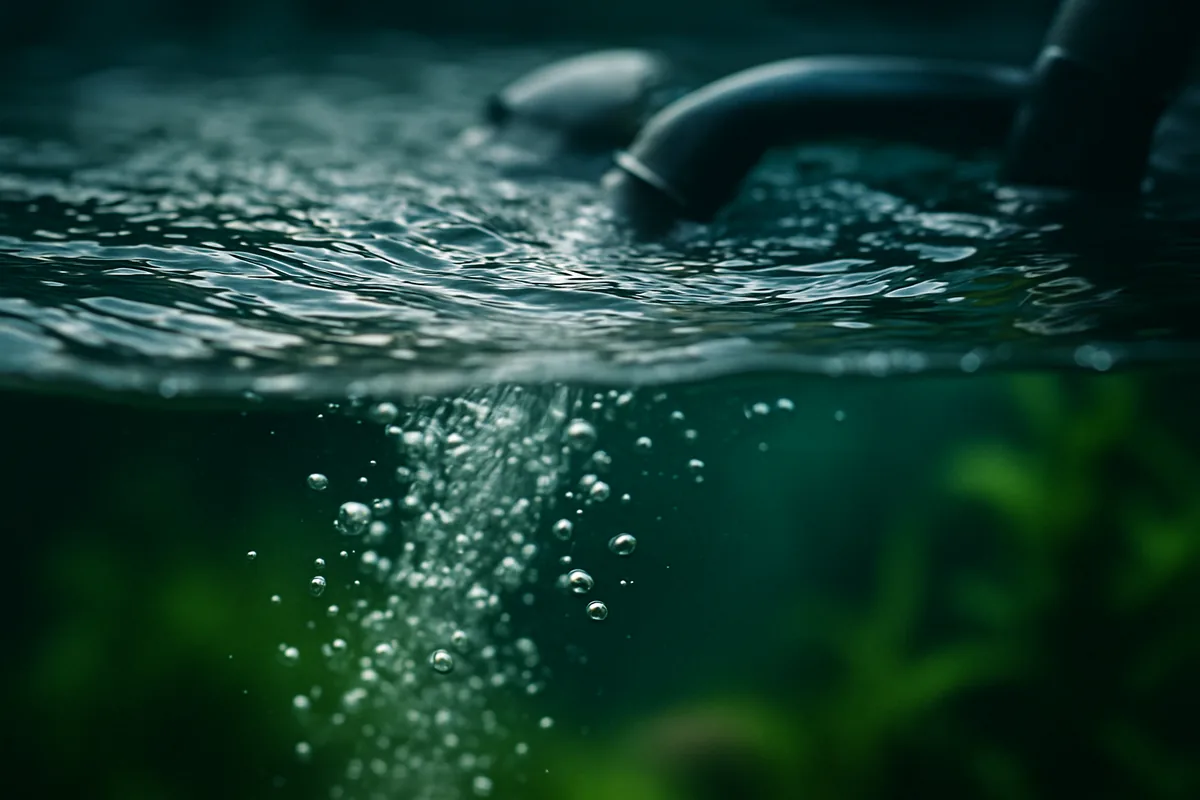
- Gas exchange happens at the surface: oxygen enters your tank and CO₂ leaves through the air-water boundary - agitation speeds that process up.
- Still water is risky: a glassy, undisturbed surface can lead to oxygen depletion, especially in warm or heavily stocked tanks.
- Common sources: filter outflow, HOB returns, air stones, spray bars, and powerheads all create agitation - you likely already have some.
- CO₂ planted tanks are the exception: too much surface movement drives off injected CO₂ before your plants can absorb it, wasting money and effort.
- Fish gasping at the surface is an emergency: it almost always means dissolved oxygen is critically low - act within hours, not days.
- Temperature matters: warm water holds less dissolved oxygen, so a tank at 28°C (82°F) needs noticeably more agitation than one at 22°C (72°F).
What surface agitation actually is
Surface agitation is any movement at the air-water interface of your tank. Ripples from a filter return, bubbles bursting from an air stone, water cascading off a spray bar - all of it counts. The key word is interface. That thin boundary between water and air is where your tank breathes, and how vigorously it moves determines how efficiently gas exchange happens.
A perfectly still, mirror-like surface looks clean and professional. It also means the same thin layer of water is sitting in contact with the air above it for hours at a time. That layer quickly saturates with CO₂ from fish respiration and becomes depleted of oxygen, slowing further exchange to a crawl. Break that surface up, and you're constantly exposing fresh water to the air - the exchange rate climbs dramatically.
The science behind the surface (without the textbook)
Oxygen doesn't pump itself into your water. It dissolves passively across the surface film, driven by the concentration difference between the air (roughly 21% oxygen) and the water below. The same physics applies to CO₂ in reverse - it's far more concentrated in the water than in the air, so it naturally wants to escape. Both processes are limited by how quickly you replace the stagnant boundary layer.
Water temperature has a direct effect on how much dissolved oxygen your tank can hold. Cold water holds more; warm water holds less. At 20°C (68°F), freshwater can hold around 9.1 mg/L of dissolved oxygen at saturation. At 28°C (82°F), that drops to roughly 7.8 mg/L. Most tropical fish need at least 5-6 mg/L to be comfortable - and active or large fish need more. In a warm, densely stocked tank, that margin gets thin fast.
The warmer your tropical tank runs, the harder your surface agitation needs to work to compensate.
This is why surface agitation matters more as your stocking density increases. More fish means more respiration, more CO₂ produced, and more oxygen consumed - all happening in water that, if it's tropical, already holds less dissolved gas than a coldwater setup. Understanding this relationship is foundational to reading your aquarium water parameters correctly.
What creates surface agitation in a typical tank
Filter outflow
The return flow from a hang-on-back (HOB) filter naturally breaks the surface as water tumbles back into the tank - it's one of the reasons HOBs work well for oxygenation even without an air stone. Canister filters are different. Their spray bar or outlet is usually positioned below the surface, so you need to deliberately angle the return upward or position it to create ripples. A canister filter with the outlet pointed straight down into the water does almost nothing for gas exchange.
Air stones and bubblers
The bubbles themselves contribute very little oxygen directly - the surface area of a bubble is tiny compared to your tank's water surface. What they actually do is drive circulation: rising bubbles drag water upward, and that movement breaks the surface and creates the agitation that matters. A large air stone in a 100-litre tank will produce meaningful surface movement. A tiny decorative bubbler in the same tank mostly just looks nice.
Spray bars
A spray bar positioned at or just above the water surface and angled to create ripples is one of the most even-distribution options available. You get agitation spread across a wide area rather than concentrated at one end of the tank. This is particularly useful in long, shallow tanks where a single return nozzle might leave dead spots at the far end.
Powerheads and wavemakers
More common in larger setups, but a powerhead aimed toward the surface can significantly increase agitation in tanks over 200 litres where a single filter return isn't moving enough water. Aim it so the flow reaches the surface rather than just creating horizontal circulation mid-water.
Positioning a canister filter's spray bar fully submerged and horizontal. It creates good flow through the tank but almost no surface agitation. Tilt it slightly so the outermost holes break the surface, or raise it until the water stream ripples the top few centimetres.
When to increase agitation
Some situations demand more surface movement than your current setup provides. Watch for these:
- Fish gasping at the surface. This is the most urgent sign. Fish hovering at the waterline with their mouths breaking the surface are breathing air directly because the dissolved oxygen in the tank has dropped too low. This needs attention now - not next water change day. See our guide on choosing appropriate fish for your setup if overcrowding is the underlying cause.
- High stocking density. If your tank is close to its stocking limit, your fish are consuming oxygen faster. Use our free stocking calculator to check whether your current fish load is within safe range for your tank size.
- Warm water temperatures. Any tank running above 26°C (79°F) should have active, visible surface movement. The warmer it runs, the less oxygen the water holds in reserve.
- Medication treatment. Several common fish medications - particularly some antiparasitic treatments - reduce dissolved oxygen as a side effect. Adding an air stone during treatment is standard practice.
- After a power cut. Filters stopping for hours means both reduced agitation and a dying bacterial colony. Increase surface movement when power returns and monitor fish closely.
- Sparse or no plants. Live plants produce oxygen through photosynthesis during daylight hours. A bare or lightly planted tank has no supplementary oxygen source beyond the surface.
Dissolved oxygen problems can develop quickly in warm weather. If your house gets hot in summer and your tank temperature climbs several degrees, your fish can go from fine to distressed within a day. A thermometer alone won't warn you - you need to watch fish behaviour as temperatures rise.
When to reduce agitation - the CO₂ planted tank situation
If you're running a CO₂-injected planted tank, surface agitation becomes a balancing act. Injected CO₂ dissolves into the water and is absorbed by plants - but it also escapes through the surface the same way oxygen enters. Aggressive surface movement in a CO₂-injected setup can off-gas your CO₂ fast enough that maintaining a target concentration of 20-30 mg/L becomes difficult or expensive.
The practical answer most planted tank keepers land on is moderate, controlled agitation. Enough to prevent oxygen depletion overnight (when plants aren't photosynthesising and are actually consuming O₂ themselves), but not so much that your CO₂ is constantly being stripped out during the day. Many keepers run their CO₂ injection during photoperiod and increase surface agitation slightly at night via a timer-controlled air stone or by adjusting their filter return.
A lot of planted tank advice online treats CO₂ retention and oxygenation as equally matched concerns. They're not. Fish welfare comes first. If you're unsure whether you have enough dissolved oxygen, add more agitation. You can always dial back CO₂ injection to compensate. The reverse - cutting surface agitation to save CO₂ and accidentally depleting oxygen - can kill fish overnight.
What most guides miss: surface film
There's a related issue that often gets overlooked entirely: surface film. In many tanks, a thin, oily-looking film develops on the water surface. It comes from proteins, dust, fish slime, and organic matter accumulating at the boundary layer. Beyond looking unpleasant, this film actively reduces gas exchange by creating a physical barrier between water and air.
You'll notice surface film most in tanks with low surface agitation - it can't form properly if the surface is moving. A surface skimmer (the kind that draws water from the very top millimetre into a filter inlet) is one solution. Increasing agitation to prevent the film forming in the first place is another. If your tank consistently develops film even with moderate agitation, it's worth investigating organic load - overfeeding, decomposing plant matter, or insufficient filtration are usually responsible.
To quickly test your surface agitation, watch the water surface from the front glass. You want to see constant, gentle rippling across most of the surface - not a glassy calm with one small patch of movement near the filter return. If large sections of the surface are still, redirect your outflow or add an air stone to those areas.
Surface agitation and the nitrogen cycle
Good oxygenation doesn't just keep fish alive - it keeps your beneficial bacteria alive too. The nitrifying bacteria that process ammonia and nitrite (the foundation of a cycled tank) are aerobic, meaning they need dissolved oxygen to function. A chronically low-oxygen tank can have its bacterial colony impaired, leading to ammonia and nitrite spikes even in an established setup. If your parameters are unstable despite the tank being long-cycled, poor gas exchange is worth ruling out. For more on this, read our guide to the nitrogen cycle.
This connection also matters when you're first setting up a tank. During the cycling process, you want maximum surface agitation to support bacterial growth. Don't reduce it to save CO₂ or for aesthetic reasons during a fish-in cycle - the bacteria need that oxygen. More on that in the guide to cycling your tank.
Practical setup: getting agitation right without guesswork
There's no single correct level of agitation - it depends on your stocking density, temperature, and whether you're running CO₂. But here's a working framework:
- For a lightly stocked, room-temperature tank (under 24°C / 75°F): a single filter return breaking the surface is usually enough.
- For a tropical community tank (25-27°C / 77-81°F) at moderate stocking: aim for visible rippling across at least two-thirds of the surface.
- For a heavily stocked tank or anything above 27°C (81°F): add a second agitation source - an air stone, a second filter, or a spray bar. Don't rely on a single filter return.
- For a CO₂-injected planted tank: keep surface movement moderate during the photoperiod, increase it during the night hours, and watch fish behaviour as your primary indicator of adequate oxygenation.
Tracking your water temperature alongside fish behaviour over time makes it much easier to spot when conditions are shifting. App-aquatic lets you log parameters and set reminders so temperature creep during hot weather doesn't catch you off guard.
Do a water change if you suspect low dissolved oxygen as a short-term fix - fresh, cooler tap water carries more dissolved oxygen and buys you time while you address the underlying cause. Regular water changes are good practice regardless; see how often you actually need them in our water change frequency guide.
Track your parameters and get care reminders with App-aquatic.
Get the free appCan you have too much surface agitation?
In most freshwater tanks, no - more agitation is rarely harmful to fish. The main exception is a CO₂-injected planted tank, where aggressive surface movement strips out CO₂ faster than you can inject it. Some surface-dwelling fish like Betta splendens also prefer calmer conditions and can be stressed by strong surface turbulence, though moderate rippling is fine for them.
Do live plants replace the need for surface agitation?
Not reliably. Plants produce oxygen during the day when lights are on, but at night they switch to consuming oxygen through respiration. In a heavily planted tank at night - lights off, no photosynthesis, fish and plants all competing for dissolved oxygen - you can get significant overnight drops. Surface agitation runs 24 hours. Plants don't.
My filter is running but my fish are still gasping - what's wrong?
Check whether your filter return is actually breaking the surface or just circulating water below it. Canister filters in particular often have outlets positioned too deep to create meaningful agitation. Also check water temperature - if the tank is warm and heavily stocked, one filter return may simply not be enough. Add an air stone immediately and investigate the root cause once fish are stable.
Does an air stone add oxygen directly through the bubbles?
Minimally. The surface area of individual bubbles is small, and most of the oxygen exchange still happens at the water surface. What air stones really do is drive circulation - rising bubbles pull water upward, and that movement agitates the surface. The oxygenation benefit is real, but it comes from the surface movement the bubbles create, not from the bubbles themselves.
How do I know if my dissolved oxygen level is actually low?
Fish behaviour is the most accessible indicator: gasping at the surface, lethargy, fish crowding near the filter return, or unusual aggression can all signal low oxygen. For a definitive measurement you need a dissolved oxygen test kit or meter - standard liquid test kits for ammonia and nitrite don't measure it. If you're regularly concerned, a basic DO meter is a worthwhile investment for any densely stocked tank.