Guide
Freshwater aquarium shrimp types
A full list of popular shrimp species with care differences: Neocaridina, Caridina, amano, ghost, bamboo, vampire, and fan shrimp.
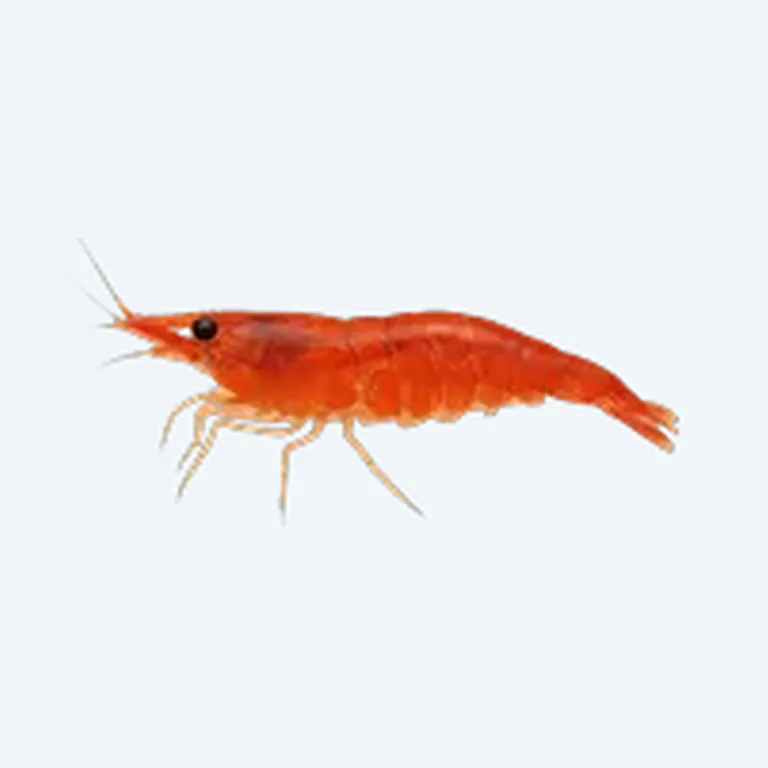
- Two main dwarf groups: Neocaridina (cherry shrimp and colour variants) are forgiving of tap water; Caridina (crystal red, bee, Taiwan bee) need RO water and tight chemistry - they're not beginner shrimp.
- Water parameters matter more than food: most shrimp deaths come from wrong GH, KH, or pH, not starvation.
- Amano shrimp won't breed in your tank: their larvae need brackish water, so your colony only grows by buying more.
- Ghost and bamboo shrimp look similar but eat completely differently: bamboo and vampire/fan shrimp are filter feeders that starve on sinking pellets alone.
- Copper kills shrimp: many fish medications and some tap water supplies contain enough copper to wipe a colony in hours.
- Tank cycling is non-negotiable: shrimp are sensitive to ammonia and nitrite - never add them to an uncycled tank.
Overview: how freshwater shrimp divide up
Freshwater aquarium shrimp split into two broad categories: dwarf shrimp (genus Neocaridina and Caridina, typically 2-4 cm) that live and breed entirely in freshwater, and larger shrimp - amano, ghost, bamboo, vampire, and fan shrimp - that play different roles and have distinct care requirements. Understanding which group you're looking at saves a lot of dead shrimp and frustration.
Before adding any shrimp, your tank needs to be fully cycled. Shrimp are far more sensitive to ammonia and nitrite than most fish. If you're not sure where you stand, read the guide on how to cycle a fish tank first.
Neocaridina dwarf shrimp
Neocaridina davidi is a single species that has been selectively bred into dozens of colour forms. What the trade sells as separate species - cherry shrimp, blue dream, yellow goldenback, orange sakura, green jade, bloody mary, black rose - are all the same animal in different colours. That matters practically: if you mix colour variants, their offspring revert toward wild brown-grey within a few generations.
Water parameters
Neocaridina are the most tolerant dwarf shrimp you can keep. Target GH 6-8, KH 2-4, pH 6.5-7.5, temperature 18-26 °C (64-79 °F). In many areas, dechlorinated tap water falls within this range without any additional chemistry. Test your tap water first - if GH and KH are in range, you're set.
Inert substrate (plain sand or gravel) is fine. Buffering substrate like Fluval Stratum will push pH down, which is unnecessary for Neocaridina and can cause instability.
Breeding and colony growth
Females carry fertilised eggs under their tail for 21-28 days. The eggs hatch as fully formed miniature shrimp - no larval stage, no special treatment needed. A healthy colony of 10 shrimp in a stable 30-litre tank can grow to 100+ within six months. That's one of the genuine joys of keeping them.
Dense moss (java moss, christmas moss) or a moss ball gives shrimplets somewhere to hide and graze. Without cover, juveniles get picked off - even by other shrimp when the colony is hungry.
Grading
Cherry shrimp are sold by grade: sakura, fire red, painted fire red. Higher grades have more solid, deeper colour. For breeding your own colony, start with high-grade stock - low-grade "beginner" cherries often produce inconsistent colour offspring even when kept pure.
Caridina dwarf shrimp
Caridina covers a wide range of species kept in the hobby: crystal red shrimp (CRS), crystal black shrimp (CBS), bee shrimp, tiger shrimp (Caridina mariae), and the more advanced Taiwan bee variants (king kong, panda, blue bolt). These are genuinely beautiful shrimp, but they punish chemistry mistakes fast.
Water parameters
Most Caridina from the soft-water bee and crystal group need GH 4-6, KH 0-2, pH 5.5-6.5, temperature 20-24 °C (68-75 °F). That's a narrow window, and standard tap water almost never hits it. You'll need reverse osmosis (RO) water remineralised with a Caridina-specific product (Salty Shrimp GH+, for example) and an active buffering substrate to hold pH down.
Active substrates like Fluval Stratum, ADA Amazonia, or SL-Aqua exhaust their buffering capacity after 12-18 months. When they stop buffering, pH climbs and colonies crash. Plan substrate replacement before it happens - this is a genuine ongoing cost of keeping Caridina.
Who these are for
Caridina are not beginner shrimp. That's not gatekeeping - it's practical advice. If you haven't kept Neocaridina through a full year (including substrate exhaustion cycles and seasonal temperature swings), you're likely to lose expensive animals. Crystal reds graded S or SS can cost £5-15 each; Taiwan bees often run £10-30 per shrimp. The chemistry investment and knowledge baseline are both significant.
Shops often present crystal red shrimp as a natural step up from cherry shrimp. The gap is much larger than that framing implies. The water chemistry, substrate management, and sensitivity to fluctuation put Caridina in a different category of difficulty. If you want colour variety without the complexity, breed multiple Neocaridina colour strains in separate tanks instead.
Amano shrimp
Caridina multidentata - named after aquarist Takashi Amano, who popularised planted tanks - are the best algae-eating shrimp available for most community tanks. They reach 4-5 cm, are noticeably more robust than dwarf shrimp, and will systematically graze thread algae, hair algae, and film algae that other shrimp ignore.
Care
Amano shrimp tolerate a wide range of conditions: GH 6-8, KH 2-4, pH 6.5-7.5, temperature 18-26 °C (64-79 °F). Dechlorinated tap water in most regions works fine. They're compatible with most peaceful community fish, though large cichlids and aggressive fish will harass or eat them.
Why they won't breed in your tank
Amano larvae require brackish water to survive - they hatch, drift to the sea, develop through multiple planktonic stages, and migrate back to freshwater as juveniles. Replicating this in captivity is technically possible but not practical for most hobbyists. Treat them as a fixed-size team: buy the number you want, replace individuals as they age (lifespan is typically 2-3 years with good care).
One shrimp per 10 litres gives you visible impact on soft algae. Fewer than that and they make little dent in an established bloom.
Ghost shrimp
Palaemonetes paludosus are sold cheaply, often as feeder shrimp, but they're legitimately interesting to keep. Fully transparent, active, and inexpensive - good for watching shrimp behaviour without spending much. They reach about 4 cm and are more aggressive than dwarf shrimp; they'll occasionally grab and eat slow or weak tankmates including smaller shrimp.
Care is undemanding: pH 6.5-8.0, temperature 18-26 °C (64-79 °F), tolerant of a range of hardness. They breed in freshwater, but larvae are free-swimming and rarely survive in a community tank without a dedicated rearing setup.
Keeping ghost shrimp with dwarf shrimp. Ghost shrimp will hunt and eat Neocaridina, especially juveniles. They look peaceful - they're not. Keep them in a species tank or with fish too large to be threatened.
Bamboo, vampire, and fan shrimp
These three are grouped together because they share the same critical care requirement: they are filter feeders. They don't graze surfaces like other shrimp. Instead, they extend fan-like appendages to catch suspended particles from the water column.
Bamboo shrimp (Atyopsis moluccensis)
Reach 6-8 cm. Brown to reddish-brown with a pale lateral stripe. Peaceful and completely harmless to other tank inhabitants. They need a moderate to strong flow to position themselves and filter feed effectively - a powerhead or wavemaker outlet aimed where they can sit is ideal. Temperature 22-28 °C (72-82 °F), pH 6.5-7.5.
Vampire shrimp (Atya gabonensis)
Similar feeding behaviour to bamboo shrimp, larger (up to 10-15 cm), and native to West Africa and South America. Blue-grey to brown colouration, striking appearance. Same flow requirements as bamboo shrimp. More expensive and less commonly available.
Fan shrimp (Atyopsis spinipes and related species)
Closely related to bamboo shrimp, sometimes sold interchangeably. Similar care needs apply.
Bamboo and vampire shrimp that spend all their time digging at the substrate rather than holding position in flow are starving. They resort to scavenging when they can't filter-feed adequately. Increase water flow directed at their resting spots, or target-feed fine powdered foods like Shrimp King Mineral or spirulina powder mixed into the current.
Water quality and common mistakes across all shrimp
Most problems with shrimp come down to four things. Understanding them prevents most losses.
Copper
Copper is lethal to shrimp at concentrations fish tolerate without issue. Check any medication or plant fertiliser you add to a shrimp tank. Products containing copper sulfate, copper citrate, or listed simply as "copper" will kill shrimp. Some tap water supplies also run briefly high in copper from new pipework - if you've had unexplained losses after a water change, test for copper.
Ammonia and nitrite
Both are acutely toxic to shrimp. Your tank must be fully cycled before adding any shrimp. Shrimp also produce less waste than fish, which means understocked shrimp-only tanks can crash their nitrogen cycle if not fed regularly. Keep an eye on aquarium water parameters - zero ammonia, zero nitrite, nitrate under 20 ppm.
Rapid parameter changes
Shrimp tolerate a range of water chemistry, but sudden shifts kill them. Top-off evaporation with RO or dechlorinated water (not full water changes), and when doing water changes, match temperature and chemistry closely before adding it to the tank. Drip acclimation over 1-2 hours when introducing new shrimp.
Overfeeding
Shrimp don't need much food in a planted or established tank - biofilm and algae cover most of their needs. Rotting uneaten food spikes ammonia. Feed small amounts every 2-3 days and remove uneaten food after a few hours.
Use App-aquatic to log your water tests against feeding and water change dates. Patterns that cause parameter spikes become obvious quickly when you can see the timeline.
Choosing tankmates
Dwarf shrimp are prey animals. Any fish with a mouth large enough to fit a shrimp will eventually eat one - and most fish will try. Safe tankmates for Neocaridina and Caridina are limited to small, non-predatory species: ember tetras, chili rasboras, otocinclus, small corydoras (with caution), and celestial pearl danios. Even "peaceful" fish like rummy-nose tetras will eat shrimplets.
Amano, bamboo, and ghost shrimp can hold their own better alongside community fish due to their size, but still avoid anything predatory or large enough to swallow them whole. Check our free stocking calculator to assess bioload when planning a mixed tank.
Track your parameters and get care reminders with App-aquatic.
Get the free appCan I keep Neocaridina and Caridina together?
Technically they can coexist, but their water requirements conflict. Neocaridina prefer harder, higher-pH water; Caridina need soft, acidic conditions. Trying to find a middle ground compromises both. Keep them in separate tanks - it's not worth the compromise on either side.
Why do my shrimp keep dying after water changes?
Almost always a temperature or chemistry mismatch between the new water and the tank. Cold tap water added directly causes shock. Also check for chloramine in your tap water - standard dechlorinators handle chlorine but some don't neutralise chloramine. Use a dechlorinator that specifies chloramine removal (Seachem Prime is commonly used). Copper from new pipes is another possibility.
How many cherry shrimp do I need to start a colony?
Ten is a reasonable starting number - enough genetic diversity to establish a healthy breeding group without overcrowding a new tank. Buying fewer than six means you may end up with an all-male or all-female group by chance. Berried (egg-carrying) females at purchase are a good sign you've got a productive batch.
Do I need a special filter for shrimp?
Not a special filter, but the intake needs guarding. Baby shrimp are small enough to be pulled into a standard hang-on-back or canister intake, so either run a sponge filter or fit a fine pre-filter sponge over the intake. Sponge filters are the classic shrimp choice: gentle flow, no intake risk, and a large surface that grows the biofilm shrimp graze on all day. The exception is filter-feeding species like bamboo and vampire shrimp, which need moderate to strong flow to feed.
More guides · Shrimp beauty vs ease · Breeding shrimp · Cleanup crew