Guide
Shrimps: managing beauty and ease of care
The most striking shrimp often need the most precise care. How to choose and what to expect.
- Beauty costs stability: the more vivid and consistent the colour grade, the tighter the water parameters need to be - and the less margin for error you have.
- Neocaridina first: cherry, sakura, and fire red shrimp give you real colour with tap water tolerance and genuine beginner-friendliness.
- Caridina need soft, acidic water: GH 4-6, KH 0-1, pH 5.5-6.5 - usually requiring RO water and a remineraliser. Not a tap-water setup.
- Stability beats perfection: shrimp crash from swings, not from parameters sitting slightly outside the ideal. Consistent water beats chasing perfect numbers.
- Grade up gradually: start with mid-grade Neocaridina, learn what your tank does, then move to Caridina if you want to.
The real trade-off between beauty and ease
Shrimp grading is essentially a sliding scale between hardiness and selectiveness. Every step toward a more vivid, consistent colour grade represents more generations of selective breeding - and with that comes greater sensitivity to water conditions. The shrimp have been bred for appearance, not resilience.
This isn't a problem if you know it going in. The mistake most people make is buying high-grade Caridina because they look incredible in a shop tank, then losing the whole colony in six weeks because their tap water is hard and slightly variable. The shrimp weren't defective - they were just in the wrong setup.
The practical question isn't "which shrimp are most beautiful?" It's "which shrimp are most beautiful given my actual water and my current experience level?" Those are very different questions, and this guide will help you answer the second one.
Neocaridina: colour you can actually achieve
Neocaridina davidi and its colour variants are the right starting point for almost everyone. They handle a wide range of parameters - pH 6.5-7.5, GH 6-12, KH 2-8, temperature 18-26°C (64-79°F) - and many do fine on dechlorinated tap water. They breed readily in good conditions, which means you'll know quickly whether your tank is working for them.
Understanding Neocaridina colour grades
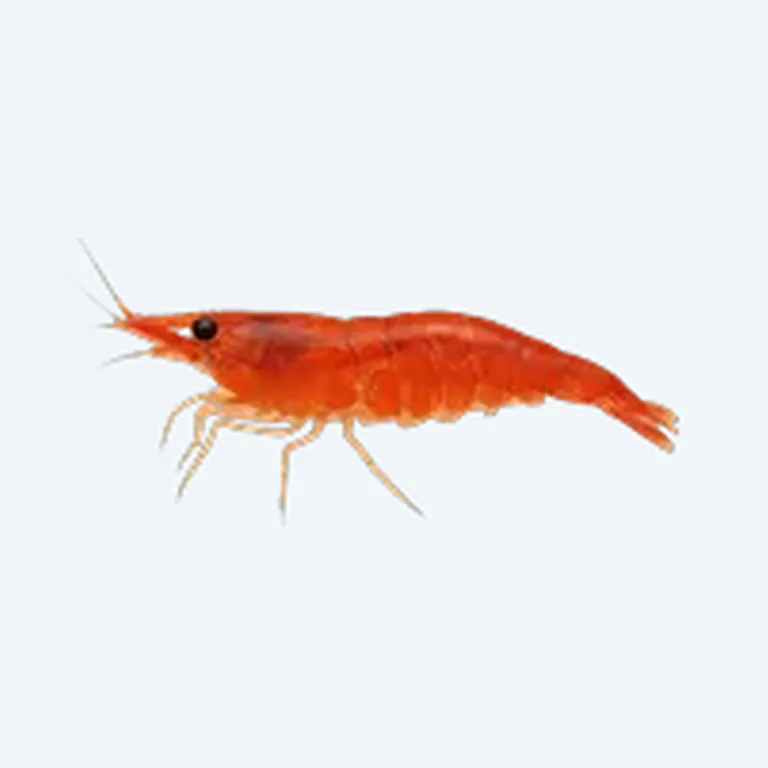
Cherry shrimp run from low-grade (pale red, a lot of transparency, patchy colouration) up through sakura (solid mid-red, minimal see-through areas) to fire red and painted fire red (deep, opaque red across the whole body). The higher grades look significantly better, and they're still forgiving enough for a beginner who's done their homework on cycling their tank first.
Other Neocaridina colour morphs - blue dream, yellow, green jade, orange pumpkin - follow the same grading logic. Low grades are scrappy and dull; mid-to-high grades are genuinely attractive. They all need broadly similar water. A tank set up for fire red cherry shrimp will work for blue dream or yellow shrimp without adjustment.
If you want colour but this is your first shrimp tank, buy mid-grade sakura rather than the cheapest cherry shrimp you can find. The colour difference is significant, the care is identical, and you won't regret it once the colony establishes.
Low-grade wild-type cherry shrimp are sometimes sold as "starter shrimp" because they're cheap. They're fine for learning, but if you're going to invest time in a shrimp tank, mid-grade Neocaridina gives you far more satisfaction without meaningfully more difficulty. The price difference is small.
Neocaridina stocking and colony dynamics
Start with 10-15 shrimp in a tank of at least 20 litres (5 gallons). They're social and feel more secure in groups - you'll see more activity and feeding behaviour with a decent-sized colony. A well-established colony of cherry shrimp in a planted tank is genuinely striking, especially as numbers build toward 40-60 individuals. Females carry bright orange or yellow eggs visibly, which becomes one of the more satisfying things to watch.
Don't mix Neocaridina colour morphs in the same tank unless you're happy with the offspring reverting toward brown or olive. The colour varieties interbreed freely, and the results will disappoint you within two or three generations.
Caridina: when you're ready to work for it
Caridina cantonensis and related species are where shrimp keeping gets genuinely demanding. Crystal red and crystal black shrimp have a formal grading system running from C-grade (minimal white patterning, a lot of red or black) up through B, A, S, SS, and SSS - with SSS grades showing nearly complete white coverage in precise patterns. The difference between a C-grade and SSS-grade crystal red is dramatic. So is the price and the care requirement.
What Caridina actually need
The non-negotiables for Caridina:
- Soft water: GH 4-6, KH 0-1. Hard water causes long-term health problems even if the shrimp appear fine initially.
- Acidic pH: 5.5-6.5 for most Caridina varieties. Taiwan bees and king kongs sit toward the lower end of this range.
- Temperature: 20-24°C (68-75°F). They're less tolerant of heat spikes than Neocaridina.
- Stability: parameters that barely move. A 0.3 pH swing or a GH jump from 5 to 8 after a water change will stress the colony.
- Active substrate: most serious Caridina keepers use an aqua soil substrate (Amazonia, Controsoil, SL-Aqua) which buffers pH down and releases minerals. These substrates exhaust after 12-18 months and the tank chemistry shifts - plan for that.
In practice, this almost always means RO water remineralised with a Caridina-specific product (like Salty Shrimp GH+) rather than tap water. If your tap is soft and consistent, some keepers get away with it - but most don't, and it's not worth the risk on expensive livestock.
Caridina on the wrong substrate or with the wrong water chemistry can look healthy for weeks before a sudden die-off. If you're losing shrimp in small numbers over several weeks rather than all at once, check GH, KH, and pH first - something is usually creeping out of range.
Taiwan bees and king kongs
Taiwan bee shrimp - blue bolt, black king kong, panda, wine red - represent the top tier of the hobby's visual range. They're breathtaking. They're also derived from crossing crystal reds with Caridina mariae variants, and they're among the most sensitive shrimp you can keep. Their water requirements overlap with standard Caridina but they're less forgiving of drift. If you want these, give them a dedicated tank and treat it as a serious project rather than an add-on to an existing setup.
Adding Caridina to an established community tank because the parameters look right on paper. Community tanks have variable feeding, more bioload, temperature fluctuations from lights and equipment, and less precise parameter control. Caridina do best in species-only or near-species-only tanks where every decision is made around their needs.
Amano shrimp: the overlooked workhorse
Caridina multidentata, the Amano shrimp, sits outside the usual beauty-vs-ease conversation because they're not bred for colour - they're transparent with dotted markings, up to 5cm (2 inches). But they deserve a mention because they're exceptionally hardy, genuinely useful algae eaters, and among the easiest shrimp to keep alongside fish. They tolerate pH 6.0-7.5, GH 4-14, and temperatures up to 28°C (82°F) with reasonable tolerance.
They won't breed in freshwater (their larvae need brackish), so you maintain a stable population without managing a colony. That's a real advantage in a community tank where you want the benefits of shrimp without the complexity. Keep them in groups of six or more - smaller groups hide constantly.
Matching shrimp to your setup
What your tap water actually tells you
Before you buy anything, test your tap water. If your GH is above 12 and your KH is above 6, Caridina are going to be a fight - not impossible, but you'll need RO from day one. If your pH runs above 7.5 consistently, Caridina are borderline regardless of GH. Check your local water report or test it with a proper liquid test kit, not strips.
Hard tap water is perfectly fine for Neocaridina. Soft tap water (GH 4-8) can work for both, depending on pH. Understanding your aquarium water parameters before you stock is the single most useful thing you can do.
Decision framework
- New to shrimp, want easy success: mid-grade Neocaridina (sakura or fire red cherry shrimp). Fully cycled tank, plant cover, stable tap water. This is the right move.
- New to shrimp, community tank: Amano shrimp, or Neocaridina if the tank has no shrimp-eating fish. Avoid anything smaller than the fish's mouth.
- Experienced with fish, first dedicated shrimp tank: mid-to-high grade Neocaridina or low-grade crystal red. Use this tank to learn what "stable parameters" actually means in practice.
- Experienced shrimp keeper, want to push further: high-grade Caridina in a dedicated RO-based setup. Taiwan bees or SSS-grade crystals as a deliberate project.
Use App-aquatic to log your water tests over time and spot parameter drift before it becomes a problem. Shrimp issues often show up in the data weeks before you notice anything visually wrong with the animals.
What most guides miss about shrimp keeping
The nitrogen cycle matters more with shrimp than with fish
Shrimp are sensitive to ammonia and nitrite in ways that even hardy fish are not. A tank that's "cycled enough" for a betta will still kill a batch of cherry shrimp if it's not fully established. Run the cycle properly - usually 4-6 weeks - before adding any shrimp. Check the nitrogen cycle explained if you're not confident on the process.
Water changes can be as dangerous as poor water
This catches people out. Doing a large water change with water that's slightly different in temperature, pH, or hardness can shock shrimp more than just leaving slightly elevated nitrates alone. Shrimp are osmoregulators - sudden parameter shifts are physiologically stressful. Keep water changes to 10-15% weekly, match the temperature of the new water exactly, and dechlorinate thoroughly. Review how often to do water changes for shrimp-appropriate guidance.
Acclimation is not optional
Most shrimp losses happen in the first 72 hours and trace back to rushed acclimation. Drip acclimate over 1-2 hours minimum. The goal is to shift the shrimp from the bag water to your tank water so slowly that their bodies adjust without stress. Float the bag first to equalise temperature, then drip at roughly one drop per second. Don't dump and go.
Predation risk is underestimated
Baby shrimp are tiny - 2-3mm when born. Almost any fish will eat them, including ones generally considered "shrimp safe." Even a peaceful community of small tetras or rasboras will pick off shrimplets. If breeding matters to you, keep shrimp in a species-only tank or with only the most reliably non-predatory fish (small otocinclus, snails). Check the stocking calculator to see what you're working with.
In a well-established tank, healthy mid-grade Neocaridina will typically begin berried females within 6-8 weeks of introduction.
Practical care: the non-negotiables
Filtration: sponge filters are the standard recommendation for shrimp tanks for a reason - they provide biological filtration without the suction that kills shrimplets, and the surface gives biofilm for shrimp to graze on. If you use a hang-on or canister filter, cover the intake with a sponge pre-filter.
Plants: heavily planted tanks are not decorative in a shrimp context - they're functional. Plants buffer water chemistry, provide grazing surfaces covered in biofilm, offer hiding places that reduce stress, and export nitrate. Java moss, java fern, anubias, and hornwort all work well. Stem plants grow fast and help with nitrate export.
Feeding: shrimp in a mature, planted tank often need very little supplemental feeding. Biofilm and algae sustain them well. When you do feed, feed small amounts of high-quality shrimp-specific food (Bacter AE, Shrimp King Complete) or blanched vegetables (zucchini, spinach). Remove uneaten food within a few hours. Overfeeding is a direct route to ammonia spikes and bacterial infections.
Copper: lethal to shrimp at trace levels. Check any plant fertilisers, medications, or tap water treatment products for copper content before use. Many fish medications that are fine with fish will wipe out a shrimp colony.
Track your parameters and get care reminders with App-aquatic.
Get the free appCan I keep cherry shrimp with fish?
Adult cherry shrimp can coexist with small, peaceful fish like ember tetras, chili rasboras, or otocinclus. The problem is shrimplets - almost any fish will eat them, so colony growth is limited or impossible in a community tank. If breeding a colony matters to you, a species-only tank is the practical answer.
How do I know if my water is suitable for Caridina?
Test for GH, KH, and pH with a liquid test kit. Caridina need soft, acidic water - GH 4-6, KH 0-1, pH 5.5-6.5 - and most tap water is harder than that. If yours is, the practical route is RO water remineralised with a Caridina-specific product, usually over an active aqua soil substrate that buffers pH down.
More guides · Shrimp types · Breeding shrimp · Water parameters