
Algae guide
Blue-Green Algae in Fish Tanks: Causes, Risks, and How to Treat It
Last updated: May 2026
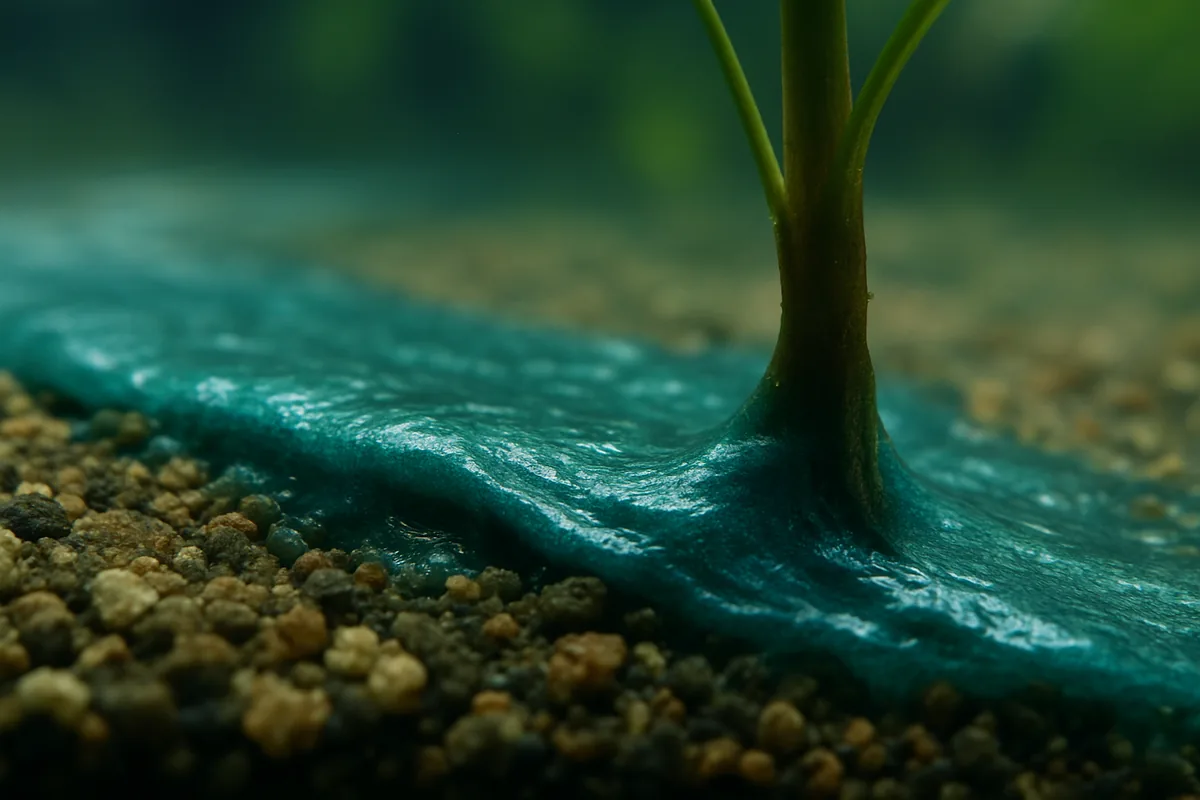
- Not actually algae: Blue-green algae is cyanobacteria - a photosynthetic bacterium. That distinction matters because standard algae treatments don't touch it, but antibiotics can.
- Signature signs: Slimy blue-green or purple-brown sheets that peel off surfaces in one piece, plus a distinctive musty, earthy smell when disturbed.
- The counterintuitive cause: Very low nitrate - not high nutrients - is a primary trigger. Obsessively clean tanks with heavy water-change schedules are common victims.
- First response: A 5-7 day full blackout combined with improved flow and gentle daily siphoning resolves most outbreaks without chemicals.
- Toxin risk is real: Some strains release hepatotoxins and neurotoxins. Invertebrates and small fish show stress first - act before it escalates.
- Antibiotic last resort: Erythromycin works but crashes your biological filter. Only use it if the blackout fails and you're prepared to manage an ammonia spike.
What blue-green algae actually is
The name is misleading. Blue-green algae is not algae at all - it's cyanobacteria, one of the oldest life forms on earth, capable of photosynthesis but fundamentally bacterial in structure. This is why it spreads differently from green spot algae or hair algae, smells different, behaves differently, and needs a completely different response.
In a tank it typically appears as a thin, slimy mat - blue-green, teal, or sometimes deep purple-brown depending on the strain - draped over substrate, plants, rocks, and equipment. The defining characteristic is the way it peels away in soft, wet sheets rather than scrubbing off in patches. Disturb it and you'll notice the smell immediately: a damp, earthy, almost soil-like odour that's distinctive once you've encountered it once.
It spreads fast. A small patch on a corner of substrate on Monday can cover the front quarter of your tank by the weekend, especially if conditions are favouring it.
Why it appears: the causes most guides get wrong
Most algae guides tell you that algae problems come from excess nutrients. With cyanobacteria, that logic is often backwards. Low nitrate is one of the strongest triggers. Cyanobacteria can fix atmospheric nitrogen directly from the water, so when nitrate drops very low - below 5 ppm - it gains a competitive advantage over plants and true algae that can't do the same. It thrives precisely where other organisms struggle.
The aquarist doing 50% water changes twice a week to keep nitrate near zero is one of the most common cyanobacteria cases. Pristine water chemistry isn't protection - it can be the invitation. Aim for nitrate in the 10-20 ppm range in a planted tank rather than chasing zero.
Other contributing factors stack on top of low nitrate:
- Poor flow and dead spots. Cyanobacteria colonises areas where water movement is weak - corners, behind equipment, under broad-leaved plants. It likes stagnant conditions.
- Excess light or inconsistent photoperiods. Running your lights 10-12 hours a day, or leaving them on irregularly, feeds any photosynthetic organism in your tank. Cyanobacteria is no exception.
- Phosphate imbalance. A tank with very low nitrate but measurable phosphate creates an ideal ratio for cyanobacteria. The imbalance matters as much as the absolute numbers.
- New tank syndrome. An uncycled or recently cycled tank has unstable nutrient dynamics that cyanobacteria can exploit before the nitrogen cycle is fully established. If you're not sure where your tank stands on cycling, the nitrogen cycle explained guide covers what to expect and when.
- Organic waste accumulation. Uneaten food, decaying plant matter, and detritus building up in substrate create local nutrient hotspots that feed the bloom.
Scrubbing cyanobacteria off surfaces with a brush and doing a large water change. This shreds the mat into fragments and suspends them throughout your water column, spreading the outbreak to every surface in the tank within days. Always siphon it out intact - never scrub it loose first.
The health risk to your fish and invertebrates
Not every cyanobacteria outbreak is actively toxic, but the risk is serious enough that you should never assume yours is harmless. Certain strains - particularly those forming dense, dark mats - produce cyanotoxins, which fall into two main categories:
- Hepatotoxins (liver-damaging): microcystins are the most common. These cause internal organ damage with symptoms that can look like a general mystery illness.
- Neurotoxins: less common in freshwater aquariums but documented. Cause rapid neurological symptoms.
Invertebrates - shrimp especially - are typically the first to show stress. If your shrimp become lethargic, stop feeding, or start dying without obvious water quality issues showing on your tests, and you have visible cyanobacteria growth, connect those dots immediately. Small fish, bottom-dwellers, and anything spending time near the substrate or mat surfaces are at higher risk than open-water swimmers.
Beyond toxins, dense mats physically smother bottom-dwelling fish, cover plant leaves and block photosynthesis, and in severe cases can noticeably deplete oxygen overnight - particularly concerning in warm water.
A cyanobacteria bloom that has turned very dark - almost black or deep purple-brown - and has a particularly strong odour is more likely to be producing toxins than a lighter, patchy growth. If fish are showing stress signs alongside this, treat it as urgent and increase surface agitation immediately to boost oxygenation while you address the outbreak.
How to treat a cyanobacteria outbreak
Step 1: Fix the flow first
Before anything else, identify and eliminate dead spots. Reposition your filter outlet, add a small powerhead, or adjust a spray bar so that water moves across the affected areas. Cyanobacteria cannot anchor and spread effectively in areas with consistent current. This step alone won't cure an active outbreak but it's essential to prevent regrowth after treatment.
Step 2: Manual removal by siphon
Every day during treatment, use a siphon to gently lift and remove any sheets of cyanobacteria you can reach. The technique matters: hover the siphon above the mat and let the suction draw it up in one piece. Don't disturb substrate around it or stir the mat. Dispose of the water - don't reuse it.
Step 3: The blackout
A full blackout is the most effective non-chemical treatment for cyanobacteria and works for most outbreaks. Cover the entire tank - sides and top - with cardboard or black bin bags so that zero light enters for 5 to 7 consecutive days. Not reduced light. Complete darkness.
During the blackout:
- Increase surface agitation and run extra aeration. Plants won't be photosynthesising so oxygen output drops - your fish still need it.
- Don't feed, or feed minimally every other day with tiny amounts. Waste accumulation during a blackout causes more problems than mild hunger.
- Continue daily siphoning of any accessible mats.
- Check on your fish daily - lift the cover briefly in a dark room if needed.
After the blackout, do a 30% water change, restart normal lighting at a reduced photoperiod (6-7 hours to start), and watch for regrowth over the following two weeks.
A blackout won't harm healthy fish for a week. Hardy plants like Anubias, Java fern, and mosses will survive fine. More light-dependent plants like stem plants may show some yellowing but recover quickly once light returns. The cyanobacteria almost never does.
Step 4: Address your nitrate and nutrient balance
Once the blackout is done, test your water properly - not just nitrite and ammonia, but nitrate and phosphate. If your nitrate is consistently below 5 ppm, you're in the danger zone for recurrence. Reduce your water change frequency slightly, or if you're running a heavily planted tank, add a small amount of nitrogen-based fertiliser to bring it up. Check your aquarium water parameters guide for target ranges across a full parameter set.
If you've been doing very large or very frequent water changes, read the how often to do water changes guide - more isn't always better, and with cyanobacteria it can actively make things worse.
Step 5: Erythromycin - the last resort
If the blackout fails and the outbreak returns within a week, erythromycin (sold under brand names like Maracyn in the US) will kill cyanobacteria reliably. It's a bactericide, and cyanobacteria is a bacterium - so it works where algaecides don't.
The cost is significant: erythromycin kills your beneficial nitrifying bacteria too. Your biological filter will be partially or fully crashed after a course of treatment. You'll need to monitor ammonia and nitrite daily afterward, potentially for 2-4 weeks, and treat as if you're cycling a new tank. Have a plan for managing a disrupted cycle before you start. Consider moving filter media to a separate container during treatment to preserve some beneficial bacteria, or using bottled bacteria products to help re-establish the cycle faster.
The minimum duration required to effectively starve a cyanobacteria bloom. Shorter periods often result in rapid regrowth.
Preventing it from coming back
Once you've cleared an outbreak, the goal is making your tank an inhospitable environment for cyanobacteria long-term:
- Maintain nitrate between 10-20 ppm in a planted tank, 20-40 ppm in a fish-only setup. Test regularly - don't guess.
- Run a consistent 7-8 hour photoperiod on a timer. Irregular light schedules destabilise photosynthetic competition in the tank.
- Eliminate dead spots with adequate circulation. Every area of substrate should have some water movement across it.
- Export detritus regularly - vacuum substrate during water changes rather than just changing water from the top.
- Don't over-rinse filter media with tap water. Chlorinated water kills beneficial bacteria. Use tank water for filter maintenance.
- Stock sensibly. A well-stocked, properly fed tank maintains more stable nutrient dynamics than an almost-empty one with irregular feeding. Use the free stocking calculator to make sure your bioload is appropriate for your tank size.
Some tanks get recurring cyanobacteria no matter what, usually because of a specific combination of low stocking, near-zero nitrate, and moderate light. If that's your situation, the fix is accepting slightly higher nitrate rather than fighting a losing battle with treatments. A reading of 15 ppm won't harm your fish - it's within safe parameters for virtually every freshwater species.
Track your parameters and get care reminders with App-aquatic.
Get the free appIs blue-green algae dangerous to humans handling the tank?
The concentrations produced in a home aquarium are very low, but it's still sensible to wear gloves if you have broken skin, and wash your hands thoroughly after working in an affected tank. Don't let tank water splash near your mouth. The toxin risk is primarily to your fish and invertebrates at aquarium scales.
My nitrate reads zero but I have cyanobacteria - is that a coincidence?
Almost certainly not. Near-zero nitrate is one of the clearest predictors of cyanobacteria. It fixes its own nitrogen from water, so it thrives exactly where plants and true algae can't compete. Let your nitrate rise to 10-20 ppm - counterintuitively, that's part of the solution.
Will my fish and shrimp survive a 7-day blackout?
Yes, provided you maintain aeration. Fish don't need light - they need oxygen. Run an air stone or increase surface agitation during the blackout and feed lightly every other day. Shrimp are equally fine in darkness. The risk during a blackout is oxygen depletion if aeration is inadequate, not the darkness itself.
Can I use hydrogen peroxide instead of erythromycin?
Spot-treating exposed cyanobacteria with a dilute hydrogen peroxide solution (1-2 ml of 3% H₂O₂ per 10 litres, applied directly via syringe with flow turned off for 10 minutes) does work on localised patches and has less impact on your filter than erythromycin. It's a reasonable middle step between the blackout and antibiotics. It won't address the underlying conditions causing the bloom, so it's a spot fix, not a cure.
How quickly will cyanobacteria come back after treatment if I don't fix the cause?
Fast. Most aquarists who treat without addressing flow, nitrate balance, and photoperiod see regrowth within 1-2 weeks. The blackout or erythromycin kills what's there; it doesn't change the conditions that invited it. The environmental fixes are what actually solve the problem long-term.