Guide
Fish staying at top of tank: causes, data, and what to do
Fish at the surface can mean trouble - or nothing. Here's how to tell the difference, what data to collect, and which actions to take.
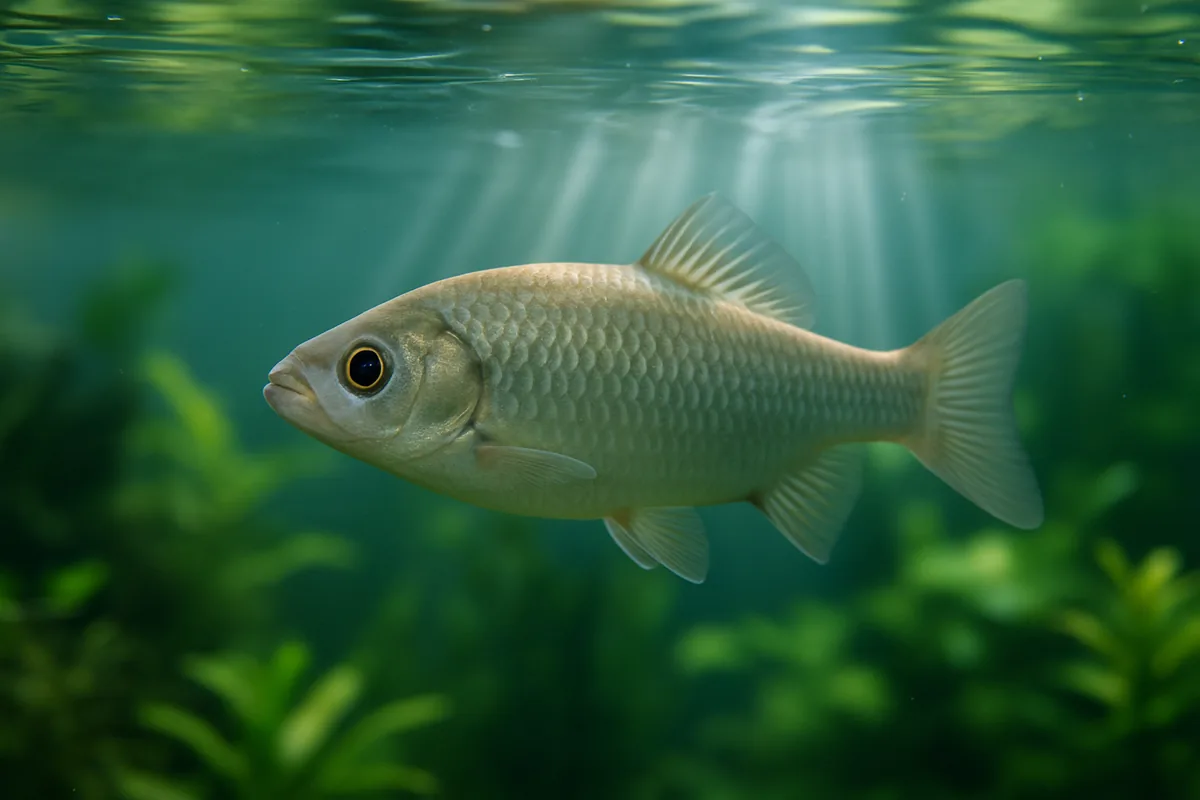
- Test ammonia and nitrite first. Most cases of surface gasping trace back to water quality - even 0.25 ppm ammonia can cause gill stress.
- Low dissolved oxygen is the other main culprit. Warm water, heavy stocking, and poor surface agitation all reduce oxygen. Add an airstone or increase filter flow immediately.
- Labyrinth fish breathe air at the surface by design. Bettas, gouramis, and paradise fish are not gasping - they're doing what they're built to do.
- Calm surface swimming ≠ gasping. If your fish are near the top but breathing normally, the cause is probably territorial behaviour, feeding anticipation, or flow preference - not an emergency.
- When multiple fish are gasping at once, act fast. That's a water quality or oxygen crisis. A 30-50% water change buys time while you find the cause.
What data to collect before you do anything
Guessing wastes time and can make things worse. Spend two minutes writing down these facts before reaching for a product bottle.
Which fish, and how are they behaving?
Is it every fish in the tank, one species, or a single individual? Are they gasping - mouth breaking the surface, gill covers pumping hard - or just hanging near the top with relaxed fins and normal breathing? That distinction matters more than anything else in this guide.
When did it start?
After a water change? After adding new fish? After a hot day or a heatwave? After you started medicating? Each of those points at a different cause.
Your test results
Ammonia, nitrite, nitrate, pH, and temperature. If you don't have results from the last 24 hours, test now. Liquid test kits are more reliable than strips - API Master Test Kit is the standard recommendation. Log everything with dates; patterns matter as much as individual readings.
Tank setup
How much surface movement do you have? Is the filter running normally? What's the stocking level? A 60-litre tank packed with large cichlids is a very different situation from a lightly stocked 200-litre with a good sump.
If you use App-aquatic to log your test results, you can spot trends - a slow ammonia creep over several weeks - that you'd miss testing ad hoc. That kind of pattern is often why fish end up at the surface.
Cause 1: Ammonia or nitrite poisoning
This is the most common reason fish gasp at the surface, and it's the most urgent. Ammonia and nitrite directly damage gill tissue. Damaged gills can't pull oxygen from the water efficiently, so fish move to the surface where gas exchange is easiest - the same reason you'd lean out of a car window if the air inside ran low.
Many species show physiological stress at 0.25 ppm ammonia. At 0.5 ppm and above, gasping and surface crowding are common.
Both ammonia and nitrite should read zero in an established, cycled tank. Any reading above zero tells you the biological filter isn't keeping up - whether that's because the tank was never properly cycled, you've overfed, added too many fish at once, or used medication that killed your beneficial bacteria.
What to do: Do a 30-50% water change with dechlorinated water immediately. This dilutes the toxin and buys your fish time. Then figure out why ammonia or nitrite is elevated. Common reasons: tank not fully cycled (see how to cycle a fish tank), overstocking (check your numbers with the free stocking calculator), or overfeeding. Test daily until both parameters hold at zero.
Ammonia toxicity is pH-dependent. At higher pH (above 7.5), a larger proportion of total ammonia is in the more toxic un-ionised form. A reading of 0.5 ppm at pH 8.0 is significantly more dangerous than the same reading at pH 7.0.
Cause 2: Low dissolved oxygen
Oxygen enters your tank at the water's surface. If that surface is still and glassy, gas exchange is slow. If your tank is warm, heavily stocked, or densely planted with lights off, oxygen demand can outpace supply - and fish will crowd near the surface or cluster by the filter outlet where water movement is highest.
Most tropical freshwater fish need at least 5 mg/L. Below 3 mg/L, many species are in serious distress.
Water temperature is a major factor. Cold water holds more dissolved oxygen than warm water - a tank at 30°C (86°F) holds roughly 20% less oxygen than the same tank at 24°C (75°F). During summer heatwaves, this alone can push a normally fine tank into crisis, especially if it's stocked heavily.
What to do: Increase surface agitation right now. Angle your filter outlet to break the surface, add an airstone, or float a powerhead near the top. If it's a heat event, you can float a sealed bag of ice to bring temperature down gradually - don't drop it more than 2-3°C in an hour. Long term, reconsider stocking density if oxygen is a recurring issue.
Running CO2 injection at night. Plants consume oxygen in the dark and CO2 injection lowers oxygen further. Turn CO2 off when the lights go off, and make sure your surface agitation is adequate. Fish that look fine all day sometimes gasp by morning for exactly this reason.
Cause 3: Gill disease or parasites
If water quality tests out fine and oxygen isn't the issue, look more closely at the fish themselves. Gill flukes (Dactylogyrus spp.), bacterial gill disease, and velvet (Oodinium) can all damage gills enough to cause laboured breathing and surface-seeking - often in individual fish or one species rather than the whole tank.
Signs beyond surface behaviour: clamped fins, flashing (rubbing against surfaces), excess mucus, visible redness or pallor around the gills, or gold/rust dusting on the body (velvet). Gill flukes rarely look dramatic from the outside, which is why they get missed.
What to do: Quarantine the affected fish if possible. Treat based on what you observe - antiparasitic medication for flukes or velvet, antibacterial for bacterial gill disease. Get a proper diagnosis before reaching for medication; blanket-dosing a community tank is hard on fish and your biological filter.
Cause 4: Normal behaviour - labyrinth fish and surface preference
Bettas, gouramis, paradise fish, and other labyrinth fish have a supplementary breathing organ - the labyrinth - that lets them breathe atmospheric air. They will surface regularly, and they need access to the air above the water. This is not gasping. It's not a sign of distress. It's biology.
How to tell the difference: a healthy labyrinth fish surfaces briefly, takes a breath, and goes back to normal behaviour with relaxed fins and good colour. A stressed fish stays at the surface continuously, holds its body at a steep angle, and shows other signs of distress - pale colour, clamped fins, lethargy.
Beyond labyrinth fish, some species simply prefer the upper water column: hatchetfish, silver dollars, and many danio species naturally occupy the top third of the tank. If they're calm and behaving normally, there's nothing wrong.
A lot of beginner panic about bettas "gasping" is actually bettas breathing normally. Before you do a water change and add stress coat, watch the fish for five minutes. If it dips to the surface, takes a quick breath, and swims off normally, it's fine. That said - if you haven't tested your water in the last week, test it anyway. Healthy behaviour in poor water is still poor water.
Cause 5: Temperature spike
A failed heater stuck on, a hot room, or direct sunlight on the tank can push temperatures high enough to cause gasping even in a well-maintained tank. Warm water holds less oxygen, and fish metabolism increases with temperature - a double hit. At 30°C (86°F), most tropical community fish start to struggle. At 32°C (90°F), you can lose fish quickly.
What to do: Confirm temperature with a reliable thermometer (digital, not the stick-on strip type). If temperature is elevated, increase surface agitation immediately - agitation raises oxygen more efficiently than any other intervention. Cool the tank gradually. Check your heater; a faulty thermostat is a genuine equipment failure that needs replacing, not resetting.
Cause 6: New tank syndrome and incomplete cycling
If your tank is less than six to eight weeks old and you haven't used a bacterial starter product or seeded media from an established tank, there's a strong chance the nitrogen cycle isn't complete. That means ammonia and nitrite can spike hard, especially in the first few weeks after adding fish.
See the full guide on the nitrogen cycle explained if you're not sure what's happening in your tank biologically. Surface gasping in a new tank is almost always water quality until proven otherwise.
What most guides miss
Most surface-gasping guides run through ammonia, oxygen, and gill disease and stop there. A few things that don't get enough attention:
Medication side effects
Several common fish medications - particularly those containing formalin, malachite green, or high doses of salt - reduce dissolved oxygen or stress gills directly. If you started treatment recently and fish are now at the surface, the medication itself might be contributing. Always increase aeration when medicating.
Sudden pH swings
A pH crash (often in low-KH tanks with heavy planting) can cause rapid gill irritation and surface-seeking. Check your aquarium water parameters - pH and KH together, not just pH alone.
Nitrate at high levels
Nitrate doesn't burn gills the way ammonia does, but chronic high nitrate (above 40-80 ppm depending on species) causes immune suppression and can contribute to gill problems over time. If your fish are generally "off" and nitrate is elevated, more frequent water changes are overdue - check how often to do water changes for practical guidance.
Filter failure
A blocked impeller, clogged media, or pump failure doesn't just reduce flow - it can rapidly degrade water quality and oxygenation simultaneously. If your filter has been running quieter than usual, check it. Clean the impeller and rinse media in tank water (never tap water, which kills beneficial bacteria).
If you can't immediately identify the cause and multiple fish are gasping, do the 30-50% water change first and ask questions second. Dilution buys time. You can always investigate after the emergency is handled.
Quick action checklist
Run through this in order when you see fish at the surface:
- Is this a labyrinth fish or a known top-dweller behaving normally? If yes, monitor and move on.
- Test ammonia and nitrite. If either is above zero, do a 30-50% water change immediately.
- Check temperature. Above 28°C (82°F) for most tropicals warrants action.
- Assess surface agitation. Increase it now if the surface is still.
- Look at the fish closely - clamped fins, flashing, unusual colour, or visible spots point toward disease.
- Consider what changed in the last 48-72 hours: new fish, new food, medication, a water change, a hot day.
Track your parameters and get care reminders with App-aquatic.
Get the free appMy betta is always at the top of the tank. Is that normal?
Usually yes. Bettas are labyrinth fish and breathe atmospheric air at the surface - it's normal behaviour, not distress. Watch for warning signs: staying at the surface continuously without moving away, a steep body angle, clamped fins, or pale colour. If the fish surfaces briefly and swims off normally, it's doing what bettas do. Still worth testing your water if you haven't recently.
All my fish are at the top of the tank gasping - what do I do right now?
Do a 30-50% water change with dechlorinated, temperature-matched water immediately. While the water is going in, increase surface agitation - angle the filter outlet or add an airstone. Then test ammonia, nitrite, and temperature. Multiple fish gasping at once is a water quality or oxygen emergency, not a wait-and-see situation.
My water tests fine but fish are still at the surface. What am I missing?
A few possibilities: dissolved oxygen may be low despite clean chemistry (especially in warm, heavily stocked, or still tanks - increase agitation and see if it helps). Gill flukes or bacterial gill disease can cause surface-seeking with normal water parameters. Check the fish carefully for flashing, clamped fins, or gill pallor. Also check your filter is running properly - a partially blocked impeller won't show up on a test kit.
Can overfeeding cause fish to stay at the top?
Indirectly, yes. Overfeeding drives ammonia spikes as uneaten food decomposes and fish waste increases. That ammonia damages gills and causes surface gasping. The surface behaviour is caused by the ammonia, not the food itself. If you suspect overfeeding, cut back to once a day, remove any uneaten food after two minutes, and test your water.
Is it safe to add an airstone to fix the problem?
Yes, and it's one of the fastest ways to raise dissolved oxygen. An airstone increases surface agitation, which is where oxygen exchange happens. It won't fix ammonia or gill disease on its own, so test your water and deal with the underlying cause at the same time. There's no real downside to running one, as long as the extra flow doesn't push weak swimmers or long-finned fish around the tank.
More guides · Fish gasping at surface · Water parameters · Cycling · Oxygen and airstones