
Guide
Adding wood to a tank: water changing color? Here's what's going on
Your water turns tea-coloured or brown after adding driftwood. It's tannins - and they're usually harmless. What causes it and what to do.
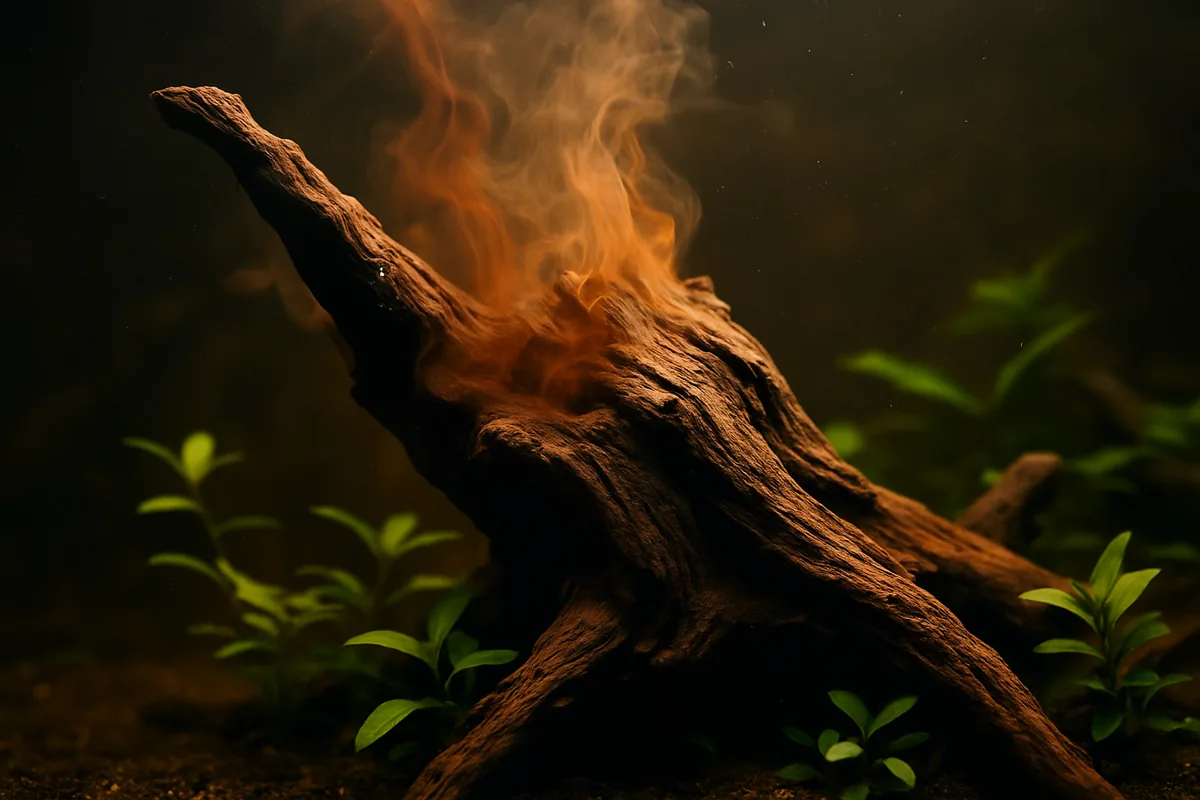
- The cause: Wood leaches tannins (humic acids) into your water, turning it yellow, amber, or brown - like weak tea. It's normal and expected with any new piece of driftwood or bogwood.
- Is it harmful? No. Tannins are non-toxic to fish, plants, and invertebrates. Many species evolved in tannin-stained water and do better in it.
- pH effect: Tannins gradually lower pH and slightly soften water. Usually minor, but worth tracking if you keep species with specific water requirements.
- To clear the water faster: Soak or boil the wood before adding it, run activated carbon in your filter, and keep up with water changes.
- To leave it: If your fish are healthy and you like the look, you don't have to do a thing. Tannin-tinted tanks are a deliberate choice for many experienced keepers.
- Timeline: Most wood slows its tannin release significantly within 4-12 weeks, depending on the size and density of the piece.
What's actually happening in your tank
When you put wood in water, it releases tannins - polyphenolic compounds that occur naturally in bark, heartwood, and leaves. The same chemistry gives red wine its dryness, tea its colour, and autumn leaves their brown tones. In your aquarium, tannins dissolve into the water column and absorb blue light, which is why the water takes on that warm amber or brown cast rather than turning grey or green.
The specific compounds involved are mostly humic acids and fulvic acids. These are the same substances responsible for the famous blackwater rivers of South America and Southeast Asia - the Rio Negro, the Blackwater rivers of Borneo - where the water is the colour of dark iced tea but crystal clear. Tannins are not a sign that something is wrong. They're a natural feature of wood in water.
How much colour you get depends on several things: the type of wood, how old and dry it is, how large the piece is relative to your tank volume, and water temperature. Mopani wood and Malaysian driftwood tend to be heavy releasers. Spider wood and cholla wood usually produce far less. Bogwood (also sold as moor wood or Sumatran driftwood) is one of the most tannin-rich options you'll find.
Most beginner guides treat brown water as a problem to be solved. It isn't. It's chemistry working exactly as it should. Whether you want to reduce it or keep it is entirely an aesthetic and livestock-based decision - not a water quality emergency.
Is tannin-stained water actually safe?
Yes. Tannins have no direct toxicity to freshwater fish, shrimp, snails, or aquatic plants. In fact, there's a reasonable body of evidence (and a lot of experienced keeper consensus) that tannins provide mild benefits:
- Antimicrobial properties: Tannins have a mild inhibitory effect on some bacteria and fungi. This is likely why Indian almond leaves have become popular in betta and shrimp breeding setups - not folklore, but a real, if modest, effect.
- Stress reduction: Fish that evolved in blackwater environments - tetras, discus, bettas, many dwarf cichlids, apistogrammas, chocolate gouramis - display more natural behaviour and lower stress indicators in tinted water. The darker environment reduces harsh reflections and feels more like home.
- pH buffering: Humic acids will gradually push pH downward and reduce carbonate hardness (KH). For most community tanks this effect is subtle. For species that need soft, acidic water (pH 5.5-6.5), it can be a genuine advantage.
If your tap water already has low KH (below 3-4 dKH), adding a lot of tannin-releasing wood can push pH down faster than expected. Test your water before and after adding large pieces, and keep an eye on pH for the first few weeks. Check out the guide to aquarium water parameters if you're unsure what your numbers mean.
The fish that genuinely prefer tannins
This isn't just a "some fish tolerate it" situation. Certain species do measurably better in soft, acidic, tannin-rich water. If you're keeping any of the following, tinted water is something to consider deliberately rather than fight against:
- Cardinal and neon tetras - wild-caught cardinals especially struggle in hard, alkaline water. Tannins help.
- Discus - native to slow, acidic Amazonian floodplains. Hard water is a chronic stressor.
- Bettas - most bettas in the trade are tank-raised and tolerate a range, but they show better colouration and less fin-clamping in slightly acidic, tannin-stained water.
- Apistogramma and other dwarf cichlids - breeding often won't trigger in the wrong water chemistry. Tannins can be the missing variable.
- Chocolate gouramis - notoriously difficult to keep; they essentially require blackwater conditions.
- Most wild-caught South American and Southeast Asian species - if the fish comes from a blackwater or peat-swamp habitat, tannins are part of what it evolved with.
If you're newer to the hobby and building your first community tank, the best fish for beginners guide covers species that are flexible about water chemistry - useful context if you're still deciding what to stock.
How to reduce tannins if you want clearer water
You have several options, and they work best in combination.
Soak before you add the wood
This is the single most effective thing you can do. Put the wood in a bucket or storage tub, fill with water, and leave it. Change the water daily or every two days. You'll see the water go dark brown at first, then progressively lighter over days. Once the soaking water stays mostly clear after 24-48 hours, the wood has released most of its free tannins and will cause minimal discolouration in your tank.
How long does this take? A small piece of driftwood might be mostly done in a week. A large, dense piece of mopani can take 3-4 weeks of repeated soaking. It's worth the patience - it saves you weeks of water changes inside the actual tank.
Boil it
Boiling accelerates tannin leaching significantly. A rolling boil for 1-2 hours will drive out a large proportion of tannins and also sterilise the surface against algae, bacteria, and any hitchhiking organisms. Use a pot you're happy dedicating to tank work - the tannins stain. For large pieces, rotate it or do it in sections.
Boiling also helps waterlog denser woods that otherwise float, which is a separate headache you'll want to avoid.
After boiling, the wood goes straight into the soak bucket, not the tank. You still want a few days of soaking after boiling to catch the remaining tannins before the wood hits your display tank.
Activated carbon in your filter
Activated carbon (AC) is highly effective at adsorbing tannins from the water column. If you run it in your filter media, it will clear the water visibly within 24-48 hours. The catch: carbon becomes saturated and stops working, typically within 3-4 weeks. Once it's exhausted it releases nothing harmful, it just stops adsorbing. Replace it on schedule or check it by whether the water starts tinting again.
One thing to know: activated carbon also removes medications. If you ever need to treat your tank, take the carbon out first.
Water changes
Regular water changes dilute tannins mechanically - you're removing tinted water and replacing it with fresh. This doesn't stop the wood releasing tannins, but it keeps the concentration lower while the wood slowly exhausts itself. For heavily tinting new wood, doing 25-30% changes two or three times a week for the first month is reasonable. After that, most wood has settled down enough that your usual schedule handles it. If you're unsure what schedule that should be, the guide on how often to do water changes is a good reference.
Most people skip soaking entirely and then complain about brown water for months. A week of soaking in a bucket costs you nothing except time. Skipping it costs you weeks of water changes and activated carbon. Do the soak.
Deliberately creating a blackwater tank
If you're going the other direction - you want more tannins, not fewer - this is a legitimate and increasingly popular direction. A well-executed blackwater setup looks stunning: dark amber water, driftwood, leaf litter, fine-leafed plants. It also lets you keep species that are genuinely difficult to maintain in hard, neutral water.
To build a blackwater tank intentionally:
- Use tannin-rich wood: Mopani, Malaysian driftwood, or bogwood as your hardscape foundation.
- Add Indian almond (Catappa) leaves: These are one of the most effective and controllable tannin sources. Add a few leaves per 50 litres, replace as they break down.
- Consider peat filtration: Running water through peat moss in your filter adds humic acids directly. It lowers pH and KH more aggressively than wood alone - test frequently.
- Use RO or soft tap water: Blackwater conditions only work well in soft water. If your tap water is hard (above 10 dGH), tannins alone won't overcome the buffering capacity.
- Skip activated carbon: If you want the tannins, don't run carbon. Use other mechanical and biological filtration instead.
Make sure your tank is fully cycled before worrying about blackwater chemistry. Tannins don't replace the nitrogen cycle - they're a water chemistry feature, not a filtration substitute. If you're still in the setup phase, the guide to cycling a fish tank covers what you need to do first.
The Rio Negro runs at pH 4-5 in places - far more acidic than most aquariums. You don't need to replicate that exactly, but it shows how tolerant blackwater species are of acidic conditions.
What most guides miss
A few things that don't get enough coverage:
Not all tannins are equal. The compounds from Indian almond leaves, driftwood, peat, and alder cones all differ somewhat in composition and effect. The colour intensity doesn't necessarily correspond to pH impact - very dark tannin water from catappa leaves may shift pH less than peat filtration that produces lighter tinting.
Tannins don't replace buffering. If your KH is very low and pH is already unstable, adding tannin sources makes that instability worse. Solve your buffering situation first. Tannins as a deliberate tool work best in tanks where water chemistry is otherwise understood and stable.
The colour fades naturally. Almost all wood will slow and eventually mostly stop releasing tannins without any intervention. The timeline varies - a small piece of pre-soaked spider wood might barely tint your water at all; a large raw mopani root can go for months. If you can live with it temporarily, it resolves itself.
Plants are unaffected. Tannins don't harm aquatic plants. If anything, the slight acidification can benefit plants adapted to soft water. Light penetration is marginally reduced in very dark water, but in a typical lightly tinted tank it's not a meaningful factor.
If you're tracking pH shifts after adding new wood, log your readings over time rather than relying on memory. App-aquatic lets you log test results with dates so you can actually see the trend - useful when you're trying to figure out whether your pH drop is the wood or something else.
Track your parameters and get care reminders with App-aquatic.
Get the free appHow long until the brown water clears on its own?
It depends heavily on the wood type and size. Small, pre-soaked pieces may mostly stop tinting within 2-4 weeks. Large, dense pieces like mopani can release tannins for 2-3 months. Regular water changes speed this up. If you want it gone faster, run activated carbon and do more frequent partial changes - 25-30% two or three times a week until it settles.
Will tannins kill my plants or shrimp?
No. Tannins are non-toxic to aquatic plants, shrimp, snails, and fish. Many shrimp keepers deliberately add Indian almond leaves because the tannins appear to reduce stress and bacterial issues in their shrimp tanks. Plants are unaffected by tannins directly, though very dark water reduces light slightly - keep that in mind if you're running light-hungry plants.
Does activated carbon remove tannins permanently?
No. Carbon removes tannins by adsorption, not by stopping the wood producing them. Once the carbon is saturated (typically 3-4 weeks), it stops working. If the wood is still releasing tannins at that point, the water will tint again when you remove or exhaust the carbon. You need to keep replacing the carbon, or pre-soak the wood until it's mostly done releasing before you add it to the tank.
My water is brown but clear - is that different from cloudy water?
Yes, and it matters. Tannin-stained water is brown or amber but visually clear - you can see through it, fish are distinct, there's no haze. Cloudy water is a different issue entirely, usually caused by a bacterial bloom during cycling, a spike in dissolved organics, or disturbed substrate. If your water is both brown and cloudy, the cloudiness needs separate attention. Check the nitrogen cycle guide if you're mid-cycle.
Can I use any wood from outside, or does it have to be aquarium wood?
Most wood you find outdoors can't go straight into a tank, but it doesn't have to be shop-bought aquarium wood either. Dead, well-dried hardwoods such as oak or beech are generally safe once the bark and any soft or rotten sections are removed and the piece has been boiled and soaked. Avoid pine and other softwoods, which leak resin, and skip anything from roadsides or land that may have been sprayed.