
Guide
Crystals in fish tanks: what's safe, what isn't, and what to check before you add anything
The crystal and mineral trend has hit the aquarium hobby - but not everything beautiful is fish-safe. Some crystals will do nothing. Others will dissolve into your water, spike your pH, or release metals that kill quietly over weeks.
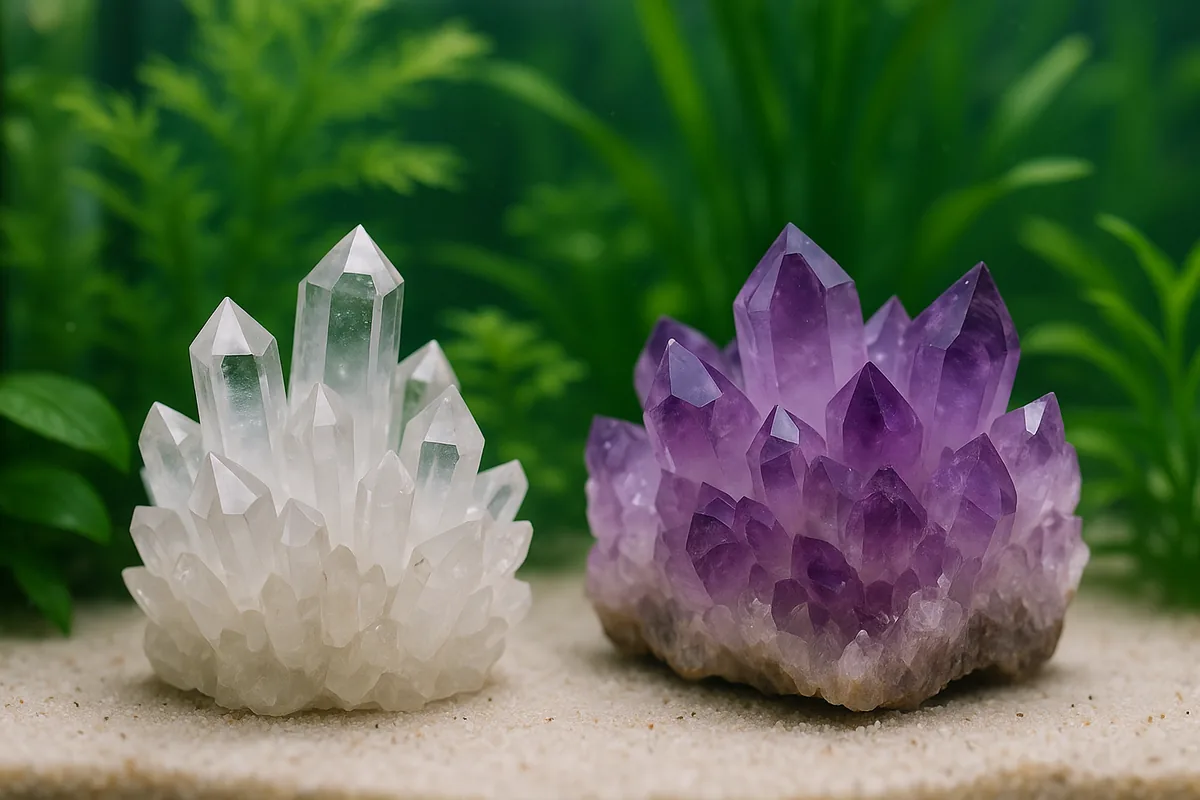
- Quartz family = safe: rose quartz, clear quartz, amethyst, citrine, agate, jasper, obsidian are all inert.
- Copper-bearing = avoid: malachite, azurite, chrysocolla release copper - lethal to invertebrates and harmful to fish.
- Selenite dissolves in water - do not add it to a tank. Pyrite oxidises and produces acid. Galena is lead. Cinnabar is mercury.
- Vinegar test: drops of white vinegar that fizz = carbonate content = will raise your pH.
- Always rinse crystals thoroughly. Never use soap. Test water for 7 days after adding any new mineral.
Why people add crystals to aquariums
The reasons vary. Some fishkeepers are drawn to the aesthetics - rose quartz clusters, amethyst geodes, and polished obsidian all look stunning submerged. Others have come from the crystal healing world and want to combine both interests. Some simply pick up a nice-looking rock at a market, wonder if it's safe, and start googling.
Whatever the motivation, the question is always the same: will this kill my fish? The answer depends entirely on the mineralogy of what you're adding - and it's worth understanding the basics before anything goes into your tank.
The core principle: solubility and reactivity
When a rock or crystal sits in water, two things can happen. Either nothing meaningful occurs - the mineral is inert and stable - or it dissolves, partially or fully, changing your water chemistry. Some minerals are reactive with the slightly acidic water conditions common in freshwater tanks. Others stay completely inert no matter how long they sit.
The danger zones are:
- Carbonates and limestones - these dissolve slowly in acidic water, raising pH and hardness.
- Sulfides - minerals like pyrite contain sulfur and iron compounds that can oxidise and leach toxins.
- Copper-bearing minerals - malachite, azurite, and chrysocolla contain copper, which is lethal to invertebrates and toxic to fish at low concentrations.
- Selenite and gypsum - water-soluble calcium sulfate that dissolves readily and can affect water parameters significantly.
The safest crystals are generally silicon-based (quartz family) - they are among the hardest and most chemically stable minerals on earth. The most dangerous are those that contain metals or sulfur compounds.
Crystals that are generally safe for freshwater aquariums
Rose quartz
Probably the most asked-about crystal in the hobby. Rose quartz is silicon dioxide with trace manganese or titanium giving it its pink colour. It is chemically inert in water, extremely hard (Mohs 7), and will not affect your pH, hardness, or anything else measurable. Polished or tumbled rose quartz is a solid choice for aquascaping. Raw rose quartz is also fine, but sharp edges on rough pieces can injure fish, particularly bottom dwellers and those with soft bodies like eels or loaches.
Clear quartz / rock crystal
Pure silicon dioxide. Completely inert. This is the benchmark - the crystal that every other mineral is measured against for aquarium safety. Crystal points, clusters, tumbled pieces - all fine. Just give them a thorough rinse before adding.
Amethyst
Amethyst is quartz with iron impurities that give it the purple colour. Still silicon dioxide at heart. Inert and safe for freshwater tanks. The iron content is bound within the crystal lattice and does not leach into the water under normal aquarium conditions. One caveat: do not use raw amethyst geodes with exposed matrix rock - the base rock is often a different material that may not be inert. Stick to clean clusters or tumbled pieces.
Smoky quartz
Another quartz variant. Colour comes from natural radiation during formation. Safe in aquariums - the trace aluminium or other impurities are locked in the structure and do not dissolve.
Citrine
Natural citrine is heated amethyst - still quartz, still inert. Some “citrine” sold commercially is heat-treated amethyst (identical chemistry). Fine for tanks.
Obsidian
Volcanic glass - essentially natural silica glass. Inert and stable. Obsidian is safe, though sharp edges on raw or fractured pieces are a real concern. Tumbled or polished obsidian is much safer for a tank with delicate or soft-bodied fish.
Jasper
An opaque microcrystalline quartz. Inert. Red jasper, ocean jasper, picture jasper - all members of the quartz family and safe for aquarium use.
Agate
Banded chalcedony - microcrystalline quartz. Safe. Agate slices look beautiful as tank decor and are completely inert.
Black tourmaline
Generally considered safe in small amounts by experienced aquarists - it's a complex boron silicate mineral. That said, tourmaline is variable in composition and some varieties contain metals including iron, manganese, and aluminium. Small polished pieces appear inert in practice, but it's not as clear-cut as the pure quartz family. If in doubt, leave it out.
If you're unsure whether a mineral is safe, search its name followed by "MSDS" (Material Safety Data Sheet) - this will tell you its exact chemical composition and solubility. Or post in the r/Aquariums community - experienced aquarists can usually identify a mineral from a photo and give a quick safety verdict.
Crystals to avoid in your aquarium
Pyrite (“fool's gold”)
One of the most dangerous minerals to put in a tank. Pyrite is iron sulfide. When exposed to oxygen and water, it oxidises - a process called acid mine drainage in nature - and can produce sulfuric acid and ferrous sulfate. In a tank this means dropping pH, increasing iron levels, and in severe cases creating conditions lethal to fish. It looks stunning but is genuinely dangerous. Avoid.
Malachite
Bright green and visually striking - and a significant source of copper carbonate. Copper is toxic to fish at very low concentrations (above 0.3 ppm in soft water) and is lethal to shrimp, snails, and other invertebrates at even lower levels. Do not put malachite in a tank with any livestock. The irony is that malachite green (a synthetic dye) is sometimes used as an anti-parasitic treatment - but the mineral itself in raw form is a very different matter.
Azurite
Another copper-bearing mineral - this one bright blue. Same problem as malachite. Contains copper carbonate and will leach into water. Not safe.
Chrysocolla
A silicate mineral but heavily copper-bearing. Often sold as a decorative blue-green stone. Avoid.
Selenite / gypsum
Selenite is crystalline calcium sulfate. It is water-soluble. Put a selenite wand in your tank and it will slowly dissolve, raising general hardness (GH). For a softwater tank with tetras, discus, or other fish that need low hardness, this can cause real problems over time. For hardwater fish it's less dangerous, but there are better ways to raise GH. Best avoided entirely.
Calcite and limestone
Both are calcium carbonate. They dissolve slowly in acidic water, raising pH and KH (carbonate hardness). This can actually be useful if you deliberately want harder, more alkaline water for rift lake cichlids or livebearers - but it will stress or kill softwater species. Understand what your fish need before adding anything calcite-based. See our water parameters guide for context on pH and hardness.
Fluorite
Calcium fluoride. Fluoride can be toxic to fish at higher concentrations. Fluorite is fairly stable but the risk is not worth taking in a system with livestock.
Galena
Lead sulfide. Beautiful silver-grey mineral - and obviously a serious concern. Lead is highly toxic to fish. Avoid entirely.
Cinnabar
Mercury sulfide - used as a pigment historically and now collected as a mineral. Mercury is one of the most toxic metals to aquatic life. Hard no.
The “vinegar test” - a quick field check
Not a perfect test, but a useful one. If you put a few drops of white vinegar on a rock or crystal and it fizzes or bubbles, it contains carbonates and will raise your pH in the tank. No reaction? Likely safe from a hardness perspective - though this doesn't rule out metal content. Use the test as a first screen, not a definitive safety check.
Preparing crystals before adding them to your tank
Even safe crystals need preparation. The rule is straightforward:
- Rinse thoroughly with warm water to remove dust, debris, and any residue from handling or storage.
- Do not use soap or cleaning products - these leave residues that are toxic to fish. Hot water is fine. Soap is not.
- Boil if possible - small, solid crystals (not selenite, which will dissolve) can be boiled for 10-15 minutes to sterilise.
- Check edges - raw crystals often have sharp points. If you have bottom-feeding fish, long-finned fish, or invertebrates, smooth edges matter.
- Test your water before and after adding - monitor pH, GH, and KH in the week after introduction to catch any unexpected changes early. See our guide on tracking water parameters.
What about commercially dyed crystals?
Some tumbled stones sold in gift shops and crystal markets are dyed. The dye is usually applied to porous or lower-quality stones to enhance colour. Dyes can leach into aquarium water and harm fish. If you're not buying from a reputable mineral dealer who confirms the stone is natural and undyed, treat dyed stones as unsafe. Ways to spot dyed stones: unusually vivid, uniform colour; colour that rubs off on a damp cloth; low price for what appears to be a premium crystal.
Quick reference: safe vs avoid
| Crystal / mineral | Status | Why |
|---|---|---|
| Rose quartz | ✅ Safe | Silicon dioxide, inert |
| Clear quartz | ✅ Safe | Pure SiO₂, benchmark inert |
| Amethyst | ✅ Safe | Quartz with bound iron, inert |
| Obsidian | ✅ Safe (polished) | Volcanic glass, inert - check edges |
| Agate / jasper | ✅ Safe | Microcrystalline quartz |
| Pyrite | ❌ Avoid | Oxidises, produces acid and iron |
| Malachite | ❌ Avoid | Copper carbonate - toxic |
| Azurite | ❌ Avoid | Copper carbonate - toxic |
| Selenite / gypsum | ❌ Avoid | Water-soluble, raises hardness |
| Calcite / limestone | ⚠️ Caution | Raises pH and KH - fine for hard water fish only |
| Galena | ❌ Avoid | Lead sulfide - highly toxic |
| Cinnabar | ❌ Avoid | Mercury sulfide - extremely toxic |
What actually matters: monitor your water
Even if you've added what should be a safe crystal, always test your water parameters after introduction. Check pH, GH, and KH at 24 hours, 48 hours, and one week. Any unexpected shift is a sign to remove the crystal and investigate. A good water parameter baseline before you add anything makes spotting changes much easier. You can log readings and track trends in App-aquatic. That way you'll catch a slow drift before it becomes a crisis.
The honest verdict
The quartz family - rose quartz, clear quartz, amethyst, citrine, agate, jasper, obsidian - is genuinely safe for freshwater aquariums. Rinse them properly, check for sharp edges, and monitor your water. Everything else requires research before it goes anywhere near your fish. If you're not sure about the exact mineral composition of something you've bought, keep it out. The aesthetics aren't worth a tank crash.
For more on what affects water chemistry, or for help understanding what to put in your tank beyond crystals, see our other guides.
Related guides
Track water pH and hardness before and after adding new decor - catch chemistry changes before they affect your fish.
Get the free appIs rose quartz safe for fish tanks?
Yes. Rose quartz is silicon dioxide - part of the quartz family - and completely inert in water. It won't affect pH, hardness, or anything else measurable. Rinse thoroughly before adding and check for sharp edges on raw pieces if you have bottom-dwelling fish.
Can I put amethyst in my aquarium?
Yes. Amethyst is quartz with iron impurities giving it the purple colour - the iron is locked in the crystal lattice and doesn't leach into water under aquarium conditions. Use clean clusters or tumbled pieces; avoid raw geodes where the base matrix rock is a different, potentially unsafe material.
Why is selenite not safe for fish tanks?
Selenite is crystalline calcium sulfate and it is water-soluble. A selenite wand in your tank will slowly dissolve, significantly raising general hardness (GH). For softwater fish - tetras, discus, Corydoras - this is harmful over time. There are far better and more predictable ways to raise GH if that's your goal.
What does the vinegar test tell you?
White vinegar drops that cause fizzing indicate the mineral contains carbonates (calcium carbonate, magnesium carbonate) which will dissolve in slightly acidic water and raise pH and KH. No fizzing is a good first indicator - but it doesn't rule out metal content, solubility from other causes, or dyes. Use it as a first screen only.
Can I use crystals from a gift shop in my fish tank?
Only if you can confirm the exact mineral (quartz family minerals are generally safe) and that the stone is natural and undyed. Gift shop crystals are often dyed, treated, or resin-coated to enhance appearance - all of which can leach into tank water. When in doubt, stick to aquarium-specific decor or properly identified minerals from a reputable mineral dealer.
All guides · Water parameters · Aquarium substrate · Wood and tannins · Get the app