
Guide
The curse of dwarf gouramis: myth vs reality
Dwarf gouramis have a reputation for dying young. Some of that is earned; much of it is misunderstood. Here's what's real and how to stack the odds in their favour.
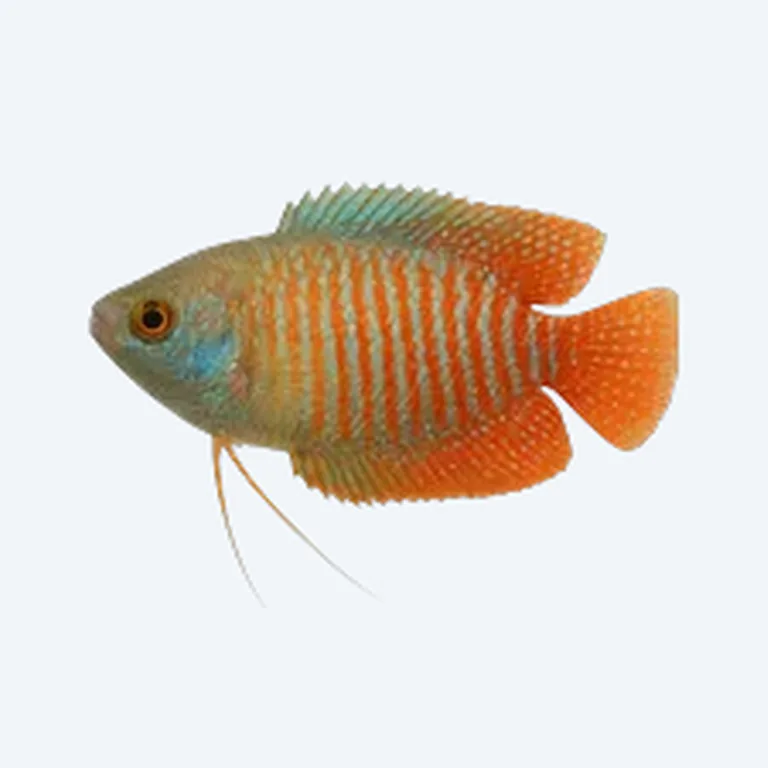
- The virus is real: Dwarf gourami iridovirus (DGIV) is widespread in commercially farmed stock and has no cure. Many fish arrive infected before you even get them home.
- The fish aren't inherently fragile: In clean, stable water with no viral load, dwarf gouramis can live 4-5 years. The species isn't the problem - the supply chain is.
- Quarantine every new fish: It won't eliminate DGIV, but it stops you seeding an established tank with infected fish while you watch for symptoms.
- Source matters more than anything else: Fish from reputable local breeders or specialist shops carry significantly lower risk than mass-market chain-store stock.
- Genuine alternatives exist: Honey gouramis (Trichogaster chuna) and pearl gouramis (Trichopodus leerii) offer similar appeal without the same viral baggage in the trade.
- Water quality is your best lever: Soft, slightly acidic water (pH 6.0-7.0, 24-28°C / 75-82°F) and minimal stress won't cure DGIV, but they give healthy fish the best possible foundation.
Why dwarf gouramis have a reputation
Browse any fishkeeping forum and you'll find the same thread: someone bought a beautiful pair of dwarf gouramis, kept them carefully, and watched them fade and die within three to six months. The replies come thick and fast - "they're just weak fish," "dwarf gouramis are cursed," "buy something else." That reputation didn't come from nowhere. But it's telling an incomplete story.
The reality is more specific, and more fixable, than "the species is fragile." Dwarf gouramis - Trichogaster lalius - are a genuinely hardy species when they're healthy. Wild populations in South Asia live in slow, warm, heavily vegetated water and are well-adapted to fluctuating conditions. The problem enters at the breeding farm, not the river.
Dwarf gourami iridovirus: what you actually need to know
Dwarf gourami iridovirus (DGIV) is a member of the iridovirus family, first documented extensively in Singapore-farmed stock in the early 2000s. Singapore and other Southeast Asian countries supply the vast majority of dwarf gouramis sold in the hobby worldwide. Studies have found infection rates as high as 22% in imported commercial stock - and that's the fish that get tested. The real figure in the supply chain is likely higher.
A 2006 Australian study found about 22% of the dwarf gourami it sampled from retail aquarium shops carrying iridovirus. Those fish were sampled because they were showing signs of disease, so this is not a prevalence rate for every imported gourami - but it does show the virus is established in the ornamental trade, and asymptomatic carriers mean a healthy-looking fish is no guarantee.
The virus is systemic - it replicates inside internal organs. An infected fish can look completely normal at the point of purchase. Symptoms typically emerge weeks to months later: progressive lethargy, loss of the vivid iridescent colour, refusal to eat, bloating (from fluid accumulation), and eventually death. The timeline between "apparently healthy" and "visibly dying" can be as short as two weeks or stretch to six months depending on the fish's immune status and stress level.
There is no treatment. No medication cures DGIV. Antifungals and antibiotics don't touch it. If a dwarf gourami has the virus, the outcome is terminal. Keeping water quality excellent and stress low may extend a mildly infected fish's life, but it won't save it.
DGIV can infect other iridovirus-susceptible species in the same tank. While dwarf gouramis are the primary vector in the hobby, keep infected fish isolated and do not add them to a community aquarium containing other labyrinth fish or closely related species.
What the "cursed fish" narrative gets wrong
The frustrating thing about the "dwarf gouramis are weak" take is that it lets the supply chain off the hook. When hobbyists accept that the species is inherently doomed, they stop asking harder questions about where their fish came from and how they were raised.
Hobbyists who source dwarf gouramis from responsible local breeders - fish raised in small batches, in good water, without the intense overcrowding of commercial export farms - routinely keep them for four or five years without incident. The species isn't broken. The industrial breeding pipeline that produces millions of them annually, under conditions that maximize viral transmission, is what's broken.
Most of the dwarf gouramis sold in chain pet stores are a gamble. That's not scaremongering - it's the commercial reality of how those fish are produced. If you want a reliable experience with this species, you need to shop differently, not just care differently.
Water requirements: getting the basics right
Assuming you've sourced healthy fish, dwarf gouramis have clear preferences that are worth meeting precisely.
Temperature
Keep the tank at 24-28°C (75-82°F). They'll tolerate slightly cooler water short-term, but chronic temperatures below 22°C (72°F) suppress immune function and increase susceptibility to secondary infections. Consistency matters as much as the number - a tank that swings 4°C daily is more stressful than one held steady at the lower end of the range.
pH and hardness
Target pH 6.0-7.0 with soft to moderately hard water (4-10 dGH). They're not as demanding about pH as, say, discus - a stable 7.2 won't kill them - but they genuinely do better in soft, slightly acidic conditions. Most tap water in hard-water areas is fine if you're not chasing perfection. Learn what's coming out of your tap first; see our guide to aquarium water parameters if you're not sure how to test it.
Flow and oxygenation
Dwarf gouramis are labyrinth fish - they breathe atmospheric air directly from the surface. They do not need heavy surface agitation for oxygenation. In fact, strong flow stresses them. Use a gentle sponge filter or an internal filter with the outlet directed along the back glass, not across the surface. Heavy planting also helps break up any current.
Tank size
A single male with a few females is comfortable in a 60-litre (15-gallon) tank. Don't try to keep two males together unless the tank is large and heavily planted - males are consistently aggressive toward each other and one will be harassed into a permanent state of stress.
Dense floating plants - frogbit, water lettuce, or Amazon frogbit - make a real difference to dwarf gourami confidence. They use surface vegetation as cover and for building bubble nests. A tank with bare open water produces noticeably more skittish fish.
Sourcing: where most people go wrong
This is the single highest-impact decision you'll make for a dwarf gourami. Buy from the wrong place and no amount of perfect water chemistry will save the fish.
Avoid chain pet stores for this species if you can. Their stock almost universally comes from mass-market importers, and the infection rates are highest in that part of the supply chain. This isn't universal - some chain stores have attentive staff who quarantine well - but it's the general pattern.
Look for local breeders. Check aquarium society classifieds, local fishkeeping Facebook groups, and specialist aquatic stores. A fish raised by a hobbyist in a 100-litre tank at home has had almost no exposure to the viral load present in export farms. These fish cost more and are harder to find, but the difference in survival rates is significant.
Ask questions in-store. Where did this batch come from? How long have they been in this tank? Are there any other fish in the tank showing symptoms? A shop that can't or won't answer those questions is a shop that doesn't know - and that's a risk signal.
Never buy from a tank with sick or dead fish in it. Obvious, but frequently ignored when you're looking at a gorgeous neon-red male in a mixed display tank. One listless fish in the corner changes the calculus entirely.
Quarantine: what it can and can't do
Quarantine cannot save a fish that's already infected with DGIV. What it does is protect your established tank from an infected newcomer. Keep new dwarf gouramis in a separate tank for a minimum of four weeks - six is better. Watch for lethargy, colour changes, and bloating. If they're going to show symptoms, this is when you'll see them.
A basic quarantine setup doesn't need to be elaborate: a 40-litre tank, a sponge filter seeded from your main tank, a heater, and a few hiding spots is enough. If you're not sure how to get a new tank cycled quickly, the guide on how to cycle a fish tank covers the fastest approaches.
Skipping quarantine because the fish "look healthy" at the store. DGIV is asymptomatic for weeks. A dwarf gourami can be actively infectious and visually perfect at the point of purchase. Quarantine isn't about what you can see - it's about what you can't.
Tank mates and social setup
Dwarf gouramis are peaceful fish that do poorly with fin-nippers or overly boisterous species. Tiger barbs are a common pairing that ends badly - barbs will shred gourami fins and the resulting stress accelerates any underlying health issues. Serpae tetras are another one to avoid for the same reason.
Good companions include ember tetras, harlequin rasboras, corydoras catfish, small loaches, and similarly-sized peaceful species. Keep one male per tank. A male-female pair or a single male with a group of females works well. If you're stocking a community tank, run your proposed list through a free stocking calculator before buying.
Alternatives worth considering
If the risk calculus on dwarf gouramis doesn't appeal to you, there are excellent alternatives that scratch the same itch without the DGIV problem.
Honey gouramis (Trichogaster chuna) are closely related, similarly sized, and genuinely underrated. They're peaceful, the males develop a warm gold-and-orange colour, and they don't carry the same viral burden in the trade. They're also slightly more tolerant of imperfect water conditions, which makes them a better fit if you're newer to the hobby. They feature in our guide to best fish for beginners for exactly these reasons.
Pearl gouramis (Trichopodus leerii) are larger - expect 10-12 cm (4-5 inches) - but spectacularly beautiful and hardy. They need a bigger tank (90 litres minimum) but are genuinely one of the most robust and rewarding labyrinth fish available.
Sparkling gouramis (Trichopsis pumila) are tiny, peaceful, and fascinating to watch. They don't have the bold colour of dwarf gouramis, but they're easy to keep and suitable for nano setups from about 30 litres.
Honey gouramis are objectively a better choice for most community tanks. They're easier to source clean, hardier in average tap water, and just as attractive. The only reason dwarf gouramis outsell them is that the red and blue neon varieties look more dramatic under shop lighting. If you're drawn to the species purely for the colour, that's fair - just go in with clear eyes about the sourcing challenge.
Keeping records: why it matters more with sensitive fish
With a species where the difference between "healthy" and "early DGIV symptoms" can be subtle, keeping a log of your fish's behaviour and your tank parameters over time is genuinely useful. A fish that's slightly less active than it was two weeks ago is easy to dismiss in the moment - harder to dismiss when you can see the pattern in a log. App-aquatic lets you track parameters, note behavioural observations, and set reminders for water changes, which is particularly useful when you're monitoring a new fish through quarantine.
Track your parameters and get care reminders with App-aquatic.
Get the free appHow do I know if my dwarf gourami has DGIV?
There's no at-home test. Classic signs are progressive lethargy, fading colour, loss of appetite, and abdominal bloating - but these symptoms overlap with bacterial infections, internal parasites, and other conditions. The honest answer is that by the time symptoms are clear enough to distinguish, the prognosis is already poor. If a dwarf gourami declines steadily without responding to treatment for secondary infections, DGIV is the most likely cause.
Can DGIV spread to other fish in my tank?
DGIV primarily affects dwarf gouramis and has been documented in a small number of other iridovirus-susceptible species. There's no strong evidence it poses a broad risk to unrelated community fish like tetras or corydoras. That said, isolate any fish showing symptoms immediately - both to reduce stress on the sick fish and as a precaution.
Are female dwarf gouramis safer to keep than males?
DGIV infects both sexes equally - sex doesn't affect susceptibility to the virus. Females are less colourful (silvery-grey with faint orange stripes), which is why most people buy males. From a health standpoint, the sourcing and supply chain factors are the same for both.
My dwarf gourami died after two months. Did I do something wrong?
Probably not, if your water parameters were correct and the tank was cycled. A fish that dies within two to six months of purchase with progressive lethargy and colour loss almost certainly had DGIV when you bought it. That's a supply chain failure, not a husbandry failure. Check your water anyway - aquarium water parameters covers what to test and what the numbers should look like - but don't automatically blame yourself.
How long do dwarf gouramis live if they're healthy?
Four to five years is realistic with good care and virus-free stock. Some hobbyists report fish reaching six years. The fish you see dying at one to two years in most accounts aren't showing the species' natural lifespan - they're mostly showing the effects of DGIV and poor-quality stock from the supply chain.
More guides · Gourami care · Combining fish · Quarantine · App features