
Guide
Loach guide: different types and their role in the tank
Loaches are bottom-dwelling fish with distinct personalities. From tiny kuhlis to large clowns, here's what each type does and how to keep them.
- Loaches are social: most species need groups of five or six minimum - a lone loach is a stressed loach.
- Tank size matters more than most guides admit: kuhli and dwarf chain loaches can work in 75-115 litre (20-30 gallon) tanks; clown loaches need 280+ litres (75+ gallons) and eventually much more.
- Snail control is real but limited: yo-yo, dwarf chain, and clown loaches will eat pest snails; kuhli loaches will not.
- Substrate is non-negotiable: sharp gravel damages the barbels of any loach species - use sand or fine, smooth substrate.
- Hillstream loaches are a specialist choice: they need high flow and cool, oxygen-saturated water and do not belong in a standard tropical community.
- Loaches supplement good husbandry - they don't replace it: they will not save a tank with poor water quality or an incomplete cycle.
What loaches actually do in your tank
Loaches occupy the bottom third of the water column and they do it actively. They sift substrate for food, scavenge uneaten scraps, investigate every gap in your hardscape, and in several species, systematically hunt snails. That combination of behaviour - constant movement, comedic personality, and genuine utility - is why they're among the most popular freshwater fish in the hobby.
That said, they are not a cleanup crew in any meaningful sense. A loach group won't compensate for overfeeding, skipped water changes, or a tank that hasn't been properly cycled. Think of them as adding character and some incidental scavenging, not as tank maintenance. If your nitrogen cycle isn't established before you add them, loaches - especially clowns - will be the first to show it. Check our guide on how to cycle a fish tank before stocking any.
Kuhli loaches
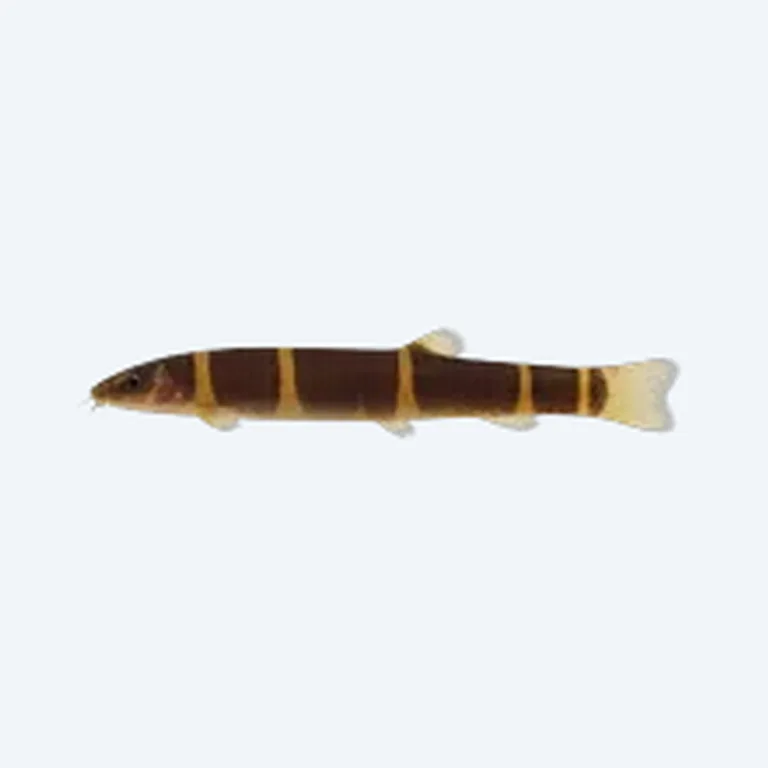
Pangio kuhlii and related species. Small (8-12 cm / 3-5 inches), eel-shaped, and striped with alternating dark and pale bands. They're one of the most frequently bought and most frequently mishandled loaches in the hobby.
Care requirements
Temperature: 24-28 °C (75-82 °F). pH: 5.5-7.0. They come from soft, acidic blackwater streams in Southeast Asia, so harder alkaline tap water will stress them long-term. Keep groups of at least five - six is better. Alone or in pairs they hide permanently and rarely thrive.
Sand substrate is essential. Their barbels are delicate and gravel will abrade them over time, making them vulnerable to infection. Provide dense planting, caves, and PVC pipe offcuts or similar tunnels. They will vanish into these during the day and emerge at night or when the lights dim.
A 75-litre (20-gallon) tank is workable for a group of five to six. They don't need much horizontal swimming space, but they do need hiding options and they need the tank to be mature and stable before they go in.
Buying one or two kuhlis because "they're so cute" and then wondering why you never see them. A single kuhli loach will spend its entire life wedged behind the filter. The hiding behaviour doesn't go away until the group is large enough for them to feel secure.
What kuhlis won't do
They won't touch snails. They also won't eat algae in any meaningful quantity. Their value is in scavenging leftover food from the substrate and adding a genuinely unusual, active presence to the lower levels - once you have enough of them to actually see that activity.
Clown loaches
Chromobotia macracanthus. Orange body, bold black stripes, and a personality large enough to match their eventual size. They're one of the most charismatic fish in freshwater keeping and one of the most commonly purchased into tanks that are far too small for them.
Care requirements
Temperature: 25-30 °C (77-86 °F). pH: 6.0-7.5. Juveniles sold at 4-5 cm in pet shops will reach 20-30 cm (8-12 inches) over a 10-20 year lifespan. Yes, they live that long. A group of five juveniles you buy today will need a tank of at least 280 litres (75 gallons) within a few years, and realistically 475+ litres (125+ gallons) as adults.
They are highly social. Groups of five or more are the minimum - they form genuine social hierarchies and will display, play-fight, and even lie on their sides (a behaviour that alarms new owners but is normal for this species). Keep them in groups and give them hiding places: large caves, root tangles, and dim areas they can retreat to.
Most people buy them as juveniles for a 200-litre community tank and don't plan beyond that - which is how clown loaches end up in rescue groups.
Clown loaches are sold constantly to people who don't have the tank to keep them properly, and the trade knows it. If you have a 150-litre tank and you're thinking about three clowns for "snail control," don't. Get dwarf chain loaches instead. Clowns are a long-term commitment that requires serious tank space.
Snail control
Clown loaches are effective snail hunters and will systematically work through a pest snail population. They won't eradicate every snail overnight, but sustained populations of bladder snails or ramshorn snails are genuinely reduced by a healthy clown loach group. The catch: you need the right-sized tank to keep the group that does the work.
Yo-yo loaches
Botia almorhae, also sold as Pakistani loaches or almora loaches. Named for the Y-O-Y-O pattern on juvenile fish - it becomes less distinct as they age. They reach around 12-15 cm (5-6 inches) and are noticeably more assertive than kuhlis or dwarf chains.
Care requirements
Temperature: 24-28 °C (75-82 °F). pH: 6.0-7.5. Tank size: 150 litres (40 gallons) minimum for a group of four to five. They're active, they explore the entire tank, and they can be nippy with slow-moving or long-finned fish. Angels, bettas, and fancy guppies are not good tank mates.
Yo-yos are gregarious but also have distinct personalities and social jostling within the group - the occasional chase or minor skirmish is normal. It becomes a problem when the tank is too small to distribute that energy, or when they're kept with fish that can't hold their own.
Yo-yos do well alongside medium-sized robust fish like tiger barbs, larger rasboras, or rainbowfish. They need tank mates that move quickly and aren't easily intimidated. Avoid pairing them with anything slow, shy, or flowing-finned.
As snail hunters
Excellent. Yo-yo loaches are arguably more reliably aggressive snail hunters than clown loaches at the same group size. They'll crack open snail shells and consume both pest snails and deliberately kept species - don't add them to a tank with nerite or mystery snails you want to keep.
Dwarf chain loaches
Ambastaia sidthimunki, sometimes listed as Botia sidthimunki. Small (5-6 cm / 2 inches), boldly patterned with a chain-link stripe along the lateral line, and genuinely one of the best loach options for tanks under 150 litres.
Care requirements
Temperature: 25-28 °C (77-82 °F). pH: 6.0-7.5. A group of six fits comfortably in a 75-115 litre (20-30 gallon) planted tank. They're active in mid-water as much as at the bottom, which is unusual for loaches, and they school loosely in a way that looks impressive in a well-planted setup.
Like all loaches: sand substrate, hiding spots, and a mature, stable tank. They're not particularly delicate once settled, but they're sensitive to ammonia and nitrite spikes - make sure your nitrogen cycle is fully established before adding them.
Dwarf chain loaches can be nippy with long-finned species, particularly slow-moving ones. They've been reported harassing bettas and fancy guppies. In a busy, well-planted community with fast-moving tank mates, this is rarely an issue - but in a quiet, sparsely stocked tank it can become one.
Snail control in planted tanks
This is where dwarf chain loaches genuinely shine. They're small enough not to disturb planting, active enough to hunt consistently, and effective against bladder snails and small ramshorn snails. For a heavily planted 80-120 litre tank with a pest snail problem, a group of six dwarf chain loaches is one of the best solutions available.
Hillstream loaches
Species from genera including Sewellia, Gastromyzon, and Beaufortia. Flattened, disc-shaped bodies built for clinging to rock surfaces in fast-moving, highly oxygenated hill streams. They are visually striking and increasingly available - and consistently placed into tanks that can't support them.
What they actually need
Temperature: 18-24 °C (64-75 °F) for most species. This is cooler than the typical tropical community. High flow - turnover of 10-15 times the tank volume per hour. Smooth, flat rocks they can graze for biofilm. Excellent oxygenation. Pristine water quality. These are not beginner fish and they don't belong in a standard 26 °C community tank with a single HOB filter.
Their role is biofilm and algae grazing on hard surfaces - glass, smooth rocks, broad-leaved plants. They won't touch pest snails and they don't scavenge substrate in the same way other loaches do. In the right setup - a dedicated hillstream biotope or a cool, high-flow tank - they're fascinating. In a standard community, they slowly decline.
Hillstream loaches are impulse-bought constantly by people who see them stuck to the glass in a fish shop and think they'd be interesting in their community tank. Most die within months because the temperature is too high and the flow too low. If you don't have a dedicated high-flow, cool-water setup, skip them entirely.
Getting the stocking right
Most loach species need groups, and groups take up stocking capacity. Before committing to any loach species, work out whether your tank can actually support the group size and the fish already in it. Use our free stocking calculator to check, and cross-reference with your target water parameters for the species you're considering.
Loaches are also sensitive to water quality in ways that less hardy fish aren't. If your tank runs high on nitrates or your water change schedule is inconsistent, a clown or kuhli loach group will show it before your tetras do. Regular testing and consistent water changes matter more with loaches than with most community fish.
If you want to track parameters, log water tests, and set care reminders for your loach group, App-aquatic does all of that in one place.
If you're new to the hobby and want a loach, start with dwarf chain loaches or kuhli loaches - both work in smaller tanks and are manageable for an intermediate keeper. Clown loaches are not a beginner fish despite being sold as one. See our guide to best fish for beginners for broader options.
What most guides miss
A few things come up repeatedly in loach keeping that don't get covered clearly elsewhere:
Loaches and ich: Loaches, especially clowns, are more susceptible to Ichthyophthirius multifiliis (white spot) than most fish. They're also sensitive to standard ich treatments containing copper or high doses of malachite green. If you need to treat ich in a loach tank, use half-dose treatments and monitor carefully, or use a heat treatment method.
The lying-on-side behaviour: Clown loaches sleep on their sides or wedged at odd angles. They also do this when stressed. New keepers panic and assume the fish is dying. If the fish looks otherwise healthy - good colour, eating, active at other times - it's almost certainly just sleeping. If it's genuinely lethargic and not eating, that's when to check your parameters.
Loaches and salt: Many general fishkeeping guides recommend aquarium salt for various ailments. Most loach species are scaleless or have very small scales and are highly sensitive to salt. Avoid salt treatments in any loach tank.
Group dynamics take time: A newly added group of loaches will hide for days or weeks. This is normal. They need time to establish themselves, learn the territory, and settle into their social structure. Don't judge a loach group's behaviour in the first fortnight.
Track your parameters and get care reminders with App-aquatic.
Get the free appCan I keep a single loach?
For most species, no. Kuhli, clown, yo-yo, and dwarf chain loaches are all social fish that need groups to behave normally and stay healthy. A single loach will hide constantly, become stressed, and often decline. The minimum for any of these species is five to six individuals.
Will loaches eat all my snails?
Snail-eating loaches - yo-yo, dwarf chain, clown - will significantly reduce pest snail populations, but they rarely eradicate them entirely. They also won't discriminate: if you have nerite or mystery snails you want to keep, snail-hunting loaches will go after those too. Kuhli loaches and hillstream loaches don't eat snails, so they're the safer choice if you want loaches alongside snails you value.
More guides · Cleanup crew · Corydoras · Combining fish · App features