
Fish care
Bronze Corydoras: Complete Care Guide
Last updated: May 2026
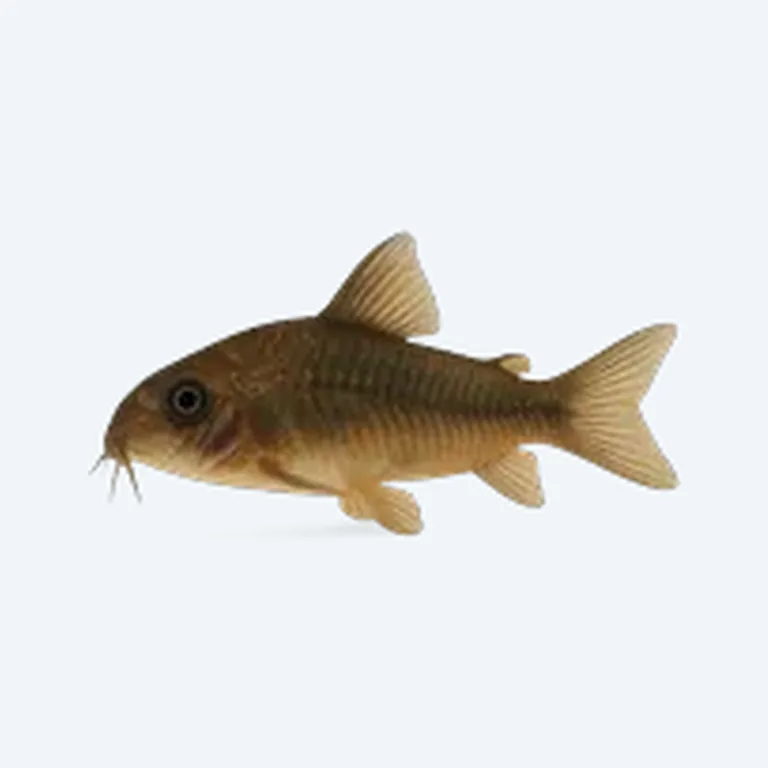
- Minimum group size: Six Corydoras aeneus - fewer and they stress, hide, and glass-surf constantly.
- Substrate is non-negotiable: Fine rounded sand only. Sharp gravel erodes barbels and opens the door to bacterial infections.
- Tank size: 75 L (20 US gal) for a group of six; go larger if you're adding mid-water fish above them.
- Water: 22-28°C (72-82°F), pH 6.0-7.5, soft to moderately hard. They tolerate a wide range but punish neglect fast.
- Diet: Sinking foods only - flakes floating overhead go uneaten and foul the water while your corys go hungry.
- Care level: Genuinely easy, but they are cleaner fish, not cleaners - they will not eat your leftover mess.
Who are Bronze Corydoras?
Corydoras aeneus, the bronze corydoras, is one of the most widely kept freshwater fish in the hobby - and one of the most misunderstood. They come from shallow, slow-moving rivers and flood plains across Trinidad and South America, where they spend their days sifting through soft sediment in tight social groups. That origin story tells you almost everything you need to know about keeping them well: soft substrate, clean water, and company.
Adults reach about 7 cm (2.8 in). They're armoured with two rows of bony scutes rather than scales, which makes them more robust than they look - but those iconic whisker-like barbels are sensitive tissue, not armour. That distinction matters more than most beginner guides admit.
Bronze corys sit comfortably on the best fish for beginners list for good reason. They're tolerant of a wide parameter range, peaceful with almost every community fish, and active enough during the day to actually be interesting. The catch is that "easy" doesn't mean "throw them anywhere and hope."
Tank Setup
Size and footprint
75 L (20 US gal) is the workable minimum for a group of six, but floor footprint matters more than raw volume. Corys are bottom dwellers - a tall, narrow tank with the same litre count gives them far less usable territory than a standard rectangular one. If you're building a community tank with mid-water or surface fish above them, push to 110-120 L (30 US gal) to keep stocking numbers sensible. Check any combination you're considering against the free stocking calculator before buying.
Substrate - the make-or-break decision
Barbels are pressure and chemical receptors that corys use to locate food and read their environment. When they're degraded - shortened, fused, or visibly eroded - those functions are compromised and bacterial infection can follow. The culprit in most cases is substrate.
Crushed coral, coarse gravel, and any angular substrate causes chronic mechanical abrasion to barbel tissue. Ammonia can read zero and your corys can still be slowly deteriorating because of what they're walking on every day.
The right choice is fine-grade rounded sand - pool filter sand, aquarium playsand, or purpose-made soft substrates all work. Aim for a grain size of 0.5-1 mm. Corys will immediately start their natural sifting behaviour, pushing mouthfuls of sand through their gills to find food. It's one of the more satisfying behaviours to watch once you've set the tank up correctly.
Keep the sand bed around 2-3 cm deep. Too shallow and it compacts; too deep and you risk anaerobic pockets forming in low-flow areas. A gentle weekly stir with your finger or a thin rod prevents dead spots without disturbing the colony.
Water parameters
Bronze corys are adaptable. Their native habitats span a wide range of conditions, and captive-bred fish - which is what you're almost certainly buying - are even more flexible than wild-caught specimens.
72-82°F. The lower end suits them well and also benefits many other community fish. Avoid sustained temperatures above 28°C.
They'll tolerate slightly outside this, but stable is more important than perfect. Swings of more than 0.3 pH in 24 hours cause more harm than a reading of 7.6.
Hardness is flexible - soft to moderately hard water (2-20 dGH) all works. What doesn't work is poor nitrogen cycle management. Corys are benthic, meaning they live right at the zone where mulm, detritus, and uneaten food accumulate. They're the first fish in your tank to suffer when nitrates climb or the cycle isn't fully established. If you're setting up a new tank, read the guide on how to cycle a fish tank before adding any fish.
Filtration and flow
Moderate flow. These are fish from slow-moving water - they don't need a torrent, and strong currents at substrate level will stress them. A sponge filter or a canister with a spray bar pointed at the glass works well. The goal is good oxygenation and circulation without blasting the bottom of the tank.
Corys occasionally dart to the surface and gulp air - this is normal intestinal breathing behaviour, not a sign of low oxygen. They have a modified section of intestine that can extract oxygen from air. You'll see it more in warmer water. Don't panic and don't add an airstone unless you have other reasons to.
Group Dynamics and Social Behaviour
Six is the genuine minimum. Not "ideally six" or "six if you can manage it" - six. Below that number, corys are visibly less settled. They spend more time hiding, more time glass-surfing, and less time doing the active foraging behaviour that makes them interesting to keep. A group of eight or ten is noticeably more confident and active than a group of four.
They can be kept with other Corydoras species - they'll often school loosely with close relatives - but for the best shoaling behaviour, keep at least six of the same species. C. aeneus with a group of C. sterbai, for example, will coexist peacefully but won't integrate into a tight unit the way conspecifics do.
If your tank is too small for six corys, it's too small for corys. Three fish kept alone isn't a compromise - it's a welfare problem drawn out over years. The fish won't die immediately, but they won't thrive either.
A useful behavioural flag: corys that suddenly start hiding after months of confident activity aren't having a personality change. Something in the tank has shifted. Check temperature (heater failure is common and often missed), test for nitrite spikes, and look for new tank mates that might be harassing them - even mild fin-nipping from barbs or larger cichlids can push corys into permanent retreat.
Feeding
Corys are omnivores that feed at the bottom. The most common feeding mistake is dropping flake food into the tank and assuming it will eventually reach them. Some will make it down; most gets intercepted by mid-water fish, or breaks apart and clouds the water before it sinks.
Relying on corys to "clean up" leftover food from other fish. They will eat scraps, but they need their own dedicated sinking food, fed after lights out when competition from other fish is lower. Corys kept as cleanup crew are usually underfed.
Good foods for bronze corys:
- Sinking wafers and pellets - the staple. Look for ones with a high protein content (insect meal, shrimp meal, or fish meal listed early in the ingredients).
- Frozen or live bloodworm, daphnia, and brine shrimp - excellent for conditioning and variety. Feed 2-3 times a week if you can.
- Blanched vegetables - courgette (zucchini), cucumber, spinach. Corys will graze on these overnight. Remove uneaten portions after 24 hours.
Feed once or twice daily, offering only what they'll consume in a few minutes. Overfeeding is one of the fastest ways to spike nitrates in a heavily planted or sand-substrate tank where detritus hides easily. Stay on top of water change frequency - weekly partial changes of 25-30% are the baseline for a cory tank.
Tank Mates
Bronze corys are genuinely peaceful and compatible with the majority of community fish. The practical guidelines are simple: avoid anything large enough to eat them, avoid confirmed fin-nippers, and avoid species with significantly different temperature or water chemistry requirements.
Good tank mates include tetras (most species), rasboras, danios, livebearers, small gouramis, and other Corydoras species. Avoid tiger barbs (persistent fin-nippers), large cichlids, and aggressive bottom dwellers that will compete directly for territory - red-tailed black sharks and large Botia loaches can make corys miserable in smaller tanks.
Shrimp and snails are compatible. Corys won't hunt adult shrimp, though they may eat very small shrimplets.
Health and Common Problems
Barbel erosion
The most common health issue in captive corys, and almost always substrate-related or water-quality-related. Healthy barbels are long, tapered, and symmetrical. If they look stubby, blunted, or you can see redness at the base, act immediately: do a large water change, check your substrate, and test your water parameters. In early stages, moving the fish to clean water with proper substrate allows barbels to regenerate partially. Advanced cases may not recover.
Red blotch disease and bacterial infections
Patches of redness on the body or face, particularly around the mouth and barbel base, usually indicate a bacterial infection - often secondary to physical damage or poor water quality. Treatment with a broad-spectrum antibiotic effective against gram-negative bacteria (like kanamycin) is the standard approach, but fixing the underlying cause is mandatory or the fish will reinfect.
Ich
Corys get ich like any other fish, but their bony scutes mean some salt-based treatments are less effective. Heat treatment (gradually raising temperature to 28-30°C for 10-14 days while maintaining good oxygenation) is a safer option. If using medication, check it's safe for scaleless and armoured fish - some ich treatments are too harsh.
App-aquatic lets you log water test results over time, so you can actually see whether nitrates are trending up between changes rather than guessing. Useful for any tank, but especially ones with bottom-dwelling fish that suffer before visible symptoms appear.
Breeding
Bronze corys breed readily in home aquariums, often without any deliberate effort. Spawning is typically triggered by a water change with slightly cooler water - mimicking seasonal rain. The female holds 2-4 eggs cupped in her pelvic fins while the male fertilises them; she then deposits small clusters on flat surfaces, broad leaves, or the glass.
Eggs hatch in 3-5 days at 24-26°C. The fry are tiny and need infusoria or commercial fry food initially, graduating to microworms and then finely crushed flake within a few weeks. If you want to raise a meaningful number, move eggs to a separate container - adults will eat them given the chance, and so will most tank mates.
A sex ratio of one male to two females reduces the wear on individual females during spawning chases, which can be surprisingly vigorous.
Track your parameters and get care reminders with App-aquatic.
Get the free appCan I keep just two or three bronze corydoras?
You can, but you shouldn't. Fewer than six and they're chronically stressed - more time hiding, more glass-surfing, less natural behaviour. They're shoaling fish and they need the group to function properly. If your tank can't fit six corys comfortably, it's the wrong fish for that setup.
Do corydoras really need sand? Can I use fine gravel?
Sand is strongly preferred. Fine rounded gravel is a compromise - if the grains are small and smooth enough, barbel damage risk is lower, but it's never as good as proper sand. Avoid anything coarse, angular, or calcium-rich like crushed coral. The risk isn't hypothetical; barbel erosion is one of the most common health problems in captive corys and substrate is the primary cause.
Why are my corydoras swimming up and down the glass?
Glass-surfing in corys usually means one of three things: the group is too small and they're stressed, water quality has deteriorated (check nitrite and nitrate), or they're new to the tank and still adjusting. If it's been going on for more than a week in an established tank, test your water and look critically at group size. Occasionally it signals a temperature problem - check your heater is working correctly.
Will corydoras eat my shrimp?
Adult shrimp are safe. Corys don't hunt, and a full-grown cherry shrimp or amano shrimp is too large and too fast to be at risk. Very small shrimplets and freshly hatched baby shrimp may get eaten incidentally during foraging. If you're running a shrimp breeding tank, a cory colony isn't ideal - but for a mixed community tank the two coexist without problems.
How long do bronze corydoras live?
In good conditions, 10 years is realistic and some reach 15. They're long-lived fish for their size, which is worth keeping in mind when you set up a tank - these aren't fish you replace every couple of years. Good substrate, stable parameters, and adequate group size are the main factors that determine whether they get anywhere near that. Barbel damage from rough substrate and chronic stress from a small group are what most often cut their lives short.