Guide
Neon tetra disease
What it is, which tetras and related fish it affects, and what you can do when you see it.
- No cure exists: Neon tetra disease is caused by the microsporidian parasite Pleistophora hyphessobryconis - infected fish will not recover.
- Remove sick fish immediately: Isolate or euthanise humanely. A dead or dying fish left in the tank is how the parasite spreads to others.
- Affected species: Neon tetras, cardinal tetras, glowlight tetras, black neon tetras, and other small characins. Non-characins are largely unaffected.
- Early signs: Fading colour along the stripe, a fish lagging behind the school, whitish or grey patches in the muscle tissue.
- Quarantine every new tetra: Four weeks minimum before introducing any new characin to an established tank.
- False positives are common: Poor water quality and bacterial infections can look almost identical - rule those out first.
What neon tetra disease actually is
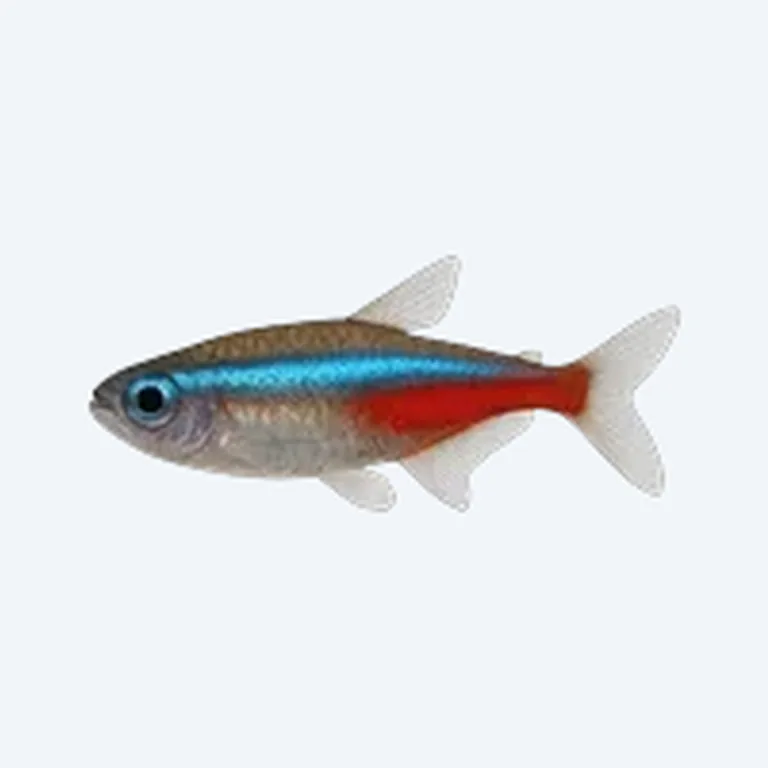
Neon tetra disease is caused by Pleistophora hyphessobryconis, a microsporidian - a type of obligate intracellular parasite that invades muscle tissue. It was first identified in neon tetras in the 1940s and named after them, but the name is misleading. Cardinal tetras are just as vulnerable, and so are glowlight tetras, black neon tetras, and a range of other small characins.
The parasite forms cysts inside the fish's muscle cells. Those cysts rupture, releasing spores that spread through the body and, when an infected fish dies or is eaten, into the water column and into any fish that ingests them. There is no drug that clears it once established. Everything you read about "treating" neon tetra disease is either mistaken or referring to a different illness.
Most fish sold as "neon tetras" at chain pet stores have passed through crowded wholesaler tanks where Pleistophora spores are almost certainly present. Buying cheap neons and skipping quarantine is the single most common way this disease enters a home tank. The fish look healthy in the shop - the parasite's early stages are invisible to the naked eye.
Symptoms: what to look for and what gets misidentified
The disease progresses in stages, and catching it early matters - not because you can save the infected fish, but because early removal limits spread to the rest of the group.
Early stage
The first sign is usually behavioural: one fish stops schooling tightly, hangs back, or sits slightly lower in the water column than the others. Around the same time, the iridescent blue-green stripe on a neon tetra begins to fade or develop a white, washed-out patch - typically in the mid-section of the body, not the head or tail. The fish may still be eating at this point.
Mid to late stage
The white or grey patches spread and take on a lumpy or cyst-like appearance as Pleistophora cysts build up in the muscle. The spine may begin to curve - a symptom often called "wasting" - and the fish loses condition rapidly. Swimming becomes erratic or laboured. At this point the fish is suffering and there is no path back.
What else looks like this
This is where most fishkeepers go wrong. Bacterial infections, especially columnaris (Flavobacterium columnare), can produce pale patches along the body that look almost identical in the early stages. Stress from poor water quality causes colour loss across the whole school, not in isolated individuals. A fish with swim bladder problems will also struggle to maintain position. If the pale patches affect the entire group at once rather than one individual, water quality is a far more likely culprit than Pleistophora. Check your parameters before assuming the worst.
Columnaris can kill fish in 24-48 hours and is bacterial - meaning it is treatable with antibiotics if caught early. Misidentifying it as neon tetra disease and giving up costs you fish that could have been saved. If the patches are more surface-level and saddle-shaped (across the back), and spread fast, suspect columnaris and act accordingly.
How the parasite spreads
Transmission happens one way: ingestion of spores. In practice, this means:
- Eating dead or dying tank mates. A fish that dies overnight and gets picked at by the rest of the group before you notice in the morning is the most common transmission route in home aquaria.
- Contaminated food. Tubifex worms and other live foods sourced from polluted water can carry Pleistophora spores. Frozen or freeze-dried foods are far safer.
- Introducing infected fish without quarantine. A fish incubating the parasite shows no visible symptoms for days to weeks.
The parasite does not survive freely in the water for long, and it cannot penetrate intact skin - it has to be swallowed. This is why removing sick and dead fish quickly is the most effective thing you can do to protect the rest of your tank.
Most Pleistophora infections become visible within two to four weeks of exposure - long enough for a proper quarantine to catch most cases before they reach your display tank.
Which fish are at risk - and which aren't
Pleistophora hyphessobryconis primarily targets characins. The species most commonly reported with confirmed infections include:
- Neon tetra (Paracheirodon innesi)
- Cardinal tetra (Paracheirodon axelrodi)
- Glowlight tetra (Hemigrammus erythrozonus)
- Black neon tetra (Hyphessobrycon herbertaxelrodi)
- Various Hyphessobrycon and Hemigrammus species
Danios, rasboras, livebearers, corydoras, and most other non-characin community fish are not meaningfully susceptible to this specific parasite. That said, a tank with a Pleistophora problem is a tank with a hygiene problem, and stressed fish of any species are more vulnerable to secondary infections.
If you keep a mixed community and lose neons to this disease, you don't need to tear down the whole tank. Remove all affected characins, do not replace them for at least six weeks, and maintain excellent water quality throughout. Most spores will die off without a viable host to reinfect.
What to do when you suspect neon tetra disease
Step 1 - Test your water first
Before anything else, test for ammonia, nitrite, nitrate, and pH. A single fish showing pale patches and lethargy in an otherwise healthy school is more likely to be neon tetra disease or a bacterial infection. But if multiple fish look off and your nitrite reads above zero, you have a water quality emergency, not a parasite problem. Treat accordingly. If you're not sure what your numbers mean, the guide on aquarium water parameters covers the full picture.
Step 2 - Isolate the affected fish
Move any fish showing symptoms to a separate container or quarantine tank. Use tank water so you don't add temperature shock to their problems. If you don't have a quarantine setup, a clean bucket with an air stone and a heater will do for the short term. Keep the water temperature consistent with your display tank - for neon tetras, that's 22-26°C (72-79°F).
Step 3 - Decide on euthanasia
If the fish is in late-stage disease - curved spine, severe muscle wasting, struggling to swim - the humane call is euthanasia. Clove oil is the most widely available method: 0.4 ml of clove oil mixed into a small amount of tank water, then added to a container with the fish. Unconsciousness within 30 seconds, death within a few minutes. Do not flush live fish or freeze them - both are inhumane.
Step 4 - Do not leave dead fish in the tank
Check your tank every morning. If a fish has died overnight, remove it before the rest of the group has a chance to pick at the body. This is the single most practical thing you can do to stop the spread.
Step 5 - Support the remaining fish
Healthy fish handle low-level parasite exposure better than stressed ones. Keep water quality tight, feed a varied diet, avoid overcrowding, and reduce unnecessary disturbance. If you're not already on a consistent water change schedule, the guide on how often to do water changes is worth reading. App-aquatic's parameter tracking and reminder features are useful here - they make it easy to spot if something drifts between manual checks.
Step 6 - Quarantine before adding replacements
Once you've stabilised the tank, wait at least six weeks before adding new tetras. When you do, quarantine them separately for four weeks and watch for any early signs of fading colour or abnormal behaviour before moving them to the display tank.
Immediately replacing dead neons with a new batch from the same store, without quarantine, and wondering why the disease keeps recurring. You may be reintroducing the parasite every time you restock. Source fish from different suppliers and always quarantine - this solves most recurring cases.
Can you treat neon tetra disease with medication?
No. There is no medication that cures an established Pleistophora infection. Some sources suggest antiparasitic drugs like metronidazole or fenbendazole, but there is no peer-reviewed evidence they clear Pleistophora from muscle tissue in fish. What those medications may do is address secondary bacterial infections or unrelated parasites that were misidentified as neon tetra disease in the first place.
If a fish you treated with antiparasitic medication "recovered," it almost certainly had columnaris, a water quality issue, or another condition - not confirmed neon tetra disease. This is why accurate identification matters.
Preventing neon tetra disease going forward
Prevention is the entire game here. Once the parasite is in your tank, your options are limited. Before that point, your options are straightforward:
- Always quarantine new fish - four weeks, in a separate tank, every time.
- Avoid live tubifex worms from unknown sources. Bloodworm, daphnia, and brine shrimp (frozen or live) are lower risk.
- Buy from reputable sources - ideally local breeders or specialist retailers with visibly healthy, uncrowded stock, rather than wholesaler-fed chain stores.
- Don't overstock. Stress suppresses immune function. Use a free stocking calculator to make sure your bioload is realistic before buying more fish.
- Maintain water quality consistently. Neons and cardinals are not especially delicate fish in clean, stable water, but they deteriorate fast in poor conditions. The basics - regular water changes, an established nitrogen cycle, appropriate temperature - are what keep a tetra tank healthy long term.
Track your parameters and get care reminders with App-aquatic.
Get the free appCan cardinal tetras get neon tetra disease?
Yes. Despite the name, Pleistophora hyphessobryconis infects cardinal tetras just as readily as neons. The same symptoms apply: fading colour, pale patches in the muscle, lethargy, and eventual wasting. Cardinals are not safer than neons in this regard.
Is there any treatment that works?
No confirmed treatment exists for Pleistophora once it's established in muscle tissue. Fish that appear to recover after medication almost certainly had a different condition. Focus on isolating sick fish, preventing transmission, and keeping the remaining group in optimal health.
How do I tell neon tetra disease apart from a bacterial infection?
The key differences: neon tetra disease typically affects one fish at a time, progresses slowly over days to weeks, and produces a whitish or grey patch in the mid-body muscle with a slightly raised or lumpy texture. Bacterial columnaris tends to progress faster (sometimes within 48 hours), often shows a saddle-shaped white patch across the back, and may affect multiple fish in short succession. If you're unsure, test your water first - if parameters are off, treat that before assuming disease.
Do I need to break down my entire tank if I've had neon tetra disease?
Rarely. Pleistophora spores need a suitable host to survive long-term. Remove all affected and dead fish, don't add new susceptible fish for six weeks, and maintain good water quality. The spore load drops on its own. A full tank breakdown is only worth considering if you've had repeated, heavy losses and want to start clean - even then, it's not guaranteed to eliminate every spore.
Why do my neons keep dying even after I replace them?
If you're restocking without quarantining, you're very likely reintroducing the parasite each time. The other possibilities: your water parameters are consistently off (high nitrates, wrong temperature, unstable pH), or you're buying from a supplier whose stock is already carrying the disease subclinically. Quarantine new fish for four weeks, check your parameters with a liquid test kit (not strips), and consider sourcing from a different retailer. The guide on aquarium water parameters covers what neons actually need to thrive.
More guides · Neon vs cardinal · Top fish illnesses · Hospital tank · Get the app