Fish care
Amano Shrimp: Complete Care Guide
Last updated: May 2026
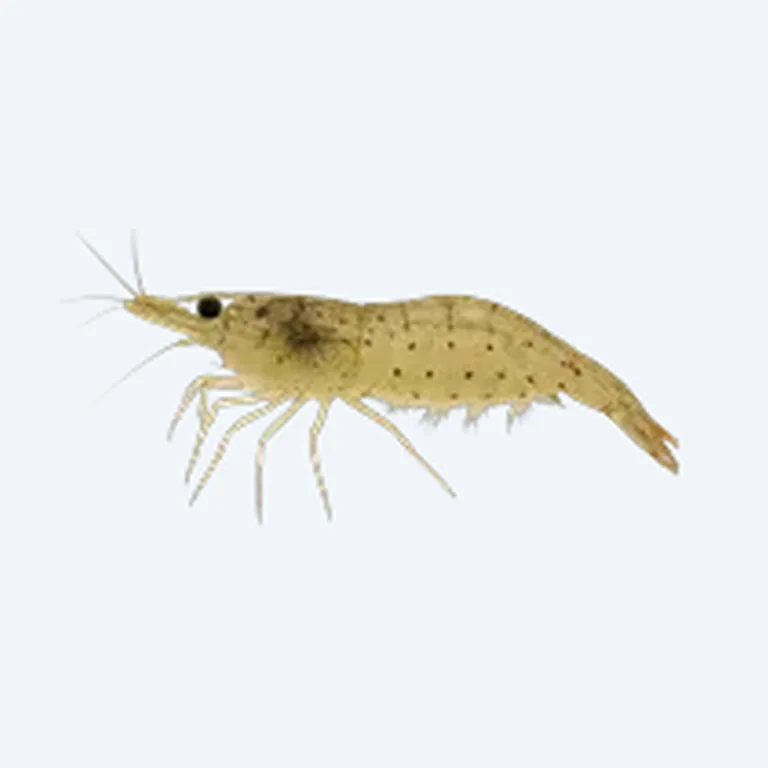
- Species: Caridina multidentata, commonly called Amano shrimp - named after aquascaper Takashi Amano, who popularised them as algae crew in the 1990s.
- Tank size: 40 L (11 US gal) minimum; a group of 6-10 shrimp works best in 60-80 L (16-21 US gal) or more.
- Parameters: 20-27°C (68-81°F), pH 6.5-7.5, soft to moderately hard water, ammonia and nitrite at zero.
- Algae eating: Excellent on hair algae, thread algae, and surface biofilm - not a fix for a tank with poor nutrient control.
- Breeding: Females will berried in freshwater, but larvae require brackish-to-marine salinity to develop. Captive breeding is specialist-level and rarely happens accidentally.
- Copper kills them: Many fertilisers and most invertebrate medications contain copper. Check every product before dosing a tank with Amanos in it.
Why Amano shrimp belong in almost every community tank
Caridina multidentata is the best algae-grazing invertebrate available to freshwater hobbyists - full stop. A group of ten working through a planted tank overnight will clear filamentous algae that would take you an hour to remove by hand. They're large enough (up to 5 cm / 2 inches) that most community fish ignore them, hardy enough for beginners, and entertaining enough that experienced aquarists keep them in display tanks alongside high-end Caridina breeding setups.
They're not a novelty. They're a functional part of a balanced planted aquarium, and once you've kept a healthy group you'll struggle to imagine a tank without them.
Tank setup and water parameters
Amanos originate from freshwater streams and rivers across Japan and the Korean peninsula - habitats with relatively stable, well-oxygenated water and plenty of surfaces covered in biofilm and algae. Replicating that isn't complicated, but a few things matter more than others.
Water chemistry
Keep temperature between 20-27°C (68-81°F). They tolerate the cooler end better than most shrimp - 22-24°C (72-75°F) is the sweet spot for activity and longevity. pH should sit between 6.5 and 7.5. Unlike Caridina breeding species such as Crystal Reds, Amanos aren't fussy about exact hardness, and they'll thrive in the moderately hard tap water that most UK and US fishkeepers have (GH 6-12 dGH is fine).
What they cannot tolerate is ammonia or nitrite at any level, and nitrate above 20-30 ppm starts to stress them visibly. A fully cycled tank isn't optional - see how to cycle a fish tank if you're setting up fresh. Amanos added to an uncycled or unstable tank will die within days, and new keepers often blame the shrimp rather than the water.
Tank size and filtration
The 40 L (11 US gal) minimum is realistic for a small group of five or six shrimp kept without other livestock. If you're adding Amanos to a community tank - which is the most common scenario - the tank size is dictated by your fish stock, not the shrimp. Check your stocking with the free stocking calculator before adding anything.
Filtration should be gentle but effective. Sponge filters or spray bars that disperse flow work well. Strong intakes on external filters will trap shrimp - cover them with a pre-filter sponge. Amanos are surprisingly powerful swimmers but juveniles and moulting adults are vulnerable.
Plants and hardscape
Heavily planted tanks suit Amanos extremely well. They graze constantly - on algae, on decomposing plant matter, on the biofilm that colonises driftwood and stones. Java moss, Anubias, and fine-leaved stem plants give them grazing surfaces and cover. A tank with no plants or hardscape is a poor environment for them; they'll spend all their time exposed and stressed.
Add a piece of driftwood if you don't already have one. The biofilm that grows on waterlogged wood is a consistent food source Amanos actively seek out, and it supplements their diet even in tanks with little algae.
Feeding
In an established planted tank with some algae growth, Amanos largely feed themselves. They graze continuously through the day and night, picking at surfaces with their small front claws. You don't need to feed them heavily - overfeeding the tank is one of the main causes of the algae problems people buy Amanos to fix in the first place.
That said, if your tank is very clean - bright lights, CO2, fast-growing plants outcompeting algae - supplement with blanched vegetables (zucchini, spinach, cucumber) two or three times a week, or a quality shrimp-specific pellet. Sinking wafers designed for bottom feeders also work. Remove uneaten food after a few hours to avoid ammonia spikes.
In a community tank with regular fish feeding, leftover food reaching the substrate usually provides enough supplemental nutrition. Amanos are not shy about stealing a sinking pellet from a corydoras.
Buying Amanos specifically to solve an algae outbreak, then overfeeding the tank at the same time. If food is hitting the substrate regularly, the shrimp will eat that instead of algae - and the extra nutrients will fuel more algae growth. Fix the feeding and nutrient levels first.
What Amano shrimp actually eat - and what they won't touch
Hair algae (including Cladophora and thread algae) is where Amanos genuinely earn their reputation. They'll work through a tank infested with it methodically and efficiently. They're also effective on green dust algae on glass, biofilm on hardscape, and diatoms during tank maturation.
They will not reliably eat black beard algae (BBA), blue-green algae (which is actually cyanobacteria), or spot algae on glass. Some individual shrimp will nibble BBA when hungry, but don't count on it. They also won't solve a tank that's chronically overloaded with phosphate or nitrate - algae there will regrow faster than any shrimp crew can handle. Address water parameters first; the shrimp are the finishing crew, not the solution.
Pet shops sometimes sell Amano shrimp as an algae cure. They're not. They're an algae maintenance tool for tanks that are already mostly balanced. If your tank has a serious algae problem, the fix is light duration, nutrient control, and water change frequency - not more shrimp.
Compatible tank mates
Amanos are peaceful and relatively large for shrimp, which makes them compatible with a wider range of community fish than smaller Neocaridina species. Even so, they're not invincible.
Safe tank mates include: small tetras (Hyphessobrycon spp.), rasboras, corydoras, otocinclus, small plecos, gouramis under 8 cm, and other peaceful bottom dwellers. Avoid anything with a mouth large enough to fit an adult Amano - that includes angelfish, large cichlids, goldfish, and most predatory species. Even "peaceful" fish like pearl gouramis will eat a freshly moulted shrimp if they find one.
Amanos can be kept with dwarf shrimp (Neocaridina davidi, Crystal Reds) but will outcompete them for food if numbers are uneven. They don't predate other shrimp under normal conditions, though there are reports of starved Amanos harassing smaller shrimp.
Six is the social minimum; ten or more is where you see consistent, noticeable algae control in a planted community tank.
The breeding reality - what most guides skim over
Females will carry eggs in a fully freshwater tank. You'll see a berried female with green or grey eggs clustered under her tail, and it's tempting to expect babies. They won't survive.
Caridina multidentata larvae are planktonic and require brackish water - salinity around 1.015-1.025 specific gravity - to develop through their larval stages. After metamorphosis, juveniles transition back to fresh water. In a standard community freshwater tank, larvae die within hours of hatching. This is not a deficiency in your setup; it's the species' natural life history.
Captive breeding is possible but requires a dedicated system: a freshwater breeding tank, a separate brackish rearing tank, a marine salt mix, and the ability to feed marine-grade phytoplankton and rotifers to larvae. It's genuinely specialist work and almost nobody does it by accident. The Amanos in the trade are almost entirely wild-caught from Japan and Taiwan. Buy healthy, active specimens from a reputable source rather than assuming your colony will self-sustain.
Amanos are extremely sensitive to copper. It's present in many liquid plant fertilisers, some fish medications, and tap water in older properties with copper pipes. Always check fertiliser ingredients - anything listing copper sulfate is a risk. If you need to treat a tank for disease, move the shrimp first or use a copper-free treatment.
Moulting and health
Amanos moult regularly - roughly every four to eight weeks in good conditions, more frequently in younger or rapidly growing individuals. A freshly moulted shrimp is pale, soft, and vulnerable for several hours. This is normal. Don't remove the shed exoskeleton; shrimp often eat it for the minerals.
Failed moults - where a shrimp gets stuck in its old shell - are usually caused by iodine deficiency or sudden water parameter swings. Large water changes with significantly different temperature or chemistry can trigger a moult at the wrong time. Match your replacement water to tank temperature and consider using a mineral supplement designed for shrimp if you're seeing frequent failed moults in a soft-water setup.
Tracking parameters consistently over time makes it much easier to spot when something shifts. App-aquatic lets you log test results and flag trends across multiple tanks, which is useful if you're running a planted tank alongside a breeding setup.
Signs of a healthy Amano
Active grazing throughout the day. Translucent body with visible internal organs (a pinkish or olive-coloured patch along the dorsal line is the ovary in females - completely normal). Steady, purposeful movement. Healthy Amanos are rarely still during the day unless hiding during a moult.
Concerns: white, opaque, or milky body colouration (bacterial infection or ammonia stress), lethargic shrimp sitting at the surface (oxygen or ammonia problem), consistent jumping or glass-surfing (water quality issue, check parameters immediately).
How many Amano shrimp do you need?
For algae grazing in a community tank, work on roughly one Amano per 5-8 L (1.5-2 US gal) of planted volume, up to a sensible ceiling. A 100 L (26 US gal) planted community tank with moderate fish stocking handles 10-15 Amanos comfortably. More than that and you'll need to supplement feed them regularly because the tank won't produce enough natural grazing to keep them occupied and healthy.
There's no benefit to overstocking shrimp. Beyond a certain density they compete for food, the dominant individuals eat better than subordinate ones, and you end up with a stressed, hungry group rather than an efficient algae crew. Keep numbers proportionate and make sure your water changes stay consistent as bioload increases.
Track your parameters and get care reminders with App-aquatic.
Get the free appWhy did my Amano shrimp die after I added fertiliser?
Almost certainly copper toxicity. Many all-in-one liquid fertilisers contain trace amounts of copper sulfate. Even concentrations safe for fish can kill shrimp quickly. Check the ingredients label - if copper is listed, use a copper-free alternative or dose very conservatively and do a water change immediately after.
My female Amano is carrying eggs. Will I get babies?
Not in a freshwater tank. The larvae hatch as free-swimming zoea that need brackish water (salinity around 1.015-1.025 SG) to survive and develop. In fresh water they die within hours. Breeding Amanos in captivity requires a dedicated brackish rearing setup and is genuinely difficult - it's not something that happens by accident.
How many Amano shrimp do I need to control hair algae?
For a meaningful impact on an existing hair algae problem, you need at least 10 in a tank of 80-100 L (21-26 US gal). Fewer than six and the grazing effect is minimal. That said, if the underlying cause - excess light, poor nutrients, irregular water changes - isn't fixed, even 20 shrimp won't keep up.
Can Amano shrimp live with bettas?
It depends on the individual betta. Some ignore shrimp entirely; others hunt them relentlessly. Amanos' size gives them a better chance than smaller Neocaridina, but there's no guarantee. If you try it, provide dense planting and plenty of hiding spots, watch for the first 24-48 hours, and be ready to separate them. A betta in a small tank with nowhere for shrimp to escape is a bad combination.
My Amano shrimp turned white - what's wrong?
A freshly moulted shrimp will look pale and translucent for a few hours - that's normal. Persistent white or opaque colouration across the body usually signals a bacterial infection or significant water quality stress (ammonia, nitrite, or a sudden parameter swing). Test your water immediately. If parameters are fine and the shrimp is lethargic or not eating, it's likely a bacterial issue and the prognosis isn't good. Maintain good water quality and avoid stressors like sudden temperature changes to prevent it recurring.