
Tank mates
Best Angelfish Tank Mates: Compatible Species
Last updated: May 2026
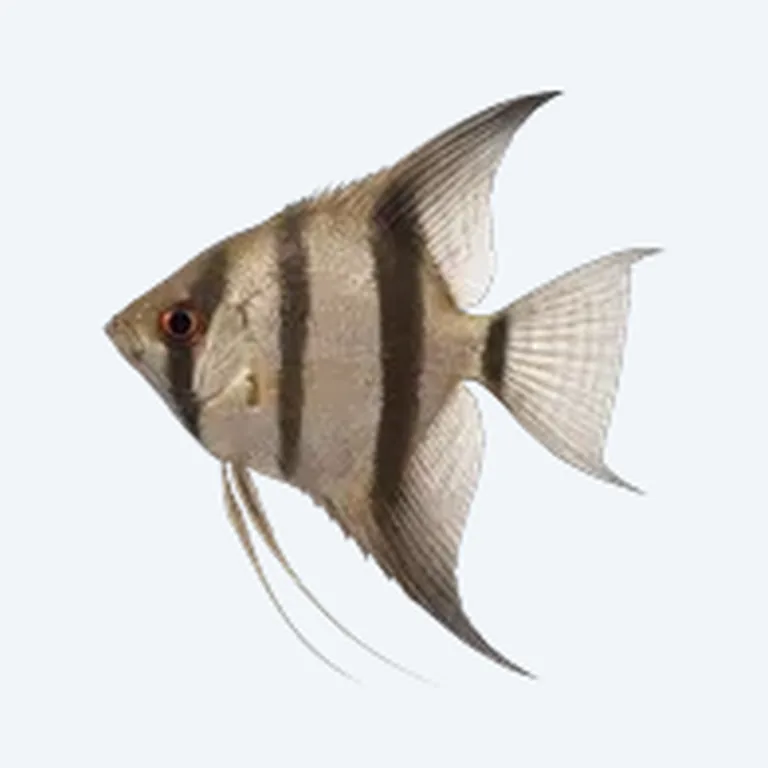
- Minimum tank size: 180 L (47 US gal) for a single pair of angels - taller is better, not just longer.
- Water window: 24-30 °C (75-86 °F), pH 6.0-7.5, soft to moderately hard. Most good tank mates share this range.
- The core rule: if a fish fits in an adult angel's mouth, it will eventually end up there. Body size at purchase means nothing - think adult size.
- Best companions: larger corydoras, bristlenose plecos, dwarf gouramis, mollies, platies, rummy-nose tetras, keyhole cichlids.
- Hard avoids: neon tetras, cardinal tetras, tiger barbs, serpae tetras, bettas, and anything with flowing fins that invites nipping.
- Semi-aggressive reality: angels are cichlids. Pair bonding triggers genuine aggression - even toward fish that were fine for months.
Pairing Angelfish with something specific? Our fish compatibility checker compares any two of 820 species on water parameters, predation risk, fin nipping, temperament and tank size - and draws them both at life size so you can see the difference.
Understanding what angelfish actually are
Pterophyllum scalare is sold as a gentle community fish, and for much of its life that reputation holds. But it is still a cichlid - a predatory, territorial cichlid from the floodplain tributaries of the Amazon basin. Adult angels reach 15 cm (6 in) body length and can exceed 25 cm (10 in) tip to tip on their fins. A fish that size, with a cichlid's instincts, will eat anything it can swallow and harass anything it perceives as a rival or a threat to its spawning site.
The community tank problems people encounter with angels almost always come down to one of two things: adding fish that are too small, or not anticipating what happens when a pair decides to spawn. Neither is the angel's fault. It is doing exactly what its biology tells it to do.
Many fish stores sell juvenile angels in tanks full of neon tetras to demonstrate how "peaceful" they are. Juveniles at 3-4 cm are genuinely harmless to neons. Adults at 12-15 cm are not. You are buying the adult, not the juvenile - plan for what you will actually have in 12 months.
Tank size and setup
180 L (47 US gal) is the practical floor for a single pair plus companions. A standard 180 L tank is often only 45 cm (18 in) tall, which is marginal - angels use the full water column and their long fins need vertical clearance. If you can go to 240 L (63 US gal) with a 50-60 cm (20-24 in) height, your fish will be visibly more settled and you will have more flexibility with tank mates.
Decor matters too. Dense planting along the sides and back, combined with some driftwood or tall rock structures, breaks line of sight and gives companions somewhere to retreat. An open bare tank concentrates aggression because every fish is always visible to every other fish.
Amazon sword plants (Echinodorus spp.) are a natural fit - same origin, same water preferences, and the broad leaves give angels a surface to spawn on, which can actually redirect aggression away from tank mates when a pair is bonded and focused on a clutch.
Water parameters that matter for compatibility
Angels are flexible within their range. The non-negotiables are temperature and extreme pH. Below 24 °C (75 °F) they become sluggish and disease-prone; above 30 °C (86 °F) oxygen levels drop and stress climbs. A stable 26-28 °C (79-82 °F) suits most of the species on this list. For more detail on getting and keeping those numbers right, the guide on aquarium water parameters covers everything from GH to KH.
pH flexibility is genuine - most angels kept in tap water at pH 7.0-7.4 live healthy lives. Where you run into trouble is mixing species with genuinely incompatible chemistry needs. Livebearers like mollies do best with harder water and a slightly higher pH (7.2-7.8), so at the overlap point around 7.2-7.4 with moderate hardness, mollies and angels can coexist. Fully soft, acidic setups (pH 6.2, very low GH) are less forgiving if you also want thriving livebearers.
Compatible tank mates: the full breakdown
Corydoras catfish
The best all-round companions for angels. Corydoras occupy the bottom third of the tank, are too large for an adult angel to eat once they reach adult size, and have no fin characteristics that trigger nipping. Go for the larger species: Corydoras sterbai reaches 6-7 cm and handles the warmer end of the angel temperature range well (important - many corydoras prefer cooler water, and C. sterbai is one of the few that genuinely thrives at 27-28 °C). Corydoras aeneus and C. paleatus are fine at the cooler end of the angel range. Keep corydoras in groups of six or more - a lone cory is a stressed cory, and a stressed cory gets sick.
Bristlenose pleco
Ancistrus spp. top out at around 12-15 cm, are entirely non-aggressive, and spend their time on wood and glass rather than competing in the water column. They are a near-universal fit in angel tanks. One note: males can be territorial with each other in smaller tanks. One bristlenose per tank under 300 L is the safer call.
Dwarf gouramis
Trichogaster lalius works in practice more often than theory suggests. They occupy a similar mid-water zone to angels, which can occasionally cause friction, but in a well-planted tank with adequate space the two generally ignore each other. Watch for flow - dwarf gouramis prefer calmer water. If your filtration creates strong current, add some flow-breaking plants or position the outlet to push along the surface rather than through the tank. One male dwarf gourami per tank; two males will fight regardless of what else is in there.
Mollies and platies
Both work where water chemistry overlaps - that mid-range of pH 7.2-7.4 with moderate hardness. Sailfin mollies (Poecilia latipinna) get large enough (8-10 cm) that adult angels leave them alone. Standard short-finned mollies and platies are reliable. Avoid fancy guppy strains entirely - the long flowing tails are fin-nipping bait and guppies are small enough to be eaten outright.
Rummy-nose tetras
This is the tetra that works where neons don't. Hemigrammus rhodostomus reaches 4-5 cm and, critically, schools tightly. A school of 12-15 rummy-noses moving as one unit is much harder for an angel to pick off than scattered individuals. They share the same Amazon origins, prefer 26-28 °C, and the similar soft, slightly acidic water. Still not 100% safe with a large, well-fed pair during spawning, but they are the best tetra option available.
Keyhole cichlids
Cleithracara maronii is one of the most genuinely peaceful cichlids you can keep, which makes it an unusual choice that works well. They stay small (8-10 cm), are non-aggressive, share South American water preferences, and will not compete with angels for territory the way more assertive cichlids would. An underused option that most guides skip entirely.
Other options worth considering
Larger rasboras such as Trigonostigma heteromorpha (harlequin rasbora, 4-5 cm) work in groups of 10+. Geophagus species can coexist in larger setups (300 L+) though they need more research per species. Bolivian rams (Mikrogeophagus altispinosus) are another South American cichlid that can work - less fragile than German blue rams and more comfortable at angel temperatures.
Fewer than this and the school disperses under pressure - individuals get picked off. Larger numbers create safety in movement.
Fish to avoid - and why
Neon and cardinal tetras
The most common mistake in angel stocking. Juvenile angels ignore neons because they cannot eat them yet. Adult angels eat neons because they can. Paracheirodon innesi tops out at 3-4 cm - well within swallowing range of a full-grown angel. This is not a temperament issue; it is a predator-prey size relationship. Cardinal tetras are slightly larger but the same problem applies.
Tiger barbs
Puntigrus tetrazona are relentless fin nippers. An angel's long trailing fins are exactly the target tiger barbs go for. You will end up with a stressed, shredded angel regardless of tank size or group dynamics. There is no workaround here.
Serpae and bleeding heart tetras
Both are semi-aggressive and nippy. Serpae tetras in particular have a well-documented tendency to mob slow-moving fish with long fins. Keep them out of angel tanks.
Bettas
Male bettas and angels is a recurring bad idea. The betta's fins provoke angel aggression; the angel's fin extensions provoke betta aggression. Someone ends up dead or chronically stressed. Usually the betta.
Other cichlids (most of them)
Convicts, firemouths, Jack Dempseys - all significantly more aggressive than angels and will eventually dominate or injure them. Green terror and flowerhorn pairings are actively harmful. The exception list is short: keyhole cichlids, Bolivian rams in larger tanks, and some Geophagus species if you know the specific fish.
Angels that have been peaceful community fish for a year can turn aggressive overnight when a pair bond forms and spawning begins. The pair will claim a territory and defend it from everything. If this happens, the safest move is to move the pair to their own breeding tank rather than try to out-decorate the aggression.
Building a combination that actually works
The most reliable angel community follows a simple structure: angels in the mid-water, corydoras (6+) on the bottom, a school of 12+ larger tetras or rasboras in the upper-mid zone, and one algae worker (bristlenose). That is a complete tank that uses all zones, looks natural, and keeps the peace most of the time.
Introduce angels last, or at the same time as other fish. An angel that has been in the tank alone for weeks treats the whole space as its territory. New fish introduced to an established angel get a much harder reception than fish that grow up alongside it.
Buying one angel. Single angels often become dominant and neurotic, harassing tank mates without the stabilising effect of a conspecific relationship. Start with a group of four to six juveniles and let pairs form naturally - you can then rehome or separate extras if needed.
Before finalising your stocking list, run it through the free stocking calculator - it will flag bioload issues before they become water quality problems. If you are setting up a new tank, the guide on how to cycle a fish tank is essential reading before adding any fish.
If you keep multiple tanks or want to track parameters over time, App-aquatic lets you log water tests, set feeding and water change reminders, and keep a stocking list with notes for each tank - useful once you have more than one setup running.
A note on sourcing healthy angels
Wild-caught Pterophyllum scalare from the Rio Negro or Peruvian tributaries are occasionally available and are genuinely different animals - darker, more skittish, stronger preference for soft acidic water. Most tank-bred angels are far more adaptable. For community tanks, tank-bred is the better choice. Avoid angels with pinched bodies, clamped fins, or white patches on the body - these are common signs of hole-in-the-head or bacterial infection, and a sick angel will stress a whole community tank if it introduces disease.
Track your parameters and get care reminders with App-aquatic.
Get the free appCan angelfish live with neon tetras?
Not safely long-term. Juvenile angels ignore neons, but once angels reach adult size - around 12-15 cm body length - neons become a food source, not a tank mate. It is not a temperament problem; it is a size problem. Rummy-nose tetras are a better tetra option if you want a schooling fish with angels.
How many angelfish can I keep together?
In a 180 L tank, a pair works well. Four to six juveniles in a 240-300 L tank lets natural pair bonds form, but you need to be prepared to separate a dominant pair once they start breeding. Keep an odd number only if you have space for aggression to spread - in a small tank, one fish will almost always get singled out.
Why are my angelfish suddenly aggressive after months of peace?
Almost certainly a pair bond forming and pre-spawning territory establishment. This is normal cichlid behaviour and can appear suddenly. The pair will claim a section of the tank and drive other fish away from it. If the aggression is severe, separating the pair into a breeding tank is usually the cleanest solution.
Can I keep angelfish with German blue rams?
With caution. German blue rams prefer warmer water (27-30 °C) which overlaps with angels, but they are fragile fish that struggle with any water quality fluctuation. Bolivian rams are hardier and a safer companion choice. If you go with GBRs, your water quality management needs to be consistent - check the guide on how often to do water changes to make sure your routine is up to it.
Do angelfish eat corydoras?
Adult corydoras of larger species are safe.