Guide
Axolotl morphs and colours: a visual identification guide
Eight morphs, photographed, with the one trick (eye colour) that narrows down which one you're looking at fastest.
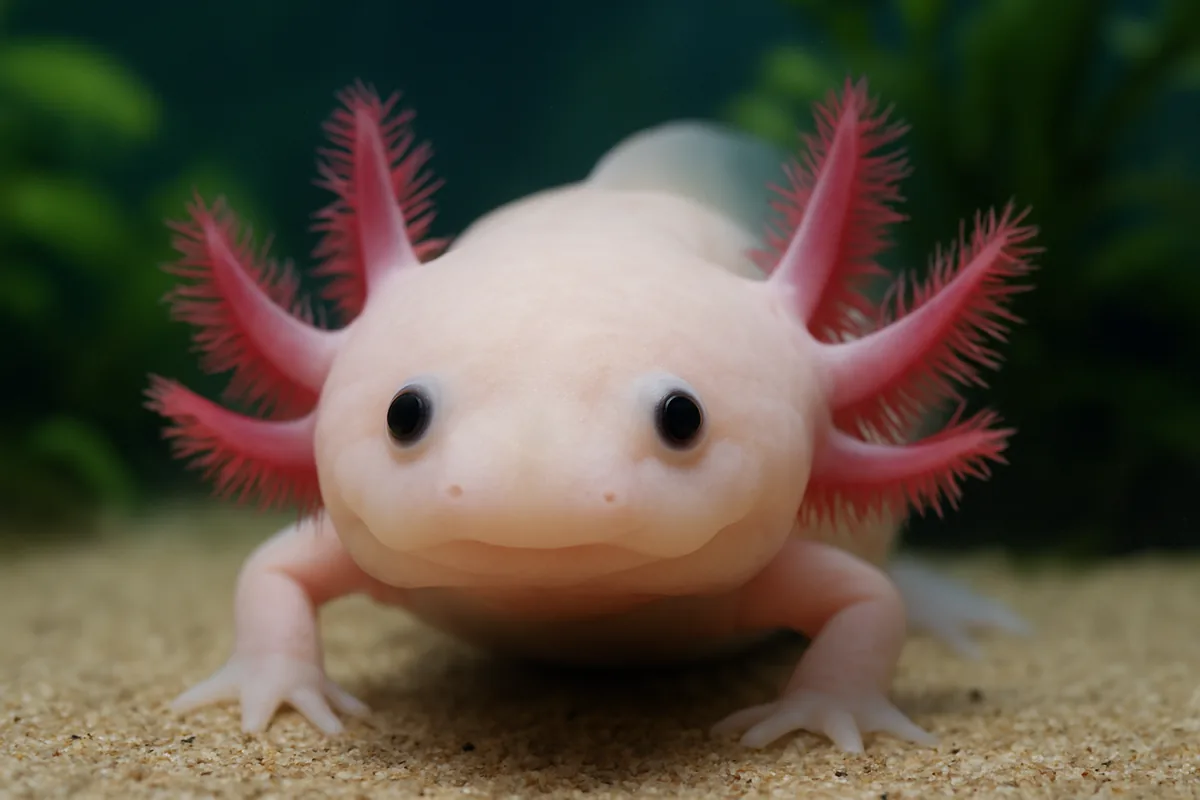
- Start with the eyes: dark/black eyes = non-albino morph. Red/pink eyes = albino morph.
- The eight common morphs: wild type, leucistic, golden albino, melanoid, GFP, copper, axanthic, piebald.
- Morph is purely cosmetic - it has zero effect on temperature, tank, or diet needs. See our care guide for the parts that actually matter.
- GFP is a trait, not a base colour - it layers on top of any of the others and glows green under blacklight.
The eye-colour trick
Before comparing skin tone or pattern, look at the eyes first - it's the fastest way to cut the identification job in half. Dark or black eyes mean you're looking at a non-albino morph: wild type, leucistic, melanoid, axanthic, copper, or piebald. Red or pink eyes mean an albino variant, most commonly golden albino. Everything below is organised the same way.
Wild type
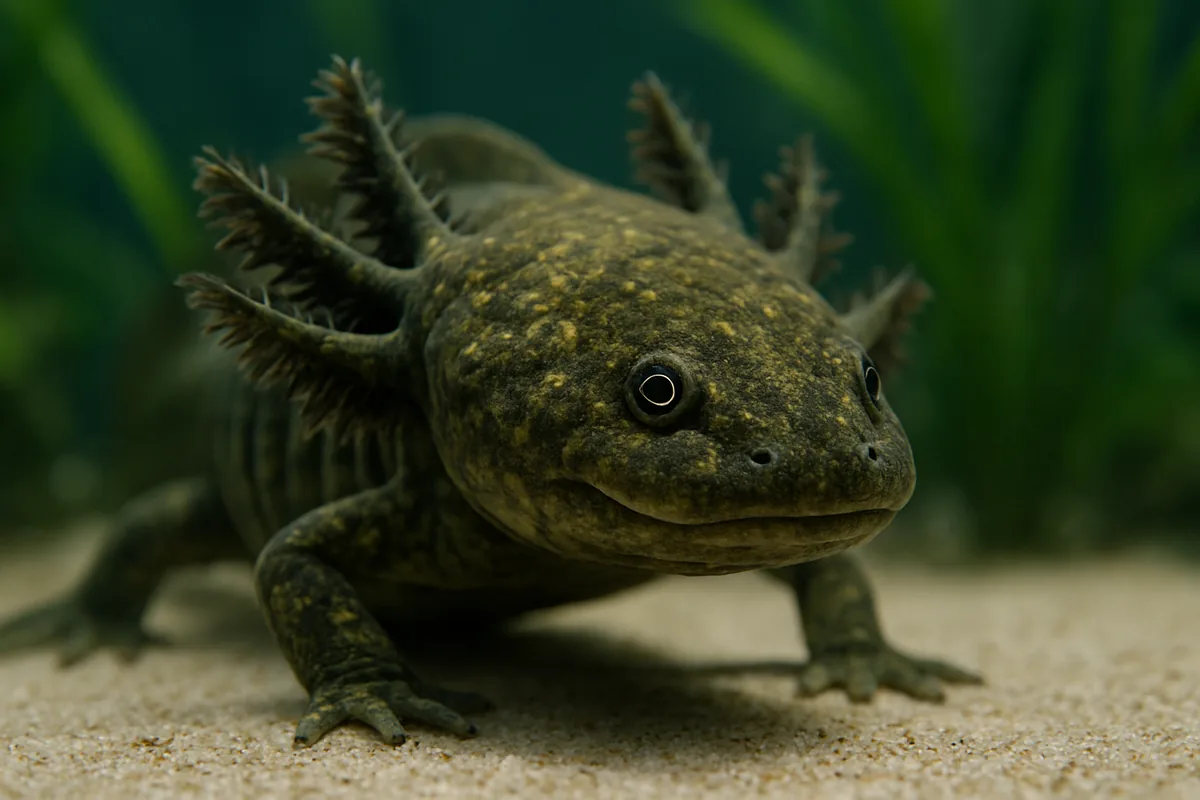
The natural, ancestral colouring: a mottled olive-brown to dark green body with scattered gold speckles, and dark eyes with a faint gold ring around them - that ring is a useful tell versus melanoid, which lacks it. This is the closest look to wild Ambystoma mexicanum in Lake Xochimilco.
Leucistic
The classic "pink axolotl" most people picture, shown at the top of this guide. Pale, almost translucent pinkish-white skin with vivid pink external gills, but - importantly - dark black eyes, which is what separates it from an albino. Keepers also distinguish "normal" leucistic (fully clean, uniform pale skin) from "dirty" leucistic, which carries scattered flecks of dark pigment on the face and back; both are the same underlying morph.
Golden albino
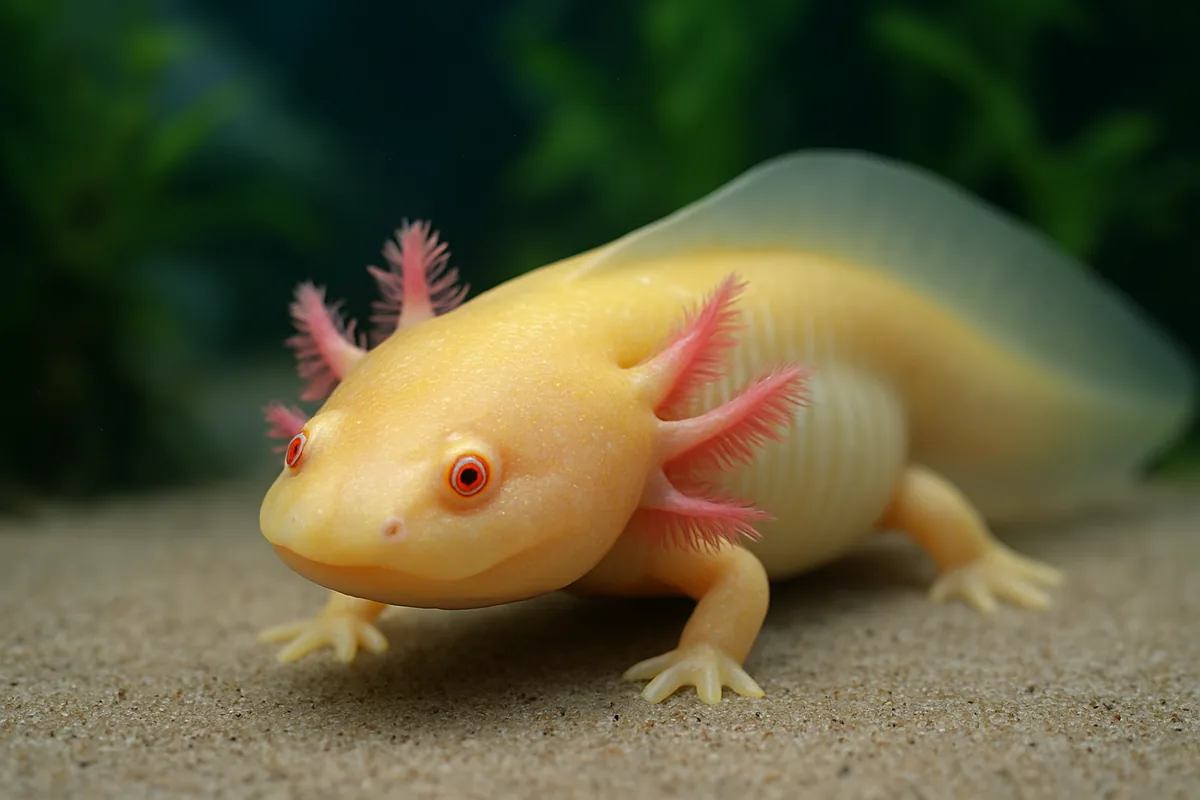
Pale gold to near-translucent-white skin with faint metallic speckling, pink gills, and the giveaway feature: distinct red eyes. True albinism affects eye pigment as well as skin, which is exactly why the eye-colour check works so reliably as a first filter.
Melanoid
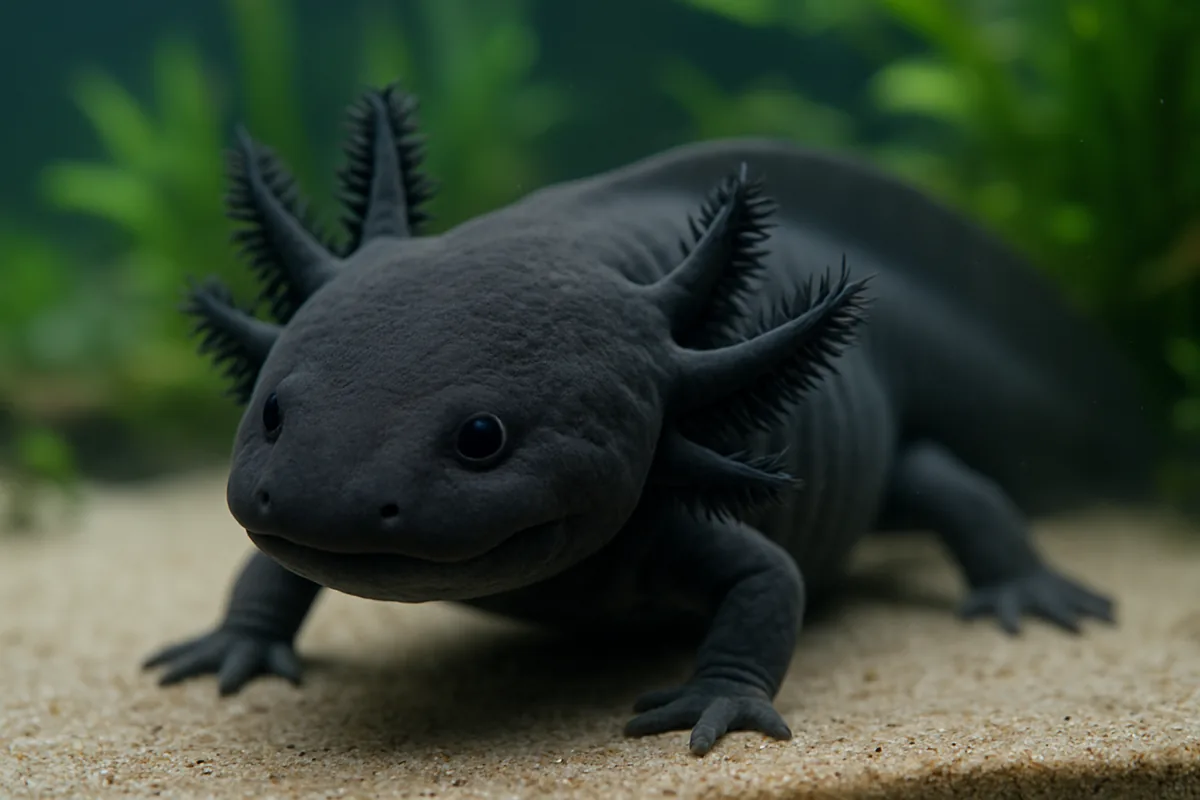
Solid charcoal to near-black skin with a matte, non-iridescent finish and no gold flecking at all. The clearest way to separate it from a simply dark wild type: melanoid axolotls lack the pale gold ring around the eye that wild types show, and the skin reads flat rather than mottled.
GFP (green fluorescent protein)
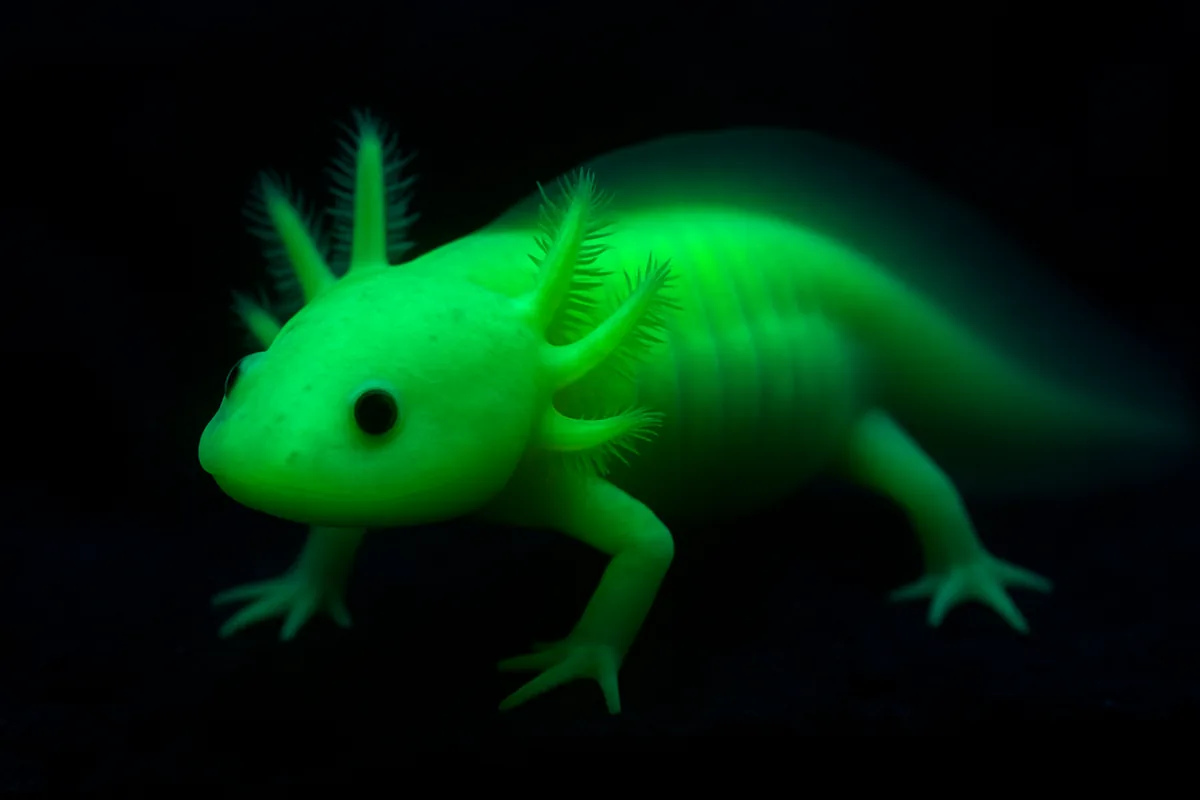
GFP isn't a base colour at all - it's an inherited trait that can sit on top of leucistic, wild type, melanoid, or other morphs. In normal light a GFP axolotl looks close to its base morph with maybe a faint sheen; under blacklight or UV light, it glows a striking green. It's a genuinely fun party trick and a real, well-documented genetic marker used in research contexts.
Copper
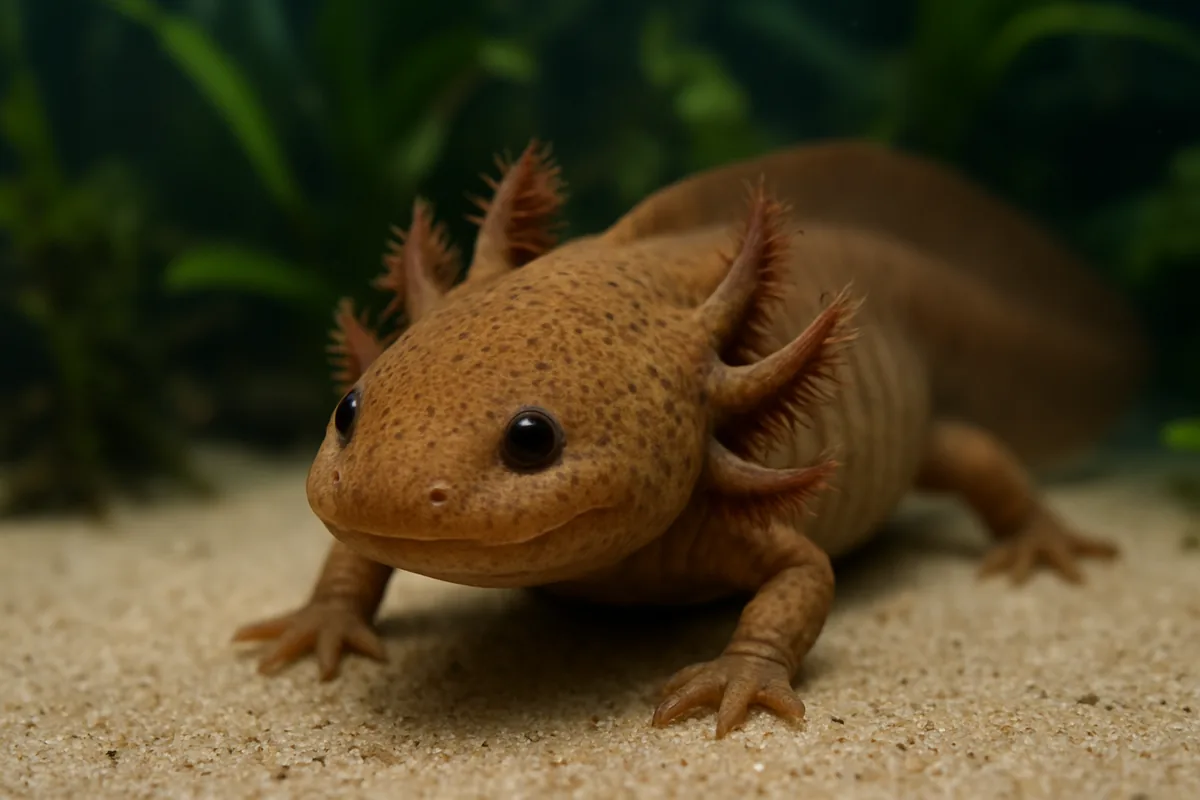
A warmer, lighter take on wild-type colouring - light tan-brown skin with fine copper-toned speckling rather than the darker olive-green base. Eye colour varies with the specific genetic background, so it's a less reliable single tell for this one; overall warmth and lightness of tone is the better cue.
Axanthic
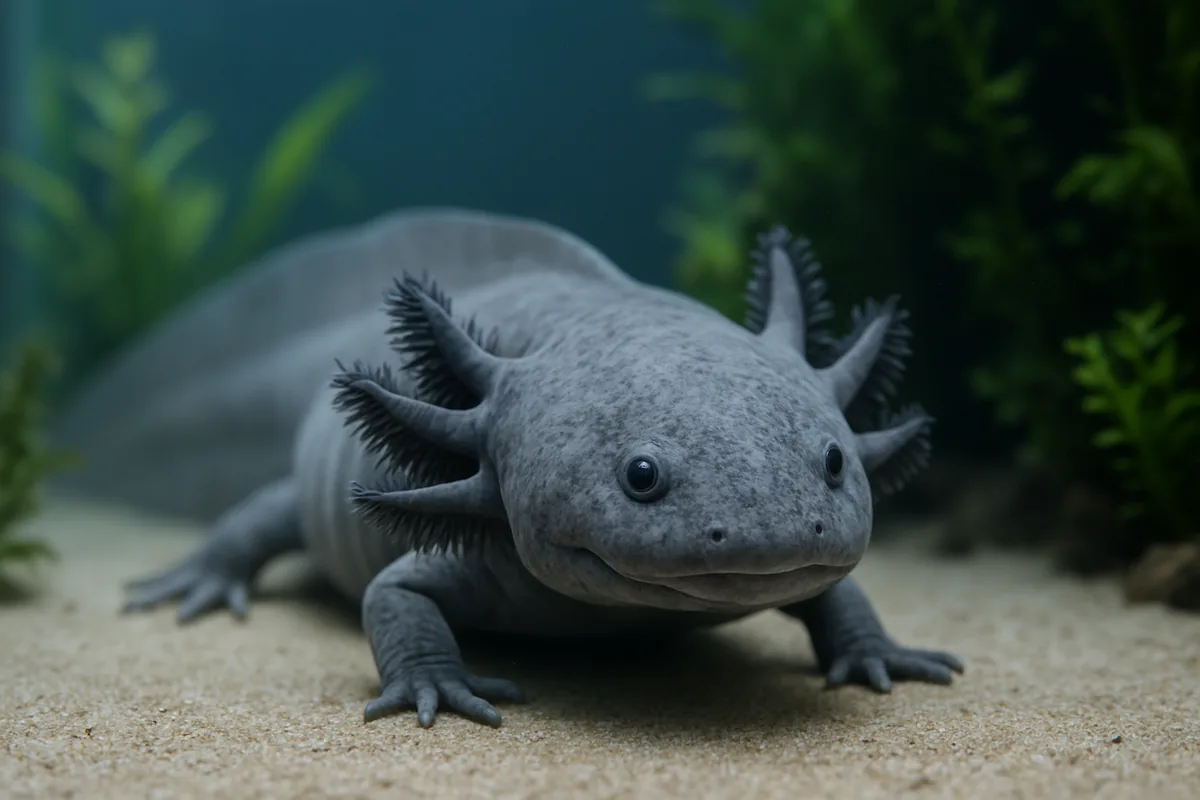
Axanthic axolotls lack yellow pigment entirely, which shifts their whole colour temperature cool - grey to silvery-grey rather than the warm brown-green of a wild type or the warm tan of copper. Dark eyes, no gold tones anywhere on the body.
Piebald
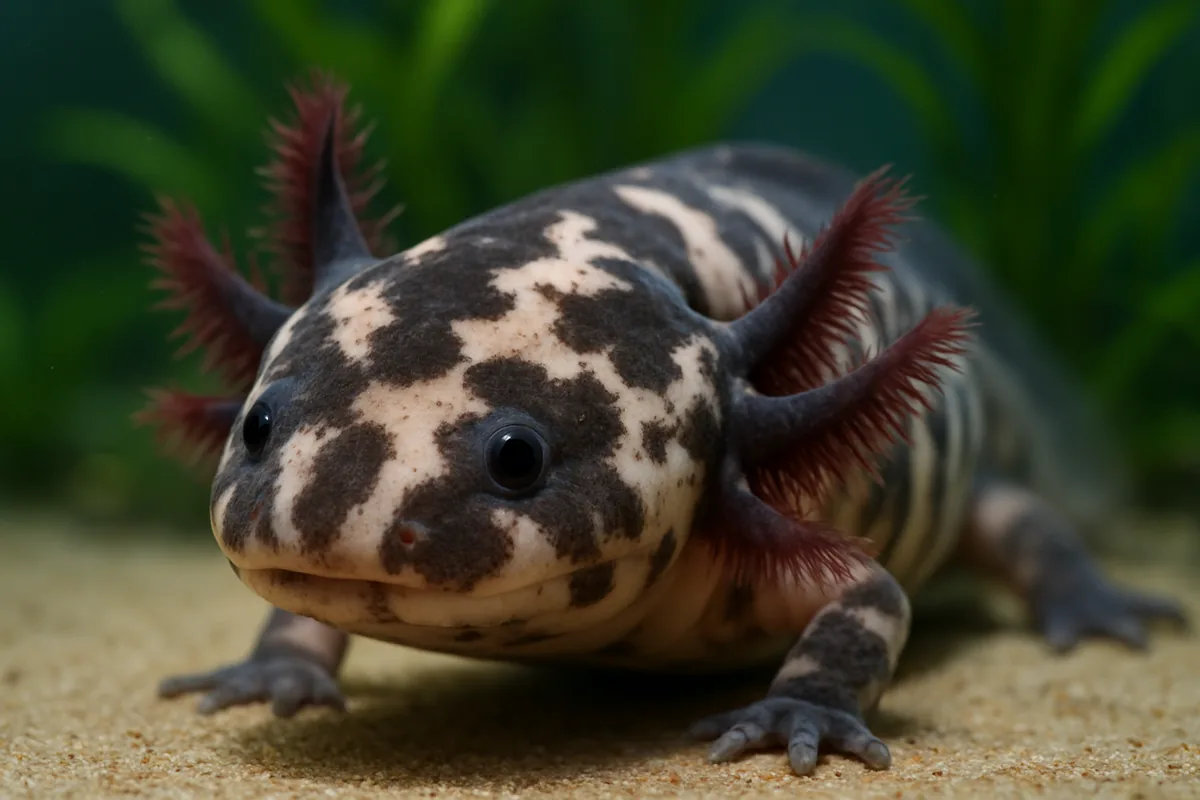
Unmistakable once you've seen one: irregular patches of dark pigmented skin next to patches of pale, unpigmented pink skin, in a genuinely random pattern that makes every piebald axolotl's markings unique. Dark eyes, and the patchiness (rather than an even tone) is the whole identification.
Other morphs you'll see mentioned
A few less common variants come up often enough to name even without a dedicated photo here: lavender (a pale grey-lilac tone, sometimes called "silver dalmatian" when combined with light spotting) and hypomelanistic ("hypo," a reduced-pigment morph that sits partway between wild type and leucistic in how much dark pigment shows). Both follow the same eye-colour rule as everything above.
None of this affects husbandry. A leucistic axolotl and a wild type kept side by side need exactly the same temperature, tank, substrate, and diet - see the full care guide for what actually matters. The one practical upside of pale morphs: skin and gill problems (covered in Axolotl SOS) show up more visibly against light skin, which can mean catching trouble earlier.
Whatever morph you've got, the care is identical - get the essentials right.
Read the axolotl care guideHow can I tell what morph my axolotl is?
Start with eye colour: dark or black eyes mean a non-albino morph (wild type, leucistic, melanoid, axanthic, copper, or piebald); red or pink eyes mean an albino variant. From there, skin colour, pattern, and whether it's matte or has a gold sheen narrow it down further.
Does an axolotl's morph affect its care?
No. Every morph has identical temperature, water quality, tank, and diet needs. Morph is purely cosmetic genetics - the only practical difference is that pale morphs (leucistic, albino) show skin and gill problems more visibly, which can actually make it easier to spot early trouble.
What is a GFP axolotl?
GFP (green fluorescent protein) is an inherited trait, not a base colour - it can appear alongside leucistic, wild type, melanoid, or other morphs, and makes the axolotl glow green under blacklight/UV light while looking close to normal in regular light.
Is a leucistic axolotl the same as an albino?
No, and the eyes are the giveaway. Leucistic axolotls have little to no melanin on the body but keep dark eyes. True albino morphs (like golden albino) lack melanin in the eyes too, giving them red or pink eyes.
More guides · Axolotl care · Axolotl tank mates · Axolotl SOS · App-aquatic