Guide
Axolotl care guide: tank, temperature, substrate and diet
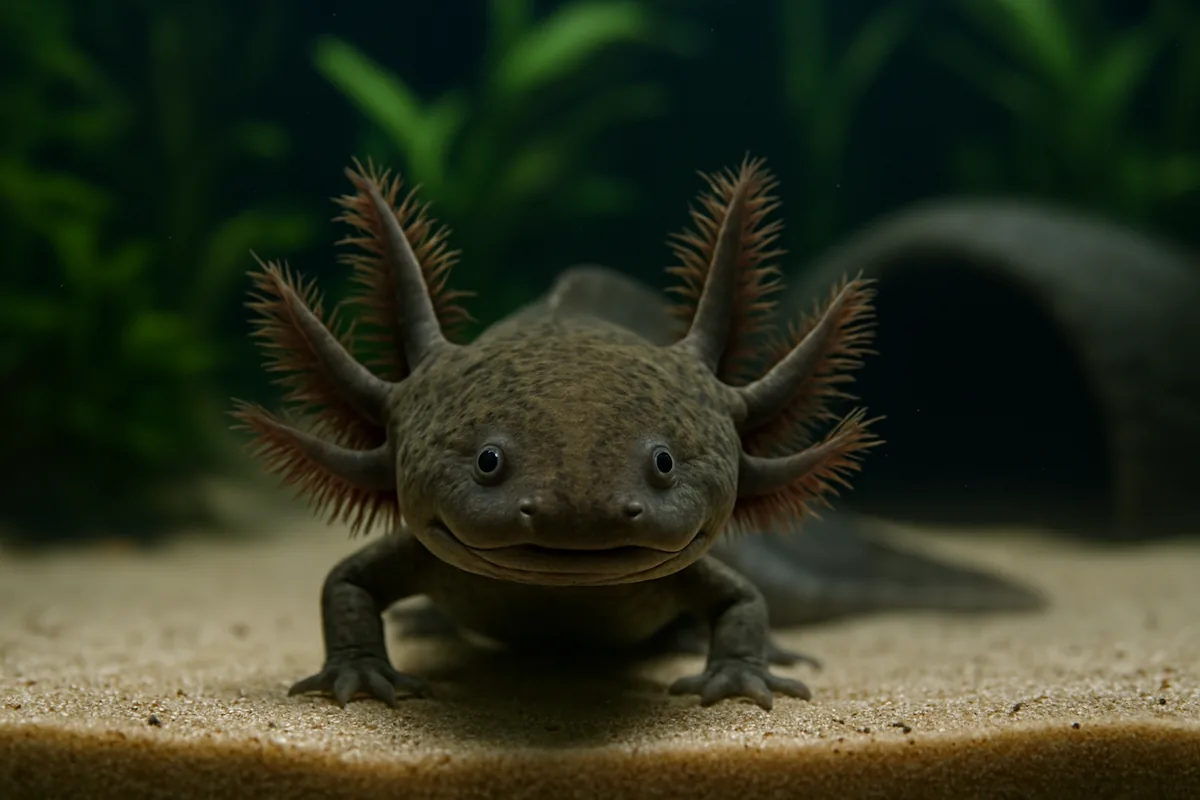
Axolotls are not fish - they are cold-water amphibians that keep their gills for life - so most tropical aquarium advice gets them killed. This guide covers what actually keeps a pet axolotl healthy: cool water with no heater, the substrate rule that prevents a fatal blockage, the right tank, a carnivore diet, and why they are happiest alone.
- Cold water, no heater. Keep them at 16-18C (60-64F). Above ~23C they stress and get sick; a chiller may be needed in warm climates.
- Bare bottom or fine sand only. Gravel gets swallowed and causes fatal impaction. This is the rule that saves lives.
- Big footprint, gentle flow. 75 L (20 gal) minimum for one, a long tank over a tall one, and a sponge or baffled filter - they hate strong current.
- Carnivore diet, kept alone. Earthworms and pellets; no feeder fish. Axolotls eat tankmates and fish nip their gills, so solo (or same-size axolotls) is safest.
Temperature is the thing that kills axolotls
If you remember one thing, make it this. Axolotls (Ambystoma mexicanum) are cold-water animals from high-altitude lakes in Mexico. Their ideal range is 16-18C (60-64F), and they tolerate up to around 20C. Push past 22-24C and they go off their food, their slime coat suffers, fungal and bacterial infections set in, and prolonged heat is simply fatal.
This means no heater - the opposite of a tropical tank. In a cool room you may need nothing. In a warm room or a hot climate, keeping the water cold is the real challenge and may require an aquarium chiller, or at least a clip-on fan blowing across the surface and frozen water bottles in a pinch. Be honest with yourself about your room temperature before buying an axolotl - this is where most go wrong.
The substrate rule: bare bottom or fine sand
Axolotls feed by creating suction, vacuuming up food and anything sitting near it. Give them gravel or small stones and they will swallow it, and swallowed gravel causes impaction - a blockage of the gut that is frequently fatal and hard to treat.
So the only safe choices are:
- Bare glass bottom - safest of all, easiest to keep clean, and fine for the animal even if it looks plain.
- Fine aquarium sand - looks natural, gives them grip (they slip on bare glass), and passes harmlessly through the gut if a little is swallowed.
Never use gravel, pebbles, or small decorative stones in an axolotl tank. See our substrate options guide for how sand compares to other choices.
Tank size and setup
- Size: at least 75 L (20 US gallons) for a single adult; they grow to 20-30 cm. Floor space beats height - they are bottom-dwellers - so choose a long, wide tank.
- Filtration: they are messy, so you need good filtration, but they dislike strong flow. A sponge filter or a baffled hang-on-back/canister is ideal. Strong current stresses them and can curl their gills forward.
- Hides and cover: provide caves, plants (real or silk) and shade. Axolotls have no eyelids and dislike bright light, so keep lighting dim and give them somewhere to retreat. See our axolotl plant guide for which live plants actually survive the digging and the cold.
- Lid: keep it covered - they can and do climb or jump out.
Cycling the tank: treat them as more sensitive than fish, not less
An axolotl tank needs the same nitrogen cycle as any other aquarium - a colony of bacteria that converts fish (or in this case, axolotl) waste from toxic ammonia into nitrite and then into much less harmful nitrate. What's different is the margin for error. Axolotls breathe partly through their skin and gills, both of which are in constant, unprotected contact with the water, so ammonia and nitrite exposure hits them faster and harder than it hits most fish. Run a full fishless cycle before the axolotl goes anywhere near the tank - don't cycle with the animal in it, and don't trust a "it's probably fine by now" guess. Test until ammonia and nitrite both read zero on repeat checks, not once.
Handling: why the answer is usually "don't"
Axolotls are covered in a protective slime coat that guards against infection, and it comes off easily on dry skin, paper towels, or a net dragged across their body. Losing enough of it is a real infection risk, not a cosmetic issue. In practice:
- Don't handle unless you have to. Moving tanks, water changes, and health checks are the main legitimate reasons - not showing them off.
- If you must move one, scoop with a wide, soft net or a cup with water in it rather than lifting them into the air. Never pick one up with dry hands.
- If skin contact is unavoidable, wet your hands first with dechlorinated tank water and support the body - don't grip a limb or the tail.
Do axolotls need land? (No - and this trips people up)
Unlike most salamanders and newts, axolotls are neotenic: they keep their larval, fully aquatic form - external gills, aquatic tail, no lungs-only lifestyle - for their entire life instead of metamorphosing onto land. A healthy axolotl in a proper cold-water setup should never need to leave the water, and land access in the enclosure serves no purpose for a normal pet. This is worth knowing because a lot of generic "amphibian" or "salamander" care advice assumes a land phase that simply doesn't apply here.
Occasionally an axolotl does metamorphose anyway - losing its gills and developing lungs and drier, thicker skin, effectively becoming a terrestrial salamander. This is not a fun surprise: it's usually triggered by chronic stress, prolonged warm water, or (rarely) iodine exposure, it shortens a healthy axolotl's lifespan considerably, and an animal that morphs needs an entirely different, land-based setup almost immediately. It's a genuine reason to take the temperature rule seriously rather than a curiosity.
Regeneration: impressive, but not a free pass
Axolotls really can regrow lost limbs, tails, and even parts of the spinal cord and organs, which is exactly why they're a staple of regeneration research. But "it'll grow back" isn't a reason to be casual about injuries - regrowing a limb takes weeks to months, uses real energy reserves, and the open wound is an infection risk for all of that time. Treat any bite, nip, or injury as something to address (clean water, isolate if another axolotl caused it, monitor closely), not something to shrug off because the anatomy is forgiving.
Water quality and parameters
Axolotls have permeable skin and delicate external gills, so they are sensitive to poor water - in some ways more so than fish. The tank must be fully cycled before they go in, and the water dechlorinated.
- Ammonia 0, nitrite 0 - non-negotiable; both are highly toxic to them.
- Nitrate low - keep it modest with regular water changes (roughly 20% weekly is a good starting habit).
- pH 7.4-7.6 - neutral to slightly alkaline.
- Moderate hardness - very soft water is not ideal; a little mineral content keeps them healthy.
Use a liquid test kit and stay on top of it, especially while the tank is young.
Diet
Axolotls are pure carnivores. Good staples:
- Earthworms / nightcrawlers - the gold-standard staple; nutritious and well digested. Cut to size for smaller animals.
- Sinking carnivore or axolotl pellets - convenient and balanced.
- Bloodworms and blackworms - good supplements, especially for juveniles.
Avoid feeder fish. They carry parasites and disease, can introduce thiaminase, and pose a choking risk. Feed adults every 2-3 days and juveniles daily, and remove anything uneaten to protect water quality.
Tankmates: keep it simple
The honest answer is that axolotls do best alone. They will eat any fish small enough to fit in their mouth, and fish - even small ones - peck at their feathery gills, causing injury and infection. If you want more than one axolotl, keep them at a similar size in a tank large enough for each, and watch juveniles closely, as young axolotls will nip each other's limbs and gills (limbs regenerate, but it is still stress and infection risk). See our full axolotl tank mates guide for the complete breakdown, including the one case (large, hard-shelled snails) that's genuinely lower-risk.
What a healthy axolotl looks like before you buy one
Whether you're at a shop, an expo, or buying from a breeder, check the animal itself, not just the price:
- Gills fanned out and moving, not clamped flat or curled tightly against the head - clamped gills are a stress or water-quality sign in the seller's own tank.
- Alert and responsive - tracking movement, reacting to food, not sitting motionless on its side.
- Straight spine and tail, four full limbs (or limbs visibly regenerating cleanly, which is normal and not a dealbreaker on its own).
- No red streaking on the legs or belly, no fuzzy white patches, no obvious sores.
- Ask about the water it's coming from - a seller who can't tell you the temperature is a seller who probably isn't keeping it cold enough.
If something looks off, it's fine to walk away. An axolotl bought on impulse from a stressed, overheated display tank is starting its life already behind.
Axolotls are hardy, charming and long-lived (10-15 years) when their needs are met - but those needs are specific and unforgiving on two points: they must stay cold, and they must not have gravel. If your home regularly sits above 22-24C and you are not prepared to run a chiller, an axolotl is the wrong pet, no matter how appealing.
Take this seriously: rescues are currently seeing real numbers of axolotls surrendered by owners who didn't plan for a 10-15 year commitment or the cold-water setup, often bought on impulse after seeing one in a game or on social media. A healthy axolotl outlives plenty of dogs. Get the temperature and substrate right, go in knowing the actual timeline, and the rest of their care is genuinely straightforward. We've itemised what that actually costs, start to finish, in our cost of ownership study.
Something look wrong with your axolotl right now? Axolotl SOS asks a few quick questions and tells you exactly what's likely going on and what to do about it.
Open Axolotl SOSRelated guides
Log your axolotl tank's temperature and water tests over time so problems are caught early - free in App-aquatic.
Get the appDo axolotls need a heater?
No - the opposite. Axolotls are cold-water amphibians and need 16-18C (60-64F). A heater is dangerous. Above about 22-24C they suffer chronic stress, stop eating, get fungal infections and, sustained, die. In warm rooms you may need a chiller or a fan-and-frozen-bottle setup to keep the water cool.
What substrate should I use for an axolotl?
Bare bottom or fine aquarium sand only. Never gravel. Axolotls feed by suction and swallow whatever is under their food; swallowed gravel causes fatal intestinal impaction. Fine sand passes safely, and bare glass is even safer and easiest to clean.
Can axolotls live with fish?
It is strongly discouraged. Axolotls eat any fish small enough to fit in their mouths, and larger fish nip their feathery gills and cause infection. Fish also carry parasites and prefer warmer water. The safest setup is one axolotl alone, or two of similar size in a large enough tank.
How big a tank does an axolotl need?
At least about 75 litres (20 US gallons) for one adult, which can reach 20-30 cm. Floor space matters more than height since they live on the bottom, so a long, wide tank is better than a tall one. Add roughly 40-55 litres per extra axolotl.
What do axolotls eat?
They are carnivores. The staple is earthworms (nightcrawlers); sinking carnivore or axolotl pellets, bloodworms and blackworms also work. Avoid feeder fish, which carry disease and can cause choking. Feed adults every 2-3 days, juveniles daily, and remove uneaten food.
Do axolotls need land in their tank?
No. Unlike most salamanders, axolotls are neotenic - they keep their aquatic, gilled form for life instead of developing lungs and moving onto land. A properly set up axolotl should stay fully submerged; land access serves no purpose for a healthy pet. If one does metamorphose into a land-form (usually from chronic stress or warm water), it needs an entirely different terrestrial setup right away.
Can axolotls regrow lost limbs?
Yes, genuinely - limbs, tails, and even parts of the spinal cord and organs, which is why they're used in regeneration research. It's not instant: regrowth takes weeks to months and uses real energy reserves, and the wound is an infection risk in the meantime, so injuries still need clean water and attention rather than being ignored.
How do I know if a pet-shop axolotl is healthy before buying?
Look for fanned-out, moving gills (not clamped flat), an alert animal that tracks movement and food, a straight spine and tail, and no red streaking or fuzzy white patches. Ask what temperature the seller keeps their water at - if they don't know, that's a warning sign in itself.
All guides · Nitrogen cycle · Substrate options · Water parameters · Get the app