Guide
Can axolotls live with fish? The honest tank mate guide
Short answer: not really, and here's exactly why - plus the one option that's actually safe.
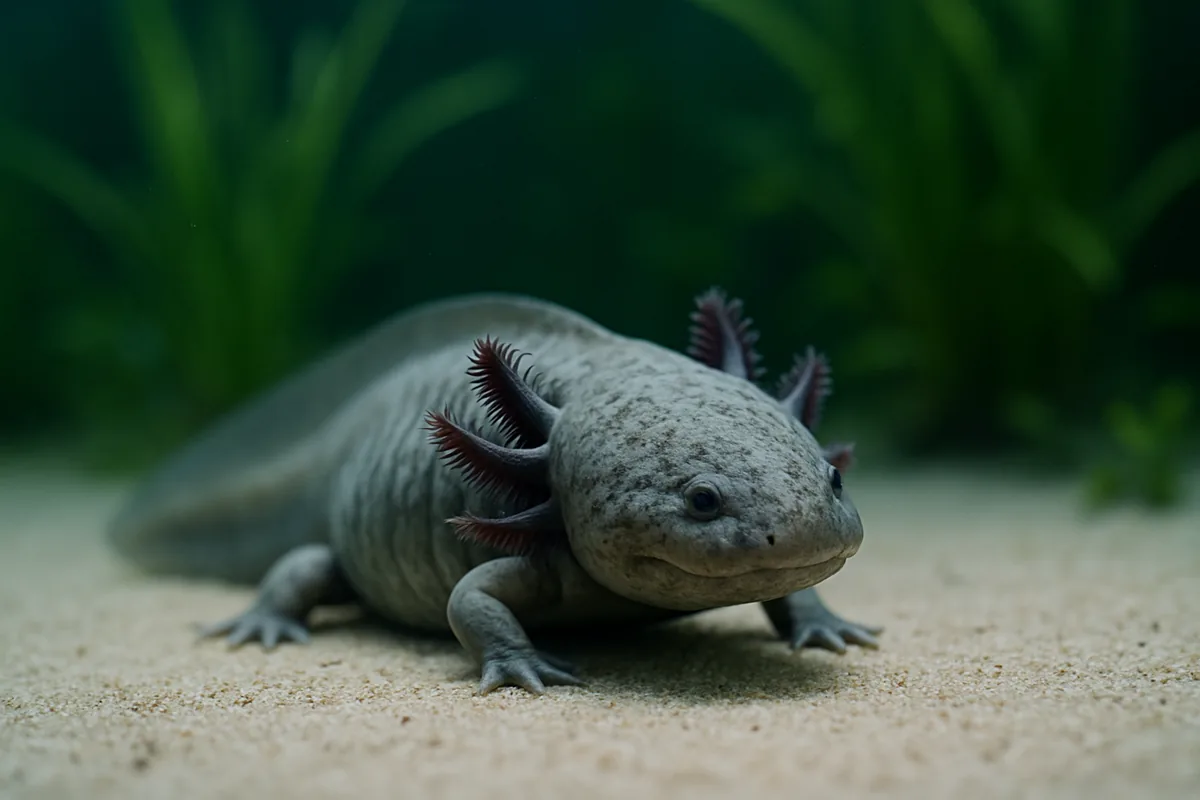
- Not recommended. Axolotls do best alone, or with other axolotls of a similar size.
- Temperature is the first problem: axolotls need 16-18C; almost every popular aquarium fish needs 22C or warmer.
- Predation goes both ways: an axolotl eats any fish small enough to fit in its mouth, and larger or faster fish nip at its exposed external gills.
- Shrimp are food, not tank mates - small shrimp will almost certainly get eaten. Large, hard-shelled snails are the closest thing to a genuinely low-risk addition.
- If you're set on company, a second (similarly sized) axolotl is the only pairing we'd call reliably safe.
Pairing Axolotl with something specific? Our fish compatibility checker compares any two of 815 species on water parameters, predation risk, fin nipping, temperament and tank size - and draws them both at life size so you can see the difference.
Why this question keeps coming up
It's a completely reasonable thing to ask - a bare tank with one animal in it looks lonely, and most of the aquarium hobby is built around mixed communities. Axolotls just don't fit that model. They're amphibians, not fish, with different temperature needs, different feeding behaviour, and skin and gills that are far more vulnerable than fish scales. The honest answer disappoints a lot of first-time keepers, so it's worth explaining exactly why, not just asserting it.
The temperature problem
Axolotls need 16-18C (60-64F) and start struggling above about 22-24C. The overwhelming majority of popular community fish - tetras, guppies, corydoras, gouramis, bettas - are tropical species that need 24-28C to thrive. There's essentially no overlap. Keep the water cold enough for the axolotl and the fish are chronically stressed and immune-suppressed; keep it warm enough for the fish and the axolotl is the one in danger. This alone rules out almost every popular aquarium fish before behaviour even enters the picture.
The predation and nipping problem
Axolotls are ambush predators that feed by suction, and they will try to eat anything that fits inside their mouth - small fish included. Meanwhile, their feathery external gills are soft, exposed, and an obvious target for any fish with nipping tendencies or just boisterous curiosity, causing injury and a real infection risk on top of the stress. This is a two-way problem: it's not that fish are unsafe for the axolotl or safe from it - both directions carry real risk depending on relative size.
Even fish widely marketed as "peaceful community fish" investigate anything novel in the tank, including an axolotl's gills. A fish doesn't need to be a known fin-nipper to cause a problem here.
Disease and parasites
Fish can carry parasites and pathogens that are relatively low-risk to other fish but that an axolotl - with permeable skin and no scales for protection - handles far worse. Feeder fish specifically are a bad idea for this reason on top of the choking and nutritional problems they already carry; see our axolotl care guide for why they're best avoided as food entirely, let alone as tank mates.
What about goldfish? They're coldwater too
This is the pairing people ask about most, since goldfish and axolotls share a similar temperature range on paper. In practice it's still a poor match: goldfish are fast, competitive eaters that will out-compete a slower axolotl for food, they're perfectly capable of nipping at gills, and they're notoriously high-bioload fish whose waste output raises ammonia risk in a tank set up for an animal that's already more ammonia-sensitive than most fish. Sharing a temperature range solves one problem out of several.
Shrimp and snails: enrichment, not tank mates
Small shrimp - cherry, ghost, and similar - are commonly suggested as a "cleanup crew," but realistically, an axolotl will hunt and eat them. If you add shrimp, plan for that outcome rather than being surprised by it; some keepers use them intentionally as occasional live food and enrichment rather than expecting them to survive long-term.
Larger, hard-shelled snails - mystery snails, apple snails - are a different story. They're generally too big and too armoured to be easy prey, which makes them the closest thing to a genuinely low-risk addition. It's still not a guaranteed-safe pairing (a curious axolotl can injure itself trying, and a snail's shell edge can scuff soft skin), but the risk is meaningfully lower than with any fish.
If you really want to try anyway
Some experienced keepers do house axolotls with select large, robust, genuinely cold-tolerant fish - weather (dojo) loaches are the one that comes up most, in very large tanks with close monitoring. This is a deliberate, informed risk taken by people with the experience to manage it and pull an animal out fast if it goes wrong, not a beginner-friendly option, and we wouldn't recommend it as a starting point. If it goes wrong, it goes wrong for either animal.
An axolotl alone in a well-decorated tank isn't a compromise or a lesser setup - it's the actual correct way to keep one. They're solitary by nature, interactive with their keeper regardless, and the "empty tank" feeling fades fast once you've got the aquascape right. See our axolotl plant guide for how to make a solo tank feel full without adding risk.
The one pairing that actually works
A second axolotl, similar in size, in a tank sized for both of them. Even then, watch closely early on - juveniles especially will nip at each other's limbs and gills, and while axolotls regenerate real damage, repeated injury is still a stress and infection burden worth avoiding. See our care guide for tank-size guidance when keeping more than one, and use Axolotl SOS if an injury does happen so you know what to do next.
Something already looking off with your axolotl or a tankmate? Get a fast read on what's going on.
Open Axolotl SOSCan axolotls live with fish?
Technically sometimes, but it's not advisable. Axolotls need cold water (16-18C) that most fish can't tolerate long-term, they will eat any fish small enough to fit in their mouth, and larger or faster fish nip at their exposed feathery gills. The safest setup is an axolotl alone or with other axolotls of a similar size.
Can axolotls live with goldfish?
Not recommended, despite both being coldwater animals. Goldfish are fast, competitive eaters that will out-compete a slower axolotl for food, they can nip at gills, and they produce a lot of waste that raises the bioload and ammonia risk in a tank already set up for a more sensitive animal.
Can axolotls live with shrimp or snails?
Small shrimp like cherry or ghost shrimp will almost certainly be eaten - treat them as enrichment food, not tank mates, if you add them at all. Larger, hard-shelled snails such as mystery or apple snails sometimes coexist since they're too big and armoured to be easy prey, but it's not a guaranteed-safe pairing.
What fish can live with an axolotl?
There's no fish we'd confidently recommend. Some experienced keepers report success with large, robust, cold-tolerant fish like weather (dojo) loaches in very large tanks, but it's a real risk taken on deliberately, not a beginner-safe option.
More guides · Axolotl care · Axolotl plants · Axolotl SOS · App-aquatic