
Best fish lists
Best Algae Eaters for Freshwater Tanks
Last updated: May 2026
- No algae eater replaces good husbandry: fix your light duration, nutrient export, and plant balance first - algae eaters manage what's left, they don't fix the cause.
- Match species to algae type: Otocinclus eat soft green film and diatoms; Amano shrimp target hair and fuzz algae; nerite snails grind off hard green spot; true Siamese algae eaters are one of the only fish that will eat black beard algae.
- Avoid the two most commonly sold frauds: Chinese algae eaters become aggressive fin-nippers by adulthood, and common plecos outgrow most tanks and stop eating algae entirely.
- Tank maturity matters: Otocinclus and Amano shrimp need established biofilms and stable parameters - dropping them into a new tank usually kills them within weeks.
- Most algae problems are caused by light, not fish: 8 hours of appropriate-intensity light and adequate CO₂/nutrients will do more than any cleanup crew.
- Group sizes matter: Otocinclus need 6+, Amano shrimp work best in groups of 5-10, and a single nerite snail per 10 gallons is a reasonable baseline.
Why algae eaters are often misunderstood
The idea that you can buy a fish, drop it in, and watch it hoover up your algae problem is one of the most persistent myths in the hobby. Algae eaters are a maintenance tool, not a cure. If your tank is running 12 hours of intense light with no plants competing for nutrients, a squadron of Otocinclus won't save you - they'll just be underfed while the algae wins anyway.
That said, the right species in the right tank genuinely earns its place. A small group of Amano shrimp will keep thread algae under control in a planted tank. A pair of bristlenose plecos will stop green film from building up on hardscape and wood. Nerites will polish the glass better than any magnetic scraper on green spot algae. The key is choosing the right animal for the job - and understanding what that job actually is.
Before adding anything, check that your water parameters are stable and your tank is fully cycled. A tank with ammonia swings will kill sensitive species like Otocinclus before they've had a chance to do anything useful. If you're not sure about your cycle, read through how to cycle a fish tank first.
Most algae outbreaks are a lighting and nutrient problem. A 6-8 hour light period, a healthy plant load, and consistent water changes will do more to control algae than any combination of cleanup crew. Buy algae eaters because you want them, not because you're hoping they'll fix a broken balance.
The species worth keeping
Otocinclus - the best glass cleaner for planted tanks
Otocinclus spp. are small (3-5 cm / 1.5-2 inches), peaceful catfish that graze soft green algae and diatoms off glass and broad plant leaves. They're one of the few fish genuinely suited to a well-planted community tank - they won't bother your plants, and they're small enough to keep in a 40-litre (10-gallon) setup.
What most guides miss: Otos are wild-caught almost exclusively, and they arrive at fish stores badly stressed and often parasitised. Buy from a store that's had them in stock for at least two weeks, and quarantine before adding them to your display tank. A healthy Oto has a slightly rounded belly - a concave or pinched belly means it's been starving, and that fish is already in trouble.
Keep them in groups of 6 or more. A single Oto in a large tank will spend its time stressed and hiding rather than grazing. In groups they're active, visible, and far more effective. They need a mature tank with an established biofilm - don't add them to any tank less than 2-3 months old. Supplement their diet with blanched zucchini or cucumber, and sinking algae wafers, especially in a clean, low-algae planted tank where natural food is limited.
Water: 22-28°C (72-82°F), pH 6.0-7.5, soft to moderately hard. Very sensitive to ammonia and nitrite - a fully cycled tank is non-negotiable.
What they won't eat: black beard algae, green spot algae, hair algae, or staghorn. Otos are specialists, not generalists.
Nerite snails - the only snail worth buying specifically for algae control
Nerite snails (Neritina spp.) do one thing extremely well: they rasp hard green spot algae off glass, rocks, and equipment. Nothing else in the hobby does it as efficiently. A nerite working a pane of glass for a week will leave it cleaner than any manual scrub.
They come in several attractive forms - zebra, tiger, horned, olive - and they won't breed in freshwater. The eggs they lay (small white specks on hard surfaces) are infertile in fresh water, which is either mildly annoying cosmetically or irrelevant depending on your tolerance. The no-breeding characteristic is a genuine advantage over pest snails.
Stocking: 1 per 10 litres (2.5 gallons) is a reasonable maximum. They're slow-moving and will starve in a very clean, low-algae tank - if your glass is spotless, supplement with algae wafers. They need a lid; nerites climb and escape readily.
Water: 22-26°C (72-79°F), pH 7.0-8.0. They need calcium for healthy shells - if your water is very soft, add a small piece of cuttlebone.
Amano shrimp - the best for hair and thread algae
Caridina multidentata - commonly called Amano shrimp after Takashi Amano who popularised their use - are the workhorse of planted tank algae control. A group of 8-10 in a 60-litre (15-gallon) planted tank will visibly reduce thread algae, fuzz algae, and staghorn within a week or two, provided conditions are right.
They need a mature tank. In a new setup they'll fail to thrive and die quietly. They're also sensitive to copper - many liquid plant fertilisers contain trace copper that's fine for fish but lethal to shrimp. Check your fert label before dosing.
In a clean planted tank with little algae, Amanos will still pick at biofilm, detritus, and soft algae - but supplement with sinking pellets or blanched vegetables so they're not starving while looking busy.
Water: 18-28°C (65-82°F), pH 6.5-7.5. Cooler temperatures slow their metabolism slightly; warmer tanks accelerate it but also shorten their lifespan. They typically live 2-3 years.
Buying 2-3 Amano shrimp for a 100-litre tank and wondering why they make no visible difference. Amanos need numbers to be effective - 1 shrimp per 10 litres is the minimum for real algae control. A group of 10 in a 100-litre planted tank is not excessive.
True Siamese algae eater - the black beard algae specialist
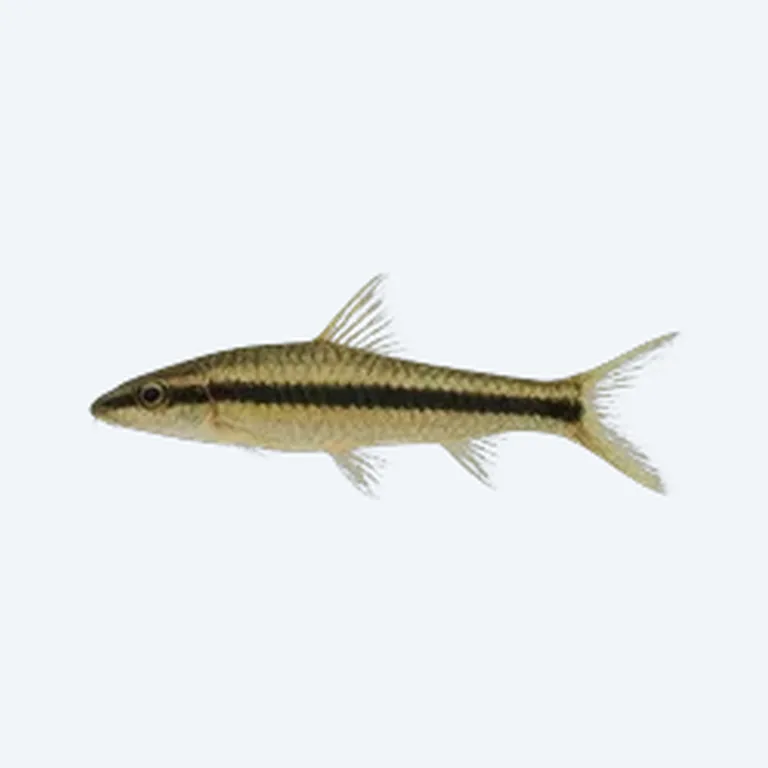
Crossocheilus oblongus is one of the only fish reliably documented to eat black beard algae (BBA), which is otherwise notoriously resistant. The catch: the fish sold as "Siamese algae eater" in stores is frequently not the true SAE. There are several lookalikes - the Chinese algae eater, the flying fox (Epalzeorhynchos kalopterus), and the false SAE (Garra cambodgiensis) - that are commonly mislabelled and far less useful.
To identify the true SAE: the black horizontal stripe runs all the way to the tip of the tail fin (including the tail itself), and the fish has no second gold stripe above the black one. The mouth has a small pair of fleshy barbels visible up close. Flying foxes have a gold stripe above the black one. It's a subtle difference and genuinely easy to get wrong in a store tank.
True SAEs grow to about 14 cm (5.5 inches) and are active, schooling fish - keep at least 4-6. They're peaceful with most tankmates but can become boisterous in small groups. They'll eat BBA most enthusiastically when they're slightly hungry, so don't heavily feed them other foods if BBA control is the goal.
Water: 24-28°C (75-82°F), pH 6.5-7.5, soft to moderately hard. Best in tanks of 120 litres (30 gallons) or more.
If your LFS can't confirm species ID on a "Siamese algae eater," look up side-by-side comparison photos of Crossocheilus oblongus vs. Epalzeorhynchos siamensis before buying. The difference is subtle but consistent, and it's worth getting right before spending money on a fish that won't do the job.
Bristlenose pleco - manageable size, real utility
Ancistrus spp. are the pleco for most home aquariums. They stay under 15 cm (6 inches), eat soft green algae and biofilm off wood, glass, and hardscape, and don't devastate plants the way larger plecos can. Males develop the distinctive tentacle-like bristles on the snout; females have smaller bristles around the mouth edge only.
They need driftwood in the tank - not optional. Bristlenose graze wood constantly and it contributes to their digestive health. Supplement with blanched zucchini, cucumber, and sinking wafers. They're predominantly herbivorous but will scavenge protein-rich foods if offered.
A common misconception: bristlenose plecos are not effective glass cleaners. They graze whatever surface they're resting on, but they're not going to methodically clean every pane the way a nerite does. Their strength is hardscape, wood, and broad flat surfaces.
Water: 20-27°C (68-80°F), pH 6.5-7.5. Minimum tank size 100 litres (25 gallons). They're territorial with other bottom-dwellers and with their own species unless the tank is large enough with enough hiding spots.
Cherry shrimp - light grazing, not heavy lifting
Neocaridina davidi will pick at soft algae, biofilm, and detritus constantly. In a planted tank, a colony of 20-30 cherry shrimp provides a low-level background grazing effect that's genuinely useful. They won't make a dent in an established algae problem, and they won't touch hair algae or BBA at all.
Their main contribution is cleaning up in the gaps - picking at plant leaves, grazing wood, cleaning up uneaten food - which indirectly helps keep nutrients down. They're not a primary algae eater; they're a supporting player.
Cherry shrimp are also the most beginner-friendly shrimp to keep. They tolerate a wider range of water parameters than Amanos or Caridina species and will breed readily in most setups. If you overfeed them, their population will explode - which is usually a pleasant surprise rather than a problem, unless you have fish that eat shrimp.
Water: 18-28°C (65-82°F), pH 6.5-8.0.
What to skip
Chinese algae eater
Gyrinocheilus aymonieri is sold as an algae eater when it's small and tolerable. By the time it reaches adult size - up to 28 cm (11 inches) in captivity - it's largely stopped eating algae, turned aggressive, and started latching onto the flanks of flat-bodied fish to rasp their slime coat. They're a persistent problem in the hobby because juveniles genuinely do eat algae and look harmless at 5 cm. Don't buy them.
Common pleco
Pterygoplichthys pardalis (and several close relatives all sold under "common pleco") can reach 45-60 cm (18-24 inches). They're routinely sold to beginners as algae eaters for community tanks. They produce enormous amounts of waste, eat algae mainly as juveniles, and spend adulthood being rehomed or dumped - they've become an invasive species in several US states for this reason. If your tank is under 500 litres, there's no situation where this fish belongs.
Algae eaters cannot fix a light problem. If your tank runs more than 8-9 hours of light per day, or your lights are too intense for your plant density, no cleanup crew will keep pace. Reduce your photoperiod before you buy anything.
Building an effective cleanup crew
The most effective approach is layering complementary species rather than relying on one animal for everything. A practical combination for a 100-litre planted community tank might be: 6 Otocinclus for glass and plant leaves, 8 Amano shrimp for hair algae and detritus, and 3-4 nerite snails for green spot on hardscape and equipment. That covers most algae types without overstocking.
Use the free stocking calculator to check that your cleanup crew fits within your stocking load - shrimp have minimal bioload but Otocinclus and plecos count toward it. If you're tracking multiple tanks, App-aquatic lets you log parameters and set reminders, which helps you spot the correlation between nutrient levels and algae outbreaks over time.
Dropping from 12 hours to 8 hours of light is often enough to collapse a persistent algae problem without changing anything else.
Also worth knowing: algae outbreaks often follow predictable patterns. A new tank almost always goes through a diatom phase in the first 4-8 weeks - brown dusty algae on everything. It resolves on its own as the tank matures. Otocinclus will clear it faster, but it's not an emergency and doesn't indicate a broken tank. Understanding the nitrogen cycle helps you recognise which stages produce which algae types.
Track your parameters and get care reminders with App-aquatic.
Get the free app