
Fish care
Betta Fish: Complete Care Guide
Last updated: May 2026
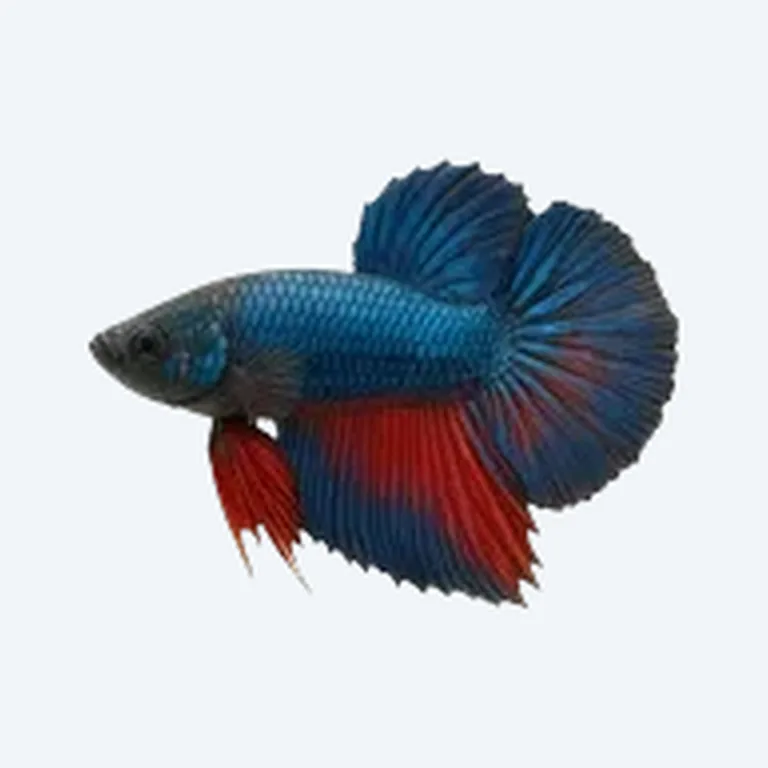
- Minimum tank size: 40 L (11 US gal) - not a bowl, not a vase. Footprint matters more than volume alone.
- Temperature: 24-28°C (75-82°F) is the sweet spot; the full tolerance range is 22-30°C (72-86°F). Don't skip the heater.
- pH: 6.0-7.5. Bettas are adaptable, but stable beats optimal every time.
- Males cannot be housed together - ever. One male per tank, no exceptions.
- Surface access is non-negotiable: bettas breathe air directly via their labyrinth organ and will drown if blocked from the surface.
- They are carnivores in practice: a pellet marketed as "betta food" is fine only if insect protein is the first ingredient.
What actually makes a betta different
Betta splendens has been selectively bred for centuries - originally in Southeast Asia, where males were matched against each other in staged fights. That history explains almost everything about the animal you're keeping: the aggression, the vivid coloration bred to intensify threat displays, the finnage that was exaggerated far beyond anything found in wild fish. The fish you buy at a pet shop is a highly artificial creature. That's not a problem, but it does mean wild-betta care guides don't always translate cleanly.
The single most misunderstood feature is the labyrinth organ - a folded respiratory structure behind the gills that lets bettas breathe atmospheric air. This is why you see them periodically surfacing for a gulp. It evolved in warm, oxygen-depleted rice paddies and slow waterways where dissolved oxygen alone wasn't reliable. The practical implications for your tank are real: you need a gap between the waterline and the lid, you need to avoid a thick surface film that blocks gas exchange, and you need to make sure your filter outlet isn't creating so much surface turbulence that the betta exhausts itself swimming against it. The labyrinth organ is an advantage, not a weakness - but only if the tank lets it function.
The pet trade has used the labyrinth organ as justification for selling bettas in cups, tiny tanks, and unheated "betta bowls" for decades. The logic goes: they can breathe air, so water quality matters less. This is completely backwards. A betta in a 1-litre cup is surviving, not thriving - ammonia spikes fast in tiny volumes, temperature swings with room temperature, and the fish has nowhere to go. The labyrinth organ doesn't make small containers acceptable. It makes them slightly less immediately lethal.
Tank setup
Size and footprint
The 40 L (11 US gal) minimum isn't arbitrary. A longer tank - 60 cm (24 in) base length or more - gives a male betta enough territory to feel secure without being constantly stressed, and enough water volume to buffer temperature swings and dilute waste between water changes. Height matters less than floor space. A tall, narrow column of water isn't useful to a fish that spends most of its time in the middle and upper zones.
Smaller tanks aren't impossible to maintain, but they demand more frequent water changes and more precise heater management. If you're new to the hobby, a larger tank is actually easier to keep stable - not harder. A 60 L (16 US gal) setup is more forgiving than a 20 L (5 US gal) one.
Heating
Bettas are tropical fish. They need a heater. A room that reaches 24°C in summer will drop to 18°C in winter, and chronic exposure to temperatures below 22°C suppresses immune function and slows digestion. Aim for 25-27°C (77-81°F) as your target - stable within that window, not bouncing between extremes. A basic submersible heater with an external thermometer (not just the dial on the heater itself) is all you need. Check the thermometer daily until you trust the setup.
Long-finned show strains - halfmoons, rosetails, and similar - struggle in strong current. Their fins create drag, and a powerful filter outlet will exhaust them. Match your filter to your fish: a gentle sponge filter or a low-flow hang-on-back with a baffled outlet is often better than a canister rated for 200 L/h pointed straight at a fish with 8 cm of trailing finnage.
Filtration and cycling
You need a cycled filter. Bettas are not immune to ammonia and nitrite poisoning - they just die more slowly than some species, which can make it look like they're "handling it" right up until they aren't. Before you add any fish, run the nitrogen cycle properly. It takes 4-6 weeks with fish-in cycling, or less with a seeded filter. This is the single step most beginners skip, and it kills more bettas than any other mistake.
Once cycled, keep nitrates below 20 ppm with regular water changes. A good starting point is 25-30% weekly - see how often to do water changes for guidance on adjusting that to your tank's bioload and plant density.
Buying a betta the same day as the tank. An uncycled tank has no beneficial bacteria, and ammonia from fish waste will reach toxic levels within 24-48 hours. Either cycle the tank before fish arrive, or buy a bottle of established filter media from a local fishkeeper and test daily with a liquid test kit - not strips - until ammonia and nitrite read zero.
Plants, décor, and lid
Bettas are intelligent enough to get bored and stressed by barren tanks. Dense planting - whether live or artificial - provides cover, breaks up sightlines, and gives the fish somewhere to rest near the surface. Floating plants like Salvinia or Pistia are particularly useful: they diffuse light, offer a resting spot, and reduce jumping risk without sealing the tank. Java fern, anubias, and cryptocorynes work well as mid-ground plants that don't demand CO2 injection.
Always use a lid. Bettas jump, especially when startled or when tank conditions deteriorate. Leave a 3-5 cm gap between the waterline and the lid for air exchange - a completely sealed lid traps stale air above the surface, which undermines labyrinth breathing.
If you're using a tight-fitting glass lid, prop one edge open a few centimetres with a small piece of airline tubing or a plastic clip. It looks inelegant, but it works. The betta needs fresh air above the water, not the same humid pocket recycled for hours.
Feeding
In the wild, bettas eat insects, larvae, and small crustaceans. Their digestive system is built for protein-dense, chitin-heavy food - not the wheat- and soy-padded pellets that dominate the cheap end of the betta food market. Read the ingredient list. You want insect meal, shrimp meal, or whole fish protein as the first ingredient. If the first ingredient is wheat flour or corn starch, feed it to something else.
A practical feeding routine: high-quality betta pellets twice daily, small portions (3-5 pellets per feeding is enough for most fish), with two or three feeds per week replaced by frozen bloodworm, daphnia, or brine shrimp. One fast day per week prevents constipation, which is genuinely common in bettas and often mistaken for dropsy in early stages.
Overfeeding is a bigger problem than underfeeding. Uneaten food spikes ammonia in small tanks within hours. If food is still floating after two minutes, you're feeding too much.
Most bettas in pet shops are already 6-12 months old. A fish you buy and keep well can realistically live to 4 years; some reach 5-6 with excellent husbandry.
Male betta aggression - what the guides get wrong
Every guide tells you male bettas fight. Fewer explain the nuance. Males will kill other males given the chance - but they also vary enormously as individuals. Some males in a large, heavily planted 200 L (53 US gal) tank will coexist with peaceful community fish without issue. Others will relentlessly shred the fins of any tankmate, including females. You cannot predict which type you have until you try, which means having a backup plan - a spare tank or divider - before you attempt any community setup.
Tankmates that tend to work well with male bettas: Corydoras species (bottom-dwellers that stay out of the betta's zone), ember tetras, harlequin rasboras, and nerite snails. Tankmates that reliably fail: any species with bright colours or flowing fins that the betta reads as a rival (guppies, male endlers), fin nippers that target the betta's finnage (tiger barbs, serpae tetras), and other anabantoids. Run any proposed combination through the stocking calculator before committing.
Female bettas are sometimes kept in "sororities" - groups of five or more in a large, well-planted tank. This works when it works, and fails badly when it doesn't. Dominance hierarchies form, weaker females get harassed, and the tank can look fine for weeks before a sudden escalation. If you're new to bettas, start with one fish and learn the species before attempting a sorority.
Health - recognising problems early
Bettas are prone to a handful of specific conditions, most of which are preventable with good water quality and appropriate feeding.
Fin rot is the most common. It starts as ragged or receding fin edges and progresses to deeper tissue damage if ignored. The cause is almost always poor water quality - elevated ammonia or nitrite, or chronically high nitrates. Fix the water before treating with medication. Medication on a dirty tank treats the symptom while the cause continues.
Swim bladder issues are common and usually caused by overfeeding, constipation, or gulping air while feeding. A fish that floats at the surface on its side, or sinks and can't rise, often responds to a 48-hour fast followed by a single deshelled frozen pea. If the problem persists, investigate further.
Velvet is a parasitic infection that looks like gold dust on the fish's body, often only visible under a torchlight held at an angle. It spreads fast and requires treatment with copper-based medication or aquarium salt. Raise the temperature to 28-29°C (82-84°F) and darken the tank during treatment - the parasite's free-swimming stage is light-sensitive.
Track your water parameters consistently. A test log over time reveals patterns - a nitrate spike every eight days, a pH drift when the KH is low - that a single reading misses. App-aquatic's parameter tracking makes this straightforward if you're managing more than one tank or want a history to show a vet.
What most care guides miss
Most betta guides focus on the male's aggression and leave it there. What they skip:
Betta splendens are jumpers when stressed. A fish that starts jumping repeatedly is telling you something is wrong - usually water quality, but sometimes a bullying tankmate, a too-bright light with no shade, or a temperature spike. Don't just replace the lid; investigate the cause.
The fins you see in shops are the result of extreme selective breeding. Halfmoon and rosetail bettas with fins larger than their bodies are beautiful and fragile. Their fins tear on rough décor, catch in filter intakes, and make the fish slower and more exhausted in any current. If you keep a long-finned strain, sand down any sharp edges on hardscape, use a filter intake guard, and keep flow minimal.
Water parameters matter beyond pH and temperature. Soft, slightly acidic water (GH 3-10 dGH, KH 2-5 dKH) matches their natural habitat. If your tap water is very hard - common in limestone regions - a partial reverse osmosis blend or Indian almond leaves can soften it gently. This isn't mandatory, but it explains why bettas kept in very hard water sometimes look dull and stressed despite "correct" pH. Read more about aquarium water parameters if you're unsure what your GH and KH mean.
Track your parameters and get care reminders with App-aquatic.
Get the free appCan a betta live in a 10-litre tank?
Technically yes, in the sense that it won't die immediately. Practically, no - 10 litres has almost no thermal or chemical buffer. Temperature swings with the room, ammonia spikes after a single missed water change, and the fish has no room to exhibit normal behaviour. The minimum worth aiming for is 40 L (11 US gal), and bigger is genuinely easier to maintain.
Do bettas need a heater if my house is warm?
If your house stays above 24°C (75°F) year-round, including overnight and in winter, you might manage without one. Most homes don't meet that standard consistently. A betta kept at 20°C (68°F) for weeks will have a suppressed immune system and reduced lifespan. A £10 submersible heater is a small investment against that risk.
Why is my betta making a bubble nest?
Bubble nests - clusters of small air bubbles at the surface, often anchored to a floating leaf or the tank wall - are a normal breeding behaviour. Males build them as preparation for spawning. A betta building a bubble nest is a sign it's comfortable and in good condition. You don't need to do anything about it unless you're attempting to breed them, in which case the process is significantly more involved than just adding a female.
Can I keep a betta with other fish?
Sometimes, with the right tankmates and tank size. Bottom-dwelling, peaceful, short-finned species - like Corydoras catfish or small rasboras - are the safest options. Avoid anything brightly coloured or long-finned that the betta might read as a rival. Always have a backup plan (a spare tank or divider) before attempting a community setup, because individual betta temperaments vary significantly. Check specific combinations with the stocking calculator.
How long do bettas live?
Four to five years is realistic with good care - a heated, filtered tank of at least 40 L (11 US gal), a varied diet, and stable, clean water. Most bettas sold in shops are already several months to a year old, so the clock has usually started before you bring one home. Fish kept in tiny unheated bowls often only last a year or two, which is where the myth of the "short-lived betta" comes from.