Guide
Biofilm in aquariums
The whitish film on new wood or plants - what it is, when it's harmless, and when to act.
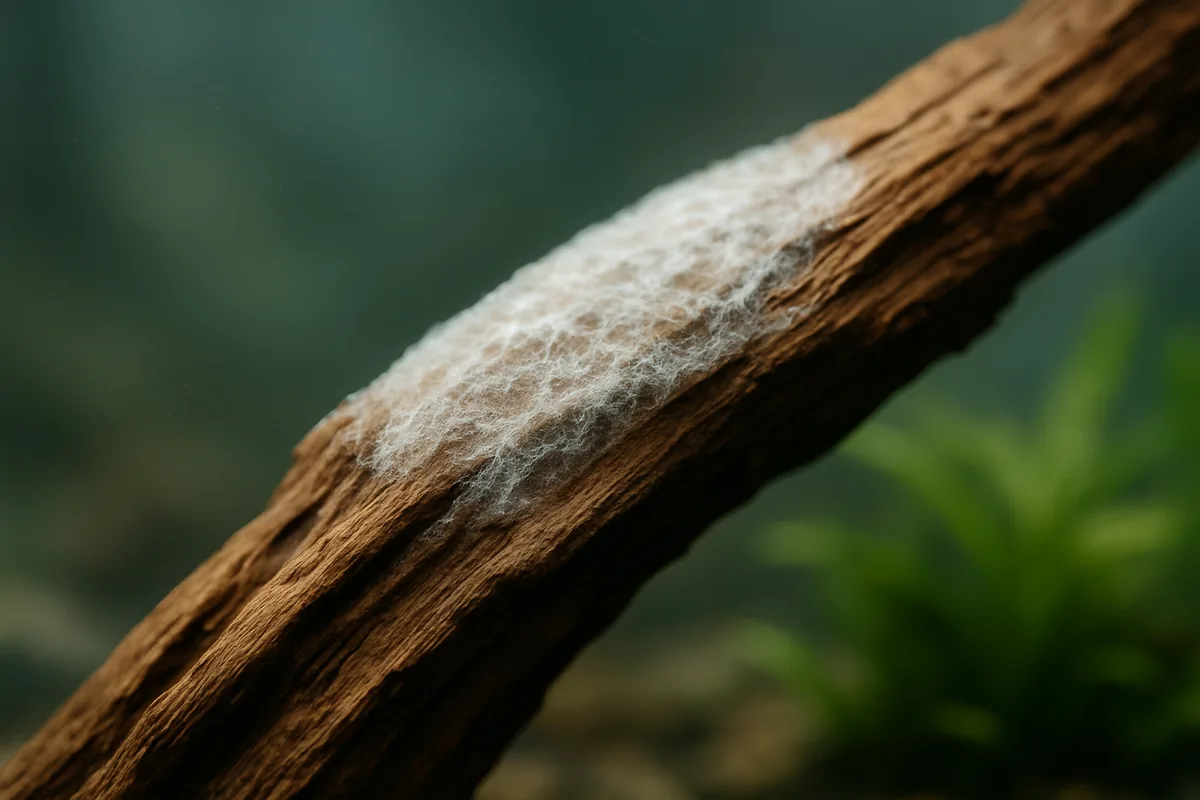
- What it is: A thin layer of bacteria, fungi, and organic material bound together in a sticky matrix - typically whitish, grey, or translucent.
- Most common location: New driftwood, seed pods, slow-moving plant leaves, and any surface that leaches organics into the water.
- Usually harmless: Shrimp, snails, otocinclus, and many other grazers actively eat it. In a healthy tank, light biofilm is normal and temporary.
- When to act: Thick, persistent, or foul-smelling biofilm points to excess organics - overfeeding, poor flow, or infrequent water changes. Fix the cause, not just the symptom.
- Quick fix: Manually siphon or scrub it off, then address feeding, circulation, and maintenance frequency.
What biofilm actually is
Biofilm isn't a single organism - it's a community. Bacteria colonise a surface, anchor themselves with a self-produced polysaccharide slime layer, and create a structured environment that other microorganisms (fungi, protozoa, algae) can also inhabit. That sticky matrix is what gives biofilm its characteristic slimy texture and why it clings to wood and decor rather than just floating off.
In an aquarium, the most common form is the pale, wispy or slightly gelatinous film that appears on new driftwood within the first few days of adding it to a tank. It can look alarming if you've never seen it before - people often mistake it for a fungal infection or a disease. It's neither. It's the bacterial equivalent of moving into a new food source.
The organic compounds leaching out of fresh wood (tannins, sugars, lignin breakdown products) provide exactly the kind of carbon-rich nutrition that heterotrophic bacteria thrive on. The biofilm appears fast because your tank is already seeded with bacteria from the water column, substrate, and filter. Give them food and a surface, and they'll colonise it within 24-72 hours.
Most aquarium content treats biofilm as a problem to solve. It isn't, in the vast majority of cases. Biofilm is evidence your tank has an active microbial community - which is exactly what a healthy aquarium should have. The actual problem is when something in your husbandry is feeding it faster than your tank can process it.
Where it shows up and why
New driftwood
This is the classic scenario. Bogwood, spider wood, cholla, Malaysian driftwood - all of them leach organic compounds when first submerged. The denser and less pre-soaked the wood, the more pronounced the biofilm. It typically peaks in the first one to three weeks, then fades on its own as the wood stops leaching heavily. Pre-soaking wood in a bucket for several days before adding it to your tank significantly reduces how much biofilm you'll see.
Seed pods and botanicals
Catappa leaves, alder cones, and decorative seed pods are increasingly popular in planted and blackwater setups. They behave exactly like wood - they leach tannins and organics, and biofilm follows. In botanical-style tanks this is expected and often embraced, since the microbial layer on decaying leaves is a genuine food source for small shrimp and fry.
Slow-moving or dying plant leaves
Healthy, fast-growing plant leaves don't usually accumulate much biofilm because they're not leaching organic material. But older lower leaves that are yellowing, or plants that are struggling to establish, can develop surface films. If you're seeing biofilm on live plants throughout the tank - not just on wood - that's worth paying attention to. It often means organic load is elevated overall.
Still or low-flow areas
Biofilm grows faster where water movement is weak. Dead spots behind decor, in tank corners, or around equipment with poor circulation give bacteria the quiet conditions they prefer. Strong, well-distributed flow doesn't eliminate biofilm, but it limits where it can establish and how thick it gets.
When you add new driftwood, point a powerhead or adjust your filter outlet toward it for the first two weeks. The increased flow slows biofilm accumulation and helps distribute the tannin release more evenly through the water column.
Is biofilm harmful to fish or shrimp?
For the vast majority of aquarium inhabitants, no. Light biofilm on wood and decor is harmless. Many species actively seek it out as food:
- Dwarf shrimp (Neocaridina and Caridina species) graze biofilm constantly. It's a meaningful part of their natural diet, and a tank with healthy biofilm on surfaces often supports better shrimp breeding rates than a sterile, spotless setup.
- Otocinclus catfish rasp biofilm off wood and glass alongside their better-known algae grazing.
- Plecos and ancistrus will work over biofilm-covered wood, especially at night.
- Snails - nerites, mystery snails, ramshorns - graze it from hard surfaces.
The concern with biofilm isn't really toxicity - it's what thick, spreading biofilm tells you about your tank's condition. If biofilm is growing aggressively across multiple surfaces, smells sulphurous or rotting, or keeps returning quickly after removal, you have an organic overload problem. That underlying issue - excess nutrients, poor oxygen levels, infrequent water changes - is what actually risks fish health, not the biofilm itself.
Thick biofilm over filter intakes can reduce flow enough to matter. Check your intake strainer during regular maintenance and rinse it off in old tank water. Don't clean it under the tap - you'll kill beneficial bacteria along with the biofilm.
When biofilm is actually a warning sign
There's a meaningful difference between light biofilm on new wood during the first few weeks and persistent, spreading biofilm that keeps coming back across your whole tank. The second one deserves investigation.
The most common underlying causes:
- Overfeeding: Uneaten food breaks down and dramatically increases dissolved organic compounds. If you can't see any leftover food after two minutes, you're probably feeding the right amount. Most people overfeed by a factor of two or three.
- Infrequent water changes: Dissolved organics accumulate between changes. If you're doing small or infrequent water changes, your baseline organic load stays elevated. See our guide on how often to do water changes for practical thresholds.
- Poor circulation: Stagnant areas accumulate detritus and support heavier microbial growth. Review your flow pattern - you want gentle circulation reaching all areas of the tank, not just one end.
- Overstocking: More fish means more waste, more organic input, and a harder job for your filtration. Use the free stocking calculator to check whether your current setup is within sensible limits.
- Immature filtration: If your tank is newly set up and hasn't completed the nitrogen cycle, your biological filtration isn't fully operational yet. Biofilm during cycling is expected; it should settle down once the cycle completes. Read the nitrogen cycle explained if you're not sure where your tank sits.
Scrubbing biofilm off every surface every week without addressing why it's appearing. You're treating the symptom, not the cause - and the repeated disturbance of surfaces can slow down the establishment of beneficial bacterial colonies in your substrate and hardscape. Clean it when it's genuinely problematic, not on a reflexive schedule.
How to remove biofilm when you need to
Manual removal
An algae scraper, soft brush, or old toothbrush works well on wood and hardscape. Scrub the affected area, then immediately siphon out the loosened material before it disperses through the water column. Don't skip the siphon step - disturbing biofilm without removing it just redistributes the organics.
During water changes
The most effective approach is to combine biofilm removal with your water change. Scrub surfaces first, then do your water change and siphon simultaneously so you're removing the debris as you go.
Pre-treating wood
Boiling driftwood for 1-2 hours before adding it to your tank serves two purposes: it kills potential pathogens and accelerates the leaching of the organic compounds that feed early biofilm. The wood will still develop some biofilm once submerged, but typically less and for a shorter period. Soaking wood in a bucket and doing daily water changes on it for a week achieves a similar result without needing a large enough pot to boil it.
Adding grazers
If biofilm on wood and decor bothers you aesthetically, a small shrimp colony is genuinely the most hands-off solution. A group of 10-15 Neocaridina davidi (cherry shrimp) in a typical community tank will keep biofilm on decor at low levels without you needing to do much. They're also excellent indicators of water quality - if your shrimp are thriving, your parameters are almost certainly in good shape.
Most visible biofilm appears within 24-72 hours of adding fresh driftwood to a mature, cycled tank.
What most guides miss about biofilm
The hobby tends to treat biofilm as a problem that needs eliminating. In reality, a thin biofilm layer on hardscape is part of a healthy tank ecosystem. The same bacterial communities that form biofilm on your wood are present in your substrate and filter media - they're part of your biological filtration and your tank's overall nutrient processing capacity.
Aggressive, repeated cleaning of all surfaces can actually work against you in a newly set up tank. Biofilm on hardscape contributes to the overall surface area available for beneficial bacteria. Removing it all constantly during the early weeks of a tank's life can slow the establishment of stable biological filtration. Let the tank develop its microbial community; just manage the conditions (feeding, flow, water changes) that prevent it getting out of hand.
If you're tracking parameters over time, you'll often see biofilm peaks correlate with spikes in dissolved organics or moments when ammonia processing temporarily lags - for example, after a large water change that dilutes the bacterial population, or after medicating a tank. App-aquatic's parameter logging makes it easy to spot these patterns retrospectively, so you can pre-empt the conditions that lead to heavy biofilm rather than just reacting to it.
For more on keeping your tank's chemistry stable, the guide to aquarium water parameters covers what to test, what the numbers mean, and how to interpret changes over time.
If you've just cycled a new tank and you're adding driftwood for the first time, expect biofilm within the first week. It's not a sign the cycle failed or that something went wrong - it's normal. Give it two to three weeks before deciding whether it's a problem worth addressing.
Track your parameters and get care reminders with App-aquatic.
Get the free appIs the white fuzzy stuff on my new driftwood dangerous?
Almost certainly not. White, wispy or slightly gelatinous film on new driftwood is classic biofilm - bacteria colonising the organic compounds the wood leaches as it soaks. It's not fungal disease, it won't harm your fish, and it typically fades on its own within two to three weeks as the wood stops leaching. Shrimp and otocinclus will graze it down faster if you have them.
Will biofilm go away on its own?
On new wood or botanicals, yes - once the organic leaching slows, the biofilm loses its food source and recedes. In an established tank with persistent biofilm, it won't go away on its own because something is continuously feeding it. In that case you need to address the root cause: overfeeding, infrequent water changes, poor flow, or overstocking.
Can biofilm kill fish or shrimp?
Biofilm itself doesn't kill fish or shrimp. However, the conditions that produce heavy, smelly biofilm - high organic load, low oxygen, poor water quality - absolutely can. If your biofilm is severe and your water smells bad, test your parameters immediately and do a water change. The biofilm is a symptom; poor water quality is the danger.
My shrimp tank has biofilm everywhere - is that normal?
In a planted or botanical shrimp tank, a light coating of biofilm on wood, leaves, and substrate is not just normal - it's desirable. Dwarf shrimp graze it constantly and it contributes to their diet. The benchmark is smell and spread: if it smells fine and isn't blanketing every surface in thick slime, leave it. Shrimp keeping and sterile tank keeping are incompatible goals.
Does biofilm mean my tank isn't cycled properly?
Not necessarily. Biofilm can appear in both cycled and uncycled tanks - it's driven by organic compounds and surface availability, not specifically by the nitrogen cycle. That said, an uncycled tank will often show heavier and faster biofilm growth because the water has higher organic load and the bacterial community isn't yet in balance. If you're unsure whether your tank has cycled, check out the guide to how to cycle a fish tank.
More guides · Wood and tannins · Algae · Cleanup crew · Get the app