
Fish care
Cardinal Tetra: Complete Care Guide
Last updated: May 2026
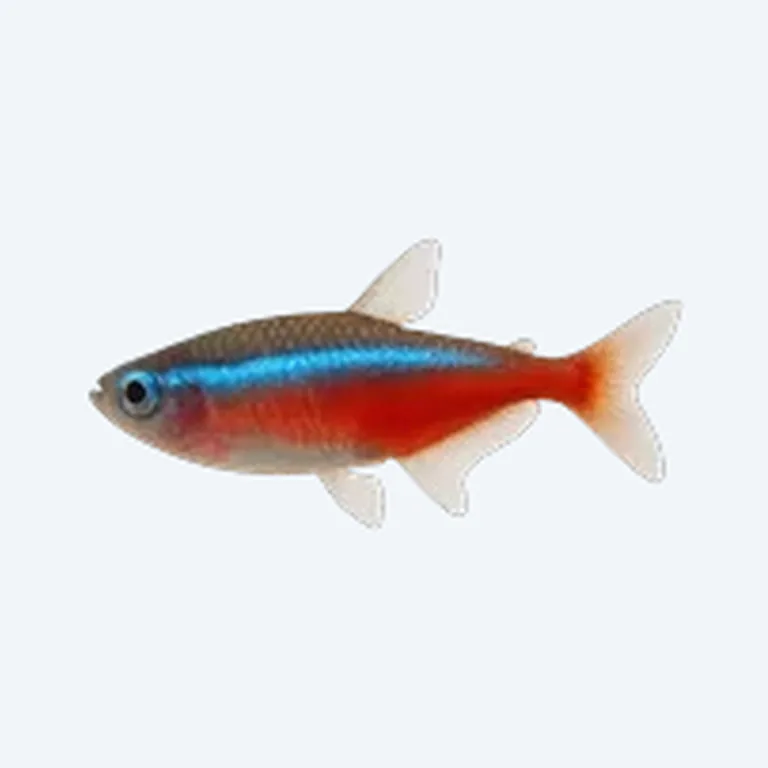
- Not a beginner fish: Cardinals need stable, soft, warm water and are sensitive to new-tank syndrome - cycle your tank fully before adding them.
- Water: 24-30°C (75-86°F), pH 4.5-7.0, soft to moderately soft (ideally under 8 dGH). Stability matters more than hitting the perfect number.
- Tank size: 60 L (16 US gal) minimum for a small group; 100 L+ gives you a proper shoal and more forgiving water chemistry.
- Group size: Keep at least 6 - they're a shoaling species and individual fish kept in small numbers are chronically stressed.
- Not the same as neon tetras: Cardinals are larger, prefer warmer and softer water, and show richer colouration. They're also less disease-resistant than captive-bred neons.
- Wild-caught majority: Most cardinals in the trade come from the Rio Negro basin. Expect shipping stress and treat new arrivals with care.
Cardinal tetra vs. neon tetra: why it matters before you buy
Most fishkeepers encounter Paracheirodon axelrodi and Paracheirodon innesi side by side at the shop, and a lot of people grab whichever looks more vibrant that day. That's a mistake worth avoiding upfront - our neon vs cardinal tetra comparison breaks down which is right for your tank.
The visual difference is straightforward: on a cardinal, the red band runs the full length of the body from nose to tail. On a neon, it only covers the rear half. Cardinals also grow slightly larger - up to 5 cm (2 in) versus around 3.5 cm (1.4 in) for neons.
The care difference matters more. Neon tetras are almost entirely captive-bred at this point and have adapted to a wider range of water conditions. Cardinals are predominantly wild-caught from the blackwater rivers of the Amazon basin - specifically the Rio Negro - and they come with water chemistry preferences that reflect where they actually live: warm, extremely soft, acidic water with very low mineral content. They can adapt to moderately hard tap water, but they do better and look better in soft conditions, and they're less forgiving of water quality lapses.
If you're new to fishkeeping, check the best fish for beginners before committing to cardinals. They're rewarding but not the most tolerant species for a first tank.
Tank setup
Size and footprint
The 60 L (16 US gal) minimum is a real minimum - enough for 6 fish in a lightly stocked tank, but not much margin. A 100-120 L (26-32 US gal) tank with a decent footprint gives you room for a proper shoal of 10-12 fish, more stable water chemistry, and space to add compatible bottom-dwellers without overcrowding. Cardinals spend most of their time in the middle of the water column and appreciate open swimming space in front and denser planting or wood at the sides and back.
Water parameters
The target range is 24-30°C (75-86°F), pH 4.5-7.0, with hardness below 8 dGH preferred. In practice, most cardinals sold in the UK and Europe have been through wholesalers using harder water, so they can handle moderate hardness - but if your tap water is very hard (above 15 dGH), you'll want to mix with RO or use a softening method.
Temperature is worth taking seriously. Cardinals kept at the low end of their range (below 24°C / 75°F) are more susceptible to ich and other parasitic infections. Most people run them at 26-28°C (79-82°F) without issues. Don't keep them with coldwater or cool-water species.
Cardinal tetras are ammonia-sensitive. Adding them to an uncycled or recently cycled tank is one of the fastest ways to lose the whole group. Read the guide to cycling a fish tank and confirm your cycle is complete with consecutive zero-ammonia, zero-nitrite readings before introducing them.
Blackwater and tannins
You don't need a full blackwater biotope to keep cardinals well, but they genuinely benefit from tannins. Adding Indian almond leaves, alder cones, or a piece of driftwood to your filter will gently acidify the water, reduce its hardness, and - as a side effect - bring out the depth of the blue and red colouration in ways that neutral tap water simply doesn't. The fish also seem less skittish in the stained, dimmer water that tannins produce.
What you're not trying to do is chase an extreme pH on day one. Sudden shifts are far more damaging than a slightly higher pH held steady. If your tank is sitting at pH 6.8 and stable, that's better than bouncing between 5.5 and 7.0.
A dark substrate - fine black sand or dark gravel - combined with a few Indian almond leaves will visually and chemically approximate a blackwater environment without complex water chemistry work. Cardinals kept this way often show noticeably brighter colouration within a few weeks.
Lighting and décor
Cardinals come from shaded river environments. They don't need intense light and are more comfortable - and less stressed - under moderate or dappled lighting. Floating plants like frogbit or salvinia work well for this. Dense planting of any kind gives the fish places to retreat, which reduces baseline stress and makes the shoal more confident about moving around the tank.
Feeding
Cardinals are omnivores with small mouths. In the wild they eat microorganisms, small invertebrates, algae, and plant matter. In the aquarium, they do well on a varied diet of:
- Quality micro-pellets or fine-crushed flake as a staple
- Frozen or live baby brine shrimp, daphnia, or micro worms a few times a week
- Occasional frozen bloodworm (use sparingly - it's protein-dense and can cause digestive issues in excess)
Feed small amounts twice daily rather than one large feed. Cardinals are slow, deliberate feeders and get outcompeted easily by faster species. If you have faster tankmates, make sure food reaches the mid-water level where cardinals actually are.
Feeding only flake. Dry food alone doesn't give cardinals the protein variety they need to maintain condition. New arrivals especially - already lean from the supply chain - need live or frozen micro foods to build back up. Offer baby brine shrimp or daphnia in the first two weeks.
Tank mates
Cardinals are peaceful and fairly delicate. The wrong tank mates cause problems in two directions: aggression from larger or fin-nipping species, and competition for food from faster, more assertive fish.
Good tank mates share similar water parameter needs - soft, warm, slightly acidic - and don't get large enough to see a 5 cm tetra as a meal. Solid options include:
- Other small South American tetras (rummy-nose, ember tetras, black phantoms)
- Corydoras catfish - Corydoras sterbai in particular, which prefers the same warm temperatures
- Apistogramma dwarf cichlids, with care - a well-structured tank with plenty of cover usually prevents aggression
- Small loricariid catfish (otocinclus, rubber-lip plecos)
- Dwarf gouramis (one male per tank to avoid aggression)
Avoid fin-nippers like tiger barbs and serpae tetras, any cichlid large enough to eat them, goldfish (wrong temperature and hardness), and anything that gets above 8-10 cm in a smaller tank. Use the free stocking calculator to check compatibility and numbers before you finalise your list.
Six is the minimum, but a group of 10-15 cardinals produces the schooling behaviour and visual impact the species is actually known for.
Health and disease
Cardinals are more disease-prone than many aquarium fish, and most losses come from a handful of specific problems.
Ich (white spot)
The most common issue, and almost always linked to temperature drops or shipping stress. Wild-caught fish arrive with compromised immune systems and are vulnerable in the first two to four weeks. Keep temperature steady at 26-28°C (79-82°F) and watch for the characteristic salt-grain white spots on fins and body. Treat early - ich progresses fast in a full shoal.
Neon tetra disease
Despite the name, cardinals get this too. It's caused by the microsporidian parasite Pleistophora hyphessobryconis and has no effective cure. Symptoms include faded colour patches, body deformity as the disease progresses, and restless or isolated behaviour. An infected fish should be removed immediately - it cannot be treated and will die, but early removal may protect the rest of the tank. Most people get this wrong by waiting to see if the fish "recovers." It won't.
Velvet (Oodinium)
Fine gold or rust-coloured dust on the body, often more visible under a torch. Cardinals are susceptible. Treat with copper-based medication or a purpose-made velvet treatment, and raise temperature slightly to speed up the parasite's life cycle during treatment.
General prevention
Quarantine new fish for two to four weeks before adding them to your main tank. This single step prevents the majority of disease introductions. Maintain water quality rigorously - high nitrates, ammonia spikes, or pH swings suppress immune function and open the door to secondary infections. Keep up with regular water changes and monitor your parameters consistently.
The wild-caught supply chain for cardinal tetras is long. Fish from the Rio Negro travel through multiple holding stations before reaching your local shop, and most arrive stressed and underfed. The fish you buy on Saturday may have been in transit or holding for two to three weeks. Don't add them to a community tank the same day - dim lighting, quiet, and small micro-food offerings for the first week make a real difference to survival rates.
Breeding
Breeding cardinals in captivity is genuinely difficult and rarely attempted outside specialist setups. They require very soft, acidic water (pH around 5.5-6.0, hardness below 2 dGH), complete darkness for spawning, and are egg-scatterers whose eggs and fry are sensitive to even small light exposure in the first day. Fry are tiny and need infusoria or commercial liquid fry food before they can take baby brine shrimp.
If you want to attempt it, you'll need a dedicated breeding tank, RO water with a small amount of blackwater extract or peat filtration, and a reliable method of darkening the tank completely during the spawning phase. It's a project rather than something that happens incidentally.
What most guides miss
Most cardinal care guides focus on water parameters and leave it there. A few things that actually matter day-to-day:
Flow rate matters. Cardinals come from relatively slow-moving water. A high-flow canister filter without a spray bar or flow diffuser creates current that stresses them constantly. Aim for gentle, well-oxygenated water with flow directed along the back glass rather than blasting across the tank.
Shoal size affects behaviour dramatically. Six fish will stay alive but may huddle and hide. Twelve fish in the same tank will school, move confidently, and show the full iridescent display the species is known for. The difference is striking.
pH swing is more dangerous than a "wrong" steady pH. A tank running stable at pH 7.2 is better than one bouncing between 6.0 and 7.5 due to CO2 injection or inconsistent buffering. Understand what's driving your pH before trying to adjust it - see the aquarium water parameters guide for detail on buffering and KH.
The nitrogen cycle doesn't end at setup. Cardinal tetras are sensitive enough that a mini-cycle from overfeeding, a filter clean, or adding too many fish at once can cause real losses. Track your ammonia and nitrite regularly, not just at the beginning. App-aquatic's test log makes it straightforward to spot a developing problem before it becomes a crash.
Track your parameters and get care reminders with App-aquatic.
Get the free appCan cardinal tetras live with neon tetras?
Yes, but with caveats. They'll coexist peacefully, but their ideal water conditions differ slightly - cardinals prefer warmer, softer water. If your tank is set up for cardinals (26-28°C, soft and slightly acidic), neons will be fine in it. Running it the other way around - cooler and harder for neons - puts cardinals under low-level chronic stress. Keep them together if the parameters suit cardinals, not the middle ground.
How many cardinal tetras should I keep?
Minimum 6, but 10-15 is where the species actually looks and behaves as it should. Below 6, individual fish are stressed, hide more, and lose condition faster. A large shoal in a well-planted tank is one of the best displays in the freshwater hobby.
Why do my cardinal tetras keep dying?
The most common causes are: adding them to an uncycled or insufficiently cycled tank, ammonia or nitrite spikes, temperature instability, and disease introduced with new fish that weren't quarantined. Wild-caught cardinals are also more fragile than captive-bred species - losses in the first two weeks are disproportionately high. Check your water parameters first, then review your acclimation and quarantine process.
Do cardinal tetras need a heater?
Yes. They need a stable 24-30°C (75-86°F) and should not be kept in unheated tanks. In most indoor environments, a reliable heater is essential to maintain the lower end of that range consistently. Temperature drops below 22°C (72°F) significantly increase ich susceptibility.
Are cardinal tetras wild-caught or captive-bred?
The vast majority are still wild-caught, mostly from the Rio Negro basin. Captive-bred cardinals do exist, but they make up a small share of the trade. Wild-caught fish often arrive stressed and underfed after a long supply chain, so quarantine new arrivals for two to four weeks and keep conditions warm and stable while they settle.