
Tank mates
Best Cardinal Tetra Tank Mates: Compatible Species
Last updated: May 2026
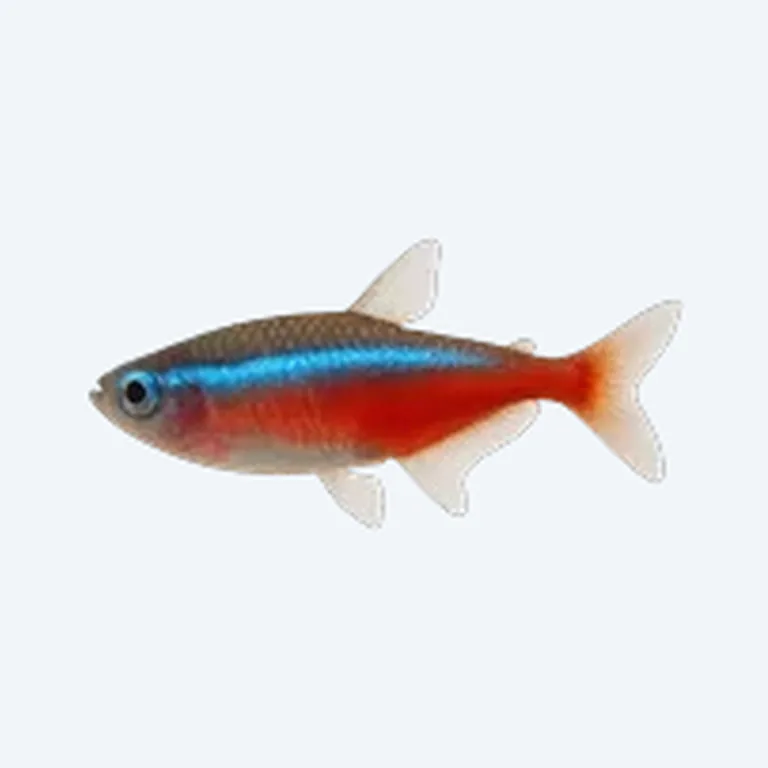
- Minimum tank size: 60 litres (16 US gal) for a school of 8-10 cardinals plus one or two compatible species; 120 L+ if you want a proper community.
- Water window: pH 5.5-7.0, temperature 24-28 °C (75-82 °F), soft to moderately soft (0-10 °dGH). Wild-caught cardinals need the lower end of that pH range.
- Best tank mates: small Apistogramma species, dwarf corydoras, marble hatchetfish, rummy-nose tetras, and Amano shrimp in softer water.
- Angelfish question: juvenile angels are fine; adults will eat cardinals. Plan accordingly before you buy.
- Avoid: large cichlids, tiger barbs, serpae tetras, and any fish that needs hard alkaline water - they'll suffer in the conditions cardinals need.
- Biggest mistake: keeping cardinals in hard tap water above pH 7.5 without treatment. Colours fade, immune function drops, and lifespan shortens noticeably.
Pairing Cardinal Tetra with something specific? Our fish compatibility checker compares any two of 815 species on water parameters, predation risk, fin nipping, temperament and tank size - and draws them both at life size so you can see the difference.
What cardinal tetras actually need before you think about tank mates
Cardinal tetras (Paracheirodon axelrodi) are not just a brighter version of neons. They're more delicate, more demanding about water chemistry, and they come almost entirely from the soft, blackwater tributaries of the Rio Negro and Orinoco basins. Get the water wrong and no choice of tank mate will save them.
The non-negotiables: pH between 5.5 and 7.0 (aim for 6.0-6.8 for a mixed community), temperature 24-28 °C (75-82 °F), and hardness below 10 °dGH. In practice, most tap water in the UK, Europe, and North America is too hard and too alkaline straight from the tap. You'll need RO water cut with tap, or a dedicated softening setup. Tannin-stained water from Indian almond leaves or driftwood isn't just aesthetic - it lowers pH gently, reduces bacterial load, and seems to genuinely reduce stress in cardinals.
School size matters more than most guides admit. Cardinals are shoaling fish. Eight is the minimum for stable, relaxed behaviour. Ten to fifteen is better. A stressed, small school hides constantly and shows washed-out colour - which defeats the entire point of keeping them.
Wild-caught cardinals (which are the majority on the market - the hobby runs a surprisingly sustainable wild harvest from Brazil) are more pH-sensitive than tank-bred fish. If your supplier can't tell you the source, assume wild-caught and keep pH below 6.8.
The best cardinal tetra tank mates
Dwarf cichlids: Apistogramma species
Apistogramma cacatuoides, A. agassizii, and A. macmasteri are the most commonly available and all share the same blackwater preferences as cardinals. A pair of apistos in a 120 L+ tank with a school of 12 cardinals is one of the best freshwater community setups you can build. The apistos occupy the lower third of the tank, the cardinals own the mid-water, and neither bothers the other under normal conditions.
The caveat: a breeding female apisto becomes territorial and will chase anything that enters her cave zone. This rarely harms cardinals - they're too fast and she'll lose interest - but a very small tank amplifies the aggression. Stick to a single pair of apistos per tank and give them at least one cave or coconut shell.
Small corydoras
Corydoras habrosus, C. pygmaeus, and C. hastatus are the three nano-sized corydoras that make the most sense here. They stay under 3 cm, prefer soft acidic water, and are completely peaceful. A group of six or more will spend their time sifting through the substrate and mid-water (pygmy corys especially are not bottom-only fish), and they don't compete with cardinals for space or food.
Standard corydoras species like C. sterbai or C. aeneus can work in terms of temperament, but they get to 6-7 cm and need more floor space. They're fine in a 120 L+ setup but not ideal for a smaller tank.
Corydoras sterbai is one of the few corydoras species that genuinely prefers temperatures above 26 °C (79 °F), which makes it a better match for cardinals than the cooler-water species like C. paleatus. If you want larger corys, sterbai is the one.
Hatchetfish
Marble hatchetfish (Carnegiella strigata) and common hatchetfish (Gasteropelecus sternicla) are surface-dwellers from the same blackwater regions as cardinals. They fill a niche that most mid-water tetras simply can't - the top 5 cm of the tank - and they do it without any aggression whatsoever. A group of six hatchetfish above twelve cardinals looks genuinely stunning under low-angle lighting.
The practical issue with hatchetfish: they jump. A tight-fitting lid isn't optional. They're also sensitive to water quality fluctuations and don't tolerate nitrates above about 20 ppm well. Keep up with water changes and you won't have problems.
Other tetras
Rummy-nose tetras (Hemigrammus rhodostomus) are the closest thing to a perfect companion species. Similar size, similar water requirements, and they school loosely with cardinals in large groups. Their bright red heads provide a colour contrast that works well visually. Aim for a mixed group of 15-20 in a 120 L tank.
Black neon tetras (Hyphessobrycon herbertaxelrodi) are hardier than cardinals and tolerate a slightly wider pH range, making them a reasonable addition if your water sits at the upper end of the window (pH 6.8-7.0). Regular neon tetras are fine companions but unnecessary if you already have cardinals - they occupy the same niche and compete for the same visual space.
Amano shrimp and other invertebrates
Amano shrimp (Caridina multidentata) coexist peacefully with cardinals in most setups. They're large enough that adult cardinals won't harass them, and they do genuine algae-control work. Cherry shrimp (Neocaridina davidi) can also work, but cardinals will occasionally pick off juveniles and shrimplets. If you want a thriving shrimp colony, a species-only shrimp tank is the better choice.
This range keeps cardinals comfortable while remaining achievable for most blackwater-compatible tank mates including apistos, corydoras, and hatchetfish.
The angelfish question
Every cardinal tetra guide has to address this, because the combination is one of the most commonly asked-about in the hobby - and one of the most misrepresented.
Here's what's actually true: small juvenile angelfish (Pterophyllum scalare) under about 4-5 cm body length are not a threat to adult cardinals. The fish genuinely do coexist at that size. The problem is that angels grow fast - a juvenile hits 10-12 cm body length within a year - and at that size, a 4 cm cardinal is a meal, not a tank mate. Adult angels will eat cardinals. Not occasionally, not by accident - deliberately and repeatedly, especially at feeding time or in the dim early morning hours.
The hobby debates this constantly because plenty of people report keeping the combination successfully long-term. What they usually don't mention is that they have heavily planted tanks of 300 L+, well-fed angels, and large cardinals. The margin for error is real but narrow. If you're planning this combination, go in with open eyes: either be prepared to rehome one species as the angels mature, or run a very large, densely planted tank and accept some losses.
Most "I keep angels with cardinals successfully" reports come from large, planted tanks where cardinals have genuine refuge. In a 120 L community tank with standard planting, adult angels will reduce your cardinal school over months. It's not a community - it's a slow-motion predation event.
Fish to avoid
Tiger barbs (Puntigrus tetrazona) are relentless fin-nippers even in schools, and they'll stress cardinals into faded colour and erratic behaviour within days. This one isn't a matter of debate.
Serpae tetras (Hyphessobrycon eques) have the same fin-nipping problem and will out-compete cardinals at feeding time. A common choice that consistently causes problems.
Anything that needs hard, alkaline water - African cichlids, livebearers like mollies, most rainbowfish species - will either deteriorate in the water chemistry cardinals need or require you to keep the water conditions too hard for cardinals to thrive. These are fundamentally incompatible at the water chemistry level, not just the behaviour level.
Large cichlids of any kind: oscars, green terrors, Jack Dempseys. The size difference alone makes this a predator-prey situation.
Buying tank mates based on temperament alone without checking water chemistry compatibility. A peaceful fish that needs pH 7.5-8.5 is still the wrong choice for a cardinal tank, regardless of how docile it is. Check parameters first, behaviour second.
Building the community: practical stocking approach
The most common mistake in community planning is adding fish in the wrong order. Cardinals should go in after your tank is fully cycled (see our guide on how to cycle a fish tank) and after you've stabilised your water chemistry. Adding cardinals to an uncycled or unstable tank is expensive - they're not cheap fish and they don't recover from ammonia spikes the way hardier species might.
A sensible stocking sequence for a 120 L blackwater community:
- Weeks 1-4: fishless cycle.
- Week 5: add 6 pygmy corydoras as the initial stocking and monitor parameters closely.
- Week 7: add 10-12 cardinal tetras once you've confirmed the cycle is stable and water chemistry is dialled in.
- Week 10: add 6 hatchetfish or a school of rummy-nose tetras.
- Week 12+: consider a pair of Apistogramma if your tank is 120 L or above.
Spacing additions out lets you catch any parameter issues before they affect the whole community. Use the free stocking calculator to check your bioload at each stage - bioload creeps up faster than most people expect in soft, low-pH water where bacterial colonies can be slightly less robust than in neutral setups.
If you're tracking multiple tanks or want test log history on your phone, App-aquatic keeps parameter records and sends care reminders so nothing slips through the gaps.
Water maintenance in a cardinal community
Cardinals are sensitive to nitrate accumulation at higher levels than many fishkeepers realise. Keep nitrates below 20 ppm - 10 ppm is better. This means weekly water changes of 25-30% in most stocked tanks. Check the guide on how often to do water changes if you're unsure about your schedule.
Use a mix of RO water and tap if your tap is hard. A 50/50 mix typically brings most UK tap water to an acceptable hardness range for cardinals. Test after mixing - don't assume. For full detail on what parameters matter and why, the aquarium water parameters guide covers it in depth.
Track your parameters and get care reminders with App-aquatic.
Get the free appCan cardinal tetras live with neon tetras?
Yes, they're compatible in terms of both temperament and water requirements. The practical issue is that they occupy almost identical niches - same depth, similar colouration, same food. It's not a bad combination, just an uninspiring one. Rummy-nose tetras give you more visual variety with the same compatibility.
Will angelfish eat my cardinal tetras?
Adult angelfish above about 10 cm body length almost certainly will, especially at feeding time. Juvenile angels under 5 cm are generally fine. The problem is you buy small, they grow fast, and the dynamic shifts. Plan for this before you stock both species, not after.
How many cardinal tetras should I keep together?
Eight is the minimum for settled, confident behaviour. Ten to fifteen is better. Below six, they school tightly out of stress rather than comfort, show faded colour, and often hide constantly. More fish = more confident, more colourful, more active fish.
Can I keep cardinal tetras with shrimp?
Adult Amano shrimp are generally safe - they're large enough that cardinals leave them alone. Cherry shrimp adults are usually fine, but juveniles and shrimplets will get eaten. If shrimp breeding is the goal, a separate tank is the right answer.
What's the easiest tank mate combination for a beginner keeping cardinals?
Six pygmy corydoras and a school of 10 cardinals in a 80-100 L blackwater setup. Both species share the same water requirements, neither bothers the other, and the bioload stays manageable. If you're new to the hobby and want background on stocking generally, the best fish for beginners guide gives useful context on what makes a fish genuinely beginner-friendly.