
Fish care
Cherry Barb: Complete Care Guide
Last updated: May 2026
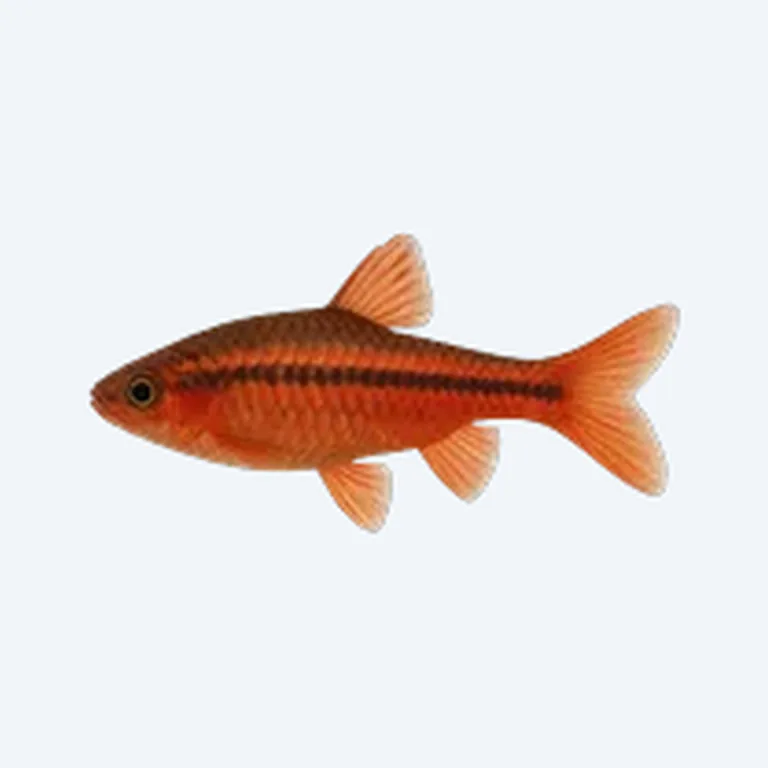
- Species: Puntius titteya - one of the few genuinely peaceful barbs, suitable for community tanks.
- Tank size: 60 L (16 US gal) minimum; 80-100 L gives you the stocking flexibility to make them look their best.
- Parameters: 22-27°C (72-81°F), pH 6.0-7.0, soft to moderately hard water.
- Group size: Six minimum - more females than males (2:1 ratio) reduces male harassment and stress colouration.
- Colour reality: Males only flush deep red when settled and comfortable; pale fish in a shop are not defective.
- Beginner rating: Genuinely easy - hardy, undemanding feeders that tolerate minor parameter fluctuation better than most tropical fish.
Why cherry barbs stand out
The freshwater hobby has a complicated relationship with barbs. Tiger barbs earned a reputation for fin-nipping chaos, and that reputation unfairly tainted the whole genus. Cherry barbs (Puntius titteya) are a different animal. They're mild-mannered, active at all levels of the water column, and the males develop a genuinely striking red colouration that rivals fish three times the price. They're also on the best fish for beginners list for good reason - they'll survive the learning curve that kills a lot of other species.
Wild cherry barbs are native to Sri Lanka's Kelani River basin, where they inhabit slow-moving, heavily shaded streams with leaf litter bottoms. That habitat context matters when you're setting up their tank: they didn't evolve under bright open water conditions, and replicating some of that softness and shade pays dividends in behaviour and colouration.
Tank setup
Size and footprint
Sixty litres is the workable minimum for a group of six, but it's tight. An 80 L tank with a longer footprint gives the males space to establish loose territories without constant confrontation, and it gives you room to add compatible tankmates without crowding. Cherry barbs are active mid-water swimmers - footprint matters more than height here, so a long, shallow tank beats a tall, narrow one of equivalent volume.
Planting and décor
Dense planting is not optional if you want to see these fish at their best. Males will display and colour up in a planted tank in a way they simply don't in a bare or lightly decorated setup. Use a mix of background plants like Vallisneria or Hygrophila, midground clumps of Java fern or Cryptocoryne, and floating plants to diffuse surface light. Floating plants - water sprite, frogbit, dwarf lily pads - make a noticeable difference. They break up overhead glare, which is one of the main triggers for washed-out colouration in males.
Dark substrate helps too. A fine black sand or dark gravel will make the red colouration pop far more than white or bright gravel. Add some leaf litter or driftwood if you want to push closer to their natural habitat - it also provides tannins that slightly soften and acidify the water, which these fish appreciate.
Add a handful of Indian almond leaves or a small piece of driftwood to naturally release tannins. The water takes on a light tea colour, pH edges down gently, and males reliably colour up darker within a few weeks.
Filtration and flow
Cherry barbs don't want strong flow. A sponge filter or a hang-on-back filter with a spray bar pointed at the glass is more appropriate than a powerhead set to maximum. They're small fish - 4-5 cm (about 2 inches) fully grown - and they spend energy fighting current they'd rather not deal with. Gentle turnover of 4-6 times the tank volume per hour is enough to maintain water quality without turning the tank into a river.
Water parameters
The target range is 22-27°C (72-81°F) and pH 6.0-7.0. They'll tolerate slightly outside these ranges - pH up to 7.5 won't kill them, and a temporary temperature dip to 20°C is survivable - but sustained life at the edges will suppress colouration and long-term health. Keep parameters stable. A slow drift is less stressful than a sharp swing. See the full guide to aquarium water parameters if you're still calibrating what to test and when.
Hardness isn't something most beginner guides bother to specify, but cherry barbs prefer soft to moderately hard water - roughly 2-15 dGH. If you're on very hard tap water (above 20 dGH), consider cutting it with RO water or collecting rainwater. They'll survive in harder water, but breeding success drops significantly.
Males typically reach 4-4.5 cm; females are slightly smaller and rounder-bodied when well-fed.
The colour question - what most guides get wrong
Walk into any fish shop and you'll probably see cherry barbs sitting in a bright, bare, overcrowded tank looking pale pink and stressed. Beginners assume that's what the fish look like. It's not. A male cherry barb in a settled, planted tank with good water and a 2:1 female-to-male ratio will develop an intense brick-red to cherry-red colouration that covers the entire body. Females stay a softer brown-copper, which is attractive in its own right against dark substrate.
The three things that consistently kill male colouration are: too much overhead light with nowhere to retreat, a single male or heavily male-skewed group where competition stress is constant, and parameter drift - usually a creeping pH rise or temperature fluctuation. Fix those three things and you won't recognise the same fish.
Most fish shops sell cherry barbs in conditions that make them look terrible. The fish in the display tank is not representative of what you'll have in six weeks with proper setup. Buy them even if they look pale - they colour up quickly once settled.
Feeding
Cherry barbs are straightforward omnivores. A quality small-pellet or flake food as the staple is fine. Round that out with frozen or live foods two or three times a week - daphnia, bloodworm, and brine shrimp all work well and will noticeably improve colouration over time. They're not picky and they're not aggressive feeders, so make sure any food makes it to mid-water where they spend most of their time. Very large pellets will sink before the cherry barbs reach them.
Feed small amounts twice a day rather than one large feeding. Anything uneaten within two minutes should be removed - cherry barbs tend to be cautious eaters initially in a new tank, and leftover food is an ammonia spike waiting to happen.
Stocking and tankmates
Group composition
Six is the minimum group size. Eight to ten is where you start to see natural shoaling behaviour rather than defensive clustering. Keep a ratio of roughly two females per male - with a 50/50 split, the males chase females relentlessly and females become chronically stressed. Add more females than males and the males redirect energy into displaying rather than harassing.
Buying three or four cherry barbs because the tank "feels full." A group that small produces a dominant male that bullies the others, and the fish spend their time hiding rather than shoaling. Six is the minimum - not a suggestion.
Compatible tankmates
Cherry barbs are genuinely peaceful and work with a wide range of similarly sized, non-aggressive fish. Good options include neon tetras, ember tetras, harlequin rasboras, corydoras catfish, small loaches like kuhlis, and dwarf gouramis. They share water chemistry needs with most of these, which simplifies maintenance.
Avoid slow, long-finned fish. Cherry barbs rarely nip unprovoked, but they're still barbs, and the temptation of a betta's flowing tail or an angelfish's long fins is genuine. Keep them with fish that can hold their own or that aren't carrying a target. Also avoid aggressive cichlids, large boisterous fish that will outcompete them at feeding, and anything large enough to eat a 4 cm fish.
Use the free stocking calculator to check how cherry barbs fit into your planned community before you buy.
Health and common problems
Cherry barbs are robust. The most common issues are environmental rather than disease-related. Ich (Ichthyophthirius multifiliis) is the most likely pathogen you'll encounter, usually triggered by a temperature drop or the stress of new arrival. It presents as white spots on fins and body. Raise temperature gradually to 28-29°C (82-84°F) and treat with a proprietary ich medication - most tropical fish medications are safe at the dosage on the label.
Fin rot occasionally appears in tanks with poor water quality. If you see ragged or receding fin edges, check ammonia and nitrite first - if those are zero and nitrate is under 20 ppm, look at whether a tankmate is nipping. Fin rot that's caught early resolves with clean water and partial course of antibacterial treatment.
Ammonia and nitrite should always read zero in an established tank. If your cherry barbs are gasping at the surface, hanging near the filter outlet, or showing clamped fins, test the water before reaching for medication - most of the time it's a water quality problem, not a disease. Make sure your tank is properly cycled before adding fish. See the guide to how to cycle a fish tank if you're not sure.
Breeding
Cherry barbs breed readily in a well-planted tank, often without any deliberate intervention on your part. Males will display intensely to females - flaring, circling, showing off colour - and spawning occurs in fine-leaved plants or moss. The eggs are scattered and the parents don't guard them, but they're also less aggressively egg-eating than many barbs. In a densely planted tank, some fry often survive unplanned.
If you want controlled breeding, set up a separate 20-30 L tank with java moss or a spawning mop, a sponge filter, and water at the lower end of the temperature range (22-24°C). Condition a pair with live foods for a week, then introduce them to the breeding tank. After spawning, remove the adults. Eggs hatch in 24-48 hours; fry are free-swimming by day three or four. Start feeding infusoria or commercial fry food, moving to baby brine shrimp as they grow.
Maintenance routine
Weekly water changes of 25-30% keep nitrates in check without stressing the fish with sudden parameter shifts. Test water parameters at least fortnightly - cherry barbs are tolerant, but tracking trends before they become problems is better than reacting to them after. If you're running multiple tanks, App-aquatic's test log and reminder system makes it easy to keep that data in one place without relying on memory or scraps of paper.
Check out the guide on how often to do water changes if you want to dial in a routine that works for your tank volume and stocking level.
Track your parameters and get care reminders with App-aquatic.
Get the free appHow many cherry barbs should I keep together?
Six is the minimum and it's not negotiable if you want natural behaviour. Eight to ten is better. Aim for two females for every male - a 2:1 female-to-male ratio dramatically reduces male aggression toward females and produces better colour displays.
Why are my cherry barbs so pale?
The three most common causes are bright unbroken overhead light, too many males relative to females (stress from constant competition), and water parameter drift. Add floating plants to diffuse light, check your pH and temperature are stable within the target range, and reassess your male-to-female ratio. Pale fish in a shop are almost always an environmental issue, not a sign you bought bad stock.
Are cherry barbs fin nippers?
Less than most barbs, but not zero. In a proper-sized group with enough females, the males direct their energy at displaying to each other and courting females rather than attacking tankmates. The risk increases with long-finned, slow-moving fish like bettas or fancy guppies. Keep them with active, similarly-sized fish and fin-nipping is rarely a problem.
Can cherry barbs live with bettas?
It depends on the individual betta's temperament, but it's generally not a recommended pairing. Cherry barbs may nip a betta's fins, and some bettas will harass or attack small fish. There are safer tankmates for both species. If you do try it, have a backup plan and watch closely for the first week.
What do cherry barbs eat?
They're easy omnivores. A quality small-particle flake or micropellet as a daily staple, supplemented two or three times a week with frozen daphnia, bloodworm, or brine shrimp. The live and frozen foods make a real difference to colouration over time. Feed small amounts twice daily rather than one large meal, and remove anything uneaten after two minutes.