
Fish care
Guppy: Complete Care Guide
Last updated: May 2026
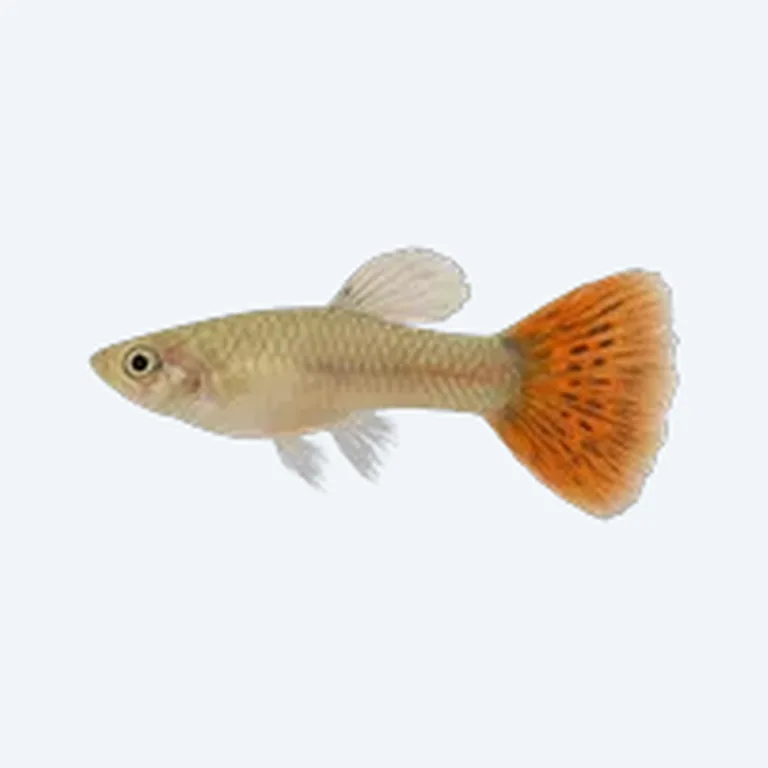
- Tank size: 40 L (11 US gal) minimum, but 60-75 L gives you the colony size and water stability guppies actually need.
- Parameters: 22-28°C (72-82°F), pH 6.8-7.8, moderate hardness (8-15 dGH). They tolerate a range but thrive in stable, slightly hard water.
- Sex ratio: Keep at least two females per male - three is better. Males harass females relentlessly if the ratio is wrong.
- Feeding: Small, varied meals twice daily. Spirulina-based foods and live or frozen foods are not optional extras - they directly affect colour, immunity, and spine health.
- Reproduction: One inseminated female can produce fry for up to six months from a single mating. Plan for fry before you buy a mixed group.
- Biggest beginner error: Overstocking males for their colour, then wondering why females are shredded and dying young.
Why guppies are not as simple as their reputation suggests
Poecilia reticulata sits on every "easy beginner fish" list, and for good reason - they forgive a lot. But "easy" has quietly become code for "neglect-tolerant," and that framing does guppies a disservice. A well-kept colony of healthy, full-coloured guppies with intact fins and long lifespans looks nothing like the stressed, clamped, short-lived fish many beginners end up with. The difference almost always comes down to three things: sex ratio, diet, and water hardness. Get those right and guppies genuinely are easy. Get them wrong and you'll be wondering why your fish keep dying in a tank that tests fine.
If you're still cycling your tank, sort that before adding any fish. A fully cycled nitrogen cycle is non-negotiable - read the how to cycle a fish tank guide first if you're not sure where you stand.
Tank setup and water parameters
Size and stocking density
The 40 L minimum is real, not a marketing floor. Guppies are active, social fish, and a colony of six in a 30 L tank is asking for ammonia spikes and chronic stress. For a starter group of six to eight fish - which is the minimum that gives you natural shoaling behaviour - aim for 60-75 L. That water volume also buffers temperature swings and dilutes the waste load from regular fry drops.
Use the free stocking calculator to check whether your planned group fits before you buy. Guppies look small on paper but a productive colony multiplies fast.
Temperature
The 22-28°C (72-82°F) range is accurate. In practice, most guppies do best held consistently around 24-26°C (75-79°F). The upper end of the range speeds metabolism and breeding but shortens lifespans - you'll notice fish from farms kept at 28°C often look aged within 18 months. If you're not actively trying to accelerate fry growth, keep the heater set at 25°C and leave it alone.
pH and hardness - the part most guides gloss over
Guppies are from hard, slightly alkaline water in the wild. A pH of 6.8-7.8 covers them, but the sweet spot is 7.0-7.6 with moderate hardness, roughly 8-15 dGH. This matters more than most beginner guides admit.
Guppies kept long-term in very soft water (under 4 dGH) often show osmotic stress - slow growth, dull colour, higher disease susceptibility, and reduced fry survival. If your tap water is very soft, adding a small amount of crushed coral to the filter media or doing partial water changes with slightly mineralised water makes a real difference. Conversely, extremely hard municipal water above 25 dGH can contribute to fin erosion over time. Blending with RO water for changes brings it down without crashing your pH.
Many guppies sold in shops come from soft-water fish farms in Asia. They may look fine initially in your hard tap water, but fish bred for generations in soft water can take several generations to fully adapt. If your colony seems chronically dull or disease-prone despite clean water, hardness mismatch is a plausible reason - not just "bad luck."
The sex ratio problem - what most people get wrong
Walk into any fish shop and the males are the ones on display: vivid fan tails, sword tails, delta tails, mosaic patterns. It's almost impossible not to buy mostly males. That impulse will ruin your tank.
A male guppy pursues females relentlessly. In a 1:1 ratio, a single female receives non-stop harassment - she can't feed properly, rests on the bottom, drops fry prematurely, and often dies within months of what looks like "old age" but is really chronic stress. The minimum is two females per male. Three females per male is where you actually see females behave normally: swimming freely, eating well, growing to full size.
If you buy a mixed group and add it to a tank with existing males, check your ratio immediately. Even one extra male pushing a female group below the 2:1 threshold is enough to see fin damage and hiding behaviour within a week.
Three females per male significantly reduces harassment stress and keeps females in good condition long-term.
Feeding guppies properly
Most people underfeed variety and overfeed quantity. A daily dump of tropical flake is how you end up with bloated, constipated fish with bent spines by year two.
What to feed
Guppies are omnivores with a meaningful herbivorous component to their natural diet. A good rotation looks like this:
- Base food: A quality micro-pellet or crushed flake with spirulina listed in the first few ingredients - not just as a trace additive.
- Protein source: Frozen or live daphnia, baby brine shrimp, or micro worms two to three times a week. These aren't treats - they're what keeps immune function and colouration strong.
- Vegetable matter: Blanched spinach, zucchini, or cucumber once or twice a week. Gut content matters for long-term digestive health.
- Fry diet: Newly hatched brine shrimp or powdered fry food. Crushed flake works but growth rates lag significantly without live food in the first few weeks.
How much and how often
Feed small amounts twice daily - what they eat in two minutes, nothing more. One feeding per day is adequate but twice a day with smaller portions produces noticeably better body condition and colour over time. Skip feeding one day per week to clear digestive tracts.
Feeding only dry pellets and expecting vibrant colour. Spirulina content in dry foods degrades with shelf time, and pellets alone don't provide the amino acid variety guppies need for peak pigmentation. If your males look dull despite good water quality, diet is almost always the cause.
Breeding - understanding what you're signing up for
Guppies will breed. If you have a mixed group, fry will appear within four to six weeks of purchase regardless of what you do. A female stores sperm after a single mating and can produce multiple broods - typically 20-50 fry every 28-35 days - without any further male contact. That's not an exaggeration. One female bought pregnant from a shop can produce fry for six months straight in your tank.
Managing the population
You have three realistic options: keep a species-only tank and sell or give away surplus fry; keep tank mates that will eat newborn fry naturally (most fish over 5 cm will); or separate males and females entirely if you don't want any breeding at all. A planted tank with dense vegetation gives fry enough cover to survive to sellable size if you want to grow them on.
Don't fall into the trap of thinking a breeding trap solves the problem. Females in breeding traps are highly stressed, often drop premature fry, and the small volume causes ammonia spikes. A separate 20-30 L growout tank is a far better investment if you want to raise fry intentionally.
Java moss, hornwort, and floating plants like frogbit give newborn fry immediate cover from adult fish. A carpet of java moss alone will save a meaningful proportion of each drop without any intervention from you.
Common health problems and how to avoid them
Fin rot
Usually bacterial, often triggered by poor water quality or fin-nipping tank mates. Fix water quality first - most early-stage fin rot resolves with consistent clean water alone. If fins are receding toward the body, a broad-spectrum antibiotic treatment becomes necessary. See the aquarium water parameters guide for what levels actually drive bacterial infections.
Bent spine (spinal deformity)
Curved or kinked spines in adult guppies can be genetic, developmental, or nutritional. Genetic cases - especially in inbred fancy lines - are irreversible. Nutritional cases often improve with a better diet, particularly more varied protein and vitamin sources. Fish showing a bent spine that was straight before are nutritional cases; fish born bent are almost certainly genetic. Neither is contagious, but heavily inbred fancy guppy lines commonly carry this trait - it's worth knowing before investing in expensive show-quality fish.
Velvet and ich
Guppies are susceptible to Oodinium (velvet) and Ichthyophthirius (ich), particularly when chilled or stressed. Velvet presents as a fine gold or rust dust on the body - it's easy to miss under bright light. Both are treatable if caught early. Temperature instability is the most common trigger in home tanks; a reliable heater with a separate thermometer to verify it is cheap insurance.
A healthy female produces a new brood roughly every month at typical tank temperatures.
Tank mates
Guppies are peaceful and work with most community fish of similar size and temperament. Good companions include corydoras catfish, small tetras like neons or embers, harlequin rasboras, and otocinclus. Avoid fin-nippers - tiger barbs, serpae tetras, and some larger tetras will absolutely target guppy tails, especially the flowing fins of fancy males. Also avoid fish large enough to eat adult guppies, which rules out most cichlids and any fish over 8-10 cm with a wide mouth.
Betta fish and guppies are a gamble. Some bettas ignore guppies entirely; others hunt them constantly. If you're considering it, check the best fish for beginners guide for temperament-matched alternatives that don't carry that risk.
Maintenance schedule
Guppies don't need complicated maintenance - they need consistent maintenance. Weekly water changes of 20-30% are the single most effective thing you can do for long-term fish health. Skipping changes for two weeks and doing a 50% catch-up is worse than steady weekly changes of the same total volume, because large changes shock chemistry and temperature more than small regular ones.
Test your water at least weekly while your tank is establishing, and monthly once stable. Log results so you can spot drift - a pH that's been sliding down by 0.1 every month tells you your buffering is exhausted before your fish start dying. The water change frequency guide covers scheduling in detail. App-aquatic lets you log test results and set change reminders across multiple tanks if you want a record that's easier than a notebook.
Track your parameters and get care reminders with App-aquatic.
Get the free appHow many guppies can I keep in a 60 L (16 US gal) tank?
A colony of eight to ten is comfortable in 60 L - aim for six to eight females and two to three males. That ratio keeps stress low and the bioload manageable with weekly water changes. Factor in that females will produce fry, so you'll need a plan for the growing population.
Can I keep only male guppies to avoid breeding?
Yes, and it works well. An all-male tank removes the breeding problem and lets you keep the most colourful fish. Males still establish a loose hierarchy and occasional chasing happens, but in a group of six or more with visual breaks in the tank (plants, decor), it's rarely a welfare issue.
My guppy is hanging at the surface - what does that mean?
Surface-hanging usually means low dissolved oxygen, ammonia stress, or gill damage. Test ammonia and nitrite immediately. If parameters are fine, check surface agitation - guppies need reasonable surface movement for gas exchange. A clamped, surface-hanging fish that also shows rapid gill movement is a gill fluke or ammonia situation until proven otherwise.
How long do guppies live?
In good conditions, two to three years is typical. Fancy long-finned strains that have been heavily inbred for show traits often live shorter lives - 12 to 18 months is common for some ornamental lines. Wild-type or feeder guppies are generally hardier and longer-lived than high-grade fancy varieties.
Do guppies need a heater?
Yes, unless your home stays genuinely stable between 22-28°C year-round. In most climates that means a heater is non-negotiable. Temperature drops overnight or seasonally are one of the most common triggers for ich and velvet outbreaks in guppy tanks. A 50-100W adjustable heater and a cheap separate thermometer to verify it's holding temperature is all you need.