
Fish care
Kuhli Loach: Complete Care Guide
Last updated: May 2026
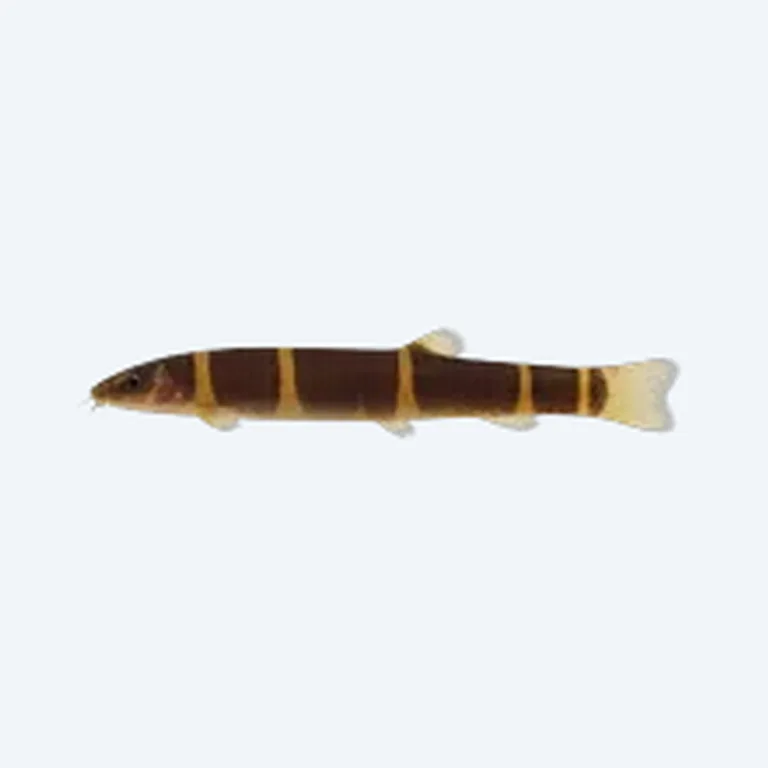
- Substrate is non-negotiable: Fine sand only - kuhli loaches burrow with their snouts and sharp gravel causes barbel infections that are hard to treat.
- Keep groups of six or more: Fewer than six and they spend most of their time hiding. Numbers give them confidence.
- Minimum tank: 80 L (21 US gal) for a group, longer footprint preferred over height - they live on the bottom.
- Water parameters: 24-30°C (75-86°F), pH 5.5-6.5, soft to moderately soft water. They come from blackwater streams in Southeast Asia.
- They are nocturnal: Expect to rarely see them during the day until the tank is mature, well-planted, and they feel safe.
- Feed after lights out: Sinking wafers dropped once the tank dims, otherwise faster tankmates eat everything first.
What kuhli loaches actually are
Pangio kuhlii is a small, eel-shaped loach from the slow-moving streams, swamps, and rice paddies of Southeast Asia - Indonesia, Malaysia, Singapore, Thailand. They share their native habitat with blackwater conditions: warm, acidic, tannin-stained water over soft muddy or sandy substrate. That background explains almost every care decision you need to make.
They reach about 10 cm (4 inches) in a home aquarium. They are peaceful, completely inoffensive to other fish, and spend the vast majority of their waking hours - which happen at night - sifting through substrate looking for food. During the day, most of a healthy group will be wedged behind the filter, inside a piece of PVC pipe, or buried under a Java fern's root mass, apparently doing nothing. That is normal behaviour, not a sign of stress.
Several species are sold under the "kuhli loach" label. Pangio kuhlii is the striped standard, but you may also encounter Pangio semicincta (very similar), Pangio shelfordii, and the all-brown or black "chocolate" kuhli (Pangio oblonga). Care requirements are near-identical across the group.
Kuhlis are listed as intermediate care, and that's fair - not because they're fragile, but because beginners often set up tanks that are wrong for them by default: gravel substrate, bright lighting, sparse decor, small groups. If your tank already ticks those boxes in the wrong direction, kuhlis will be miserable and invisible. Get the setup right and they're actually quite robust.
Tank setup
Substrate
This is the single most important thing to get right. Kuhli loaches push their snouts through substrate as a core feeding behaviour. Fine-grained sand - pool filter sand, play sand, or aquarium-specific fine sand - is what you need. Grain size of 0.5-1 mm is ideal. Anything coarser and you risk abrasion to their barbels (the small whisker-like sensory organs around the mouth). Barbel damage opens the door to bacterial infection, and a kuhli with infected barbels is hard to treat.
Gravel, even "smooth" rounded gravel, is not suitable as the primary substrate for this species. If you already have a gravel tank, you can add a sand section specifically for them, but a full sand bed is better.
Depth matters too. Aim for at least 5 cm (2 inches) of sand. Kuhlis will occasionally bury themselves completely - a deep enough bed lets them do this without bottoming out on the glass.
Most people buy kuhlis and add them to an existing gravel tank thinking "they'll be fine, they're just loaches." Over weeks, the barbels shorten, the fish become lethargic, and bacterial infections follow. By the time the problem is visible, it's already been going on for a while. Sand first, then fish.
Tank size and shape
The 80 L (21 US gal) minimum is for a group of six. If you want more - and you should, kuhlis do better in larger groups - go bigger. A 100-120 L (26-32 US gal) tank gives you room for a proper group of eight to ten alongside a handful of midwater companions.
Footprint matters more than volume. Kuhlis are bottom-dwellers. A tall, narrow aquarium with 80 L isn't as useful as a shallower, longer one with the same volume. Prioritise tanks with a longer base dimension.
Filtration and flow
Kuhlis need clean water but come from low-flow environments. A sponge filter or a canister filter with a spray bar turned to reduce surface agitation works well. Strong powerheads aimed directly at the substrate will stress them. Moderate filtration, consistent water changes - how often to do water changes covers the general logic - and a mature, cycled tank are the baseline. If you haven't cycled the tank yet, do that before adding any fish: how to cycle a fish tank.
One thing to check: filter intake pipes. Kuhlis are slim enough to get sucked into standard filter intakes, especially when young. Cover intakes with a sponge pre-filter. This is not optional - it happens.
Kuhlis can and do escape through tiny gaps. Any opening at the top of the tank - around filter pipes, heater cables, or a poorly fitting lid - is a potential exit. They move fast when startled and are surprisingly good at finding gaps you didn't know existed. A tight-fitting lid is essential.
Decor and lighting
The more cover you provide, the more you'll actually see these fish. That sounds counterintuitive, but kuhlis that feel secure will venture out more, especially in dim light. PVC pipe sections, hollow ceramic tubes, dense planting with stems reaching the substrate, leaf litter (dried Indian almond leaves are ideal and also lower pH slightly), and driftwood all work well.
Bright, unbroken lighting is your enemy. Kuhlis are diurnal-light avoiders. A dimly lit tank, or one with plenty of shaded areas, produces kuhlis that are active during the evening transition period when you're actually watching. A tank blasted with high-intensity reef lighting over bare sand produces fish you almost never see.
Water parameters
Kuhlis come from soft, acidic water. Their natural habitat has a pH often as low as 4.5-5.5 in the wild, though aquarium-kept fish adapt to a wider range. For captive specimens, 5.5-6.5 is the target. Many fishkeepers keep them comfortably at pH 6.5-7.0, especially fish that have been tank-bred for several generations, but pushing toward neutral and alkaline water long-term isn't ideal.
Temperature should sit between 24-30°C (75-86°F). The sweet spot for most kept groups is 25-27°C (77-81°F). Don't let the tank drop below 22°C (72°F) - kuhlis become very sluggish and their immune response slows.
Hardness: soft to moderately soft. If your tap water is very hard (above 15 dGH), consider mixing with RO water or using remineralised RO. For a thorough breakdown of what all these numbers mean, see the guide to aquarium water parameters.
Ammonia and nitrite should be zero at all times. Nitrate below 20 ppm. Kuhlis are not uniquely sensitive to nitrogen compounds compared to most tropical fish, but like all bottom-dwellers they're often in the zone of highest waste accumulation - detritus settles on the sand, and dirty substrate hits bottom fish first.
Kuhlis kept in groups of fewer than six spend significantly more time hiding. Six is the floor; eight to twelve produces the best behaviour.
Feeding
Kuhlis are omnivores that eat small invertebrates, organic detritus, and plant matter in the wild. In a home aquarium they'll take sinking pellets, wafers, frozen bloodworm, daphnia, brine shrimp, and blanched vegetables. They're not fussy eaters - the challenge is timing and delivery.
Feed after lights out. Drop sinking wafers or pellets once the main tank light is off and any period of dimming has started. This gives kuhlis first access before they compete with day-active species. If you feed during the day, faster midwater fish will typically eat everything before it reaches the bottom.
Rotate between protein-heavy foods (bloodworm, brine shrimp) and a quality sinking pellet as the staple. Feed small amounts every day or every other day rather than large amounts infrequently - uneaten food on the substrate leads to ammonia spikes and bacterial blooms that hit bottom-dwellers hard.
If you keep kuhlis with active midwater fish, use a feeding tube or turkey baster to deliver sinking food directly to the substrate near their favourite hiding spots after lights out. It takes thirty seconds and makes a real difference to whether they're getting fed properly.
Tankmates
Kuhlis are genuinely peaceful and get along with most community fish that share similar water parameters. Good companions include ember tetras, cardinal tetras, harlequin rasboras, chili rasboras, small danios, and other small peaceful species from soft-water Southeast Asian or South American environments.
Avoid anything aggressive or nippy. Tiger barbs will harass them. Large cichlids will stress or eat them. Fast, boisterous fish that outcompete for food are a practical problem even if they're not actively aggressive. Bottom-heavy tanks with multiple species competing for the same zone - like pairing kuhlis with corydoras in an undersized tank - can work but needs more careful management of space and feeding.
Kuhlis are fine with dwarf shrimp in practice, though they will eat baby shrimp opportunistically. Adult Neocaridina and Caridina shrimp are generally left alone.
Use the free stocking calculator to check your full combination before buying - it's easy to overstock the bottom zone specifically when you're excited about kuhlis and their companions.
What most care guides miss
The group size effect on visibility
Most guides mention groups but don't explain the mechanism. Kuhlis are prey animals. A lone kuhli, or a pair, reads the environment as risky and stays hidden almost permanently. A group of eight develops what looks like collective confidence - individuals start venturing out because others are already out. The difference between four kuhlis and eight kuhlis in the same tank is not subtle. It's the difference between fish you rarely see and fish that become a genuine feature of your tank.
Tank maturity matters enormously
New tanks make kuhlis anxious even when parameters are correct. A tank that has been running for six months, with established beneficial bacteria, stable parameters, and grown-in plants, produces much calmer, more visible kuhlis than a newly set-up aquarium. If you add them early and never see them, give it time before concluding something is wrong. Track your parameter history in App-aquatic to confirm the tank has genuinely stabilised - swings you don't notice can explain skittish behaviour.
They're escape artists in early weeks
Newly added kuhlis are particularly prone to escaping or wedging themselves in filter intakes during the first few weeks in a new environment. The stress of transport and a new tank triggers erratic movement. This is when most losses happen - not from disease, but from physical hazards. Lid check, intake pre-filter, no gaps. Do this before adding them, not after you've lost one.
Kuhlis are sometimes sold as "beginner friendly" because they're peaceful and cheap. They're not the right first fish. The substrate requirement, the group size minimum, the need for a mature and well-decorated tank, and the nocturnal feeding logistics all add up to a setup that beginner tanks rarely have. If you want something genuinely beginner-friendly, see the guide to best fish for beginners. If your tank is already established and properly set up, kuhlis are a great addition.
Health and disease
Kuhlis are scaleless - technically they have very small embedded scales, but they lack the protective armour of fully-scaled fish. This makes them significantly more sensitive to medication. Standard doses of copper-based treatments, malachite green, and some formalin treatments that other fish tolerate will harm or kill kuhlis. Always use half the recommended dose when treating a tank containing loaches, and research any medication specifically before using it.
Common health issues include ich (white spot), which shows up as white grains on the skin and fins, and bacterial infections of the barbels from substrate damage. Ich is treated with heat (slowly raising to 29-30°C/84-86°F for two weeks) or with half-dose ich treatment. Barbel infections need clean water, sand substrate, and in serious cases, antibiotic treatment.
A healthy kuhli is active after lights out, has clean intact barbels, normal colouration, and a slightly rounded belly. A kuhli that's hiding more than usual during its active period at night, is thin, has clamped fins, or shows white patches warrants closer inspection.
Track your parameters and get care reminders with App-aquatic.
Get the free appWhy are my kuhli loaches always hiding?
Usually one of three reasons: the group is too small (fewer than six), the tank doesn't have enough cover, or the tank is too new and they don't feel settled yet. Bright lighting with sparse decor is also a major factor. Add more hiding spots, increase the group size if you're below six, and give a mature tank time - kuhlis typically become more visible as the tank establishes over months.
Can kuhli loaches live with bettas?
Often yes, but it depends on the individual betta. Kuhlis occupy the bottom, bettas the surface, so spatial overlap is minimal. The risk is a nippy betta going after the long, worm-like body of a kuhli. If you try it, watch the first few hours carefully. A well-planted tank with plenty of hiding spots reduces the risk. The betta also needs to be in a tank large enough for kuhlis - 80 L minimum.
Do kuhli loaches need sand, or can they use gravel?
They need sand. Gravel abrades their barbels and soft undersides as they burrow and sift for food, and that damage leads to barbel infections that are hard to treat. Use fine, smooth sand at least 5 cm (2 inches) deep so they can dig and bury themselves properly.