
Fish care
Molly Fish: Complete Care Guide
Last updated: May 2026
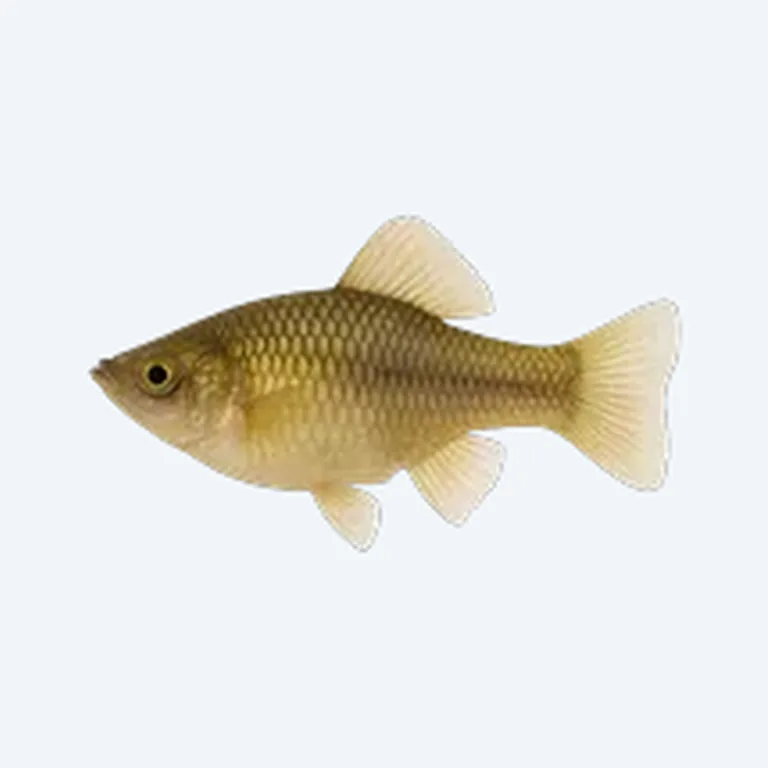
- Tank size: 80 L (21 US gal) minimum for a small group; 120 L (32 US gal) gives you real breathing room.
- Water: 22-28°C (72-82°F), pH 7.0-8.5 - mollies genuinely prefer harder, more alkaline water than most fishkeepers give them.
- Groups: Keep at least six, with two or three females per male to prevent relentless harassment.
- Diet: Omnivores with a strong vegetable lean - algae, blanched courgette, and spirulina flake should make up roughly half their diet.
- Breeding: They will breed without any encouragement. Plan for fry or they'll overwhelm you within months.
- Salinity: Many farm-raised mollies ship from brackish facilities - match that on arrival and transition to fresh slowly if you prefer a freshwater setup.
What kind of fish is a molly, really?
The molly sold in most fish shops is Poecilia sphenops or one of its cultivated variants - balloon mollies, lyretail mollies, black mollies, dalmatian mollies. They're livebearers, meaning females give birth to free-swimming fry rather than scattering eggs. That single fact shapes most of the care decisions you'll make: stocking ratios, tank density, and how fast a small colony snowballs into an overcrowding problem.
Wild-type mollies come from coastal Central America - brackish estuaries, river mouths, warm ditches. That background explains their tolerance for salt, their preference for hard alkaline water, and their tendency to graze constantly on algae and biofilm. In a soft-water acidic tank they can survive, but you'll see more disease, duller colour, and shortened lifespans. The hobby debates a lot of things; mollies preferring alkaline hard water is not one of them.
Water parameters
Get the chemistry right and mollies are genuinely easy. Get it wrong and you'll be treating shimmying fish and fungal infections indefinitely.
Mollies thrive toward the upper end of this range - pH 7.5-8.2 is the sweet spot for long-term health.
Soft water below 100 mg/L is a common trigger for the shimmy disease symptom many beginners blame on infection.
Temperature should sit between 22 and 28°C (72-82°F). They can handle brief dips, but sustained cold below 20°C (68°F) suppresses immune function fast. If your house gets cold in winter, a reliable heater with a backup is worth having - a full breakdown of aquarium water parameters explains why stability matters more than hitting a precise number.
If your tap water is soft and acidic, add a small amount of crushed coral or aragonite to your filter or substrate. It buffers pH upward and raises hardness gradually without chemicals. Far more stable than liquid additives.
Salinity: brackish, fresh, or somewhere between?
Mollies are euryhaline, meaning they tolerate a wide salinity range. You can keep them successfully in pure freshwater - millions of hobbyists do. But if you buy fish from a wholesaler or shop that holds them in lightly brackish water (1-3 ppt salt), dropping them straight into a soft freshwater tank is asking for fungal infections and stress. Ask your supplier what they're keeping the fish in, then match it on arrival. If you want a freshwater setup long-term, reduce salinity gradually over two to three weeks.
Adding aquarium salt to a community tank can harm fish that are salt-sensitive - corydoras, most tetras, and many loaches don't tolerate it well. If you want to use salt for mollies, keep them in a species-only or brackish-tolerant setup.
Tank setup and size
The 80 L (21 US gal) minimum is genuine, not padded. Mollies are active mid-to-top-level swimmers and they produce a surprisingly high bioload for their size, especially when you factor in inevitable fry. A 120 L (32 US gal) tank gives you the water volume to buffer chemistry fluctuations and the space to keep a realistic group without fin-nipping spiralling out of control.
Footprint matters more than height. A long, shallow tank suits them better than a tall one - they're not deep-water fish and they benefit from surface area for gas exchange.
Filtration and flow
Mollies are messy. They graze constantly and produce waste to match. You want filtration rated for at least 1.5 times your tank volume per hour, and good biological filtration is non-negotiable. If your tank isn't fully cycled before you add fish, you're going to have problems - read through how to cycle a fish tank before you buy anything. A tank with an established nitrogen cycle is the single biggest factor in keeping mollies healthy.
Plants and decor
Mollies graze on algae and soft plant matter, which means they'll nibble fine-leaved plants like hornwort or java moss. Tougher plants - Anubias, Java fern, Vallisneria - hold up well and give females somewhere to hide from persistent males. Open swimming space in the middle, planted edges and back. That's the layout that keeps these fish calm.
Feeding mollies properly
Most guides call mollies omnivores and leave it there. The reality is they're heavily herbivorous by nature - in the wild they spend most of their time grazing biofilm and algae off surfaces. In a tank, that means a diet weighted toward plant matter works better than standard tropical flake alone.
A practical feeding rotation:
- Spirulina flake or wafers as a staple - two to three times per week
- Blanched courgette (zucchini), spinach, or cucumber - clip it to the glass and remove after a few hours
- Quality tropical flake or micro pellets for protein balance
- Occasional live or frozen foods: daphnia, baby brine shrimp, bloodworm
Feed small amounts twice a day rather than one large feeding. Uneaten food hits the substrate, rots, and spikes ammonia - particularly problematic in a tank with a high bioload. Two minutes of eating and nothing left is the target.
Feeding only standard tropical flake. It doesn't give mollies enough plant-based nutrition, which leads to digestive issues and washed-out colouring over time. Spirulina content needs to be in the mix regularly.
Stocking and social dynamics
The two-to-three females per male ratio isn't a recommendation - it's a minimum. A single male with one female will harass her continuously to the point of exhaustion. Males constantly want to mate; females do not always want to comply. More females distributes that pressure.
Groups of six or more reduce individual stress. Mollies kept as a pair or trio often show more aggression and skittishness than those in a larger group. Plan your stocking accordingly before you buy - the free stocking calculator will tell you what fits your tank volume with the bioload factored in.
Mollies are often sold as ideal community fish, and they mostly are - but male mollies will sometimes fin-nip slower, longer-finned tankmates like bettas or male guppies. And in a mixed community, overcrowding triggers aggression fast. They're peaceful when conditions are right, nippy when they're not.
Compatible tankmates
Good matches: platies, swordtails, other livebearers, danios, mid-sized rasboras, peaceful corydoras (in freshwater setups without salt). Avoid anything with long flowing fins if your male mollies are on the pushy side, and avoid fin-nipping species like tiger barbs entirely.
Breeding: what you need to know before it happens to you
Mollies breed readily. If you have one male and one female, assume the female is already pregnant when you buy her - females can store sperm and produce multiple batches of fry from a single mating. A healthy female drops 20-100 fry every 4-6 weeks. That number compounds fast.
Fry are born live and immediately mobile. Adults will eat them given the chance. Dense planting or a breeding box gives fry somewhere to survive if you want to raise them. If you don't, don't be surprised when the colony self-regulates through predation - it's not pleasant to watch but it's what happens in an uncurated community tank.
If you genuinely don't want to breed them, keep only males or only females. A single-sex group works fine socially.
A gravid (pregnant) female develops a dark triangular patch near her anal fin - the gravid spot. As she gets closer to dropping fry, her belly becomes noticeably boxy rather than rounded. You'll have a day or two of warning if you're watching.
Common health problems
Shimmying
The shimmy is the most molly-specific problem in the hobby. Affected fish rock side to side in place rather than swimming forward. It's not a disease - it's a symptom of stress, typically caused by poor water quality, low temperature, soft or acidic water, or sudden parameter changes. Fix the water, and the shimmy usually resolves. It doesn't respond to medications.
Ich and fungal infections
Both are opportunistic - they show up when fish are stressed or the tank isn't properly cycled. White spots (ich) and cottony patches (fungus/columnaris) are the two most common presentations. Standard ich treatment at 28°C (82°F) with medication works for ich. Fungal infections respond to antifungal medication but often recur if the underlying cause - usually water quality - isn't addressed. Keep up with regular water changes and test your parameters consistently.
Bloating and digestive issues
Mollies fed exclusively high-protein foods without enough fibre develop constipation and bloat. Feeding plant matter regularly prevents most of this. A two-day fast followed by a small amount of blanched daphnia can help a bloated fish recover.
Quick care reference
Smaller groups increase stress and aggression between individuals.
At the warmer end of their range, females can deliver fry every four weeks.
If you're running multiple tanks or want to track test results over time, App-aquatic keeps your parameter history, stocking lists, and care reminders in one place on your phone.
Track your parameters and get care reminders with App-aquatic.
Get the free appCan mollies live in a fully freshwater tank without salt?
Yes - most mollies kept in the hobby live in freshwater with no issues, provided the water is hard and alkaline. Salt is not a requirement; it only becomes relevant if your fish come from a brackish facility and need gradual acclimatisation, or if you're specifically treating disease in a species-only setup.
Why is my molly shimmying and rocking in place?
Almost always a water quality or chemistry problem - soft water, low pH, cold temperature, or elevated ammonia/nitrite. Test your parameters first. The shimmy is a stress response, not an infection, so medication won't fix it. Address the water and the behaviour typically stops within a few days.
How do I stop mollies from breeding?
Keep only one sex. Males work well together in a group with no females present. If you already have a mixed group, dense planting reduces fry survival without intervention on your part. A breeding box isolates pregnant females if you want to control outcomes more deliberately.
How many mollies can I keep in a 100 L (26 US gal) tank?
A group of six to eight mollies works in a well-filtered 100 L tank, but their breeding capacity means that number can rise quickly. Factor in the fry if you're keeping a mixed-sex group and use the stocking calculator to check bioload against your filtration before you stock up.
Are balloon mollies as healthy as standard mollies?
Honestly, no. The balloon body shape is a spinal deformity bred intentionally for appearance. Balloon mollies are more susceptible to swim bladder problems, have a shorter average lifespan, and are less resilient to water quality swings than standard-bodied fish. They can live decent lives in a well-maintained tank, but go in with realistic expectations.