
Tank mates
Best Molly Tank Mates: Compatible Species
Last updated: May 2026
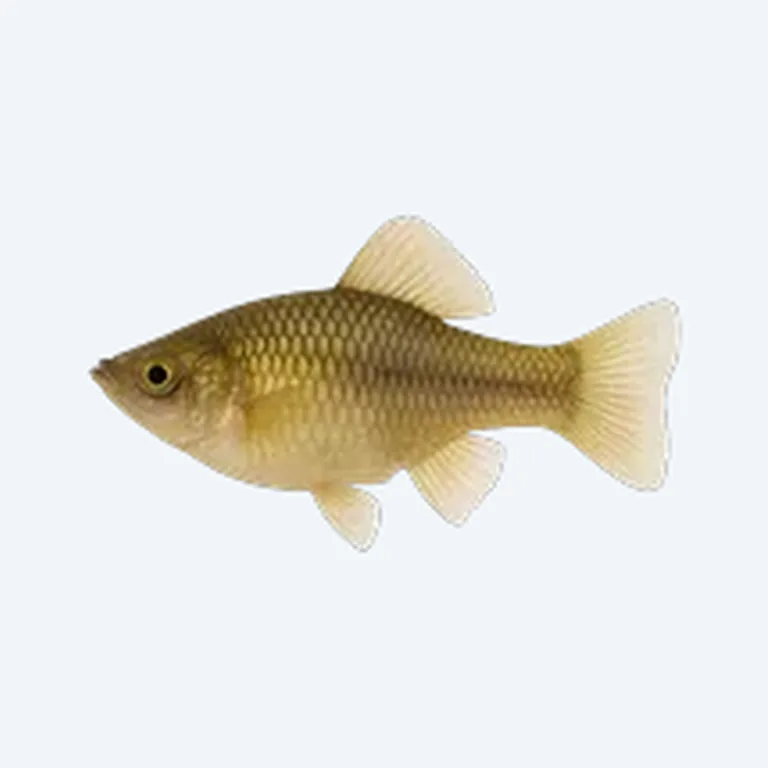
- Minimum tank size: 80 L (21 gal) for a molly group plus tank mates - mollies are active and produce a lot of waste.
- Water chemistry is the filter: mollies need pH 7.2-8.5 and moderate-to-hard water (10-25 dH). Any tank mate that demands soft, acidic water is a bad fit.
- Best companions: platies, swordtails, guppies, Corydoras, peaceful danios, and rasboras that tolerate hard water.
- Avoid bettas: fin-nipping and territory disputes are the norm, not the exception. The combination fails more often than it works.
- Watch your stocking numbers: mollies are social but males harass females relentlessly - keep at least two females per male.
- Blackwater species don't belong here: discus, apistogrammas, and cardinal tetras want soft, acidic water that mollies actively dislike.
Pairing Black Molly with something specific? Our fish compatibility checker compares any two of 815 species on water parameters, predation risk, fin nipping, temperament and tank size - and draws them both at life size so you can see the difference.
Understanding what mollies actually need
Before you pick tank mates, get the molly's baseline right. Poecilia sphenops, P. latipinna, and P. velifera - the three species you'll find in most shops - are livebearer fish native to Central American coastal waterways, which means brackish influence is baked into their genetics. They don't need salt in a community tank, but they do need hard, alkaline water. Target pH 7.5-8.2, general hardness 15-25 dH, and a temperature of 24-28 °C (75-82 °F).
That water chemistry requirement is what rules out the majority of popular community fish. Most of the "compatible" lists you'll find online were written without anyone actually checking whether the recommended species can handle the same mineral content mollies need. Soft-water fish placed in hard, alkaline setups show chronic stress, faded colour, and shortened lifespans - even if they technically survive for a while.
Get your parameters stable before adding any community fish. If you're not sure your cycle is solid, read the guide on how to cycle a fish tank first - introducing tank mates to an uncycled or unstable tank creates problems that water chemistry alone can't fix.
Most beginner guides list mollies as "easy community fish" without mentioning that their water preferences are actually quite specific. They're forgiving of a range, but they're not soft-water fish. Build the tank around their chemistry, then choose companions that fit - not the other way around.
Tank size and group dynamics
Eighty litres is the floor, not the goal. A group of four to six mollies with a supporting cast of Corydoras and mid-water schoolers will be genuinely comfortable in 120-150 L. More space reduces the harassment that male mollies direct at females, gives schooling fish room to behave naturally, and keeps the bioload manageable.
On group ratios: keep two or three females for every male. A single female with two males will be harassed to exhaustion and death. This isn't an edge case - it's a predictable outcome that gets repeated in tanks everywhere. Males are relentless. Spreading the attention across multiple females is the only practical solution short of keeping a single-sex group.
Two females per male reduces harassment stress; three to one is better in smaller tanks with limited hiding space.
The best molly tank mates
Other livebearers: platies, swordtails, guppies
The easiest wins are other members of the livebearer family. Xiphophorus maculatus (platy) and Xiphophorus hellerii (swordtail) share virtually identical water requirements - pH 7.0-8.0, hard water preferred - and have comparable temperaments. They're active mid-water fish that won't compete directly with mollies for territory and won't be intimidated by them either.
Guppies (Poecilia reticulata) work well in principle because they're close relatives with overlapping water needs. The practical issue is male guppies. Their flowing fins can attract nipping from more boisterous mollies, and in a heavily stocked tank that harassment compounds. In a spacious, well-planted tank with plenty of break-up cover, guppies and mollies coexist reliably. In a bare 80 L tank, you'll sometimes see problems.
One thing to be aware of with all livebearer mixes: they breed prolifically. If you're mixing species, you won't get hybrid fry (these species don't typically hybridise in standard setups), but you will get a tank that fills up fast. Have a plan for fry before the fish breed - because they will.
Corydoras catfish
Corydoras are one of the cleanest choices for a molly community tank. They occupy the bottom of the tank, they're peaceful, and many species do well at pH 7.0-8.0 in moderate hardness. Corydoras paleatus (peppered cory) and C. aeneus (bronze cory) are both robust enough to handle the harder end of the water range that mollies prefer.
Keep Corydoras in groups of six or more - they're shoaling fish and show stress when kept in smaller numbers. A group of six corys on the bottom of a 120 L tank with mollies and some mid-water schoolers is a visually active, well-layered community that works.
Corydoras need a soft substrate or very fine sand - their barbels are sensitive and will erode on coarse gravel. If you're keeping them with mollies, use fine sand or smooth river gravel rather than sharp substrate.
Danios and rasboras
Several danio and rasbora species handle harder water well enough to work alongside mollies. Danio rerio (zebra danio) is highly adaptable and will tolerate a wide pH and hardness range without complaint. Devario aequipinnatus (giant danio) is another solid choice for larger tanks - active, robust, and unbothered by molly social behaviour.
Rasboras are more variable. Trigonostigma heteromorpha (harlequin rasbora) prefers slightly soft, acidic water and sits at the edge of what mollies are comfortable with. It can work if your water lands in the neutral zone around pH 7.0-7.2, but it's not the first pick. Rasbora trilineata (scissortail rasbora) is more flexible and handles moderate hardness better.
Whatever danio or rasbora you choose, keep them in groups of at least eight. Their schooling behaviour is the point - a group of three looks nervous and stressed, not decorative.
Peaceful plecos and other algae eaters
Bristlenose plecos (Ancistrus sp.) are a practical addition. They stay small (10-15 cm), handle hard alkaline water fine, and clean algae off glass and decor. Avoid common plecos (Pterygoplichthys pardalis) - they reach 40-50 cm and will outgrow almost any home tank.
Nerite snails also work well in molly tanks. They're effective algae grazers, they prefer hard water (it prevents shell erosion), and they won't be bothered by mollies. Mystery snails are another option, though mollies occasionally nip at their antennae in smaller tanks.
Fish to avoid and why
Bettas
The betta-molly combination gets recommended more than it should. The problems are real and consistent: male bettas are territorial and will treat the active, nippy nature of mollies as a provocation. Mollies will nip at betta fins. The betta will respond. The result is chronic stress for both fish, and usually injury to at least one of them. Some aquarists report it working in large, heavily planted tanks - but it's a marginal case, not the norm. Build your tank around a reliable community rather than hoping this particular combination lands on the right side of the odds.
Blackwater and soft-water specialists
Discus, most dwarf cichlids from the Apistogramma genus, cardinal tetras, and altum angelfish all want soft, acidic water - typically pH 5.5-6.8, hardness under 8 dH. That's the opposite end of the spectrum from what mollies need. You cannot find a compromise water chemistry that satisfies both sides. These species shouldn't share a tank with mollies.
Neon tetras are often suggested as molly companions in beginner guides. They prefer soft, slightly acidic water (pH 6.0-7.0, soft hardness). In the harder water a molly tank requires, neons are living at the edge of their tolerance. They'll survive, often for years, but they won't thrive. There are better choices.
Large or aggressive cichlids
Most New World cichlids - Oscars, Jack Dempseys, green terrors - will simply eat or bully mollies. Mollies are not fighters. Even species that are technically "medium" aggression can make life difficult. Stick to peaceful or semi-peaceful community fish unless you're building a specific cichlid setup.
Adding tiger barbs to a molly community tank. Tiger barbs are notorious fin-nippers and will harass mollies, particularly veiltail varieties. The damage accumulates quickly and opens the fish up to infection. Don't do it.
What most guides miss: salt tolerance and the "brackish option"
Mollies are unusual among freshwater fish in that they tolerate - and in some cases actively benefit from - small amounts of aquarium salt (1-2 tablespoons per 10 L). Some experienced keepers run molly-specific tanks as lightly brackish setups to reduce disease susceptibility and improve fin quality. If you go this route, your tank mate options narrow significantly. Most freshwater community fish don't tolerate salt well at all. Corydoras in particular are sensitive to it and shouldn't be kept in salted water.
For a true community tank, keep it fully freshwater. You'll have more compatible species to choose from and won't stress animals that can't handle the salt. The brackish option is worth knowing about, but it's for a molly-specific setup - not a community tank.
Putting it all together: a practical stocking example
For a 120 L tank at pH 7.5-8.0, 18-22 dH, 26 °C (79 °F):
- 6 mollies (2 males, 4 females) - active mid-water layer
- 6 platies - same layer, different body shape and colour
- 8 zebra danios - upper water, fast and dynamic
- 6 bronze Corydoras - bottom layer
- 2 bristlenose plecos - algae control on hard surfaces
That's a stocked but manageable community. Monitor ammonia and nitrite weekly until the tank is stable, and do a 25-30% water change weekly. For detailed guidance on aquarium water parameters and understanding what your test results mean, that guide covers the full picture. For how often to change water as your bioload increases, see how often to do water changes.
Before you finalise your stocking list, run it through the free stocking calculator to check your tank isn't overstocked. Bioload isn't just about fish count - it's about the waste output per species, and mollies produce more than their size suggests.
If you're managing multiple tanks or want to log test results over time, App-aquatic lets you track water parameters, stocking lists, and care reminders in one place. The free app is useful once you're running more than one setup.
Track your parameters and get care reminders with App-aquatic.
Get the free appCan mollies live with bettas?
Occasionally it works in a large, heavily planted tank, but the combination fails more often than it succeeds. Mollies nip fins, bettas retaliate, and both fish end up stressed or injured. It's not a recommended pairing.
Can mollies live with tetras?
It depends on the tetra. Tetras that prefer soft, acidic water - neons, cardinals, rummynose - aren't good fits for a hard-water molly tank. Black skirt tetras and serpae tetras are also fin-nippers. Larger, harder-water-tolerant tetras like Buenos Aires tetras can work, but they're not the obvious first choice either.
Do mollies need to be kept in groups?
Yes. A single molly in a community tank will be noticeably more stressed and less active than a group. Keep a minimum of four, with the female-to-male ratio of at least 2:1. A lone molly is also more likely to be picked on by other community fish.
Can mollies live with goldfish?
No. Goldfish are cold-water fish that do best at 16-22 °C (61-72 °F). Mollies need 24-28 °C (75-82 °F). The temperature ranges don't overlap enough to keep both comfortably in the same tank.
How many mollies can I keep in an 80 L tank?
Four to six mollies is realistic in an 80 L tank with a working filter and regular water changes. Add tank mates conservatively - Corydoras or a small danio school is manageable, but a full community setup works better at 120 L and above. Use the free stocking calculator to check specific combinations before buying.