
Tank mates
Best Neon Tetra Tank Mates: Compatible Species
Last updated: May 2026
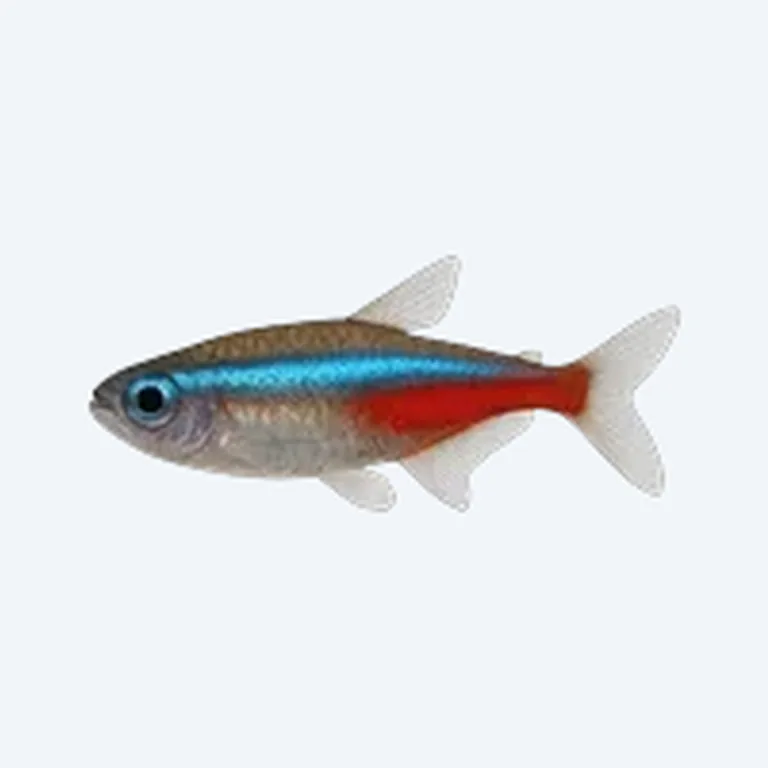
- Minimum tank size: 60 litres (15 US gal) for a neon school plus one or two companion species - bigger is always better.
- Water window: pH 6.0-7.0, temperature 22-26 °C (72-79 °F). Species outside this range are hard to mix without compromise.
- Best companions: Corydoras, harlequin rasboras, ember tetras, Otocinclus, and Amano shrimp all share the same water chemistry and temperament.
- Hard avoids: Adult angelfish, tiger barbs, most bettas, and any cichlid larger than a ram will stress or eat your neons.
- School size matters: Keep neons in groups of at least eight - a small, nervous school makes every tank mate situation worse.
- Cherry shrimp risk: Adult cherry shrimp usually survive, but neons will eat juveniles and shrimplets without hesitation.
Pairing Neon Tetra with something specific? Our fish compatibility checker compares any two of 815 species on water parameters, predation risk, fin nipping, temperament and tank size - and draws them both at life size so you can see the difference.
What neon tetras actually need from a community
Neon tetras (Paracheirodon innesi) are not the bulletproof starter fish they're often sold as. They're small - rarely past 3.5 cm (1.4 in) - and they evolved in slow, heavily vegetated, blackwater streams in South America. That origin matters when you're choosing tank mates, because anything that creates strong flow, raises the pH above 7.2, or looks at neons like a snack is going to cause problems.
The good news is that the "soft, slightly acidic, warm" water window neons prefer is also ideal for a wide range of popular community fish. If you build your tank around that chemistry first, you'll find tank mates almost pick themselves.
Most fish shops keep neons in slightly harder, higher-pH water than they'd naturally prefer - because it's easier to manage across a mixed livestock system. The trade strains sold today are more adaptable than wild-caught fish, but that doesn't mean pH 7.8 is fine. Long-term, soft and slightly acidic water keeps neons healthier and their colours more vivid.
The best neon tetra tank mates
Corydoras catfish
Corydoras are the single most reliable companion for neons. They occupy the bottom of the tank while neons school in the middle, there's zero competition for space, and their water chemistry requirements overlap almost perfectly. Corydoras sterbai is a particularly good choice because it tolerates the higher end of the neon's temperature range (up to 26 °C / 79 °F) better than species like Corydoras paleatus, which prefer cooler water around 20-22 °C (68-72 °F). Keep Corydoras in groups of six or more - they're social and stressed individuals are prone to disease.
Corydoras need soft substrate. Sharp gravel damages their sensitive barbels over time, and fish with injured barbels stop foraging properly. Fine sand or smooth rounded gravel is the right call.
Harlequin rasboras
Trigonostigma heteromorpha school in the same mid-water layer as neons, prefer nearly identical water conditions (pH 6.0-7.5, 22-27 °C / 72-81 °F), and are genuinely peaceful. The slight difference in body shape and the rasboras' copper-and-black colouring means the two species don't compete visually or behaviourally. A tank with a school of neons and a school of harlequins moving through it is one of the easiest community set-ups you can build - and one of the most striking.
Ember tetras
Hyphessobrycon amandae stay under 2 cm (0.8 in), love acidic soft water, and are completely peaceful. They work especially well in planted nano tanks where neons are the larger, showier species. The combination of ember orange and neon blue-red is visually strong. One caution: in tanks below 60 litres, mixing two tetra species can make the tank feel crowded fast - use a stocking calculator to check your numbers before buying.
Cherry barbs
Puntius titteya are one of the few barbs you can reliably keep with neons. They're slow, non-nippy, and the males' vivid red colouring adds contrast to a neon community without any behavioural cost. Keep them in a ratio of at least two females per male to prevent the males from harassing each other or other fish. They prefer pH 6.0-7.5 and temperatures of 23-27 °C (73-81 °F) - a clean overlap with neon requirements.
Dwarf gouramis
Trichogaster lalius can work, but come with caveats. A single male dwarf gourami in a well-planted 80-litre tank with a school of neons is usually fine. Two male gouramis in the same space will fight. And dwarf gouramis are prone to Iridovirus (Dwarf Gourami Disease), a viral condition with no cure - buy from a reputable supplier and quarantine new fish for at least two weeks before adding them. Also check your filter output: gouramis dislike strong surface agitation, which can conflict with the needs of other tank inhabitants.
Otocinclus catfish
Otocinclus spp. are small algae-grazing catfish that do an excellent job keeping glass and plant leaves clean in established planted tanks. The key word is established: Otocinclus are sensitive to new tank syndrome and will starve if there's not enough biofilm and soft algae already growing. Don't add them to a tank that's been running for less than eight weeks, and supplement with blanched vegetables (zucchini, cucumber) even when algae seems abundant. They're completely peaceful with neons and prefer the same water conditions.
Amano shrimp
Caridina multidentata are the tank-mate shrimp that actually work with neons. At 4-5 cm (1.5-2 in), adult Amanos are large enough that neons don't attempt to eat them. They're excellent algae and detritus cleaners, handle a wide pH range (6.0-7.5), and are robust compared to most other shrimp species. Note that Amanos cannot breed in freshwater - any eggs produced won't develop - so your population will slowly reduce over time and need replacing.
Below eight fish, neons school tightly out of stress rather than natural behaviour - which makes them more skittish and more likely to trigger predatory responses from borderline tank mates.
Bristlenose plecos
Ancistrus spp. are manageable in tanks of 100 litres or more, but confirm temperature overlap before buying. Bristlenose prefer 20-27 °C (68-81 °F), which overlaps with neons, but some individual plecos are kept in cooler water and may struggle at the higher end of a warm neon tank. They're peaceful, effective algae eaters, and won't bother neons - but they do produce significant waste, so factor that into your stocking load.
Fish to avoid keeping with neon tetras
Adult angelfish
This is the one most people learn the hard way. Juvenile angelfish (Pterophyllum scalare) look harmless alongside neons and often are - for a while. Once an angel reaches 8-10 cm body length, a neon tetra is just the right size to swallow. It's not aggression; it's predation. Angels eat neons. Don't build a tank planning to "see how it goes" - it goes with missing neons.
The "they've been fine for months" story always ends the same way. Angel fish grow slowly and the predation often starts overnight. You wake up to fewer neons and no obvious cause until it happens again.
Tiger barbs
Puntigrus tetrazona are chronic fin nippers. Neons have relatively short fins, so they're less vulnerable than bettas or fancy guppies - but tiger barbs kept in groups smaller than eight will still stress and occasionally damage neons. Even in larger groups, the constant activity and chasing creates a tank dynamic that doesn't suit neons at all. Keep tiger barbs in a species-appropriate tank.
Bettas
This one is genuinely debated. Some hobbyists keep a single male betta in a well-planted 80-litre tank with neons without incident. Others lose neons within a week. Individual betta temperament varies enormously, and there's no reliable way to predict which type you have before the neons are already in. In tanks below 60 litres the risk is higher because there's nowhere for neons to escape to. If you want to try it, have a backup plan for rehoming the betta if it doesn't work.
Buying a betta and neons at the same time for a new tank and adding them together. If you want to try this combination, establish the neons first for four to six weeks, then introduce the betta to a tank that already "belongs" to the neons. It doesn't guarantee success, but it improves the odds.
Large cichlids
Any cichlid significantly larger than 8 cm is a predation risk. This includes oscars, green terrors, Jack Dempseys, and most South American cichlids beyond dwarf species. The exception is genuine dwarf cichlids - German blue rams (Mikrogeophagus ramirezi) and Bolivian rams (Mikrogeophagus altispinosus) can coexist with neons if the tank is large enough and has enough visual breaks. Rams prefer warmer water (26-30 °C / 79-86 °F), which pushes toward the upper end of the neon's comfort zone - manageable, but worth tracking carefully.
Mollies and fish requiring hard water
Mollies prefer pH 7.5-8.5 and moderately hard water. Neons do best below pH 7.0. You can push one species out of its ideal range to meet the other, but you're then managing two stressed fish populations rather than one healthy community. This compromise is rarely worth it. If you want mollies, build a hard-water community around them separately.
What most guides miss: the shrimp question
Cherry shrimp (Neocaridina davidi) come up constantly as potential neon tank mates, and the honest answer is: adult cherry shrimp probably survive, but your shrimp colony won't grow. Neons actively hunt shrimplets and juvenile shrimp. If you want a thriving cherry shrimp population, they need their own tank or a heavily planted tank where breeding success isn't critical to you. Amano shrimp are the practical choice when you want shrimp in a neon community tank.
Setting up the tank correctly
Tank mates are only part of the equation. Neons are sensitive fish, and they do badly in tanks that haven't been properly cycled. If you're setting up a new tank, read through the guide on how to cycle a fish tank before adding any livestock - an uncycled tank will kill neons before tank mate compatibility even becomes relevant.
For ongoing maintenance, neons and most of their ideal companions do best with consistent, moderate water changes - around 25-30% weekly in a stocked community tank. The guide on how often to do water changes covers the reasoning behind that in more detail. And if you want to understand what pH, GH, and KH actually mean for your fish's health, the aquarium water parameters guide is worth reading before you stock anything.
Dense planting makes neons bolder. A heavily planted tank with floating cover gives neons somewhere to retreat to, which reduces stress and encourages the tight mid-water schooling that makes them look their best. It also gives any target fish a break from line-of-sight aggression.
When you're finalising your stocking list, run the numbers through the free stocking calculator - it accounts for tank volume, filtration, and species compatibility rather than just applying the outdated "one inch per gallon" rule.
Track your parameters and get care reminders with App-aquatic.
Get the free appHow many neon tetras should I keep together?
A minimum of eight, ideally ten or more. Neons are shoaling fish and a small group is a stressed group - they school tightly as a fear response, not a natural one. Stressed neons are dull in colour, skittish, and more prone to disease.
Can neon tetras live with guppies?
Usually yes, with one caveat: guppies prefer slightly harder, higher-pH water than neons ideally want. In a community tank held around pH 7.0 and 24 °C (75 °F), both species can do well. Avoid the extreme ends of either species' range. Fancy guppies with long fins are also occasionally nipped by neons in cramped conditions, so give them enough space.
Will neon tetras eat cherry shrimp?
Adult cherry shrimp are generally safe, but neons will eat shrimplets and juveniles. If you want a self-sustaining cherry shrimp colony, keep them in a separate tank. Amano shrimp are a better fit for neon community tanks because their size puts them out of reach.
Can I keep neon tetras with angelfish?
No, not reliably. Juvenile angels may ignore neons, but adult angelfish will eat them. It's not a temperament issue - neons are simply the right size to be prey. This is one combination that consistently ends badly regardless of tank size or décor.
What's the difference between neon tetras and cardinal tetras as community fish?
Cardinal tetras (Paracheirodon axelrodi) are slightly larger, have red extending the full length of their body, and prefer warmer, softer, more acidic water - ideally pH 5.5-6.5 and around 25-27 °C (77-81 °F). Neon tetras are happier in the 22-26 °C (72-79 °F), pH 6.0-7.0 window that most community tanks run at, so they're usually the easier fit. Both are peaceful, need a group of six or more, and are small enough to be eaten by larger tank mates.