
Compatibility
Can Neon Tetras Live With Angelfish?
Last updated: May 2026
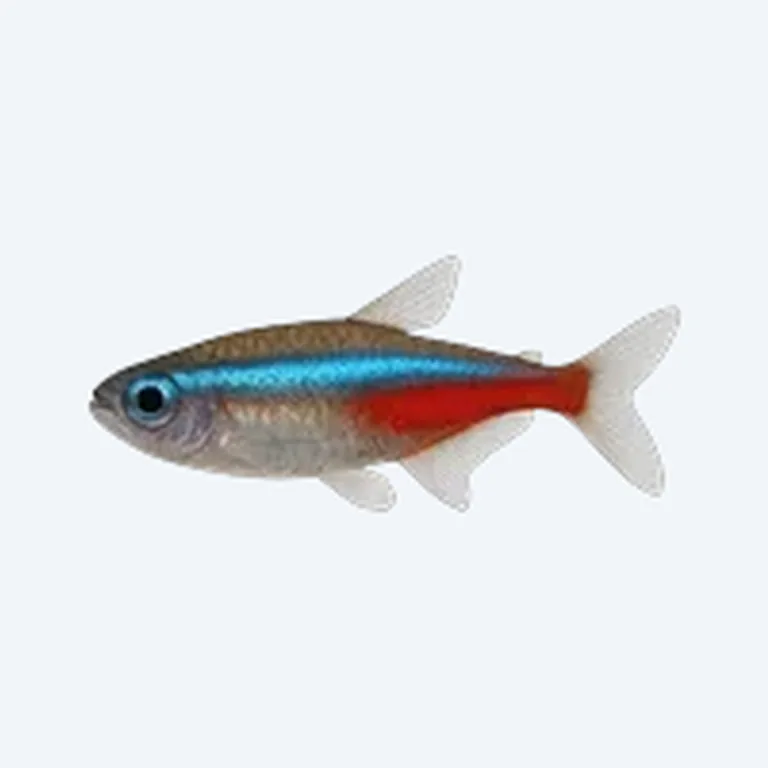
- Short answer: risky, and it usually fails. Juvenile angelfish tolerate neon tetras. Adult angelfish eat them - not occasionally, reliably.
- Size is the trigger: once an angelfish's mouth is wide enough to swallow a neon whole (typically around 8-10 cm / 3-4 inches body length), neons become prey, not tank mates.
- Temperature overlap is tight: neons prefer 22-25 °C (72-77 °F); angelfish do best at 26-30 °C (78-86 °F). Keeping both comfortably long-term means compromise, and usually one species suffers.
- Tank size doesn't fix predation: a 300-litre tank with a hungry adult angelfish still produces dead neons. Space helps with aggression, not predatory instinct.
- Better alternatives exist: larger, faster, or tougher schooling fish make genuinely good angelfish companions without the casualty risk.
Checking Neon Tetra against Angelfish? Our fish compatibility checker compares any two of 815 species on water parameters, predation risk, fin nipping, temperament and tank size - and draws them both at life size so you can see the difference.
The honest case against this combination
The appeal is obvious. Neon tetras (Paracheirodon innesi) are one of the most popular fish in the hobby, and angelfish (Pterophyllum scalare) are stunning showpiece cichlids. It seems like a classic community tank - and in pet shops, you'll often see them displayed together. That display tank is doing you a disservice.
Pet retailers keep fish in temporary, high-turnover conditions. Angelfish in a shop are usually juveniles, small enough that neons register as neighbours rather than food. Take those same fish home, grow them out over six to twelve months, and you will watch the dynamic shift in real time. The first missing neon you'll blame on a jump or a filter intake. The second you'll find half-eaten. By the third you'll know what's happening.
This isn't a temperament problem you can train out or a compatibility issue that good husbandry fixes. It's anatomy. Pterophyllum scalare are ambush predators from the Amazon basin. In the wild they eat small fish, insect larvae, and invertebrates. A full-grown neon tetra at 3-4 cm (1.2-1.5 inches) is exactly the right size to disappear in one strike.
Most guides hedge this with phrases like "it can work in the right conditions." That's technically true the same way it's true that you can leave a bag of crisps near a hungry dog - it might be fine for a while. Adult angelfish eat neons. Plan for that outcome, not the exception.
Why temperature compatibility matters more than people admit
Even if you accept the predation risk and decide to try the combination anyway, temperature is a separate problem that gets glossed over constantly.
Neon tetras are comfortable between 22-25 °C (72-77 °F). Push them above 26 °C (79 °F) long-term and their immune systems become stressed, making them significantly more vulnerable to neon tetra disease (Pleistophora hyphessobryconis) and other infections. Angelfish, on the other hand, are from warmer stretches of the Amazon and its tributaries. They thrive at 26-30 °C (78-86 °F) and develop better colour, behaviour, and breeding condition at the higher end of that range. Below 25 °C they become sluggish and prone to ich.
The overlap - around 25-26 °C (77-79 °F) - exists, but it's a compromise zone where neither fish is truly thriving. You can keep both alive in that range. "Alive" and "thriving" aren't the same thing, and after a few years of suboptimal temperature, it tends to show in lifespan and disease resistance.
Neon tetras peak at 22-25 °C; angelfish peak at 26-30 °C - the overlap is narrow and neither fish hits its best in that window.
Water chemistry: where they actually agree
pH and hardness are one area where these species genuinely overlap. Both come from soft, slightly acidic Amazonian water. Neons do well at pH 6.0-7.0 with soft to moderately soft water (2-10 dGH). Angelfish prefer pH 6.0-7.5 with similar softness. If you're keeping both, target pH 6.5-7.0 and soft water - that's workable for either species in isolation.
Most tap water in the UK and US runs harder and more alkaline than this. If your tap water is above pH 7.5 or above 15 dGH, both species will struggle without water treatment or RO blending. Check your aquarium water parameters before you stock anything.
If your tap water is hard and alkaline, using a mix of reverse osmosis (RO) water and tap water to hit your target parameters is far more stable than using pH-down chemicals, which can cause rapid swings that stress both species.
What happens as angelfish mature
This is the part most beginners don't visualise when they buy a group of quarter-sized juvenile angelfish. Pterophyllum scalare grow quickly under good conditions - expect them to reach adult size within 8-12 months in a well-fed, correctly heated tank. Adult body length (excluding fins) reaches 12-15 cm (5-6 inches). The tall, laterally compressed body shape is deceptive; the mouth on a full-grown angelfish can take prey that surprises new keepers.
The transition isn't always dramatic. Some keepers report months of apparent peace before losses begin. Others see it start the moment the angelfish hits a certain size. What's consistent is the direction of travel: once it starts, it doesn't reverse. You won't condition an adult angelfish to ignore neons through rearranging decor or adding more hiding spots.
Adding more neons to "overwhelm" the angelfish's attention is a common piece of forum advice that doesn't work. A larger school just means more casualties, not fewer. The predatory behaviour isn't diluted by numbers.
Common mistakes people make with this combination
Buying juveniles together and assuming it will stay peaceful
The most common setup failure. Everything looks fine for the first six months. The angelfish are small, the neons are fast, everyone coexists. Then the angelfish grow. By the time you notice the problem, you've got an established, decorated tank you don't want to tear down, and a difficult rehoming decision ahead of you.
Judging long-term compatibility by how juvenile fish behave together. Angelfish are docile and small at 2-3 cm. They are neither of those things at 12 cm. Plan for the adult fish, not the fish in the shop.
Relying on tank size as the solution
Bigger tanks help with many compatibility problems - territory disputes, aggression from overcrowding, oxygen levels. They don't change predatory instinct. A 400-litre tank with one adult angelfish is still dangerous for neon tetras. The angelfish has more room to stalk them, not less inclination to do so.
Misreading the temperature requirement
Keeping the tank at 24 °C and calling it a compromise. The angelfish is too cool; the neons are at their upper limit. Check the parameters regularly - if you're not already logging tests, tracking water parameters over time shows you trends that single readings miss.
Better tank mates for angelfish
If you want a schooling fish in an angelfish tank, choose species that are either too large to swallow or fast enough to make predation genuinely difficult. Good options include:
- Rummy-nose tetras (Hemigrammus rhodostomus): slightly larger than neons at 4-5 cm, fast, and they school tightly. Not immune to predation, but a harder target than neons.
- Black skirt tetras (Gymnocorymbus ternetzi): reach 5-6 cm and are considerably more robust. Angelfish generally leave them alone once the tetras are full grown.
- Corydoras catfish: bottom-dwellers that occupy a different zone entirely. Corydoras sterbai is a particularly good choice because it tolerates the warmer temperatures angelfish prefer (up to 28 °C / 82 °F).
- Bolivian rams (Mikrogeophagus altispinosus): fellow South Americans that share similar water chemistry requirements and hold their own against angelfish without persistent aggression.
- Bristlenose plecos (Ancistrus spp.): practical algae control that occupies the bottom of the tank and is completely ignored by angelfish.
None of these are guaranteed to be perfect - every tank has its own dynamics - but they're all meaningfully less likely to end up as a meal than a 3 cm neon tetra.
If you're determined to try it anyway
Some keepers have maintained neons and angelfish together for extended periods. It does happen. The conditions where it's most likely to work:
- A very densely planted tank with plenty of mid-level cover - tall stem plants, floating plants that break up sight lines, and driftwood that creates visual barriers.
- Angelfish that were raised from fry alongside the neons, so the tetras aren't registering as novel prey items. This doesn't guarantee safety, but some keepers report it reduces predation.
- A larger school of neons - 15 or more - so that the group behaviour makes individual fish harder to isolate. Again, this reduces risk rather than eliminating it.
- Consistent feeding of the angelfish with meaty foods so they're not hunting out of hunger. Hungry angelfish are more actively predatory.
Go in clear-eyed about what you're accepting. You may lose neons. Have a plan for what you'll do when you do - whether that's rehoming the angelfish, moving the neons, or running a separate quarantine tank as a refuge.
Before you buy anything, run your proposed stocking list through the free stocking calculator to check whether the tank size, bioload, and species mix actually work on paper.
If you want neon tetras as your primary display fish, build the tank around them - not around angelfish. A species-appropriate neon tetra setup at 23-24 °C with soft, slightly acidic water, a school of 15-20 fish, and similarly sized peaceful tank mates will always look better than a compromised mixed tank where something's always slightly wrong.
Setting up either tank correctly
Whichever direction you go, both species need a fully cycled tank before you add fish. New tank syndrome kills more fish than predation does, and it's entirely avoidable. Read through how to cycle a fish tank if you haven't done this before, and understand the nitrogen cycle - ammonia and nitrite spikes hit small tetras fast and hard.
For ongoing maintenance, both species benefit from regular water changes. Neons are particularly sensitive to nitrate accumulation above 20 ppm. A consistent schedule - typically 25-30% weekly - keeps conditions stable. The guidance on how often to do water changes covers how to calibrate this to your tank's bioload.
App-aquatic's parameter tracking and care reminders are useful here - logging your weekly tests in one place makes it easy to spot when nitrates are creeping up before fish start showing stress symptoms.
Track your parameters and get care reminders with App-aquatic.
Get the free appCan baby angelfish live with neon tetras?
Yes, temporarily. Juvenile angelfish under about 5 cm body length typically ignore neons. The problem is that juveniles grow into adults within 8-12 months, and the same fish that coexisted peacefully will eventually hunt the neons. If you're stocking juveniles together, plan now for what you'll do when the angelfish mature.
What temperature should I keep if I try this combination?
The compromise range is 25-26 °C (77-79 °F). This is tolerable for both species but ideal for neither. Neons are at their upper thermal limit; angelfish are slightly cool. Long-term, expect this to affect the resilience and lifespan of both fish compared to species-appropriate temperatures.
My angelfish has never touched the neons in six months - is it safe?
Probably not permanently. Six months of peace often means the angelfish is still growing. Once it reaches full size and the mouth-to-neon ratio tips, predation can start with little warning. The absence of attacks so far is encouraging, not conclusive.
Are there any tetra species that are safe with adult angelfish?
Larger, faster tetras fare better. Black skirt tetras, bleeding heart tetras (Hyphessobrycon erythrostigma), and diamond tetras (Moenkhausia pittieri) are all in the 5-6 cm range and are considerably harder targets than neons. Nothing is completely safe, but size and speed make a genuine difference.
I have neon tetras already - can I add angelfish?
Only if you're prepared to rehome one group eventually. Adding young angelfish to an established neon tank will be peaceful initially. As the angelfish grow, you'll face the same predation problem - except now it's happening in a tank already optimised for neons, which likely runs too cool for adult angelfish anyway. It's generally easier to build the tank around one species from the start.