
Compatibility
Can Oscars Live With Other Fish?
Last updated: May 2026
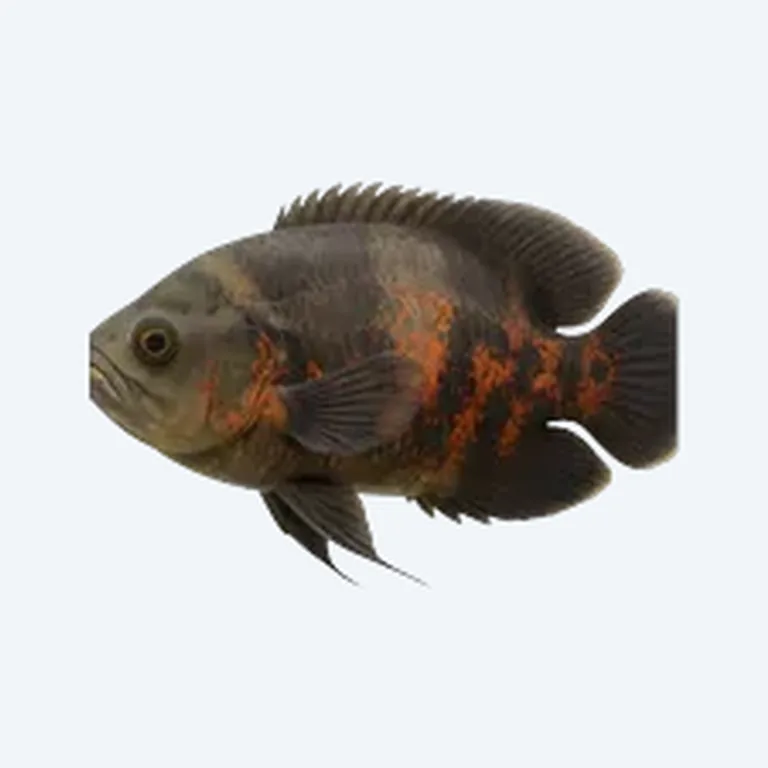
- Oscars are predators: any fish small enough to fit in their mouth will be eaten - that threshold is larger than most people expect, often 8-10 cm (3-4 in) for a juvenile Oscar that will reach 30-35 cm (12-14 in) at adulthood.
- Tank size is non-negotiable: a single Oscar needs at least 280-300 L (75 US gal); every large tankmate adds meaningful bioload and territory demand on top of that.
- The compatible species list is short: large South American cichlids, big plecos, and a handful of robust catfish are the realistic options - not community fish.
- Aggression varies by individual: two Oscars that coexist peacefully for a year can turn on each other overnight, especially during breeding conditioning.
- Filtration must be oversized: Oscars are messy eaters; aim for a filter rated at 4-6× your tank volume per hour as a floor, not a ceiling.
- This is not a beginner setup: if you're newer to the hobby, read the best fish for beginners guide first and come back to Oscars when you have a cycled tank and stable water management.
Pairing Oscar with something specific? Our fish compatibility checker compares any two of 815 species on water parameters, predation risk, fin nipping, temperament and tank size - and draws them both at life size so you can see the difference.
Understanding what an Oscar actually is
Astronotus ocellatus originates from slow-moving, warm rivers across the Amazon and Orinoco basins. In the wild it's an opportunistic predator - anything prey-sized that passes gets investigated with its mouth. That behaviour doesn't get domesticated out by captive breeding. Your pet Oscar is still running the same programming.
Adults reliably reach 30-35 cm (12-14 in) and some touch 40 cm (16 in) given the space and food. They're also long-lived - 10 to 15 years is achievable - so every stocking decision you make now you're committing to for a long time.
Water requirements are straightforward: 26-30 °C (79-86 °F), pH 6.0-7.5, soft to moderately hard water. They tolerate a wider range than that in practice, but stable parameters matter far more than hitting a specific number. If your tank is cycling through wild pH swings or temperature drops, get that sorted before thinking about tankmates. The aquarium water parameters guide covers the fundamentals in detail.
Oscars are sold in pet shops at 5-7 cm (2-3 in) looking like manageable mid-size cichlids. The staff often don't mention that they'll be 30+ cm within 18 months and produce waste like a small dog. A lot of Oscars end up rehomed or in rescue because the buyer planned around the juvenile, not the adult. Go in with eyes open.
Why the compatible species list is so short
Three things eliminate most candidate fish immediately:
Size at the mouth. Oscars are gape-limited predators - they can only eat what fits in their mouth. That sounds reassuring until you realise a 25 cm Oscar has a mouth that can take down a 10 cm fish whole. Anything under roughly one-third of your Oscar's body length is a feeding experiment, not a tankmate.
Temperament mismatches. Small, timid species get harassed to death even if they're technically too big to swallow. Oscars investigate their environment aggressively, and a stressed platy or danio being cornered repeatedly will die from stress and injury long before the Oscar tries to eat it.
Water column competition. Oscars are mid-to-bottom dwellers that rearrange substrate, uproot plants, and claim large territories. Anything that needs a planted, stable environment - most community fish - will find an Oscar tank uninhabitable.
Adding "dither fish" like giant danios or silver dollars to an Oscar tank because a forum post from 2009 says it works. Silver dollars (Metynnis spp.) are often cited as compatible and sometimes do fine - but they're also fast enough to outcompete slower fish for food and big enough that some Oscars ignore them, while other Oscars don't. There's no guaranteed outcome. If you try it, have a backup plan ready.
Fish that can realistically work
Other large South American cichlids
This is the most logical category. Cichla species (peacock bass) are sometimes kept with Oscars but are even more aggressive predators and need enormous tanks - not a practical choice for most hobbyists. More realistic options include:
- Severum (Heros efasciatus): peaceful-to-moderate cichlid, reaches 20-25 cm, similar water requirements. Works in large tanks with enough space.
- Green terror (Andinoacara rivulatus): beautiful fish, but genuinely aggressive. Can hold its own against an Oscar, which means it can also inflict serious damage. Watch carefully for escalating aggression.
- Convict cichlid (Amatitlania nigrofasciata): smaller than ideal but notorious for refusing to back down from fish three times their size. Anecdotally survives Oscar tanks - still risky, especially if the Oscar is much larger.
The honest rule with cichlid mixes: similar size, similar aggression level, and enough space that both fish can establish separate territories. That last point requires more tank than most people have.
Large plecos
Common plecos (Pterygoplichthys spp.) are the classic Oscar companion, and it mostly works. They occupy the bottom, ignore the Oscar, are armoured against casual nipping, and handle the same warm, soft water. The catch: common plecos hit 40-50 cm (16-20 in) themselves and produce enormous waste. A tank housing an Oscar and a large pleco needs serious filtration and frequent water changes.
Smaller, slower-growing plecos like Hypostomus plecostomus are sometimes tried, but they get outcompeted for food easily. If you want a pleco with an Oscar, go big or manage feeding carefully.
Large catfish
Striped Raphael catfish (Platydoras armatulus) and similar armoured catfish are sometimes kept successfully. They're nocturnal, heavily armoured, and largely ignored by Oscars. They won't clean algae or do anything visually dynamic - they'll just survive, which counts for something.
Redtail catfish (Phractocephalus hemioliopterus) get mentioned often as Oscar tankmates because of their size. Don't. They grow to 60-100 cm and require tanks beyond most home setups. This is a public aquarium fish.
Jaguar cichlids (Parachromis managuensis) are frequently suggested as Oscar companions. They can match Oscar aggression and size - but they're also capable of killing an Oscar during a territorial dispute. If you keep this combination, you need a tank over 600 L (160 US gal) with solid visual barriers, and you need to be prepared to separate them permanently.
Keeping two Oscars together
Two Oscars can coexist, and a bonded pair will often show genuinely interesting social behaviour. The problem is getting there.
Buying two juveniles simultaneously and raising them together gives you the best odds - they establish a hierarchy before either is large enough to do serious damage. Adding a second Oscar to a tank with an established adult Oscar often triggers prolonged, damaging aggression.
Even a coexisting pair will occasionally fight, especially when one is conditioning to spawn. You need enough space for both fish to get completely out of each other's line of sight - realistically a tank at least 180 cm (6 ft) long for two adults. Two Oscars in a 120 cm tank will eventually end badly.
That's for a single adult with no tankmates. Every additional large fish adds substantially to the space and filtration requirements.
The tank setup that makes mixed keeping possible
If you want an Oscar community, the tank has to be designed around managing aggression and bioload - not around aesthetics.
Size: 300 L (75 US gal) minimum for a single Oscar. For an Oscar plus one or two large companions, think 450-600 L (120-160 US gal). More is always better. Footprint matters more than height - a wide, long tank gives territorial fish room to divide space.
Filtration: Oscar tanks need filtration rated well above the standard 2-3× turnover recommendation. Aim for 4-6× total volume per hour across your filter setup, and plan for more mechanical media than biological. Oscars shred food and leave waste particles everywhere. If you're not testing your water weekly and logging the results, you're flying blind - the nitrogen cycle guide explains why ammonia and nitrite spikes happen and how to catch them early.
Layout: use large rocks, driftwood, and hardscape to break sightlines. Plants are largely futile - Oscars will rearrange or destroy them. Java fern and anubias attached to wood sometimes survive, but don't build the layout around them.
Substrate: sand or smooth gravel. Oscars sift substrate constantly. Sharp gravel damages their barbels.
When introducing a new large fish to an established Oscar tank, rearrange the hardscape at the same time. This resets territory boundaries and reduces the established Oscar's home advantage. It doesn't guarantee peace, but it reduces the intensity of initial aggression meaningfully.
Feeding in a mixed tank
Oscars are aggressive feeders and will dominate feeding time, leaving tankmates - particularly bottom dwellers - underfed. Feed in multiple spots simultaneously, or use a feeding stick to draw the Oscar's attention to one end of the tank while sinking wafers or other food reaches the bottom at the other end.
Feeder fish are still sold and promoted for Oscars. Skip them. Live feeder goldfish and minnows carry parasites and disease, provide poor nutrition, and the practice has no practical benefit over quality pellet food and frozen/thawed meaty foods. A quality large cichlid pellet plus frozen prawns, earthworms, and occasional mussels covers their nutritional needs completely.
What most guides miss
Most Oscar compatibility guides focus on whether a species will be eaten. That's only half the problem. The other half is chronic stress - fish that survive alongside an Oscar but spend their entire lives being chased, outcompeted for food, and unable to rest in open water. A fish that doesn't die immediately isn't a compatibility success. Watch for hiding behaviour, fin clamping, reduced feeding, and weight loss in any tankmate over the first few weeks.
Individual personality matters enormously with Oscars. Some are relatively placid and share a tank with severums for years without incident. Others are relentlessly aggressive and will attack anything they can't immediately eat. You can't fully predict this in advance - which is why having a backup plan (a second tank you can use for temporary separation) is sensible before you start mixing large cichlids.
If you're building out a stocking list before buying, run it through the free stocking calculator to check volume and load - it won't catch every aggression variable but it will stop you from making the obvious space and bioload mistakes.
Track your parameters and get care reminders with App-aquatic.
Get the free appCan Oscars live with goldfish?
No. Goldfish are cold-water fish that prefer 18-22 °C (64-72 °F); Oscars need 26-30 °C (79-86 °F). Even if the temperature mismatch didn't stress both fish, a goldfish is the right size and shape to be eaten by a medium Oscar. This combination fails on multiple levels simultaneously.
Can Oscars live with cichlids from African lakes like malawi or tanganyika?
Technically possible in terms of size and aggression, but the water chemistry requirements don't overlap well. African Rift Lake cichlids prefer pH 7.5-8.5 and harder water; Oscars do best at pH 6.0-7.5 in softer water. You can find a compromise around pH 7.2-7.5, but you're pushing both species away from their optimal range. It's not a natural pairing and it shows in long-term health.
Will an Oscar eat a large pleco?
An adult common pleco at 30-40 cm is almost certainly safe from being eaten - it's armoured and simply too large. However, Oscars will sometimes harass plecos, particularly at night when the pleco is active. Watch for damage to the pleco's fins and body in the first few weeks. Most Oscar-pleco combinations settle into mutual indifference.
How many Oscars can I keep in a 400 L (105 US gal) tank?
Realistically, two - and only if you raise them together from juveniles and the tank is at least 150 cm (5 ft) in length. Three Oscars in 400 L will eventually produce chronic aggression and water quality problems from the combined bioload. A single Oscar in 400 L with a large pleco and a compatible catfish is a more stable setup than trying to crowd three large cichlids.
My Oscar keeps killing every fish I add. Is it just a bad individual?
Probably not - it's likely a tank size and setup issue. An Oscar in a tank under 300 L that has established full territory ownership will attack most additions reflexively. If the tank is large enough, try rearranging all the hardscape before adding a new fish of appropriate size. If it keeps happening regardless, some individual Oscars genuinely won't tolerate tankmates and are best kept alone. A single Oscar in a well-maintained tank is still a rewarding fish to keep.