
Fish care
Platy: Complete Care Guide
Last updated: May 2026
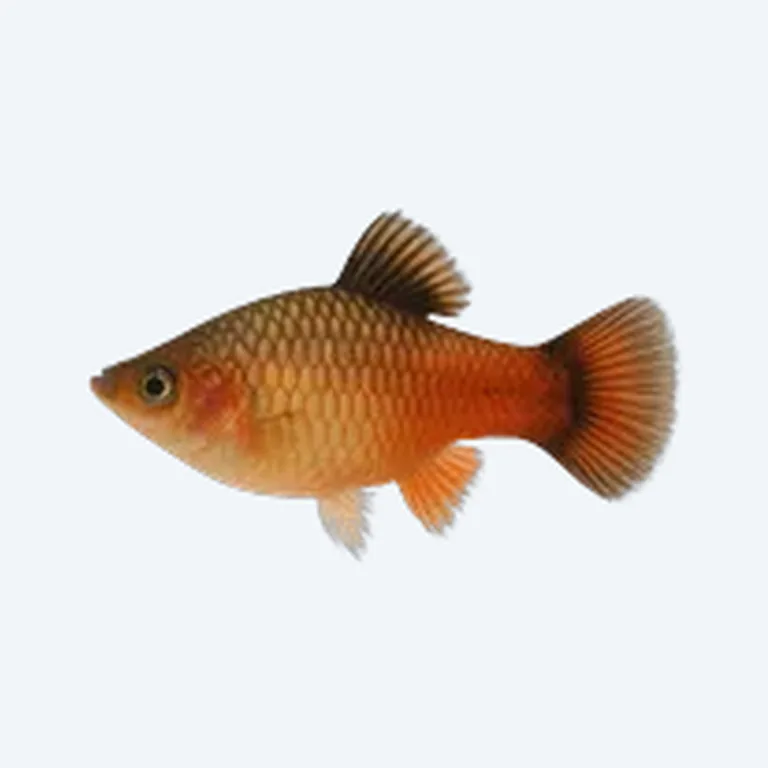
- Tank size: 60 L (16 US gal) minimum for a small group; bigger is better once you account for their prolific breeding.
- Water: 20-28°C (68-82°F), pH 7.0-8.0, moderately hard - platies genuinely need minerals and struggle in soft RO water.
- Group size: Keep at least 6, with a 2:1 female-to-male ratio to prevent males harassing individual females to death.
- Diet: Omnivores that lean herbivorous - varied flake plus regular vegetable matter, not protein-heavy food every meal.
- Care level: Genuinely easy, but their livebearer breeding means population control is something you need a plan for before you buy.
- Temperament: Peaceful and active mid-to-top swimmers; compatible with most community fish of similar size.
Why platies make sense as a first fish - and where people still go wrong
Xiphophorus maculatus earns its reputation as one of the best beginner fish honestly. They're hardy, colourful, active during the day, and tolerant of the minor water chemistry wobbles that come with learning. If you're putting together your first community tank, platies are a reasonable foundation - see our guide to best fish for beginners for how they fit with other easy species.
That said, "easy" doesn't mean "foolproof." The two things that catch new platy keepers out are water hardness and uncontrolled breeding. Get those right and these fish are as straightforward as advertised.
Water parameters - the mineral question matters more than most guides admit
Platies come from hard, alkaline rivers and lakes in Central America. Their bodies are built for water with meaningful mineral content, and that shapes how you should approach their setup.
Target pH 7.2-8.0 and general hardness (GH) of 10-20 dGH. Carbonate hardness (KH) in the 5-15 dKH range gives you useful pH stability as a bonus. Temperature sits between 20-28°C (68-82°F); most community setups run 24-26°C (75-79°F), which suits them well.
If your tap water is soft - below 5 dGH - don't assume crushed coral or limestone rocks will fix it fast enough. They raise hardness slowly and unpredictably. Remineralise deliberately using a GH booster like Seachem Equilibrium, or blend your tap water with hard tap water from another source. Platies kept in persistently soft water show it: shimmying, clamped fins, and a general lethargy that looks like disease but is actually a slow-motion stress response.
For everything else on interpreting your water test results, the aquarium water parameters guide covers what GH, KH, and pH actually mean in practice.
Tank setup
Size and stocking
60 L (16 US gal) is a workable minimum for 6 platies, but 80-100 L (21-26 US gal) gives you more margin once fry inevitably appear. Platies are active swimmers and appreciate horizontal tank space - a long, shallow footprint beats a tall column every time.
Plan your stocking carefully before you buy. Use the free stocking calculator to cross-check your full community against tank volume - it's especially useful for confirming whether your chosen tankmates share platies' water chemistry preferences.
Keep at least two females per male. Single-sex groups work fine if you don't want breeding at all - a group of females only is a legitimate, underused option.
Planting and décor
Platies aren't fussy about substrate or décor, but they do benefit from planted tanks in two specific ways. First, they graze on algae and soft plant matter, which supplements their diet naturally. Second, floating plants and dense vegetation give fry somewhere to hide if you're letting nature take its course - without cover, adults and other fish eat most of the fry within hours.
Good plant choices that tolerate harder water: Vallisneria, Egeria densa, Sagittaria subulata, and most Cryptocoryne species. Java fern and anubias work too. Avoid CO2-injected soft-water plant setups where you'd be fighting the chemistry to keep both the plants and the platies happy.
Feeding
Platies are omnivores that lean vegetarian - more like cichlids from a plant-heavy lake than a predatory carnivore. A quality flake or micro-pellet covers the base, but protein-heavy foods (like bloodworm-only diets) fed every day will cause digestive problems and constipation over time.
Rotate in: blanched spinach or zucchini twice a week, spirulina flake, algae wafers, and occasional live or frozen daphnia or brine shrimp for variety. Feed small amounts twice daily - what they clear in two minutes is the right amount.
A small clip of blanched zucchini left in the tank for an hour gives platies something to graze on naturally and keeps them occupied. It also shows you quickly which fish are feeding well and which might be off-colour.
Breeding - what the hobby doesn't prepare you for
Platies are livebearers. The female carries developing fry internally and gives birth to miniature, fully-formed fish rather than scattering eggs. A single female can give birth every 4-6 weeks, with broods of 20-80 fry at a time. If you keep males and females together, breeding is not optional - it happens.
Most beginner platy guides gloss over the population problem. Within a year, a pair of platies in a community tank can produce hundreds of fry. You need a plan before you buy: Are you letting adults eat most of them? Selling surplus to a fish store? Running a separate grow-out tank? Keeping only females? There's no wrong answer, but having no answer leads to an overcrowded tank and declining water quality. Overstocking is the most common reason "easy" fish suddenly start dying.
If you want to raise fry deliberately, a separate 20-30 L (5-8 US gal) breeding or grow-out tank is the practical approach. Move pregnant females (look for the dark gravid spot near the anal fin) just before birth, or use a heavily planted main tank and accept that a small percentage of fry will survive to adulthood on their own.
Common diseases and health problems
Platies kept in appropriate water conditions get sick far less often than the same fish in soft, acidic water. Most health issues you'll see are either water-quality-related or brought in with new fish.
White spot (ich)
Ichthyophthirius multifiliis - the classic small white dots that look like salt grains - is the most common disease in any community tank. Treat with a temperature increase to 28°C (82°F) combined with a proprietary ich treatment; platies tolerate this fine. The full nitrogen cycle - specifically an established cycle - is your best prevention, since fish stressed by ammonia or nitrite spikes are far more susceptible.
Shimmying
A platy that rocks from side to side without moving forward isn't swimming - it's shimmying, and it's almost always a water chemistry problem rather than an infectious disease. Check GH and KH first. Raise hardness if it's low, do a partial water change to dilute any parameter extremes, and the behaviour usually resolves within days.
Fin rot and bacterial infections
Secondary infections follow stress. If fins look ragged or frayed and no physical injury explains it, test your water. Elevated nitrate (above 40 ppm), irregular water changes, or overstocking are the usual causes. Fix the root problem before medicating. Regular water changes - typically 25-30% weekly - keep nitrate in check and reduce the chance of bacterial issues taking hold.
Buying platies for an uncycled tank because they're labelled "hardy." Hardy means they tolerate a wider range of stable conditions, not that they're immune to ammonia poisoning. Set up your cycle first - the how to cycle a fish tank guide walks you through it - and add fish only when ammonia and nitrite are consistently reading zero.
Colour morphs - honest buying advice
The platy trade has produced dozens of colour variants: sunset, red wag, blue mirror, tuxedo, salt-and-pepper, Mickey Mouse (named for the pattern near the tail), rainbow, and many more. They're all Xiphophorus maculatus or closely related X. variatus hybrids, and they all share the same care requirements.
What to know before buying: heavily selectively bred colour morphs - particularly balloon-bodied platies with the compressed, round body shape - are often less robust than standard-bodied fish. Balloon platies have modified spines that cause them chronic discomfort and shorten their lives. The trade sells them as cute; experienced keepers generally avoid them. Standard-bodied colour morphs are fine.
Also be aware that fish store labelling of specific colour morphs is inconsistent. The fish you buy as a "blue mirror platy" from one shop may look quite different from another shop's version of the same name. Buy the fish you see, not the name on the label.
Suitable tankmates
Platies are peaceful and mix well with most community fish that share their water chemistry preference - that rules out soft-water specialists like discus, German blue rams, or most tetras from acidic blackwater rivers. Good matches include:
- Other livebearers: Mollies (need similar or harder water), swordtails, guppies.
- Corydoras catfish: Sterbai cory handles warmer water well; bronze and peppered cory prefer the cooler end of the platy range.
- Peaceful barbs: Cherry barbs work well. Avoid tiger barbs - they fin-nip.
- Rasboras: Harlequin rasboras tolerate harder water and match platies' temperament well.
- Bottom dwellers: Bristlenose plecos, nerite snails, and most smaller loaches.
Avoid housing platies with known fin-nippers or larger semi-aggressive fish. Their flowing fins are a target, and stress from persistent harassment suppresses their immune system quickly.
App-aquatic's stocking tool logs your species list with care parameters side by side, so you can check at a glance whether new additions share your platies' water chemistry before you buy.
At a glance: key numbers
For a group of 6; add 10 L per additional fish as a rough guide.
Females reach 6-7 cm (2.4-2.8 in); males are typically smaller at 4-5 cm (1.6-2 in).
In well-maintained water with a varied diet; fish kept in poor conditions rarely reach 2 years.
Track your parameters and get care reminders with App-aquatic.
Get the free appHow many platies can I keep in a 60 L (16 US gal) tank?
Six is a reasonable starting number for a species-only or lightly stocked community setup. Don't add other fish until you account for fry - a 60 L tank fills up faster than you'd expect once a female gives birth every 4-6 weeks. If you're adding tankmates, drop the platy group to 4 and check your full stock list against the tank volume.
My platy is shimmying - what's wrong?
Shimmying in platies is almost always a water hardness problem. Test your GH - if it's below 8 dGH, your water is too soft for platies. Raise hardness gradually using a GH booster or by blending harder water, and the behaviour typically stops within a few days. If GH is fine, check temperature (too cold) and ammonia/nitrite levels.
Will platies eat all their fry?
Given the chance, yes - platies don't recognise their own offspring as offspring. In an open tank without dense planting, most fry get eaten within hours of birth. That's not necessarily a problem; it's a natural population control mechanism. If you want fry to survive, either move the pregnant female to a separate tank before birth or provide thick floating plant cover in the main tank.
Can I keep only male platies to avoid breeding?
Yes, and it works well. A group of male platies kept together behaves normally with minimal aggression, provided the group is large enough (6+) that no single fish is singled out. All-female groups are equally valid if you want zero chance of fry. The only pairing that causes problems is a single male with one female - he'll harass her relentlessly.
Do platies need a heater?
In most homes, yes. Platies tolerate down to 20°C (68°F), but room temperatures in centrally heated homes often drop below that overnight or in winter. A heater set to 24-25°C (75-77°F) keeps them comfortable year-round and removes temperature swings, which stress fish more than a steady temperature at the cooler end of their range.