
Tank mates
Best Platy Tank Mates: Compatible Species
Last updated: May 2026
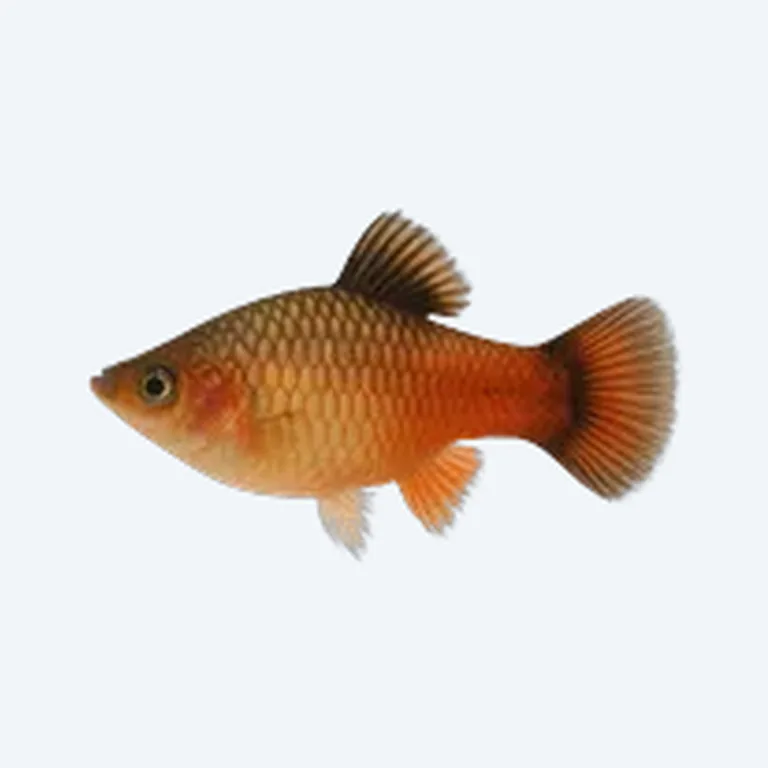
- Minimum tank size: 60 L (15 gal) for platies alone; go to 80-100 L (20-25 gal) once you add tank mates.
- Water chemistry sweet spot: pH 7.0-8.0, hardness 10-25 dGH, temperature 22-26 °C (72-79 °F) - platies are hard-water fish and their best tank mates share that preference.
- Best companions: guppies, mollies, swordtails, Corydoras catfish, harlequin rasboras, and dwarf gouramis all work well in a correctly sized tank.
- Hard avoid: tiger barbs, serpae tetras, male betta fish, and anything large enough to fit a platy in its mouth.
- Biggest mistake people make: stocking by temperament alone and ignoring water chemistry - soft-water species paired with platies will slowly decline even if they never fight.
- Sex ratio matters: keep at least two females per male platy or the males will harass females to death.
Pairing Southern Platy with something specific? Our fish compatibility checker compares any two of 815 species on water parameters, predation risk, fin nipping, temperament and tank size - and draws them both at life size so you can see the difference.
Why water chemistry should drive your stocking choices
Platies (Xiphophorus maculatus and Xiphophorus variatus) come from Mexico and Central America - hard, slightly alkaline rivers and coastal lagoons. They are not just "peaceful community fish"; they are specifically hard-water community fish. Most compatibility guides skip this and list tank mates purely by temperament. That's how you end up with a beautifully peaceful tank where half the fish slowly waste away because their chemistry needs are pulling in opposite directions.
Aim for pH 7.2-8.0 and general hardness of 12-25 dGH. If your tap water is soft, you'll need to buffer it - and that means any tank mate you choose should actually thrive in that buffered water, not merely tolerate it. Soft-water species like cardinal tetras, discus, or most wild-caught South American cichlids are off the table before you even consider behaviour.
Neon tetras and platies appear on the same "community fish" lists constantly. Neons prefer pH 6.0-7.0 and soft water below 10 dGH. Platies want pH 7.2-8.0 and hard water. You can keep them together, but one group is always living outside its comfort zone. If your tap runs hard, that's the neons. They'll survive, probably for years - but you'll see more disease, fading colour, and shorter lifespans than if you'd just matched chemistry properly.
Tank sizing: what you actually need
A 60 L (15 gal) tank works for a species-only platy group. Add tank mates and you need more swimming space, more stable water chemistry, and more filtration capacity. A 80-100 L (20-25 gal) tank is the realistic baseline for a mixed community. Platies are active midwater swimmers - they dart, they chase each other during breeding, and they need space to spread out and reduce that pressure.
Below this, stocking pressure from breeding platies plus tank mates creates water quality problems faster than most beginners expect.
Filtration should turn the tank volume over at least 6-8 times per hour. Platies are messy for their size, and livebearers reproduce constantly - fry you didn't plan for add bioload. If you want to track your tank's stocking levels properly, the free stocking calculator gives you a working estimate based on filtration and volume, not just a rough fish count.
Compatible species: the full breakdown
Other livebearers
Guppies (Poecilia reticulata) are the most natural fit. They share the same water chemistry preferences, similar size, and peaceful temperament. One genuine risk: guppies and platies won't hybridize (different genera), but male guppies will sometimes pester female platies during breeding activity. Keep your ratios sensible - more females than males across both species - and this is rarely a problem.
Mollies (Poecilia sphenops, P. latipinna, P. velifera) work well but push your hardness and salinity tolerance higher than platies strictly need. Mollies genuinely benefit from a small amount of aquarium salt; platies tolerate it but don't require it. If you want mollies in the same tank, a light brackish mix (around 1-2 g of salt per litre) is a reasonable compromise that suits both. Make sure your other tank mates can handle it too - many scaleless fish and catfish cannot.
Swordtails (Xiphophorus hellerii) are close relatives and the chemistry match is nearly perfect. The catch: male swordtails can be pushy, particularly toward other males. Keep only one male swordtail unless your tank is large enough to give them separate territories, and watch for bullying in tanks under 120 L.
With any mix of livebearers, expect fry. Platies breed readily and the fry will disappear into the mouths of tank mates if you don't intervene - which is actually a practical population control strategy. If you want to raise fry, you'll need a separate breeding tank or a heavily planted refuge with dense Java moss or hornwort.
Bottom dwellers
Corydoras catfish occupy the bottom layer that platies mostly ignore, they eat leftover food before it rots, and they thrive in the same hard, slightly alkaline water. Corydoras paleatus, C. sterbai, and C. aeneus are all reliable choices. Keep them in groups of at least six - they're shoaling fish and become stressed and prone to disease when kept in smaller numbers. Temperature is the one thing to double-check: C. sterbai is comfortable up to 28 °C (82 °F), but most other Corydoras prefer the cooler end of the platy range, around 22-24 °C (72-75 °F).
Bristlenose plecos (Ancistrus sp.) are a reasonable algae-grazing addition. They stay manageable at 10-15 cm (4-6 in) unlike common plecos, which outgrow almost any home aquarium. Make sure they have driftwood to rasp on - it's not decoration for them, it's dietary.
Midwater schooling fish
Harlequin rasboras (Trigonostigma heteromorpha) are one of the few rasbora species that genuinely tolerate hard, alkaline water. They're not ideal soft-water fish, but they're adaptable enough to do well at pH 7.0-7.8 alongside platies. A school of 8-10 adds movement in the upper midwater zone without any aggression risk. Other rasboras - particularly lambchop rasboras (Trigonostigma espei) - work similarly.
Dwarf gouramis (Trichogaster lalius) add colour and stay peaceful with platies. They prefer slightly warmer water - 24-28 °C (75-82 °F) - so keep the tank at the warmer end of the platy range if you include them. One male per tank; two males will fight. Be aware that dwarf gouramis are plagued by Dwarf Gourami Iridovirus (DGIV) in the trade - quarantine new fish for at least two weeks before adding them.
Adding tank mates to an uncycled or recently cycled tank. Platies are reasonably hardy, but adding extra fish before your biological filter is established spikes ammonia fast. Make sure your tank is fully cycled first - the cycling guide here walks through the process properly. Rushing this step kills fish.
Fish to avoid - and why
Tiger barbs (Puntigrus tetrazona) are the classic offender. They're fin nippers by nature, and male platies with their flowing tails are obvious targets. Even in a large school of tiger barbs (which reduces nipping toward tank mates), the risk with long-finned platy varieties is too high. Avoid them.
Serpae tetras (Hyphessobrycon eques) and black skirt tetras (Gymnocorymbus ternetzi) are frequently recommended as community fish, but both have a documented tendency to fin nip, especially when underfed or understocked. Not worth the risk.
Male betta fish will usually attack the flowing fins of male platies and may harass females too. Occasional success stories exist, but they're the exception. The chance of serious injury to both fish isn't worth it.
Large cichlids - including oscars, Jack Dempseys, green terrors, and even some larger Geophagus - will eat platies. Even "peaceful" larger cichlids are opportunistic predators toward fish small enough to swallow. The rule of thumb: if a fish can fit a platy in its mouth, assume it eventually will.
Chinese algae eaters (Gyrinocheilus aymonieri) are sold as peaceful algae cleaners and are neither. Adults become territorial and aggressive, and they attach to the sides of slow-moving fish - including platies - to rasp at their slime coat. They'll outgrow their usefulness and become a problem. Avoid them entirely.
Putting together a stocking list that actually works
A practical 100 L (25 gal) platy community might look like this: 6 platies (2 male, 4 female), 8 harlequin rasboras, and 6 Corydoras paleatus. That's three distinct layers - bottom, midwater, and active midwater/surface - with no temperament conflicts and matching chemistry needs. It leaves room in your bioload for a small bristlenose pleco if you want algae control.
Before you finalize any stocking list, run it through a stocking calculator - especially if you're planning to let platies breed, because the fry population will affect your water quality even if adult fish numbers look fine on paper. App-aquatic lets you log your test results and track how parameters shift as your stocking changes over time, which is genuinely useful when you're managing a mixed community.
Water changes are your safety net for a busy community tank. A stocked 100 L platy community generally needs 25-30% weekly water changes - more if your nitrates climb quickly. See the water change frequency guide for how to calibrate this to your specific setup.
Add fish in stages, not all at once. Introduce your platies first, let the tank settle for two to three weeks, then add your chosen tank mates in small groups. Each addition spikes your bioload temporarily. Staggering additions gives your filter bacteria time to catch up and keeps ammonia spikes manageable.
What most guides miss: the breeding pressure problem
Platies are prolific livebearers. A single female can drop 20-80 fry every four to six weeks, and she can store sperm for months - meaning a female you bought without a male present can still produce multiple batches of fry. In a community tank, most fry get eaten, which controls the population naturally. But in a densely planted tank with lots of hiding spots, survival rates climb, and before long you have 40 platies in a tank designed for 10.
Most guides tell you to "separate fry if you want to raise them." What they don't tell you is that in a heavily stocked community, unchecked platy breeding quietly degrades your water quality for everyone else in the tank. If you don't want to manage fry, keep only males, or stock tank mates that will readily eat fry - most of the species listed above will do this naturally. If you do want to raise some, a small 20-30 L grow-out tank is far more practical than trying to partition your main tank.
Understanding how your fish affect water chemistry over time is the deeper skill here - the aquarium water parameters guide is worth reading if you're new to managing a community tank.
Track your parameters and get care reminders with App-aquatic.
Get the free appCan platies live with bettas?
Generally no. Male bettas typically attack the flowing fins of male platies, and may harass females. Some people report success in large, heavily planted tanks, but the risk of injury - to both fish - is real and ongoing. It's not a combination worth attempting in most home tanks.
Can platies live with goldfish?
No, for two reasons. Goldfish are cold-water fish that do best at 16-20 °C (61-68 °F); platies need 22-26 °C (72-79 °F). Even if temperature were compatible, goldfish grow large enough to eat adult platies and will do so. Keep them in separate tanks.
How many platies can I keep in a 60 L tank?
Around 4-6 platies works in a 60 L tank with good filtration, assuming no additional tank mates. If you want a mixed community, upgrade to at least 80-100 L. Breeding will also increase your bioload unpredictably in a smaller tank.
Do platies need to be kept in groups?
They don't school like tetras, but they're social fish that do better in groups of four or more. A single platy in a community tank will usually be fine, but groups show more natural behaviour and are less prone to stress. Always keep more females than males - a ratio of at least 2:1 females to males prevents males from exhausting individual females with constant chasing.
Can I keep platies with shrimp?
Adult large shrimp like cherry shrimp or amano shrimp can coexist with platies in a planted tank, but platies will eat any baby shrimp they can catch, so a cherry shrimp colony will struggle to grow without dense cover such as java moss. Amano shrimp are the safer choice because they're larger and don't breed in fresh water, so there are no shrimplets to lose.