
Fish care
Swordtail: Complete Care Guide
Last updated: May 2026
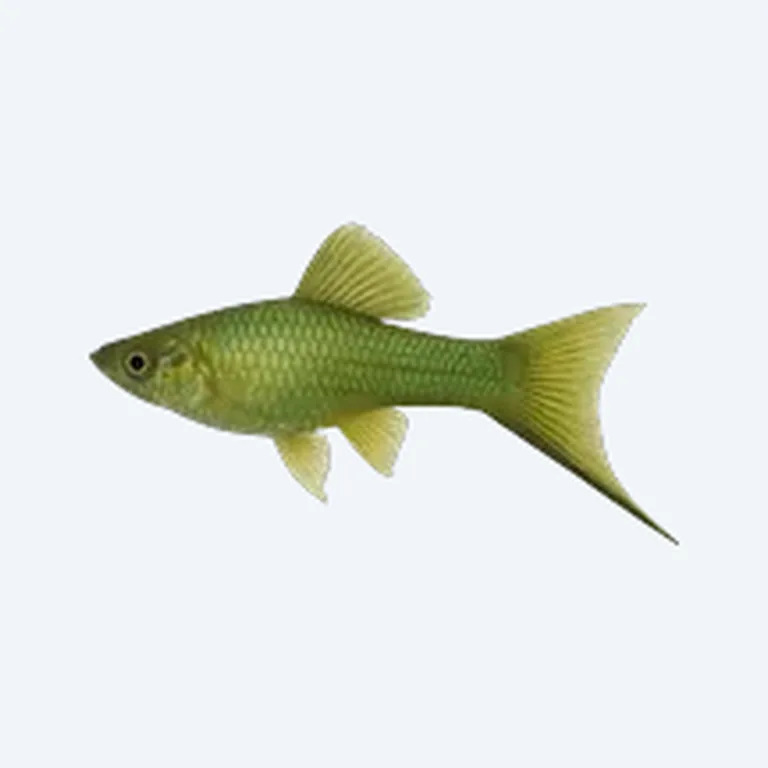
- Species: Xiphophorus hellerii - a hardy, active livebearer suited to beginners and experienced keepers alike.
- Tank size: 80 L (21 US gal) absolute minimum; a 120 L (32 US gal) long footprint is much more practical for a mixed group.
- Water: 22-28°C (72-82°F), pH 7.0-8.0, moderately hard to hard (10-25 dGH). Soft or acidic water causes real problems.
- Social structure: Keep at least 6, with a strong female bias - aim for one male per two or three females to reduce harassment.
- Breeding: They will breed without any intervention. If you don't want fry, plan for that before you buy.
- Common mistake: Keeping two or more males in a small tank. The aggression spirals fast and the weaker male rarely gets a break.
What swordtails actually are
Xiphophorus hellerii originates from fast-moving, warm rivers in Mexico and Central America - the Río Papaloapan drainage is their heartland. Wild fish live in moderately hard, slightly alkaline water with decent flow. That context matters when you're setting up a tank, because the bright, long-finned domestic varieties you find in fish shops are many generations removed from the wild, but their underlying chemistry preferences haven't changed much.
The "sword" is an elongated lower tail lobe found only on males. Domestic breeding has produced green, red, pineapple, Koi, and black varieties, as well as high-fin forms with dramatically extended dorsal fins. High-fin males look spectacular but need more swimming space - their fins create real drag, and in a short or cube-shaped tank they struggle to manoeuvre properly.
Adults reach around 10-12 cm (4-4.7 in) including the sword. Females tend to be slightly bulkier without the tail extension. Lifespan in a well-maintained tank is typically 3-5 years.
Tank size and layout
The 80 L (21 US gal) minimum is workable for a small group, but it leaves you little margin. A long 120 L (32 US gal) - think 100 cm footprint - is a better starting point if you plan a community, and it handles the inevitable growth of the colony more gracefully. Swordtails are strong, fast swimmers. They use the full length of a tank, and males need space to establish distance from each other without constant confrontation.
Avoid tall, narrow tanks. A 60 cm cube holds roughly the same volume as a 80 cm long tank but gives swordtails far less horizontal run. The sword on a mature male can add 3-4 cm to his total length - he needs room to turn.
Break up line of sight with tall stem plants, floating cover, or driftwood. Males that can't see each other constantly will spend less time sparring and more time behaving normally. Vallisneria, hornwort, and Amazon sword all work well and tolerate hard water.
Moderate flow is welcome. A sponge filter or hang-on-back with a spray bar suits them well. Avoid dead spots in the water column - swordtails are active and their bioload in a group adds up.
Water parameters
This is where most beginner guides undersell the detail. Swordtails are hard water fish. They thrive in the 10-25 dGH range with moderate carbonate hardness (KH 5-15) to buffer pH stability. If your tap water is soft and acidic - common in parts of the UK, Scandinavia, and the Pacific Northwest - you'll need to remineralise it. Crushed coral in the filter, a small bag of aragonite substrate, or commercial livebearer salts all raise hardness and stabilise pH effectively.
Stability within this range matters more than hitting an exact number - avoid swings of more than 0.3 units between water changes.
Temperature sits comfortably at 24-26°C (75-79°F) for most setups. The full 22-28°C range is tolerable, but the lower end can slow immune response and the upper end accelerates metabolism and shortens lifespan if sustained. Don't run them hot to speed up breeding.
For a deeper look at how these parameters interact, the aquarium water parameters guide covers hardness, pH, and KH buffering in practical terms.
Doing large water changes with untreated soft tap water into a hard-water swordtail tank will crash your pH and stress your fish. Always match change water to your tank's chemistry - test and adjust before it goes in, not after.
Cycling your tank first
Swordtails are hardy by livebearer standards, but "hardy" does not mean "immune to ammonia." A tank that hasn't completed its nitrogen cycle will stress or kill them just as effectively as any other fish. If you're new to the hobby, read the how to cycle a fish tank guide before you buy anything. The cycle takes 4-6 weeks and there's no shortcut worth taking.
Once cycled, swordtails are forgiving of the occasional maintenance gap, but consistent water quality is what keeps them colourful and disease-resistant over time.
Feeding
Swordtails are omnivores with a lean toward plant matter in the wild. A good quality flake or micropellet as a staple covers their nutritional base. Supplement with:
- Frozen or live daphnia, bloodworm, or brine shrimp two or three times a week
- Blanched spinach, zucchini, or spirulina wafers for vegetable content
- Occasional algae wafers if there's limited natural algae in the tank
Feed small amounts twice daily rather than one large feeding. They're enthusiastic eaters and will overeat if given the chance, which stresses filtration and increases waste. Two minutes of active feeding, then stop.
Feeding livebearer-only flake and nothing else. It's adequate but not optimal. The variety in protein and plant matter makes a visible difference to colouration and immune health within a few weeks.
Male aggression and social dynamics
This is where most guides give you half the story. Male swordtails establish a dominance hierarchy through persistent chasing and fin displays. In a well-stocked, well-planted tank with adequate space, this is manageable background behaviour. In a small tank with two males and not enough cover, the subordinate male will be harassed relentlessly - stress, fin damage, and eventually death.
The practical rules:
- One male per tank works fine and eliminates male-on-male aggression entirely.
- Three or more males in a larger tank distributes aggression more evenly - no single fish takes the full pressure.
- Two males is often the worst configuration. One dominant, one perpetually harassed.
- Keep a minimum 2:1 female-to-male ratio, ideally 3:1. Males pester females for mating and need the attention spread across the group.
Fish shops often sell swordtails in mixed groups without flagging the sex ratio. You pick four fish that look good, get home, and realise you have three males and one female. Learn to sex them before you buy - males have the sword and a modified anal fin (gonopodium) that's thin and rod-like rather than fan-shaped.
Breeding - what you need to know
Swordtails are livebearers. Females retain eggs internally and give birth to free-swimming fry. Gestation is roughly 28 days, and a single female can produce 20-100 fry per drop, depending on her size and age. She can also store sperm from a single mating and produce multiple broods without another male present.
If you want fry to survive, provide dense floating plants - java moss, hornwort, or a dedicated breeding box - as adults will eat fry readily. If you don't want fry, a single-sex group of females is the cleanest solution. A mixed group in a community tank will produce fry, most of which disappear into the food chain naturally.
There's a well-documented phenomenon where female swordtails occasionally develop male characteristics over time, including a gonopodium. This sex reversal is real, observed, and not a cause for alarm - it has no effect on tank health.
Compatible tank mates
Swordtails are peaceful toward other species but boisterous among themselves. Good tank mates share similar water chemistry preferences - other livebearers (platies, mollies), peaceful tetras that tolerate harder water (black skirt tetras, X-ray tetras), corydoras catfish, and larger peaceful rasboras all work well.
Avoid:
- Fin nippers like tiger barbs or serpae tetras - the sword is an obvious target
- Slow, long-finned fish like bettas or fancy guppies that will be outcompeted at feeding
- Cichlids unless specifically chosen for compatibility
Before you finalise your community, run your stocking list through the free stocking calculator - it flags chemistry mismatches and overstocking before they become problems in the tank.
Health and common diseases
Well-kept swordtails in stable, hard water are genuinely robust. Most disease outbreaks trace back to one of three causes: poor water quality, stress from overcrowding or aggression, or introduction of pathogens from new fish.
Ich (white spot) is the most common issue - small white granules across the body and fins. Raise temperature to 28°C (82°F) and treat with a proprietary ich medication. Catch it early; it spreads fast in a community tank.
Fin rot usually signals chronic stress or water quality problems. Treat the root cause first, then use a bacterial treatment if the fins aren't recovering.
Velvet (gold-dust disease) is less common but more serious - a fine golden sheen on the body. Treat promptly with a copper-based medication and dim the tank lights, as the parasite is photosynthetic.
Quarantine new fish for two to four weeks before adding them to your main tank. It's the single most effective disease prevention step there is and most people skip it.
Keep a water test log. Tracking pH, ammonia, nitrite, and nitrate over time tells you when something is drifting before fish start showing symptoms. App-aquatic lets you log test results by tank and flags parameter trends across multiple setups - useful once you're running more than one aquarium.
Water change routine
25-30% weekly is the standard for a moderately stocked swordtail community. In a heavily stocked breeding setup, go up to 30-40% twice weekly. The goal is keeping nitrate below 20-25 ppm - swordtails tolerate moderate nitrate better than many fish, but sustained high nitrate suppresses immune function and dulls colouration over time.
Always dechlorinate and temperature-match your change water. If you're remineralising soft tap water, add minerals to the change bucket before it goes into the tank. For a full breakdown of frequency and volume, see the how often to do water changes guide.
Is a swordtail right for you?
If you want an active, visually striking, beginner-appropriate fish that does well in community setups and doesn't need tropical soft-water chemistry, swordtails are a strong choice. They're listed among the best fish for beginners for good reason - they tolerate minor husbandry mistakes, respond visibly to good care, and have enough personality to stay interesting.
The caveats are real though: you need to manage the male-to-female ratio seriously, you need appropriately hard water, and you need a tank long enough to give males territory. Get those three things right and swordtails are as rewarding as freshwater fishkeeping gets at this level.
Track your parameters and get care reminders with App-aquatic.
Get the free appCan I keep just one swordtail?
A single female is fine - she's a social species but won't pine away alone. A single male can work too, but he's more interesting in a group. What doesn't work is keeping one male with one female; she'll be harassed constantly. If you're keeping a pair, add at least two more females.
How do I stop swordtails from breeding?
Keep a female-only group. It's the only reliable method. Mixed groups will breed - females can store sperm for months, so removing the male after the fact doesn't stop future drops. In a community tank, most fry get eaten before you notice them, but if you have heavy planting and hiding spots, expect survivors.
My male swordtail is chasing the female constantly - is this normal?
Normal behaviour, but it becomes a problem when she can't rest. Add more females (aim for three females per male), increase plant density, and check you have enough space. If you only have one male and one or two females in a small tank, the chasing will be relentless. A stressed female that can't escape will stop eating, lose colour, and eventually die.
Do swordtails need a heater?
In most homes, yes. They tolerate 22°C (72°F) but are healthiest at 24-26°C (75-79°F). If your room temperature drops at night or in winter, a heater keeps them in the right range consistently. Temperature swings are more stressful than a temperature that's slightly on the low end.
My swordtail has white spots all over it - what should I do?
That's almost certainly ich (white spot disease). Raise the tank temperature gradually to 28°C (82°F) and treat with a proprietary ich medication, following the dose on the label. Continue treatment for a few days after the last spots disappear, because medication only kills the free-swimming stage. Then check your water quality and think about what triggered it - a temperature drop, stress or new fish are the usual causes.