Guide
How to temperature match your new tank water
Avoid shock during water changes: match new water to your tank temperature.
- Target range: Match new water to within 1-2°F (0.5-1°C) of your tank before adding it.
- Always dechlorinate first: Add your dechlorinator to the bucket before heating - some conditioners work less effectively in hot water.
- Measure both: Check the tank with a thermometer, then bring your bucket water to match - don't guess by feel.
- Python or hose systems: Adjust the hot/cold mix at the tap and verify with a thermometer before water enters the tank.
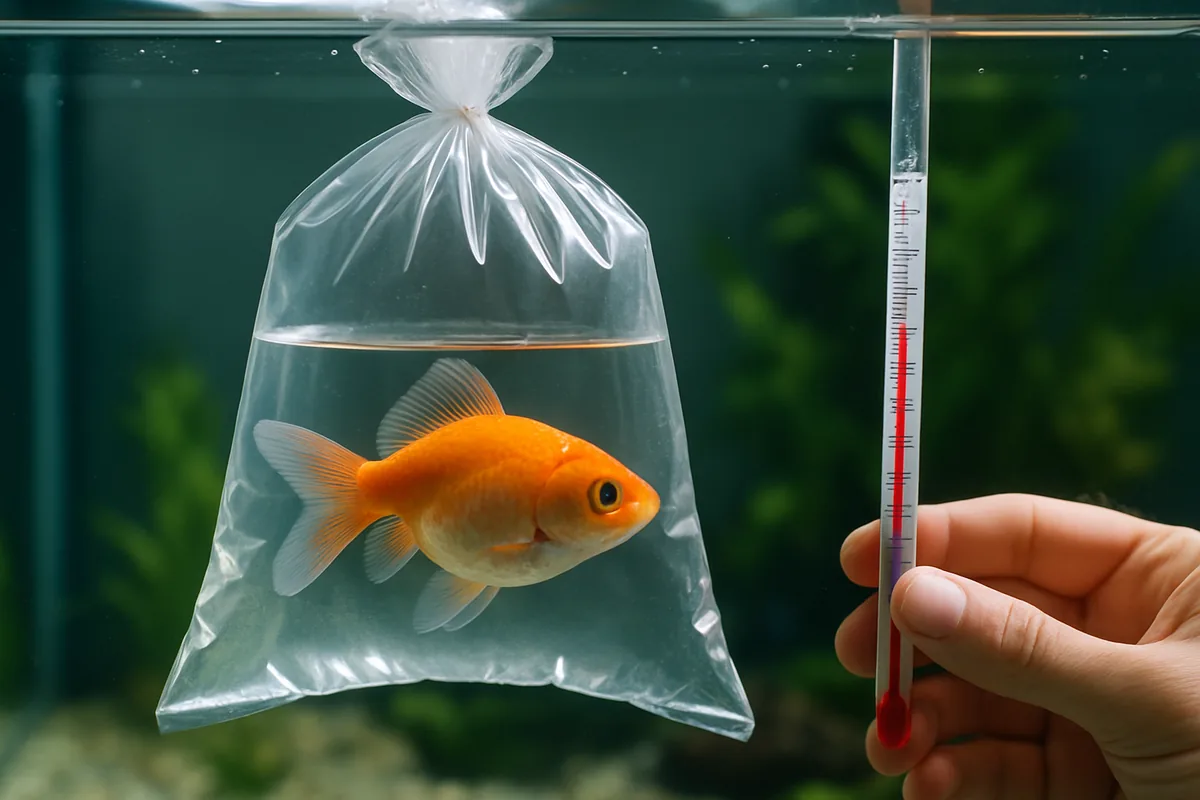
- New fish need it too: Float the bag for 15-20 minutes before releasing; temperature matching is step one of any acclimation.
- Cold tap water in winter can be 45-55°F (7-13°C) - that's a 25°F swing going into a 78°F tropical tank. This will cause shock.
Why temperature matters more than most guides admit
Fish are ectotherms. Their body temperature tracks the water they're in, and their immune system, metabolism, and stress response are all tied directly to that temperature. A sudden drop or spike doesn't just feel unpleasant - it triggers a measurable stress response: elevated cortisol, suppressed immune function, and in sensitive species, osmotic shock as their gill cells struggle to regulate ion exchange at the new temperature.
For context, a 10°F (5.5°C) swing over the course of an hour is the kind of change that, in a controlled study, would show clear signs of thermal stress. A typical tap water change on a cold winter morning can easily deliver that in under two minutes. Most fish don't die immediately - which is why people keep doing it - but the cumulative effect is repeated immune suppression, increased susceptibility to ich and other opportunistic diseases, and shortened lifespan.
This isn't fearmongering. It's the reason experienced fishkeepers are almost obsessive about temperature matching, even for hardy species like Danio rerio (zebra danios) or Poecilia reticulata (guppies) that can technically tolerate a wide range.
Hot water is just as dangerous as cold. Scalding new water into a tank - even briefly - can cause localised thermal shock near the inlet, stress fish in that area, and in a small tank, raise the overall temperature fast enough to be harmful. Always check both extremes.
How to actually match the temperature
There are three practical methods. Which one works best depends on your setup.
Hot and cold tap mix in a bucket
This is what most people do, and it works fine - the problem is skipping the thermometer. Run hot and cold simultaneously into your bucket, adjusting the ratio until it feels about right, then check the actual temperature before you go anywhere near the tank. Your hand is not accurate enough. A reading of 76°F and 82°F feel almost identical to skin, but that 6°F gap matters.
Check your tank first. Write it down or note it on your phone. Then target that same number in the bucket. A basic digital thermometer costs under $10 and will serve you for years.
Spare heater in a bucket
If your tap water runs cold and you do regular water changes, a dedicated bucket heater is genuinely useful. Fill the bucket with cold tap water, add dechlorinator, drop in a small submersible heater (50W is plenty for a 5-gallon bucket), and let it come up to temperature while you're doing other tank maintenance. By the time you've cleaned the glass and trimmed plants, the water is ready.
The downside is time - it takes 20-40 minutes depending on how cold your tap is and how warm your tank runs. Build this into your routine and it stops being an inconvenience.
Mark your bucket with a permanent marker at your typical water change volume. Fill to that line, treat, heat once - no measuring jugs, no second-guessing how much you added.
Python or direct-fill hose systems
Python-style gravel vacuums that refill directly from the tap are genuinely convenient, but they require more care on the temperature front. You cannot heat the water before it enters the tank - so you have to get the tap temperature right before you open the tank valve.
Run the water into a bucket first, adjust the hot/cold mix until your thermometer reads within 1-2°F of the tank, then redirect the hose into the aquarium. Start slow - a trickle rather than a gush - so you have time to correct if the temperature drifts as the hot water heater in your house depletes. Hot water from the tap isn't infinitely consistent; if you're doing a large water change, recheck partway through.
Running cold water directly through a Python "just for a minute" while you think about it. A 30% water change on a 30-gallon tank is 9 gallons. At 50°F going into a 78°F tank, that's enough volume to drop the tank temperature by several degrees before you've noticed anything wrong. Check first, always.
The float method
Sealing new water in a jug or bag and floating it in the tank until it equilibrates is occasionally suggested for tiny top-offs. In practice, it's slow, impractical for any meaningful water change, and adds nothing over just using a thermometer and a tap. It's more relevant during fish acclimation - see below.
How close is close enough?
The honest answer: within 1-2°F (0.5-1°C) is ideal; 3-4°F is acceptable for hardy species; beyond that you're risking stress. Most tropical tanks run at 75-82°F (24-28°C). Cold tap water in winter in many parts of the US, UK, or northern Europe sits at 45-55°F (7-13°C). That's not "a little off" - that's a full thermal shock event.
Winter tap water at 53°F going into a tropical tank at 78°F - a swing most fish cannot safely absorb in the time it takes to do a partial water change.
For coldwater setups - goldfish at 65-68°F (18-20°C), for example - the gap is usually smaller because room-temperature tap water is closer to the target. But it's still worth checking, especially in summer when tap water can run surprisingly warm.
Temperature matching when adding new fish
Acclimating new fish is a separate process from a water change, but temperature matching is where it starts. When you bring fish home, the bag water is whatever temperature it was in the store - often slightly different from your tank, and frequently stressed by a long car journey.
Float the sealed bag in your tank for 15-20 minutes. This equalises the temperature passively without exposing the fish to your tank water yet. Once the temperatures are matched, you can move to the next stage of acclimation - whether that's a simple net transfer or, for sensitive species, a full parameter check and drip acclimation to adjust water chemistry gradually.
For delicate fish - discus, wild-caught Altum angelfish, many catfish species - rushing acclimation is one of the most common causes of losses that get blamed on "bad stock" or "disease from the store." The fish were fine; the temperature transition killed them.
Most fish deaths in the first 48 hours after purchase are acclimation failures, not disease. Stores get blamed because it's the last place the fish was "healthy," but osmotic and thermal shock from a rushed bag float - or none at all - is usually the actual cause. This is fixable with five extra minutes of patience.
Species that need extra care
Temperature sensitivity varies significantly between species. Most people know discus (Symphysodon spp.) are delicate, but there are less obvious examples worth knowing.
Cardinal tetras (Paracheirodon axelrodi) are wild-caught in warm, stable Amazonian water. They have a very low tolerance for temperature swings - keep them at 79-82°F (26-28°C) and match water changes precisely. Corydoras catfish are often described as tough, and they are - except for temperature drops, which trigger a stress response quickly. Betta splendens are sold as bulletproof but they genuinely struggle below 76°F (24°C) and react badly to cold water introductions.
On the other end, coldwater species like Carassius auratus (goldfish) or Tanichthys albonubes (white cloud mountain minnows) tolerate more temperature variation in absolute terms, but they still benefit from matched water changes - especially in heated indoor setups where the ambient room temperature and tank temperature can diverge.
If you're building a stocking list and want to check compatibility between temperature requirements, the free stocking calculator flags species with conflicting ranges before you buy.
What most guides miss: seasonal variation
Your tap water temperature is not constant year-round, and this catches people out. In a heated home in January, your tap cold might run at 48°F (9°C). In August, the same tap cold might be 62°F (17°C). If you've developed a muscle-memory routine - "three turns of the hot tap" - that routine is wrong half the year.
Check the temperature every time, not just when you're starting out. Seasonal drift is slow enough that you won't feel it change from week to week, but the cumulative difference between your January and July tap water can be significant.
This also affects dechlorination. Some liquid conditioners (Seachem Prime, for example) work across a wide temperature range, but the stated dose is for normal water temperatures. Very cold water can slow the reaction slightly. Not enough to skip treatment - but worth knowing.
App-aquatic lets you log water change parameters including temperature, so you can see at a glance whether seasonal drift is affecting your routine - and get reminders when your next change is due. How often you should be doing water changes depends on your stocking and filtration, but consistency matters as much as frequency.
The full water change routine, step by step
Putting it all together into a repeatable process:
- Check and note the tank temperature with a thermometer.
- Fill your bucket to the marked water change volume.
- Add dechlorinator to the bucket immediately - before heating.
- Adjust temperature using your preferred method (tap mix or bucket heater) until it reads within 1-2°F of the tank.
- Remove old tank water (gravel vacuum during the drain if needed).
- Add new water slowly - pour against the glass or use a spray bar to avoid disturbing substrate or stressing fish.
- Recheck tank temperature 10 minutes after the change to confirm it's stable.
If you're new to fishkeeping and still learning the fundamentals, understanding the nitrogen cycle and keeping your tank fully cycled is the bigger picture that water changes fit into. Temperature matching is one part of a stable, healthy system.
Track your parameters and get care reminders with App-aquatic.
Get the free appCan I just use cold tap water and let the tank heater sort it out?
No. Your heater will eventually bring the temperature back up, but the damage happens during the transition. Cold water going in causes immediate thermal shock - the heater response is too slow to prevent it. For a 20-30% water change on a tropical tank, cold tap water can drop the tank temperature by 5-10°F before the heater catches up. Match the temperature before it goes in.
How long does a bucket heater take to warm up water for a change?
Typically 20-40 minutes for a 5-gallon bucket, depending on the starting temperature of your tap and the wattage of the heater. A 50W heater raising 5 gallons of 50°F water to 78°F will take roughly 30 minutes. Start heating while you prep the rest of your maintenance, and it's ready by the time you need it.
My fish seem fine after cold water changes - why should I bother?
Because the effects aren't always visible immediately. Immune suppression from repeated thermal stress shows up weeks later as an ich outbreak or bacterial infection that seems to come out of nowhere. Fish also don't show distress in obvious ways until the problem is serious. The absence of visible symptoms after a cold water change isn't safety - it's deferred cost.
Do I need to temperature match top-offs, or just full water changes?
Yes, match top-offs too - especially in small tanks. A 10-gallon tank that's lost an inch of water to evaporation might need 1-2 gallons replaced. That's 10-20% of the volume going in at once. If your tap is running cold, that's enough to cause a noticeable temperature drop. The smaller the tank, the more a top-off matters.
Does the water temperature affect how dechlorinator works?
Most modern liquid dechlorinators - including sodium thiosulfate-based products and more complex conditioners like Seachem Prime - work effectively across the range of temperatures you'd use for a water change. Add it to the bucket before heating as a best practice, and use the standard dose. Very cold water slightly slows the reaction, but not to a level that makes treatment ineffective at normal doses.
More guides · Water change frequency · Acclimating fish · Maintenance schedule