
Tank mates
Best Zebra Danio Tank Mates: Compatible Species
Last updated: May 2026
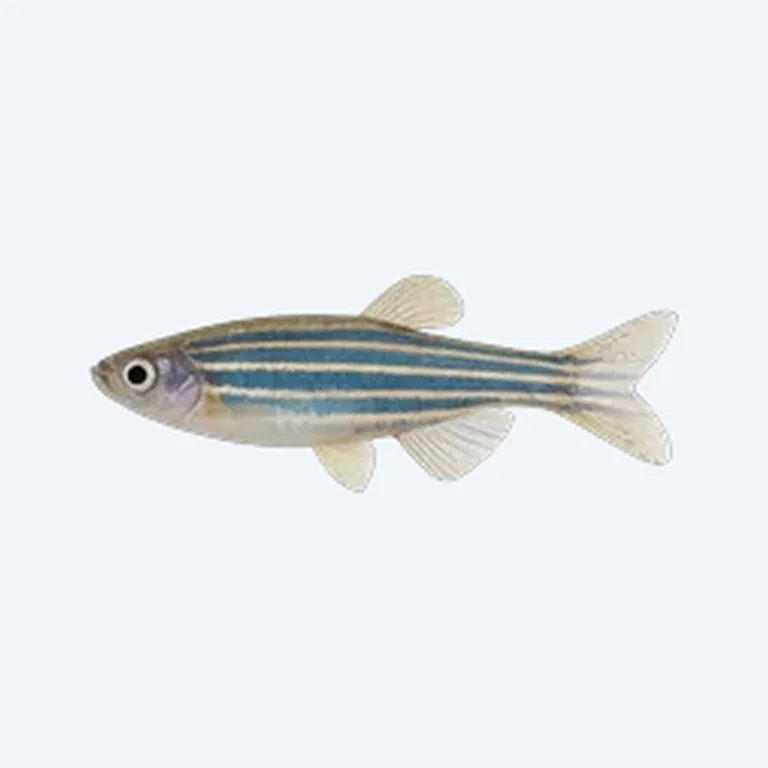
- Minimum tank size: 60 L (15 gal), but a 90 L (24 gal) horizontal tank lets danios school properly and gives tank mates room to breathe.
- Best tank mates: Corydoras catfish, harlequin rasboras, cherry barbs, white cloud mountain minnows, and most small peaceful tetras.
- Avoid: Long-finned slow swimmers - bettas, fancy goldfish, pearl gouramis. Danios will harass them relentlessly.
- Water window: 18-26 °C (64-79 °F), pH 6.5-7.5. This unusually wide thermal range opens up a lot of compatible options.
- Nipping risk: Danios nip in groups under six. Keep them in tight schools of six or more and the behaviour largely disappears.
- Feeding: Danios are fast surface feeders. Slow bottom-dwellers need their own feeding spot or they'll go hungry every meal.
Pairing Zebra Danio with something specific? Our fish compatibility checker compares any two of 815 species on water parameters, predation risk, fin nipping, temperament and tank size - and draws them both at life size so you can see the difference.
Why zebra danios are excellent community fish - with one catch
Danio rerio earned their place in the hobby for good reason. Hardy, active, disease-resistant, and tolerant of a wide water parameter range - they're genuinely beginner-friendly. But that energy is also what gets people into trouble. Stick six danios in a 40 L tank with a betta and two slow gouramis, and you'll watch the danios systematically shred every long fin in the aquarium. The problem isn't aggression. It's mismatch.
The rule is simple: pair danios with species that can keep up, occupy different water zones, or are simply too fast to be harassed. Get that right and you have one of the easiest, most forgiving community setups in freshwater fishkeeping.
Tank requirements before you think about tank mates
Tank mate compatibility starts with the tank itself. A 60 L (15 gal) is a workable minimum for a danio-only group, but the moment you add a second species you need more space. A 90 L (24 gal) with more horizontal run than height is the practical baseline for a mixed community. Danios are midwater and surface swimmers - they want length, not depth.
Filtration should produce a gentle current. Danios appreciate flow; many of their best tank mates don't mind it either. If you haven't cycled your tank yet, do that before any fish go in - read the full process in our guide on how to cycle a fish tank.
Below six, danios redirect social energy toward tank mates. At six or more, they school together and nipping drops off sharply.
Water parameters are where danios genuinely shine as community fish. Their tolerance for 18-26 °C (64-79 °F) and pH 6.5-7.5 overlaps cleanly with dozens of popular species. You can run this tank slightly cooler than most tropical setups - around 22-24 °C (72-75 °F) - which suits danios perfectly and still covers most rasboras, barbs, and corydoras. Full detail on hitting these numbers is in our aquarium water parameters guide.
Running your tank at 22-23 °C (72-73 °F) rather than the typical 26 °C tropical default is actually healthier for danios long-term and opens up cooler-water species like white cloud mountain minnows as tank mates.
The best zebra danio tank mates
Corydoras catfish
The classic pairing, and for good reason. Corydoras occupy the bottom of the tank entirely - Corydoras paleatus, C. sterbai, C. trilineatus - they're all good choices. They're too armoured and low to the substrate to interest danios, and they share a similar water parameter range. Keep them in groups of six or more as well; corydoras are shoaling fish and sulk alone.
The one practical issue: corydoras are slow, methodical feeders. Danios will hoover the surface and midwater before a pellet reaches the bottom. Drop sinking wafers or bottom pellets at one end of the tank while you feed the danios at the other. It's a five-second habit that makes a real difference.
Harlequin rasboras
Trigonostigma heteromorpha are one of the best mid-level companions for danios. They're fast enough not to be bullied, peaceful, and visually striking. They prefer similar water conditions - slightly soft, slightly acidic to neutral - and a temperature of 22-27 °C overlaps comfortably. A group of eight harlequins alongside six danios in a 90 L tank looks excellent and works in practice, not just on paper.
Cherry barbs
Puntius titteya are more peaceful than their barb reputation suggests. They're a bit slower than danios but not so slow that nipping becomes a problem, and they stay in the lower-mid section of the tank. Males colour up intensely when healthy. They prefer similar temperatures and pH to danios and handle moderate flow well. Keep a group of eight or more with a good male-to-female ratio (roughly 1:2) to spread any intraspecific attention.
White cloud mountain minnows
Tanichthys albonubes are the underrated option most people overlook. They can handle temperatures as low as 15 °C (59 °F) and thrive at the lower end of the danio range - 18-22 °C (64-72 °F). If you want a cooler-running tank, this pairing is ideal. They're peaceful, quick, and won't compete aggressively at feeding time. In a warmer tropical setup they're less appropriate - keep them below 24 °C (75 °F).
Small peaceful tetras
Many small tetras work well with danios. Hemigrammus rhodostomus (rummy-nose tetras) and Paracheirodon axelrodi (cardinal tetras) both occupy the mid-level, prefer similar temperatures, and are quick enough to avoid bother. Rummy-nose tetras are actually sensitive pH indicators - if their red colouring fades, something's off with your water. They like it slightly acidic, around pH 6.0-6.8, which is the lower end of the danio range but works fine.
Most "compatible species" lists stop at three or four species and call it done. The reality is that zebra danios get along with a wide range of active small fish - ember tetras, lambchop rasboras, smaller danio species - as long as the tank isn't understocked, the water conditions overlap, and you're not cramming everyone into a 50 L box.
Bristlenose plecos
Ancistrus sp. are a reliable algae-control addition that danios completely ignore. They stay on surfaces, grow to around 12-15 cm (5-6 in), and are peaceful with virtually everything. A single bristlenose works fine and won't outgrow a 90 L tank the way a common pleco (Pterygoplichthys) inevitably does. Don't fall for common plecos - they reach 45 cm (18 in) and will turn a community tank into a problem fast.
Fish to avoid with zebra danios
Long-finned bettas
This one comes up constantly and the answer is consistently the same: don't do it. Danios nip fins. A betta's elaborate fins are a target they cannot resist, and the stress of repeated harassment damages the betta even if no visible injury occurs. Short-finned betta varieties are occasionally successful in larger, well-planted tanks, but it's a gamble that usually ends badly. Keep bettas in species-appropriate setups.
Fancy goldfish
Temperature incompatibility alone rules this out - fancy goldfish prefer 18-22 °C (64-72 °F) at most, and their laboured swimming makes them easy nip targets. Common goldfish are slightly more robust but belong in ponds or single-species tanks, not mixed tropical communities.
Slow, labyrinth fish needing calm water
Pearl gouramis, dwarf gouramis, and paradise fish all prefer calmer conditions than danios create. It's not that danios attack them directly - it's that the constant activity prevents the slower fish from feeding and resting properly. They'll become stressed and more susceptible to disease over time.
Angel fish and discus
Angelfish (Pterophyllum scalare) have flowing fins that danios will nip, and discus need 28-30 °C (82-86 °F) - well outside the danio comfort zone. Both are mismatches on multiple counts.
Danios don't just nip fins - they also outcompete slow feeders for food. If you pair them with anything that needs time to find and consume food, you need a deliberate feeding strategy. Slow-release feeding blocks, feeding rings, and split feeding locations are all practical tools.
What most guides get wrong about danio behaviour
The nipping behaviour gets blamed on danios being "aggressive," which misrepresents the issue. Zebra danios are not aggressive - they're socially motivated. In an understocked group (under six fish) they redirect schooling energy outward. They'll chase and nip tank mates not out of territorial behaviour but because they're trying to interact with something. A proper school size fixes this almost completely.
The second thing guides miss is that danios are surprisingly sensitive to water quality given how "hardy" they're labelled. They tolerate a wide parameter range, but they don't tolerate ammonia and nitrite spikes any better than other fish. "Hardy" means they cope with temperature fluctuation and a range of pH - not that you can skip water changes. Stay consistent with maintenance; our guide on how often to do water changes covers the practical schedule.
Buying three or four danios because the tank is "small." You now have a group too small to school properly and too active to ignore their tank mates. Six is the floor - eight is better. If your tank won't comfortably hold six danios alongside your other fish, reconsider the stocking plan entirely.
Feeding a mixed danio community
Zebra danios are opportunistic surface and mid-water feeders. They'll eat flake, micro-pellets, frozen daphnia, bloodworm, and brine shrimp. The problem in a community tank is speed: danios will consume most food before slower species can reach it.
Practical approach: feed the danios at one end with floating flake or micro-pellets, then immediately drop sinking wafers or pellets at the opposite end for bottom-dwellers like corydoras. Takes five seconds and solves most feeding competition. For mid-water companions like rasboras, they're generally fast enough to feed alongside danios without intervention.
Putting together a stocking plan
A few example combinations that work in practice:
- 90 L (24 gal): 8 zebra danios + 6 corydoras paleatus + 8 harlequin rasboras
- 120 L (32 gal): 10 zebra danios + 6 sterbai corydoras + 10 cherry barbs + 1 bristlenose pleco
- 60 L (15 gal) cooler setup: 6 zebra danios + 8 white cloud mountain minnows + 6 corydoras paleatus (run at 20-22 °C)
These are starting points. Before you finalise numbers, run them through the free stocking calculator - it accounts for adult sizes, bioload, and tank footprint in a way that "inches per gallon" rules never do accurately.
Add danios last, or add all fish simultaneously. Danios introduced first will establish the entire tank as their territory and become more aggressive toward newcomers. If they're the last addition, they integrate into an existing community far more smoothly.
Track your parameters and get care reminders with App-aquatic.
Get the free appCan zebra danios live with bettas?
Generally not recommended. Danios will nip a betta's fins, and the stress of constant activity harms bettas even without visible injury. Short-finned bettas in large, heavily planted tanks are occasionally successful, but it's a gamble most experienced keepers advise against. A betta is better kept in its own tank or with calm, non-nippy companions.
How many zebra danios should I keep together?
Six is the minimum. Below that, danios don't school properly and redirect attention toward tank mates through chasing and fin-nipping. Eight to ten fish in a properly sized tank is ideal - the schooling behaviour is more natural and the group is more stable if you lose one or two.
Can zebra danios live with guppies?
It's risky. Male guppies have long, flowing tails that danios will nip - particularly in a new tank or if the danio group is small. Female guppies are more durable and less likely to be targeted. If you want to try it, keep danio numbers high (eight or more), provide plenty of planting and line-of-sight breaks, and watch closely for the first two weeks.
Do zebra danios need a heater?
Not always. They tolerate temperatures down to around 15 °C (59 °F), so in a heated room that stays consistently above 18 °C (64 °F) they can go without. That said, most community tank mates - corydoras, rasboras, tetras - need stable warmth in the 22-26 °C range, so if you're building a mixed tank you'll want a heater to hold a consistent temperature regardless.
Are zebra danios fin nippers?
They can be, but it's almost always a group-size problem. A group of fewer than six danios redirects its social energy toward tank mates, while a school of six or more stays busy with each other and nipping drops off sharply. Even in a proper school, keep them away from slow, long-finned fish like bettas, fancy goldfish, and pearl gouramis.