
Guide
Can angelfish live with neon tetras?
It's one of the most-asked questions in freshwater fishkeeping. The short answer is "sometimes." The long answer is that you need to understand exactly what the risks are, what conditions make it work, and when to choose a different path entirely.
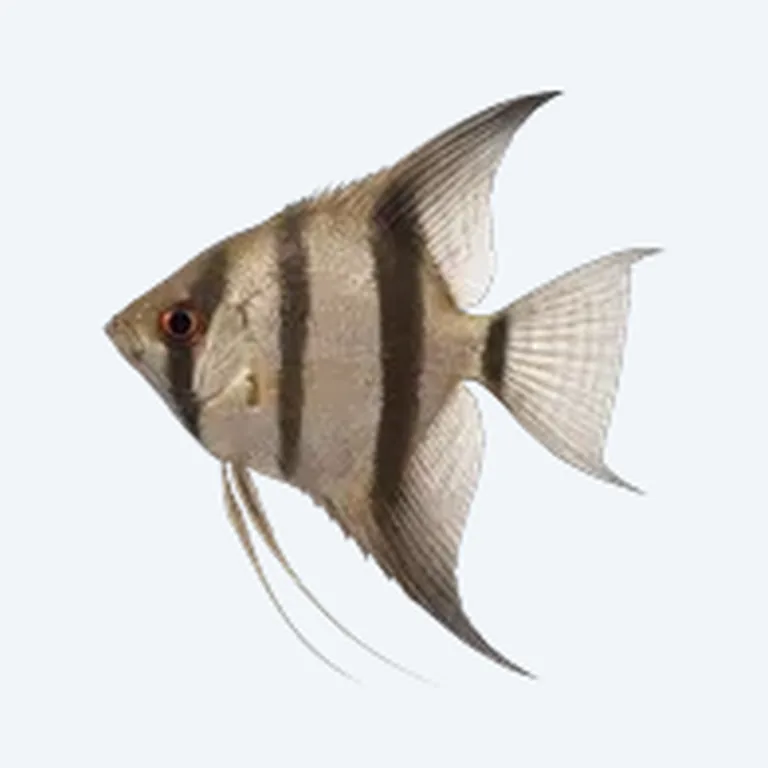
- It can work - but it's a calculated risk, not a safe default. Angelfish are predators; neon tetras are prey-sized.
- Conditions that improve the odds: tank 150L+, heavy planting, school of 15+ neons, angels raised from juvenile.
- Warning signs to act on: neons disappearing without explanation, neons permanently hiding, angels chasing the school.
- Safer alternatives: cardinal tetras (slightly larger), rummynose tetras, or a different centrepiece like German Blue Ram.
Why this question gets asked so much
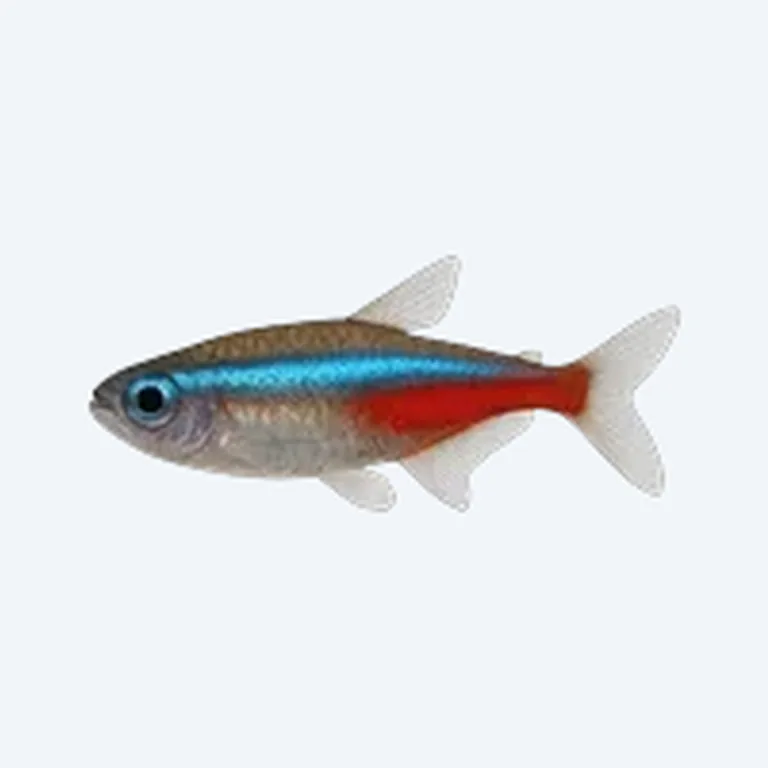
Angelfish and neon tetras are two of the most iconic freshwater fish in the hobby. Walk into almost any fish shop and you'll find both. They're often housed in the same display tanks at the shop - which gives the impression they're natural companions. They share similar geographic origins (both from South American river systems), they look stunning together visually, and the internet is full of photos of them coexisting peacefully in planted aquariums. So the question is completely understandable.
The problem is that they also have a fundamental predator-prey relationship. And that relationship doesn't disappear just because you put them in the same tank.
The core issue: angelfish are predators
Angelfish (Pterophyllum scalare) are cichlids. In their natural Amazonian habitat, they eat small fish, invertebrates, and insects. Their laterally compressed, disc-shaped body is an adaptation for navigating dense vegetation - not for socialising peacefully with anything smaller than them. They have a mouth wide enough, and an instinct strong enough, to eat neon tetras (Paracheirodon innesi).
Neon tetras reach 3-4 cm. Adult angelfish can reach 15 cm body length and considerably more including fin height. That size differential is significant - an adult angel can and will take a neon in a single strike if conditions or mood prompt it. This isn't occasional aggression; it's predation. The distinction matters.
The water parameter overlap: actually a point in their favour
Here is where angelfish and neon tetras do genuinely align. Both species originate from soft, warm, slightly acidic South American river systems. Their ideal parameters overlap meaningfully:
- Temperature: Neons prefer 20-26°C; angels prefer 24-28°C. A shared temperature of 25-26°C works for both.
- pH: Neons prefer pH 6.0-7.0; angels prefer 6.5-7.2. A shared range of 6.5-7.0 suits both well.
- Hardness: Both prefer soft water - GH 5-12 dGH. Both struggle in hard, alkaline water long-term.
This parameter compatibility is real and it's genuinely one reason the pairing is attempted so often. The chemistry works. The predation issue is behavioural, not chemical. See our water parameters guide for how to measure and adjust your water conditions.
When keeping angelfish with neon tetras actually works
The honest truth from the aquarium community is that many keepers maintain this combination successfully for years. But the conditions under which it works are specific:
1. Tank size: 150 litres minimum, 200+ preferred
A cramped tank concentrates interactions. In a 150-litre+ tank with open swimming space and visual breaks created by plants and hardscape, neons can maintain distance and angels don't need to defend territory constantly. In a 60-litre tank, the same combination is a ticking clock. Use our stocking calculator to check your bioload and space before committing.
2. Heavy planting with mid and background cover
Dense planting serves two functions: it breaks sightlines so angels aren't constantly tracking the school, and it gives neons escape and refuge. A sparse, open tank gives neons nowhere to go when an angel decides to chase. Tall stem plants like vallisneria, amazon sword, and hygrophila that create mid-water cover are particularly valuable.
3. A large school of neons - at least 12-15
A school of 6 neons in with two angels is a lottery. A school of 15-20 neons changes the dynamic - there's safety in numbers, the school looks more cohesive and confident, and individual neons are less exposed. Schooling behaviour itself is a predator-avoidance strategy. Don't under-stock the neons. See our neon vs cardinal tetra guide for which tetra variant works best in this setup.
4. Add angelfish as juveniles
This is the advice that circulates most in the hobby - and it does carry some weight. Angels that grow up alongside neons may habituate to their presence and be less likely to treat them as prey. It's not guaranteed. An angel that ignores neons at 5 cm may still eat them at 12 cm. But it improves the odds.
5. Feed angelfish well
A well-fed angel is less motivated to hunt. A hungry angel is dangerous. Feed a varied diet - quality flake or pellet, supplemented with frozen or freeze-dried foods (bloodworm, daphnia, brine shrimp). Twice daily, small portions. An angel that gets adequate protein from its food has less reason to eye the neon school with intent.
When it fails - the warning signs
This combination can break down at any time. Watch for:
- Neons disappearing without bodies. If the school is gradually shrinking with no visible cause - no disease, no other explanation - they're being eaten at night or during feeding confusion.
- Angels chasing the school. Occasional interest is normal. Sustained chasing is predation behaviour developing. Act on it early.
- Neons permanently hiding. If the school spends most of its time jammed into one corner or behind plants, it's chronically stressed. That's not a working combination.
- Breeding season. Angelfish defending a spawning site become significantly more aggressive. A pair that seemed fine suddenly becomes hostile to everything in the tank. Remove the neons during breeding events if this happens.
Better alternatives if you want both
Cardinal tetras instead of neons
Cardinal tetras (Paracheirodon axelrodi) are slightly larger than standard neons - 4-5 cm vs 3-4 cm - and that extra centimetre matters. They are also more vividly coloured, with the red stripe extending the full length of the body rather than just the tail half. The increased size reduces (doesn't eliminate) the risk of predation. See our neon vs cardinal tetra comparison.
Rummynose tetras
Rummynose tetras reach 4-5 cm, are fast and tight schoolers (which makes them harder to single out), and have striking red-head and black-white barred tail markings. They do well in the warm, soft water angelfish prefer and are considered a safer choice for angelfish tanks than standard neons.
Black phantom tetras
Reaching 4-5 cm, peaceful, and mid-water swimmers. Their darker colouration makes them less visually stimulating to a hunting angel than the bright neon stripe.
Alternative centrepiece fish for a neon tetra tank
If you love neon tetras and want to build the tank around them, consider a different centrepiece fish that won't eat them. German Blue Rams (Mikrogeophagus ramirezi) are stunning dwarf cichlids that share the same soft, warm water needs - and at 5-7 cm, they cannot eat adult neons. Pearl gouramis are another option: peaceful, beautiful, and completely compatible with neon-sized fish. Both give you a visual anchor without the predation risk.
"Angelfish and neon tetras are sold together in shops, so they must be compatible. I've seen photos of them living peacefully in planted tanks."
Shops house them together for display, not as a compatibility endorsement. The photos online show the successes - not the tanks where the neons gradually vanished over three months. Success is possible with the right conditions; it is not the default outcome.
The honest verdict
The angelfish-neon tetra combination is a calculated risk, not a safe pairing. In the right conditions - large tank, heavy planting, big school, angels raised from juvenile - many aquarists manage it successfully for years. In a smaller tank, with a small school, with mature angels, it tends to fail. The neons disappear over weeks or months, often without you witnessing the predation directly.
If you're determined to try it, set the conditions up correctly before introducing the fish. Monitor regularly. If it starts to fail, have a plan - either a separate tank for the neons, or a different centrepiece for the neon community. The worst outcome is watching a school of tetras gradually vanish and not understanding why until it's too late.
Run your planned stocking through our free stocking calculator and track it in App-aquatic. The compatibility matrix flags exactly these types of size and temperament mismatches before you buy.
Related guides
Check angelfish and neon tetra compatibility - and every other combination - in App-aquatic's stocking calculator before you buy.
Use the calculatorWill angelfish definitely eat my neon tetras?
Not definitely - but there's a significant chance they will, especially as the angels grow. Small neons (3-4 cm) are within the predation range of adult angels (12-15 cm body length). The risk is real and increases with tank size, angel maturity, and school size. "Definitely" is not the right word, but "probably, eventually" is closer to the truth than "fine."
How big a tank do I need for angelfish and neon tetras together?
150 litres is the minimum - 200+ is better. Space allows neons to maintain distance, and angels to establish territory without constantly encountering the school. In tanks under 100 litres, this combination tends to fail. The fish end up in each other's space constantly.
Can I keep neon tetras with baby angelfish?
Baby angels are fine with neons. The problem is that angels grow quickly - a juvenile angel at 3 cm can reach 10+ cm in 6-8 months. What works at the start won't necessarily work 6 months later. If you add juvenile angels to an established neon school, monitor closely as the angels grow.
What tetras are safe with angelfish?
Larger tetra species reduce (not eliminate) the predation risk: cardinal tetras (4-5 cm), rummynose tetras (4-5 cm, tight schoolers), and black phantom tetras (4-5 cm) are all better choices than standard neons. Their extra centimetre of body size and faster, tighter schooling behaviour makes them harder to single out and catch.
All guides · Angelfish care · Angelfish tank mates · Neon vs cardinal tetra · Centrepiece fish · Stocking calculator