
Guide
Fish with clamped fins: what it means and how to fix it
Clamped fins are a distress signal, not a diagnosis. Here are the four causes and how to tell them apart.
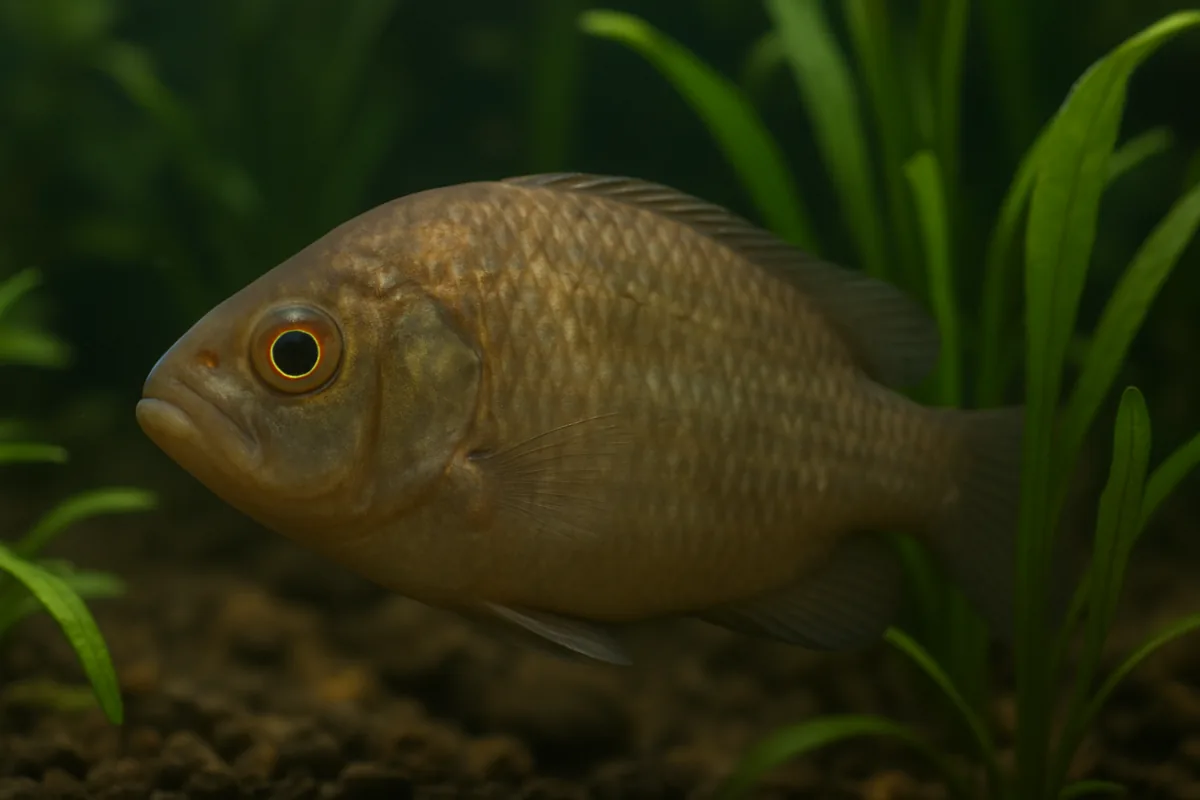
- What it is: a fish holding its fins pinned tight to its body instead of open and fanned - a sign it feels unwell or unsafe.
- It's a symptom, not a disease. It tells you something is wrong, not what. Don't reach for medication first.
- Test your water immediately: ammonia and nitrite should read 0 ppm; nitrate under 20-40 ppm. A spike is the single most common cause.
- Check the temperature: a cold tank or a failed heater is the most-missed cause - match the species' range.
- Look for other symptoms: white spots, a gold "dusty" sheen, rapid gilling, or flashing point to disease and need treatment.
- Most cases recover in 24-72 hours once the cause is fixed. No improvement after 3-4 days means you've missed something.
What clamped fins actually look like
A healthy fish carries its fins open and relaxed - the dorsal fin standing upright, the pectoral fins fanning as it hovers, the tail spread. A fish with clamped fins holds all of them tight against its body, as if it's trying to make itself smaller. On long-finned fish like bettas and fancy guppies it's obvious; on a tetra or a barb you'll notice the dorsal fin lying flat and the fish looking "pinched."
Clamping is one of the earliest and most reliable signals that a fish is in trouble. It usually shows up before more dramatic symptoms, which makes it genuinely useful - if you catch it early and act, you can often fix the problem before it becomes a disease you're medicating.
Half the advice online tells you to dose medication or aquarium salt the moment you see clamped fins. That's backwards. Clamped fins are a symptom with several possible causes, and the most common one - bad water - gets worse, not better, when you start throwing chemicals at a tank you haven't tested.
The four causes, from most to least common
1. Water quality (test this first, every time)
The great majority of clamped-fin cases trace back to water chemistry. Ammonia and nitrite are toxic at any measurable level; both burn the gills and skin and put the fish into exactly the defensive posture you're looking at. High nitrate (over about 40 ppm) causes the same chronic stress more slowly. Run a full test - ammonia, nitrite, nitrate, and pH - before you do anything else.
- Ammonia: 0 ppm. Anything above 0.25 ppm is stressful; above 1 ppm is acutely toxic.
- Nitrite: 0 ppm. Even low levels stop the blood carrying oxygen properly.
- Nitrate: under 20 ppm for sensitive fish; most community fish tolerate up to 40 ppm.
- pH: stability matters more than the exact number - a swing of 0.5+ in a day is more stressful than a steady value slightly off ideal.
The usual culprits are an incomplete or crashed nitrogen cycle (very common in tanks under two months old), overfeeding, overstocking, or a dead fish rotting out of sight. See aquarium water parameters for target ranges by species.
Assuming clean-looking water is clean water. Ammonia and nitrite are invisible and odourless at harmful levels. A crystal-clear tank can be poisoning its fish. The only way to know is to test - App-aquatic lets you log results and catch a creeping rise before it becomes a crisis.
2. Temperature - too cold, or a sudden swing
A tank that has drifted too cold, or a heater that has quietly failed, is the second big cause and the one people miss most often. Cold fish clamp up and go lethargic to conserve energy. Check your thermometer against the species' preferred range (most tropical community fish want 24-26°C / 75-79°F; bettas prefer 25-27°C / 78-80°F). A sudden change in either direction - from a large cold-water top-up, for example - clamps fins even when the final temperature is fine.
If the tank is too cold, warm it back up gradually - no more than 1-2°C (2-4°F) per hour. Racing the temperature back up is its own shock.
3. Disease and parasites
When water and temperature are genuinely fine and the fish is still clamped, look at disease. Clamping accompanies most common illnesses, so check for the tell-tale extra symptoms:
- White salt-grain spots on the body and fins - ich (white spot).
- A fine gold or rusty "dusty" sheen, especially in a torch beam - velvet.
- Rapid or laboured gilling, flashing (rubbing on surfaces) with no visible spots - often gill flukes or other parasites.
- Ragged, receding fins - fin rot, usually secondary to poor water.
Only when you have a clear diagnosis should you medicate, and ideally in a separate hospital tank rather than dosing the whole display.
4. Stress and environment
If the water is clean, the temperature is right, and there are no disease signs, the cause is environmental stress. The big ones are a bully or fin-nipper in the tank (watch at dusk and after lights-out, when most aggression happens), a tank with too little cover so the fish feels exposed, or a recent move that hasn't settled yet. Some hiding and clamping for 24-72 hours after adding a new fish is normal. For the full picture on behaviour, water, and tank mates, see signs of stress in fish. Before adding anything new, check compatibility and capacity with the free stocking calculator.
How to work out which cause it is
Don't guess - go in order. Each step rules something out:
- Test the water. Ammonia, nitrite, nitrate, pH. If anything is off, that's very likely your answer.
- Check the thermometer. Compare against the species' range, and think about any recent large water change or room-temperature drop.
- Look closely for disease in good light - spots, sheen, gill rate, fin edges, flashing.
- Watch the tank for 15-20 minutes at different times, including after the lights go out, for bullying.
The order matters because water and temperature are both common and quick to check, and fixing them often resolves the clamping without any need to consider disease at all.
Clamped fins are a stress posture, not a diagnosis. Water quality and temperature are the most common causes and the quickest to rule out, so work through them first - medicating a fish whose real problem is its water adds a chemical stressor to one it is already struggling with.
How to fix it
- If water is off: do a 25-30% water change with dechlorinated, temperature-matched water now, then fix the root cause (finish the cycle, cut feeding, reduce stock, find the dead fish).
- If it's cold: restore correct temperature slowly, and replace a failed heater.
- If it's disease: confirm the diagnosis, then treat - ideally in quarantine - with the right medication for that specific illness.
- If it's a bully: remove or rehome the aggressor. Rearranging decor rarely fixes genuine aggression for long.
- If it's a bare tank: add plants, driftwood, or caves so the fish has cover and can break line of sight.
Don't stack fixes. Change the water and raise the heat and dose three medications at once and you'll never know what worked - and you may add a chemical shock on top of the original problem. Fix the most likely cause, give it a couple of days, and reassess.
Log water tests and get reminders before problems start - free with App-aquatic.
Get the free appDo clamped fins always mean disease?
No. Clamped fins are a general distress signal, not a specific diagnosis. The most common cause is poor water quality - an ammonia or nitrite spike, or high nitrate - not an infection. Test your water before assuming the fish is sick and reaching for medication.
Can cold water cause clamped fins?
Yes, and it's one of the most-missed causes. A tank that's too cold or a heater that's failed will clamp a fish quickly. Check the thermometer against the species' preferred range and warm the tank back up slowly - no more than 1-2°C (2-4°F) per hour.
My betta has clamped fins - what does it mean?
Bettas clamp readily, which makes them a good early-warning system. Usual causes are cold water (they want 25-27°C / 78-80°F), an un-cycled or dirty tank, or a sudden parameter change. Test ammonia, nitrite, nitrate and temperature first. Persistent clamping alongside white spots, a gold dusty sheen, or lethargy points to disease.
How long until clamped fins recover?
Once the cause is fixed, fins usually relax within 24-72 hours. If there's no improvement after three to four days of good water and correct temperature, look again for a missed cause or an early disease such as ich, velvet, or gill flukes.
Should I add aquarium salt or medication for clamped fins?
Not as a first step. Clamped fins are a symptom, and most cases are environmental. Fix water quality and temperature first. Only medicate when you have a clear diagnosis, because unnecessary medication stresses fish further and can harm your beneficial bacteria.
More guides · Signs of stress in fish · Water parameters · Ich / white spot · App-aquatic