
Fish care
Dwarf Gourami: Complete Care Guide
Last updated: May 2026
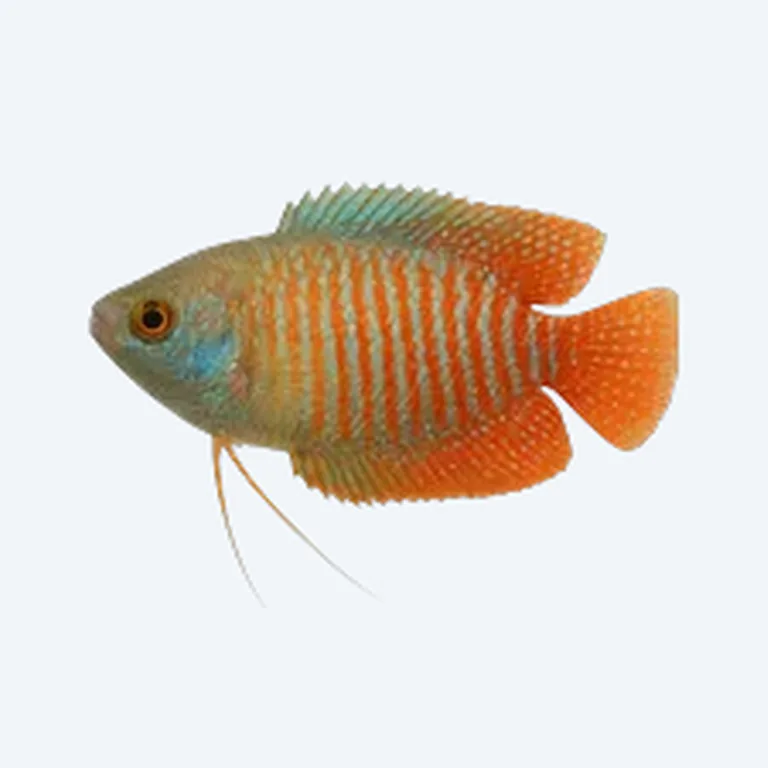
- Species: Trichogaster lalius - a labyrinth fish from slow, heavily vegetated waters in South Asia.
- Tank size: 80 L (21 US gal) minimum for a pair; bigger is better for managing male aggression.
- Water: 23-28°C (73-82°F), pH 6.0-7.5, soft to moderately hard water. Stable beats perfect every time.
- Temperament: Males are territorial with each other and can harass timid tankmates - one male per tank is the default rule.
- Diet: Omnivore. Accepts most foods but needs variety; a flake-only diet leads to dull colouration and weakened immunity.
- Iridovirus risk: Dwarf Gourami Iridovirus (DGIV) is endemic in farmed stock. Source carefully, quarantine every fish, and read the dwarf gourami reality guide before buying.
What makes the dwarf gourami worth keeping
Few fish at this price point deliver the visual impact of a male dwarf gourami in good condition. The red-and-blue iridescent striping is genuinely striking under decent lighting, and the labyrinth organ - the same structure bettas use - gives them a personality quirk you don't get with most community fish: they surface-breathe. Watch one rise to gulp air at the surface and you'll understand why people get attached to them.
They're also manageable for intermediate keepers. "Easy" in the database means the water chemistry tolerances are forgiving, not that you can ignore them. Get the setup right from the start and a dwarf gourami is a rewarding, long-lived centrepiece fish. Get it wrong - especially with the iridovirus situation - and you'll be replacing fish every few months wondering what you did wrong.
Tank setup
Size and layout
The 80 L (21 US gal) minimum is exactly that - a minimum. If you want a male-female pair with any meaningful community around them, 120 L (32 US gal) gives you real flexibility. Males are territorial, especially at the water surface where they build bubble nests. A longer tank (90 cm / 36 in footprint) helps more than extra depth because it allows territories to exist without constant overlap.
Heavy planting is not optional if you want healthy fish. Trichogaster lalius comes from densely vegetated rivers and backwaters in India, Bangladesh, and Pakistan. Without visual breaks - floating plants, stem plant clusters, driftwood - males will chase females and smaller tankmates relentlessly. Floating plants like frogbit or water lettuce serve double duty: they break line of sight at the surface and give males a natural anchor point for bubble nest building.
Leave a clear gap between the water surface and the tank lid - around 5-8 cm (2-3 in). Dwarf gouramis gulp air, and that surface air needs to be warm and humid. Cold air in an uncovered or poorly fitting tank can cause respiratory issues over time.
Filtration and flow
This is where most people get it wrong. Dwarf gouramis come from sluggish water. A canister filter turned up to full power will stress them, damage their fins over time, and - critically - disturb the bubble nests males build at the surface. You want gentle turnover: aim for around 4-6× the tank volume per hour, with the output directed along the back glass so it creates surface movement without a direct current through the swimming area.
Surface movement matters for a different reason: oil films. A stagnant surface develops a protein film quickly, and that film physically blocks gas exchange at the water surface - exactly where your gourami is trying to breathe. A light ripple clears it. A powerhead blasting at full tilt is overkill and will make your fish miserable.
Running a high-flow filter in a dwarf gourami tank because the packaging says it suits the tank size. Gourami aren't rheophilic fish. Dial the flow down or redirect the output, and watch your fish relax almost immediately.
Water parameters
The 23-28°C (73-82°F) range is real - stay within it. Prolonged temperatures below 22°C slow their metabolism and suppress immunity, making them more susceptible to the bacterial and viral infections they're already prone to. Above 29°C and dissolved oxygen drops while stress goes up. The sweet spot for most hobbyist tanks is 25-26°C (77-79°F).
pH between 6.0 and 7.5 covers the range of most tap water, so you rarely need to adjust it. What you do need is stability - wild swings of 0.5 or more within a day are more damaging than being at pH 7.4 instead of 6.8. Test regularly and log your results; if you want a quick way to track trends over time, App-aquatic stores your test history so you can spot drift before it becomes a problem.
Ammonia and nitrite must be zero. Always. If your tank isn't cycled, fix that first - read the guide to cycling a fish tank before adding any fish. For ongoing water quality, aquarium water parameters covers what each reading actually means in practice.
Dwarf gouramis are adaptable within this window, but stability matters more than hitting a specific number.
Dwarf Gourami Iridovirus - the honest conversation
DGIV is the elephant in the room with this species. Studies have found infection rates as high as 22% in imported fish from Singapore - the source of the majority of dwarf gouramis sold in the West. There's no treatment. Infected fish typically waste away over weeks to months regardless of what you do. The trade knows about this. Most fish shops don't mention it.
Dwarf Gourami Iridovirus is a megalocytivirus that has been present in farmed populations since at least the early 2000s. It causes immune suppression and organ failure. An infected fish may look fine at the shop, decline slowly over 6-12 weeks, and die for no obvious reason despite perfect water quality. Because the symptoms overlap with bacterial infections, many hobbyists blame their husbandry when the real problem was the fish they bought.
What you can do about it:
- Source locally where possible. Fish from hobbyist breeders or local fish clubs are dramatically less likely to carry DGIV than mass-farmed imports.
- Quarantine every fish for a minimum of four weeks before adding them to your display tank. A 40 L quarantine tank is a small investment that saves a lot of heartbreak.
- Watch for early signs: loss of colour, clamped fins, loss of appetite, swollen abdomen, or darkening of the skin. If a newly purchased gourami shows any of these in the first month, isolate it immediately.
- Don't overstock gouramis. Stress accelerates disease progression in carriers.
This isn't a reason to never keep the species. It is a reason to go in with realistic expectations and a quarantine setup ready.
Feeding
Dwarf gouramis are straightforward to feed. They accept high-quality flake or micro-pellet as a staple, and most individuals will eat from the surface within a day or two of settling in. The mistake is stopping there. A varied diet makes a tangible difference to colouration and long-term health.
Rotate in frozen or live daphnia, bloodworm, and brine shrimp two or three times a week. Blanched vegetables - zucchini, peas, spinach - are eaten by many individuals and provide plant matter their gut needs. Colour-enhancing foods with astaxanthin and spirulina do improve the vibrancy of the red-and-blue patterning noticeably over a few weeks.
Feed small amounts twice daily. Whatever isn't eaten in two minutes is too much - uneaten food rots quickly and spikes ammonia, which is especially dangerous given the health vulnerabilities of this species.
Tankmates
The "semi-aggressive" label on dwarf gouramis is male-specific and surface-zone-specific. A single male in a well-planted tank is generally peaceful with fish that occupy other swim zones and don't share its colouration or body shape. Problems arise when you add a second male, keep them with other labyrinth fish, or house them with fin-nipping species.
Never keep two male dwarf gouramis in the same tank unless it's very large (200 L+) with significant visual barriers. The subordinate male will be harassed continuously and will eventually stop eating. This plays out over weeks rather than hours, so it's easy to miss until the damage is done.
Good tankmates in an 80-120 L setup:
- Corydoras catfish (mid-to-bottom zone, peaceful)
- Harlequin rasboras or ember tetras (fast-moving, not fin-nippers)
- Kuhli loaches (bottom dwellers, largely ignored)
- Otocinclus (algae eaters, small and unobtrusive)
- Small livebearers like platies, in soft enough water
Avoid: tiger barbs, serpae tetras, or any known fin-nipper. Avoid: bettas, paradise fish, or other labyrinth fish. Avoid: anything large and boisterous enough to intimidate a gourami away from the surface.
Use the free stocking calculator to cross-check your full list before committing - compatibility on paper doesn't always survive the reality of a specific tank size and layout.
Breeding
Dwarf gouramis are bubble nest builders and reasonably willing to breed in home aquaria if conditions are right. The male constructs a nest at the surface among floating plants, courts the female with flaring and colour display, and wraps around her during spawning in typical anabantoid fashion. Eggs are collected in the nest and guarded by the male.
To encourage breeding: raise the temperature to 27-28°C (80-82°F), ensure floating plants are present, do a series of small water changes with slightly cooler water to mimic seasonal rainfall, and feed heavily with live or frozen foods for a week beforehand. Once spawning occurs, remove the female - the male will guard the nest aggressively and may injure her.
Fry are tiny and require infusoria or commercial fry food for the first week before graduating to baby brine shrimp. Survival rates in community tanks are low; a separate breeding setup gives you real results.
What most guides miss
The labyrinth organ develops gradually in juveniles. Young dwarf gouramis are more dependent on gill respiration than adults. This means very young fish are actually more sensitive to low dissolved oxygen than adults - don't assume because adults handle surface breathing that the fry can cope with poor water conditions.
Males adjust their territory size based on perceived threat levels. A tank that's too sparse will make a male more aggressive, not less, because there's nothing to define boundaries. Dense planting actively reduces aggression by creating a landscape the male can "own" in a limited, manageable way.
Colour varieties - powder blue, neon blue, flame, sunset - are selectively bred and often frailer than the wild-type form. If you want the most robust fish, the wild-type red-and-blue strain is generally the healthier choice. The trade-off is a less vivid initial appearance compared to a neon blue variant under a shop's display lighting.
Maintenance and water changes
Weekly water changes of 25-30% are the standard, and dwarf gouramis respond well to this routine. Nitrates above 20 ppm long-term will suppress their immune system - already under pressure from DGIV risk - so don't let the tank go weeks between changes. For guidance on frequency and volume, how often to do water changes lays out the reasoning clearly.
Keep the substrate clean. Uneaten food and waste accumulate in gravel and planted substrates quickly. A light vacuum during each water change keeps the bioload manageable without disrupting beneficial bacteria.
Track your parameters and get care reminders with App-aquatic.
Get the free appCan I keep two dwarf gouramis together?
Two males will fight - one will dominate and the other will be stressed into poor health. A single male with one or two females works in a well-planted tank of 100 L or more. If you want multiple males, the tank needs to be 200 L+ with heavy planting to break sightlines, and even then it's a gamble.
My dwarf gourami is losing colour and hiding - what's wrong?
The two most common causes are stress (check tankmates, water flow, and whether it's being bullied) and illness. If water parameters are fine and there's no obvious aggressor, DGIV or bacterial infection is a real possibility in fish purchased from a shop. There's no treatment for DGIV; bacterial infections can sometimes be addressed with appropriate medication if caught early. Isolate the fish and observe.
Are dwarf gouramis good for a beginner?
They're manageable if you have a cycled tank and a stable setup, but the iridovirus issue means you should go in informed. They're not as forgiving of water quality lapses as, say, a guppy or a zebra danio. If you're new to the hobby, check the best fish for beginners guide for species with fewer supply-chain complications while you're finding your feet.
What's the white foamy stuff at the surface of my gourami tank?
Almost certainly a bubble nest - this is normal male behaviour and a sign the fish is healthy and comfortable. Males build nests whether or not a female is present. Don't disturb it during water changes if you can avoid it; use a cup to scoop water gently near that area rather than disturbing the surface directly.
How long do dwarf gouramis live?
In good conditions - stable water, varied diet, no DGIV - 4 to 5 years is a realistic lifespan, and some individuals live a little longer. Many shop-bought dwarf gouramis don't reach that, often because of DGIV or poor-quality breeding stock, so buying healthy fish from a reliable source matters as much as your care.