Guide
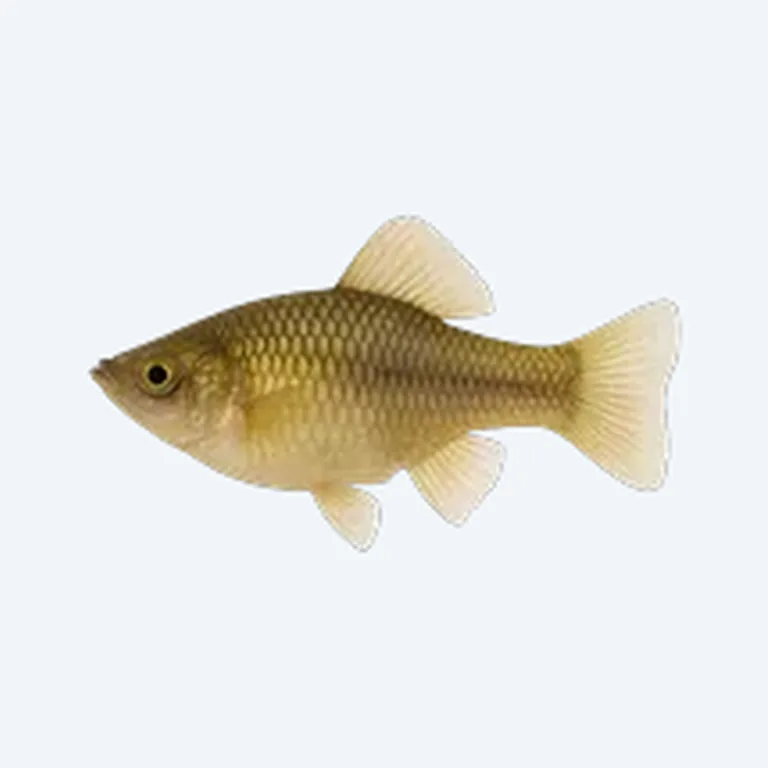
Molly fish care guide
Mollies are livebearers that do well in neutral to hard water.
- Tank size: 20 gallons minimum for a small group; 30+ gallons if you're keeping a mixed-sex group and expect fry.
- Water parameters: pH 7.0-8.0, hardness 15-30 dGH, temperature 24-28 °C (75-82 °F). Mollies prefer hard, alkaline water - softer setups cause long-term stress.
- Diet: Omnivores that graze on algae constantly. Feed a quality flake or pellet as a base, supplement with blanched vegetables, and offer live or frozen food a few times a week.
- Breeding: Livebearers that breed without any encouragement. A single female can produce 20-100 fry every 4-6 weeks. Have a plan before you buy a mixed-sex group.
- Tank mates: Peaceful community fish of a similar size - platies, guppies, corydoras, and most tetras all work well.
- Beginner suitability: Good for beginners, but only in a cycled tank. Mollies are more sensitive to ammonia and nitrate than most guides admit.
Species overview
The mollies you see in fish shops are almost all hybrids or selectively bred variants of Poecilia sphenops, Poecilia latipinna (sailfin molly), and Poecilia velifera (Yucatan sailfin). Wild-type mollies from Central America inhabit warm coastal waters, river mouths, and brackish lagoons - environments with high mineral content and stable warmth. That background explains a lot about what they need in your tank.
Common varieties include the black molly, dalmatian molly, balloon molly, and lyretail molly. Balloon mollies - the round-bodied ones - are a body-shape mutation that can lead to internal compression issues. They're not inherently fragile, but they swim less efficiently and can be more prone to digestive problems if overfed.
Tank size and setup
The 20-gallon minimum is real, not just a conservative suggestion. Mollies are active swimmers, they produce a reasonable bioload, and they breed. A 10-gallon might house a temporary grow-out group for a few weeks, but it's not a long-term home. If you're keeping a trio (one male, two females) or more, start with 30 gallons.
Sailfin mollies (P. latipinna and P. velifera) grow to 10-15 cm (4-6 inches) and genuinely need 30 gallons as a minimum. Standard short-finned mollies top out around 6-8 cm (2.5-3 inches) and are more manageable in a 20-gallon community setup.
Keep a male-to-female ratio of at least 1:2, ideally 1:3. A single male with one female means that female gets harassed relentlessly. Spreading his attention across two or three females gives each fish a break.
Filtration and flow
Mollies need good filtration - not just for water clarity, but because they're sensitive to dissolved waste. A hang-on-back or canister filter rated for at least your full tank volume (ideally 1.5-2×) is the right call. They don't need strong current, but stagnant water leads to oxygen depletion and disease problems. Moderate flow with surface agitation works well.
Plants and hardscape
Mollies appreciate a planted tank. Dense vegetation gives females somewhere to retreat from persistent males, and fry survival improves significantly in tanks with hiding spots - java fern, hornwort, and dense bunches of floating plants like frogbit are all practical choices. Mollies also graze on algae growing on hardscape and glass, which is genuinely useful - they'll pick at biofilm on rocks and driftwood throughout the day.
Setting up a bare, sparsely decorated tank and wondering why females look ragged and stressed. Males are persistent. Without cover and visual breaks, females can't escape harassment and will deteriorate quickly.
Water parameters
This is where most molly guides are vague to the point of being useless. Mollies are not soft-water fish. They come from hard, mineral-rich water and they do noticeably better when you match that. Here are the targets:
- Temperature: 24-28 °C (75-82 °F)
- pH: 7.0-8.0 (7.5-8.0 is the sweet spot)
- Hardness: 15-30 dGH (general hardness)
- Ammonia/nitrite: 0 ppm, always
- Nitrate: Below 20 ppm ideally; mollies show stress symptoms at nitrate levels that other fish tolerate fine
If your tap water is naturally soft and acidic, you'll need to either buffer it or accept that your mollies will be more disease-prone. Adding crushed coral to the filter media is a low-maintenance way to raise both pH and hardness gradually. A small amount of aquarium salt (1-2 tablespoons per 10 gallons) is optional but can help in soft-water setups - mollies tolerate low salinity better than most freshwater fish because of their brackish heritage.
For a deeper look at what each parameter means and how to adjust them, see the aquarium water parameters guide.
Mollies have a reputation for being beginner-friendly, and they are - but that reputation sometimes causes beginners to skip the nitrogen cycle. Mollies are actually more sensitive to ammonia spikes than guppies or platies. Putting them in an uncycled tank is one of the most reliable ways to lose them within the first two weeks. Read the how to cycle a fish tank guide before you buy any fish.
Keep nitrate below this threshold - mollies show stress, clamped fins, and increased disease susceptibility at levels that many other community fish tolerate without obvious symptoms.
Water changes
Weekly water changes of 25-30% are the standard, and mollies benefit from keeping to that schedule consistently. Because they're sensitive to nitrate accumulation and they breed prolifically (adding bioload over time), skipping changes shows up faster in mollies than in hardier species. For more detail on frequency and method, see how often to do water changes.
Feeding
Mollies are genuine omnivores with a strong herbivorous lean. In the wild they graze on algae and plant matter constantly. In your tank, a high-quality flake or micro-pellet provides the protein and vitamin base, but you need to supplement with vegetable matter or you'll see colour fading and poor condition over time.
Good vegetable supplements include blanched zucchini (courgette), cucumber, spinach, and spirulina-based flakes or wafers. They'll also eat algae wafers meant for plecos, which works fine. For protein variety, offer frozen or live daphnia, bloodworm, or brine shrimp two or three times a week - this particularly helps condition females who are carrying fry.
Mollies will eat until you stop feeding them, and overfeeding is a fast route to water quality problems and bloat - especially in balloon mollies whose compressed body shape leaves less room for a distended gut. Feed small amounts twice a day and remove anything uneaten after two minutes.
Breeding
Mollies are livebearers - females carry fertilised eggs internally and give birth to free-swimming fry. There is no egg-laying stage, no spawning ritual to trigger. If you keep males and females together, they will breed. That's the whole story.
Gestation is approximately 4-6 weeks, and a single female can produce anywhere from 20 to over 100 fry per brood depending on her age, size, and condition. Females can also store sperm from a single mating and produce multiple broods without further contact with a male.
Managing fry
In a community tank without intervention, most fry get eaten - sometimes by the mother herself. If you want to raise fry, your options are: a heavily planted tank with lots of floating cover (some survive naturally), a separate breeding or fry tank, or a breeder box inside the main tank. Breeder boxes stress the female if she's left in them for long periods, so move her in only when she's visibly close to giving birth (look for a dark gravid spot near the vent and a very squared-off belly).
If you don't want to breed mollies at all, keep a single-sex group. All-female groups are peaceful and easy. All-male groups can work but may involve some chasing and fin-nipping between males competing in the absence of females.
The fry problem is real and most beginner guides gloss over it. A 20-gallon community tank can go from six mollies to thirty-plus within a couple of months. Local fish shops will take healthy fry off your hands, but not always, and not indefinitely. Think about this before buying a mixed-sex group.
Tank mates
Mollies are peaceful community fish. They don't nip fins, they don't bully smaller fish, and they get along with the vast majority of community species as long as water parameters overlap. The best tank mates are other livebearers and similarly sized, non-aggressive fish:
- Platies (Xiphophorus maculatus) - near-identical water requirements, similar temperament
- Guppies (Poecilia reticulata) - work well, though male guppies may occasionally be harassed by larger mollies
- Corydoras catfish - good bottom-dwelling companions; share the preference for harder water
- Tetras - most medium-sized tetras (black skirt, black neon, lemon tetra) work, though soft-water species like cardinal tetras are a mismatch on parameters
- Bristlenose plecos (Ancistrus spp.) - useful algae cleaners, compatible on parameters
Avoid: cichlids that are large or aggressive, bettas (especially with long-finned molly varieties whose fins invite nipping), and any fish requiring acidic soft water - the parameter mismatch will mean one group is always compromised.
Before adding mollies to an existing tank, use the free stocking calculator to check you have the capacity. Mollies breed, and that changes your numbers fast.
Common health problems
Mollies are hardy when water quality is good, but they're the canary in the coal mine when it isn't. The most common issues:
Molly disease (shimmying)
You'll see this as a side-to-side rocking or shimmying motion while the fish is stationary or barely moving. It's not a single disease - it's a stress response, usually triggered by cold water, low hardness, or poor water quality. Fix the parameters and most fish recover. A fish that's been shimmying for days with no improvement may have an underlying infection.
White spot (ich)
Ichthyophthirius multifiliis - the classic white-spot disease - shows as small white granules across the body and fins, like grains of salt. It's highly contagious and needs treatment immediately. Raising temperature to 28-29 °C (82-84 °F) accelerates the life cycle and makes medication more effective. Treat the whole tank, not just the affected fish.
Fin rot
Ragged, receding fin edges, sometimes with a dark or whitish border. Almost always a water quality issue first - clean up the tank before reaching for medication. If fins aren't improving within a week of consistent clean water, a bacterial treatment is appropriate.
Log your water test results consistently - it's the fastest way to catch a problem before it becomes a disease outbreak. App-aquatic lets you track pH, hardness, nitrate, and temperature over time so you can see trends rather than just single readings.
What most molly guides miss
A few things that come up less often than they should:
Mollies need a mature tank. Not just cycled - ideally a few months old with established biological filtration and some algae growth. They graze constantly and a tank with some biofilm growth is significantly better for them than a sterile new setup. See the nitrogen cycle explained for how that biological maturity develops.
Temperature matters more than most people realise. Keeping mollies at the lower end of their range (below 24 °C / 75 °F) long-term suppresses their immune system. They look fine for months and then become disease-prone in ways that seem random but track directly back to suboptimal temperature.
Male competition is visible. Males flare their dorsal fins and chase each other as well as females. In a small tank with too many males, this constant activity stresses the whole population. The 1:2 or 1:3 male-to-female ratio isn't just for the females' benefit - it distributes male energy more constructively.
If you're newer to the hobby and considering mollies as your first fish, also check the best fish for beginners guide for how they compare to other good starting species.
Track your parameters and get care reminders with App-aquatic.
Get the free appCan mollies live in a 10-gallon tank?
Not long-term. A 10-gallon is too small for the activity level, bioload, and especially the breeding output of mollies. You can use one as a temporary fry tank or quarantine space, but it's not a suitable permanent home. Start with 20 gallons minimum, 30 if you're keeping sailfins or a mixed-sex group.
Do mollies need salt in their water?
No, they don't need it - but they tolerate it better than most freshwater fish because of their brackish heritage. Hard, alkaline water (pH 7.0-8.0, 15-30 dGH) matters far more than salt. In soft-water setups, 1-2 tablespoons of aquarium salt per 10 gallons is an optional extra, but skip it if you keep salt-sensitive tankmates such as corydoras.