Guide
Oscars: keeping them and what to watch out for
Oscars are big, intelligent, and full of personality - but they have specific needs and common pitfalls. Here's what you need to know.
- Tank size: 75 gallons (284 L) minimum for one adult oscar; 125 gallons (473 L) for a pair. Bigger is always better with these fish.
- Filtration: Canister filter or sump rated well above your tank volume. Oscars are heavy waste producers - filtration that "just about covers it" won't cut it.
- Water: 76-80°F (24-27°C), pH 6.5-7.5. Weekly water changes of 25-50% are non-negotiable.
- Feeding: High-quality cichlid pellets as a staple, supplemented with varied frozen or live foods. Feed only what they consume in two to three minutes, once or twice a day.
- Tank mates: Difficult. Oscars eat anything small enough to fit in their mouth. Many setups work best as oscar-only tanks.
- Commitment: A healthy oscar lives 10-15 years. This is a long-term relationship, not a starter fish.
Why people keep oscars
Astronotus ocellatus is one of the few aquarium fish that genuinely seems to know you exist. They learn feeding routines, recognise individual keepers, and develop distinct personalities - some are bold and interactive, others are territorial and moody. That level of engagement is rare in the hobby, and it's why oscar keepers tend to become devoted oscar keepers.
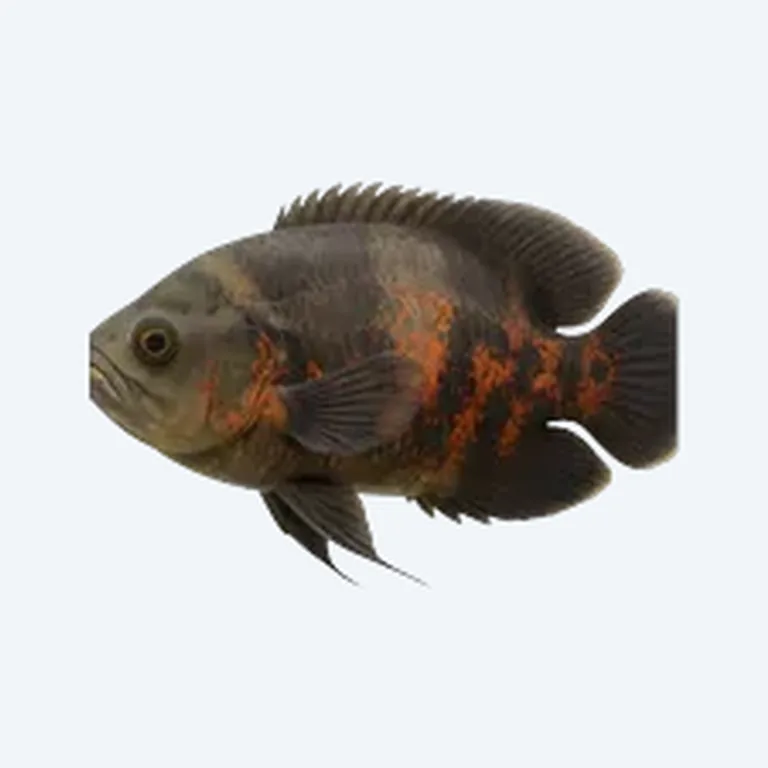
They're also visually striking. Wild-type oscars have that mottled orange-and-brown pattern; tiger oscars, red oscars, and albino variants have been selectively bred for more vivid colouration. Adults regularly reach 10-12 inches (25-30 cm), and well-fed specimens in large tanks occasionally push past that.
The trade-off is real, though. Oscars are messy, destructive, and often incompatible with anything they can bully or swallow. They're not a good choice if you want a planted community tank, and they're absolutely not suitable for beginners who haven't kept large cichlids before. Check the best fish for beginners if you're just starting out - come back to oscars once you have the experience and the tank space.
Pet shops sell juvenile oscars at two to three inches, and they look manageable. Six months later you have a foot-long, furniture-rearranging fish in a tank that's already too small. Retailers rarely emphasise the adult size or the 15-year lifespan at point of sale. Know what you're committing to before you buy.
Tank size and setup
The 75-gallon (284 L) figure cited everywhere is a genuine minimum for a single adult - not a comfortable recommendation. A 90- to 125-gallon (340-473 L) tank gives you better water stability, more swimming room, and a meaningful buffer against the waste load an oscar produces. For two oscars, 125 gallons is the floor, and 150+ gallons is more honest.
Floor space matters more than height. Oscars are active, horizontal swimmers. A tall 75-gallon column tank is worse than a shorter 90-gallon with more footprint.
Buying a 55-gallon tank because the fish is small when you buy it. A 55-gallon is too small for an adult oscar and you'll be upgrading within a year. Start with the right tank size or expect to spend twice.
Filtration
Oscars produce waste like a fish three times their number. You need a filter rated for significantly more than your actual tank volume - if you have a 90-gallon tank, run filtration rated for 150+ gallons. A quality canister filter (Fluval FX series, Eheim Pro, or equivalent) is the most practical option for most hobbyists. A sump is better still if you have the space and want the extra water volume and refugium options.
Don't rely on hang-on-back filters as your primary filtration for oscars. They can work as supplementary flow and mechanical filtration, but a single HOB won't handle the bioload.
Make sure your tank is fully cycled before adding any fish. If you're not familiar with the nitrogen cycle, read the nitrogen cycle explained before doing anything else. An oscar in an uncycled tank is an oscar that will be sick within days.
Decor and substrate
Oscars dig. They'll rearrange gravel, uproot plants, push rocks around, and generally redecorate on their own schedule. A few things help:
- Use larger, smooth river rocks that are too heavy to shift easily. Anchor anything you want to stay put.
- Avoid sharp edges on rocks or ornaments - oscars can injure themselves when they're spooked.
- Sand or smooth gravel substrate is preferable to sharp gravel.
- Most live plants won't survive long-term. If you want greenery, stick to robust, fast-growing species like Vallisneria or Anubias tied to rocks, and accept that some will get uprooted anyway. Many oscar keepers just skip plants entirely.
Most oscars reach 10-12 inches (25-30 cm) in good conditions; exceptionally large specimens can exceed 14 inches.
Water parameters
Oscars come from the Amazon basin - warm, soft, slightly acidic water in the wild. In aquaria they're reasonably adaptable, but they do best in stable conditions within this range:
- Temperature: 76-80°F (24-27°C)
- pH: 6.5-7.5
- Hardness: 5-20 dGH (soft to moderately hard)
- Ammonia / Nitrite: 0 ppm at all times
- Nitrate: Keep below 20-40 ppm; oscars are more sensitive to nitrate buildup than many fishkeepers assume
Stability matters more than hitting an exact number. An oscar kept consistently at pH 7.2 is far healthier than one whose pH swings between 6.8 and 7.6 week to week. Test your water regularly - at minimum weekly, more often if you're still dialling in the tank. See the full guide to aquarium water parameters if you need a refresher on what each value means.
Nitrate creep is one of the most common contributors to hole-in-the-head disease in oscars. High nitrate doesn't cause the visible spike in behaviour that ammonia does, so it's easy to ignore. Keep up with regular water changes and test nitrate specifically, not just ammonia and nitrite.
Feeding
High-quality cichlid pellets should be the foundation of your oscar's diet - look for pellets with a named fish or meat protein as the first ingredient, not corn or wheat fillers. Hikari Cichlid Gold, New Life Spectrum, and Omega One Cichlid pellets are reliable options.
Supplement with frozen or live foods a few times a week: bloodworms, brine shrimp, earthworms, and whole cockles or prawns are all good. Earthworms in particular are nutritionally excellent and most oscars take them greedily.
What to avoid:
- Feeder goldfish and minnows: These are common in the hobby but a genuinely bad idea. Feeder fish carry parasites and disease, and a diet heavy in thiaminase-containing fish can cause vitamin B1 deficiency over time.
- Excessive red meat or fatty foods: Beef heart is sometimes fed to large cichlids, but it's high in saturated fat that fish don't metabolise well. Use it sparingly if at all.
- Overfeeding: Oscars have no off switch. They'll beg convincingly whether they're hungry or not, and fatty liver disease from chronic overfeeding is a real problem in pet oscars. Feed once or twice a day, only what's consumed in two to three minutes, and don't let the begging guilt you into extra meals.
One fasting day per week is good practice for oscars. It gives the digestive system a break and helps prevent the obesity that shortens their lifespan in captivity. Most will act like they're starving. They're not.
Tank mates
Getting oscar tank mates right is genuinely hard. The baseline rules are: nothing that fits in the oscar's mouth, nothing slow or long-finned that will get harassed, and nothing aggressive enough to stress the oscar or cause serious injury in return.
Species that sometimes work:
- Silver dollars (Metynnis spp.) - fast, large enough, non-aggressive. One of the more reliable choices.
- Severum cichlids (Heros spp.) - similar size and temperament range, but success varies by individual fish.
- Large plecos - common plecos (Hypostomus plecostomus) or royal plecos can coexist well. Be aware that common plecos also grow very large and add significant bioload.
- Bichirs - often kept with oscars successfully. They occupy the bottom and are armoured enough to handle incidental contact.
What doesn't work: anything under five to six inches, any small tetras or barbs, angelfish, discus, small catfish, or any fish that's slow-moving and timid. Even "compatible" tank mates can fail depending on individual oscar temperament - some oscars are tolerant, others are relentlessly aggressive regardless of tank size.
Use the free stocking calculator to check the bioload before adding any tank mates. An oscar-only setup in a 75-90 gallon tank is often the most practical and lowest-stress option.
Most oscar tank mate guides online present a neat compatibility table as if it's reliable. It isn't. Tank mate success with oscars depends heavily on tank size, individual fish personalities, and introduction order. The safest approach is usually an oscar-only setup, or a large tank with a small number of large, robust companions. Plan for the possibility that you'll need to separate fish.
Health watchouts
Hole-in-the-head disease (HITH)
HITH appears as small pits or erosions around the head and lateral line - it looks exactly like what the name suggests. It's one of the most common health problems in captive oscars, and it's largely preventable.
The causes aren't fully settled in the hobby, but poor water quality (especially high nitrate), nutritional deficiencies, and chronic stress are consistently linked to outbreaks. Some research implicates the protozoan parasite Hexamita; activated carbon use has also been suspected by some fishkeepers, though the evidence is debated.
Prevention is straightforward: keep nitrates low, feed a varied and nutritionally complete diet, and maintain stable water conditions. Early-stage HITH can reverse with improved husbandry. Advanced cases may need treatment with metronidazole.
Ich and external parasites
Oscars are susceptible to ich (Ichthyophthirius multifiliis) like most freshwater fish, particularly when stressed by water quality issues or temperature fluctuations. Treat with a proven ich medication at the first sign of white spots. Quarantine new tank mates before introduction.
Bloat and swim bladder issues
Chronic overfeeding can lead to bloat, constipation, and swim bladder dysfunction. If your oscar is floating at an angle or struggling to maintain position, review the feeding regime first. Fasting for two to three days and offering a small amount of deshelled pea can help in mild cases.
A well-kept oscar is a decade-plus commitment - longer than many dogs.
What most guides miss
A few things that don't always get adequate coverage:
Oscars are escape artists. They can jump, particularly when startled or during spawning. Use a lid that fits properly. A scared oscar hitting the floor is not uncommon.
They spawn unexpectedly. If you have a male and female, expect spawning attempts. Oscar pairs become intensely aggressive when breeding - moving other fish out temporarily is often necessary. They'll clean a flat surface (a slate tile works well placed on the substrate) and defend it aggressively.
The "personality" cuts both ways. Oscars that are handled frequently when young are generally more interactive and less skittish. But their intelligence also means they notice changes in routine and can become stressed by aquarium rearrangements, new furniture near the tank, or inconsistent feeding times. They're sensitive fish in a way that most cichlids aren't.
Water changes need to be consistent, not sporadic. Doing a 50% change after skipping three weeks is more stressful to the fish than smaller, regular changes would have been. Aim for 25-30% weekly and stick to it. If you want help tracking change schedules and parameter logs in one place, App-aquatic is built for exactly that.
Track your parameters and get care reminders with App-aquatic.
Get the free appCan an oscar live in a 55-gallon tank?
A juvenile can, temporarily. An adult cannot - not comfortably, and not without chronic health problems from the waste load and restricted space. A 55-gallon is genuinely too small for a full-grown oscar. If that's your maximum tank size, choose a different species.
Can oscars live with other cichlids?
Sometimes, with the right species and enough space. Severums and green terrors are kept with oscars with mixed results. Jack Dempseys and flowerhorns are often too aggressive. It depends heavily on individual temperament, tank size, and how the fish are introduced. Be prepared to have a backup plan if it doesn't work out.
More guides · Types of cichlids · Bioload · Combining fish · App features