Guide
Why are my snails dying? Causes, diagnosis, and fixes
Snails are often treated as disposable - cheap, plentiful, easy to replace. But if they keep dying, something in your tank is wrong. Snails are actually useful early-warning indicators. Pay attention to why they're dying and you'll often find a problem that's also affecting your fish.
- Copper is the #1 killer - check all medications. Many contain copper which is lethal to invertebrates at tiny concentrations.
- Low pH dissolves shells - snails need pH above 7.0 and adequate GH (8-15 dGH) to maintain healthy shells.
- Starvation is common in clean tanks - supplement with blanched courgette or algae wafers.
- Loaches, pufferfish, and some cichlids eat snails - check your fish list.
- How to confirm death: smell test. A dead snail smells within hours. A live snail may just be resting sealed in its shell.
First: how do you know a snail is dead?
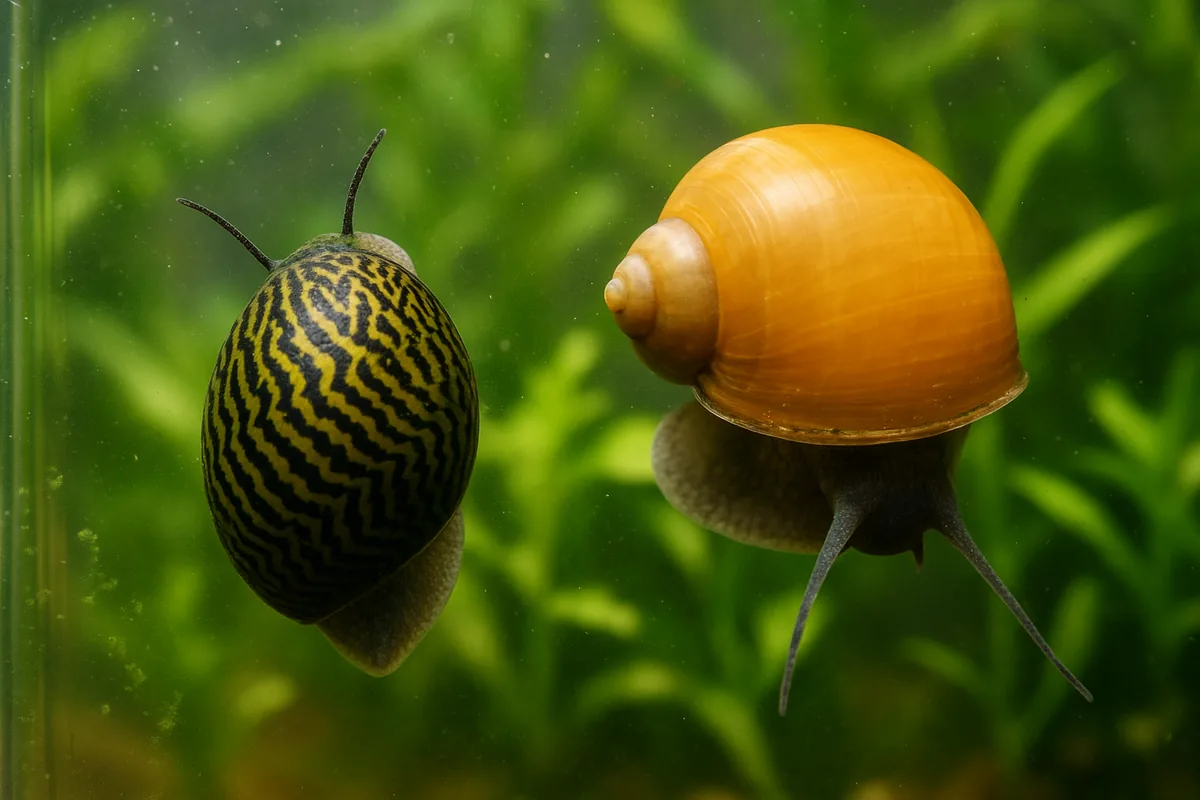
Before diagnosing, confirm the snail is actually dead. Snails - particularly mystery snails and nerite snails - can remain closed in their shells for days, especially after a stressful water change, temperature drop, or disturbance. The test: remove the snail, hold it up to your nose. A dead snail smells strongly of decay within hours. No smell, no confirmation. A live snail may simply be resting, sealed behind its operculum (the door-like plate that closes the shell opening). If in doubt, wait 24 hours before discarding.
Dead snails decompose quickly and produce ammonia - remove them from the tank as soon as you confirm death. A large mystery snail rotting in a small tank can spike ammonia significantly within hours.
Cause 1: Copper toxicity - the number one killer
Copper is lethal to invertebrates at concentrations that are relatively harmless to fish. Even copper at 0.15-0.3 ppm - barely measurable and well below the threshold that causes fish health issues - will kill shrimp and snails. Sources of copper in aquariums:
- Fish medications. Many anti-parasitic treatments (including popular ich treatments) contain copper sulfate. Always read the label before dosing, and never treat in a tank with snails or shrimp unless you can remove them first. Common copper-containing medications include some versions of Seachem Cupramine, API Super Ich Cure, and various generic malachite green/formalin combinations that may also contain copper.
- Tap water. Depending on your local water supply and the age of your plumbing, tap water can contain elevated copper. Copper pipes (particularly common in older homes and in some parts of the UK) can leach copper, especially in the first draw of water in the morning. Run the tap for 30 seconds before filling buckets. Using RO water eliminates this entirely.
- Tank ornaments. Certain decorations, particularly older or unbranded ones, may have copper-based coatings or use copper alloys. Always buy aquarium-safe decor from reputable suppliers.
- Airline fittings and airline tubing. Some metal airline valves use brass (copper-zinc alloy) components. These can leach copper, especially in soft or acidic water. Use plastic valves.
If copper is suspected, test for it (copper test kits are available). Remove the source. Do large water changes with dechlorinated water. Add activated carbon to your filter temporarily - it removes some copper from the water column. If using a medication, move snails to a separate container before treatment.
Never dose copper-containing medications in a tank with snails, shrimp, or other invertebrates. Copper is lethal at 0.15-0.3 ppm - a concentration that causes no visible harm to fish. Always check medication labels before dosing. If treatment is necessary, remove all invertebrates to a hospital tank first.
Cause 2: Low pH and soft water - shell deterioration
Snail shells are calcium carbonate. Acidic water (pH below 6.5) and very soft water (low GH) dissolve the shell over time. You'll see pitting, white patches, cracking, or holes in the shell. Eventually the shell becomes structurally compromised and the snail dies. This is gradual - you might notice deteriorating shells for weeks before deaths occur.
Most common aquarium snails need pH above 7.0 and moderate hardness (GH 8-15 dGH) to maintain healthy shells. Mystery snails and nerite snails in particular need calcium-rich water. Planted tanks running CO₂ injection can see significant pH drops overnight - check your pH at night as well as during the day.
Fix: raise pH and GH. Options include crushed coral in the filter (raises both KH and GH), cuttlebone (free calcium source that dissolves slowly - widely available from bird supply sections), or adding a small amount of liquid calcium supplement. Regular water changes with harder tap water can also help if your source water has some hardness.
Cause 3: Starvation
Surprisingly common and frequently overlooked. In a clean, lightly stocked tank with minimal algae, snails can literally starve. Mystery snails, nerite snails, and trumpets all need food - algae on surfaces, decaying plant matter, and supplemental feeding. If your tank is spotlessly clean and lightly stocked, snails are competing for minimal resources.
Supplemental foods for snails:
- Blanched vegetables - zucchini, cucumber, spinach, kale. Drop a slice in the tank and remove after 24-48 hours. Snails will cover it.
- Algae wafers - designed for bottom feeders but happily consumed by most snails.
- Sinking pellets - any sinking food that reaches the bottom.
- Decaying plant material - snails are detritivores and will consume dying leaves.
If you have assassin snails in the tank, they eat other snails. That's their purpose - but if your other snail population crashes unexpectedly, check how many assassins you have.
Cause 4: Predation
Many fish eat snails - some enthusiastically, some opportunistically. Snail-eating fish include:
- Loaches - clown loaches, yoyo loaches, and most loach species are dedicated snail predators. They will eat any snail they can get to, including larger mystery snails in many cases.
- Pufferfish - pea puffers and larger puffers eat snails. Their beak-like teeth are evolved specifically for crushing shells.
- Cichlids - many cichlids will snack on snails opportunistically.
- Large tetras and goldfish - will eat smaller snail species, particularly pond snails and ramshorns.
- Bettas - occasionally harass or nip at smaller snails.
If you have any of these species and snails keep disappearing, predation is the likely cause. Check whether full shells are left behind (predation leaves empty shells) or whether shells deteriorate (chemistry issue). If shells are disappearing entirely, something is consuming them.
Cause 5: Water quality and ammonia
Snails are tolerant of moderate water quality issues but not severe ones. Elevated ammonia and nitrite - most commonly present in uncycled or cycling tanks - will kill snails. High nitrate (above 40 ppm sustained) also stresses them chronically. If snails are dying in a new tank, check ammonia first. A 0 ppm ammonia, 0 ppm nitrite, and nitrate below 20 ppm is the target.
Sudden parameter changes also stress snails - a large, cold water change can send them into shock. Always temperature-match water changes and dechlorinate properly.
Cause 6: Handling and acclimation stress
Snails bought from a fish shop are often kept in different water conditions - different pH, hardness, and temperature. Dropping them directly into your tank without acclimation exposes them to potentially dramatic parameter swings. Float the bag for 15 minutes to temperature-equalise, then drip-acclimate over 30-60 minutes. This matters especially if your water is significantly softer or harder than the shop water.
Cause 7: Old age
Mystery snails live 1-3 years typically. Nerite snails can live 3-5 years in good conditions. If a snail has been in your tank for a long time, lived well, and is now dying without obvious external cause, old age is a real answer. Look at the snail's shell - older mystery snails often show growth rings and minor weathering at the apex of the shell. Nothing to fix. Just the natural lifespan of the animal.
Cause 8: Lack of oxygen
In heavily planted tanks at night, or in tanks with insufficient surface agitation, oxygen levels can drop. Snails will come to the surface or the waterline and appear lethargic - this is a sign of low dissolved oxygen. Add an airstone, increase surface agitation, or improve flow. See our guide on surface agitation and oxygen.
Shell problems at a glance
- Pitting, white patches, cracking - acidic water, low calcium. Raise pH and GH.
- Holes in the shell - severe calcium deficiency or acid erosion over extended period.
- Thin, translucent shell on juvenile snails - inadequate calcium during growth. Add supplemental calcium.
- Shell darkening or discolouration - often cosmetic, can relate to diet. Not usually fatal.
What to do right now
- Test water: ammonia, nitrite, nitrate, pH, and GH if you have a kit.
- Check any medications used recently for copper content.
- Check your fish list for snail predators.
- Examine shell condition - pitting and erosion point to pH/hardness; intact shells with no obvious cause point to toxins or water quality.
- Supplement calcium (cuttlebone or blanched veg) and check you're providing enough food.
Track your water parameters consistently - use App-aquatic to log readings and spot trends. A pattern of slowly falling pH or creeping nitrate often precedes snail deaths by weeks, and catching it early means preventing the problem rather than responding to casualties.
Related guides
Log your tank's pH, GH, and nitrate in App-aquatic - the most common precursors to snail deaths show up in the data before they show on the snails.
Get the free appHow do I know if my snail is dead or just sleeping?
Remove the snail and smell it. A dead snail produces a strong, unmistakeable odour within hours of death. No smell = likely still alive, just resting. Some snails - particularly mystery snails - seal their shell with the operculum and can remain inactive for 24-48 hours after a stressful event like a water change.
Can copper in tap water kill my snails?
Yes. Older plumbing - particularly copper pipes common in UK homes built before the 1970s - can leach copper, especially in the first draw of water in the morning. Run the tap for 30 seconds before filling your bucket, or use an RO filter. A standard dechlorinator (like Seachem Prime) does not remove copper.
Why are my mystery snail's shells cracking or pitting?
Almost always a pH and calcium problem. Mystery snails need pH above 7.0 and moderate hardness (GH 8-15 dGH) for healthy shell maintenance. In soft, acidic water, their calcium carbonate shells slowly dissolve. Add cuttlebone to the tank (available cheaply from pet shops as bird feed supplements), raise pH with crushed coral in the filter.
Do assassin snails kill other snails?
Yes - that's what they're for. Assassin snails (Clea helena) are predatory; they eat smaller snails and will hunt them actively. If you're keeping mystery snails or nerites alongside assassin snails, monitor populations. Assassins rarely bother large mystery snails, but they will hunt any snail small enough to consume.
What fish eat snails?
Loaches (clown loach, yoyo loach), pufferfish, many cichlids, and even some goldfish will eat snails. If your snails are disappearing without visible shells being left behind, a predator in the tank is likely consuming them whole or crushing the shell. Check your full fish list against the guide above.
All guides · Mystery snails · Nerite snail shell issues · Assassin snails · Water parameters · Get the app