
Guide
The 101 guide to rams: German Blue Ram, Bolivian Ram, and Electric Blue Ram
Ram cichlids are among the most visually spectacular fish available in the freshwater hobby. They are also more demanding than most beginners are told. This guide covers everything - including the uncomfortable truth about why German Blue Rams from most shops have a poor survival rate and what to do about it.
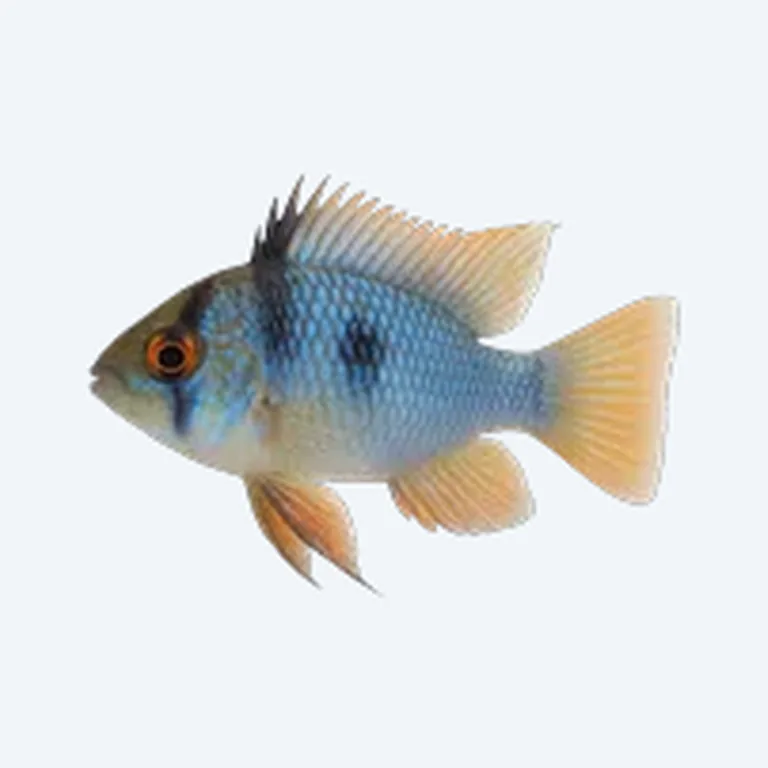
- German Blue Ram (GBR): stunning, demanding. Needs 26-30°C, pH 6.0-7.0, soft water (GH 5-12), zero ammonia, mature tank. Farm stock is often unhealthy - source carefully.
- Bolivian Ram: easier, hardier, larger. Tolerates pH up to 7.5, cooler temperatures (22-26°C). Better first choice for most setups.
- Electric Blue Ram: colour morph of GBR. Same care requirements, often even more fragile. For experienced keepers.
- Minimum tank: 80 litres for a mated pair of GBR; 100L+ for Bolivian Ram pairs with tank mates.
- Why they die: wrong water parameters, farm-raised stock issues, adding to uncycled or immature tanks.
What are ram cichlids?
Ram cichlids belong to the genus Mikrogeophagus - a name that means "small earth-eater," reflecting their natural behaviour of sifting through substrate for food. They originate from the Orinoco River basin in Venezuela and Colombia, where they inhabit warm, slow-moving blackwater streams with very soft, acidic water and dense vegetation.
There are two species:
- Mikrogeophagus ramirezi - the German Blue Ram (GBR), also sold as the butterfly cichlid or dwarf butterfly cichlid. Various colour morphs exist: wild-type, long-finned, electric blue, balloon (a deformity - more on this below).
- Mikrogeophagus altispinosus - the Bolivian Ram or butterfly ram. Larger, hardier, and less intensely coloured.
Both are genuine dwarf cichlids - compact, personalityful, and capable of the pair-bonding and territorial behaviour typical of cichlids, but on a scale appropriate for community tanks.
The honest truth about German Blue Ram health
Let's address the elephant in the room: German Blue Rams have a reputation for dying, and the reputation is partly deserved - but the cause is often misattributed to the fish being "delicate" when it's more correctly attributed to the supply chain.
The majority of GBRs sold in UK and European fish shops are farm-raised in Asia under intensive conditions, often treated with hormones to accelerate colour development and antibiotics to suppress disease in crowded conditions. When these fish arrive in shops, they're typically kept in relatively clean shop water. When they move to your home tank - often in softer, warmer conditions - the transition, combined with the immunocompromised state from their upbringing, causes many to die within weeks.
Wild-caught or specialist-bred GBRs from quality breeders are significantly hardier. The price is higher. The survival rate is dramatically better. If you keep buying farm-raised GBRs and they keep dying, the problem is the supply chain, not your tank.
Signs of poor-quality farm stock:
- Unusually vivid colour for the size (hormone treatment)
- Clamped fins immediately or within 24 hours of introduction
- Laboured breathing, hovering at the surface
- Loss of colour and appetite within days
- Internal parasites (bloating, stringy white feces) - common in intensively farmed stock
The three variants: comparison at a glance
Size: 5-7 cm
Temperature: 26-30°C (needs it warm)
pH: 6.0-7.0
Hardness: GH 4-12 dGH (soft water)
Difficulty: Intermediate to advanced
Colour: Extraordinary - iridescent blue, gold, red eye, black marking
Size: 8-10 cm
Temperature: 22-26°C (cooler tolerance)
pH: 6.5-7.5 (more flexible)
Hardness: GH 5-15 dGH (more tolerant)
Difficulty: Beginner to intermediate
Colour: Warm gold-olive with red-edged fins and a black spot
Electric Blue Ram
The Electric Blue Ram is a selectively bred colour morph of M. ramirezi - not a separate species. The body is almost entirely covered in electric blue iridescence, with reduced black markings compared to the wild-type. The colour is extraordinary. The care requirements are identical to the standard GBR - warm, soft, acidic water, mature tank, quality stock. Electric Blue Rams are often even more fragile than standard GBRs because the intense selection for colour has sometimes come at the cost of overall robustness. Recommended only for keepers who are comfortable providing GBR-appropriate conditions reliably.
A note on Balloon Rams
Balloon Rams are a deformed variant with a compressed, rounded body shape caused by spinal curvature. They are marketed as a novelty but the deformity causes swimming difficulties, organ compression, and generally shorter lifespans than normal-bodied fish. We don't recommend purchasing them on welfare grounds. A normal GBR is spectacularly beautiful without requiring deliberate deformity.
Water parameters - the non-negotiable baseline
Getting water parameters right is the single most important factor in keeping GBRs alive and thriving. These are not soft recommendations:
German Blue Ram requirements
- Temperature: 26-30°C. Optimal is around 28°C. Below 24°C, GBRs become stressed and disease-prone. This is warmer than most community fish - choose tank mates accordingly (neons are marginal at 28°C; cardinal tetras and most South American species handle it better).
- pH: 6.0-7.0. Optimal 6.5. GBRs in hard, alkaline tap water (pH 7.5+, GH 15+) will show chronic stress, poor colour, and increased susceptibility to disease. UK tap water in hard water areas (most of England) needs treatment: RO water blended with tap, or active pH/hardness adjustment.
- Hardness: GH 5-12 dGH. Soft to moderately soft water. KH 2-6 dKH.
- Nitrate: Below 20 ppm. These are sensitive fish - pristine water quality with regular water changes (25-30% weekly minimum) is essential.
- Ammonia/nitrite: Absolute zero. Never add rams to a tank that isn't fully cycled. The nitrogen cycle must be complete before introduction.
Higher than most community fish guides suggest. GBRs kept at 24-25°C - the typical community tank temperature - are being kept below their optimal range. This suppresses immune function and accelerates the health decline that many keepers attribute to the fish "just being delicate."
Tank setup
Rams are small cichlids that occupy and defend a territory around a flat spawning site. Their tank should reflect this:
- Minimum size: 80 litres for a mated GBR pair. Add at least 40 litres if you want tank mates. Bolivian Rams need 100L+ for a pair.
- Substrate: Fine sand is strongly preferred. Rams naturally sift through substrate - sharp gravel damages their mouths and inhibits natural foraging behaviour. Dark sand shows their colour most dramatically.
- Plants: Dense planting with some open floor space. Stem plants (amazon sword, vallisneria) provide visual barriers between territories. A spawning site - flat smooth stone, broad plant leaf, or clay pot on its side - gives the pair somewhere to spawn.
- Flow: Low to moderate. Wild rams come from slow-moving water. A powerful filter return pointed directly at the fish stresses them. Aim for gentle flow through the tank.
- Hiding spots: Caves (clay pots, coconut shells), driftwood, and dense plant masses give fish places to retreat when not active.
Feeding
Rams are micro-predators in the wild, sifting substrate for small invertebrates and organic material. In the tank:
- Quality cichlid micro-pellets as a staple - sized appropriately for their small mouths.
- Frozen foods: Bloodworm, daphnia, brine shrimp, cyclops. Live or frozen foods are the best conditioning food and should make up 30-40% of the diet for breeding fish.
- Frequency: 2× daily, small amounts. Rams have small stomachs - frequent small meals are better than occasional large ones.
- Variety: Monodiets of one food type produce nutritional deficiencies over time. Rotate at least 3-4 food types regularly.
Sexing rams
GBRs are one of the more sexable dwarf cichlids once mature:
- Females: Have a pink/rosy-violet flush to the lower belly area - most visible during breeding condition but usually present in healthy females. This belly colouration is the most reliable indicator.
- Males: Typically larger, have extended first rays of the dorsal fin (appear as pointed filaments projecting upward), and may have slightly more intense overall colouration.
- Both sexes in good condition are vivid - females should not be dismissed as dull. A healthy female GBR is spectacularly coloured, just slightly less intensely than the male.
For Bolivian Rams, sexing is similar: females are broader-bodied, particularly when gravid, and males are slightly more elongated with more pointed dorsal fin extensions.
Breeding
Rams are substrate spawners and form strong pair bonds. Breeding is achievable in the home aquarium with the right conditions:
- Pair formation: Buy a group of 5-6 young GBRs and allow natural pair formation, then remove unpaired individuals. Or purchase a confirmed mated pair from a specialist - more expensive but less management required.
- Breeding triggers: Slightly raise temperature to 29-30°C. Feed more live/frozen food. Ensure water is very soft (GH below 8) and slightly acidic (pH 6.5). Regular water changes with slightly cooler water then bringing temperature back up can trigger spawning.
- Spawning: The pair will clean a flat surface (stone, leaf, cleared patch of substrate) and spawn on it. Both parents defend the eggs aggressively. Eggs hatch in 48-72 hours at 28°C. Fry become free-swimming in 4-5 days and should be fed infusoria, micro worms, or commercial fry food immediately.
- Parental care: GBR parents are attentive but first-time parents often eat the eggs. Experienced pairs raise fry successfully. Patience is required.
Keeping a pair of rams in a community tank where other fish constantly disturb the breeding territory. GBRs in a busy community tank with active fish swimming through their territory - particularly corydoras or barbs - will rarely breed successfully, and may become chronically stressed even outside breeding. If breeding is the goal, a species-only or minimal tank mates setup is far more productive.
Common health problems
- Hexamita (Hole-in-the-Head): Internal parasites causing lesions on the head and body, wasting, and white stringy feces. Common in farm-raised stock. Metronidazole treatment is the standard approach. Address with a vet-sourced or aquarium medication containing metronidazole.
- Ich (white spot): More likely in fish stressed by wrong water temperature. Treat with temperature increase (29-30°C) combined with ich medication appropriate for sensitive fish.
- Bacterial infection: Often secondary to water quality issues. Fin rot, ulcers, and lethargy signal bacterial infection. Correct water quality first; treat with broad-spectrum antibacterial if needed.
- Internal worms: Farm-raised stock commonly carries nematodes or other internal parasites. Symptoms: visible wasting despite eating, bloating, or white feces. Treat with flubendazole or praziquantel.
Quick care comparison table
| Parameter | German Blue Ram | Bolivian Ram |
|---|---|---|
| Adult size | 5-7 cm | 8-10 cm |
| Temperature | 26-30°C (optimal 28°C) | 22-26°C |
| pH | 6.0-7.0 | 6.5-7.5 |
| GH | 4-12 dGH (soft) | 5-15 dGH (flexible) |
| Min tank (pair) | 80 litres | 100 litres |
| Lifespan | 2-4 years | 4-6 years |
| Experience level | Intermediate-advanced | Beginner-intermediate |
Related guides
Track ram cichlid water parameters, breeding events, and feeding schedules in App-aquatic - GBRs need consistent monitoring and App-aquatic makes it effortless.
Get the free appWhy do my German Blue Rams keep dying?
Usually one of three causes: water too cold (below 26°C), water too hard or alkaline (GH above 15, pH above 7.5), or farm-raised stock with pre-existing health problems. Test your water parameters first. If parameters are correct and fish are still dying shortly after purchase, the issue is almost certainly the quality of the stock - try sourcing from a specialist breeder rather than a general fish shop.
Can German Blue Rams live with neon tetras?
Yes - it's one of the most popular combinations. Both prefer soft, slightly acidic water. The temperature preference overlaps at 26°C (upper end for neons, lower end for GBRs). In a 100L+ planted tank, a pair of GBRs and a school of 12-15 neons is a classic South American biotope setup. See our full neon tetra guide for compatibility context.
Are Bolivian Rams easier to keep than German Blue Rams?
Significantly, yes. The Bolivian Ram is larger, hardier, and tolerates considerably less specific water conditions. It doesn't need water as warm or soft as the GBR. The trade-off is slightly less intense colouration - the Bolivian Ram is still a beautiful fish, but the GBR's electric blue-and-gold is more striking. If you're setting up a community tank without the ability to maintain very soft, warm water, the Bolivian Ram is the better choice every time.
How do I sex my German Blue Ram?
Females have a distinctive pink-violet flush to the lower belly - most obvious in healthy, well-conditioned fish and most vivid in breeding condition. Males tend to be slightly larger, have more extended first rays of the dorsal fin (producing a pointed crest), and often show slightly more intense overall colouration. Both sexes should be vivid in a healthy specimen. See our full fish sexing guide.
How long do German Blue Rams live?
In appropriate conditions: 2-4 years for the GBR, 4-6 years for the Bolivian Ram. Many commercially sold GBRs die within months - this is not their natural lifespan but a product of poor stock quality and inappropriate conditions. A well-kept GBR pair in a species-appropriate planted tank can easily reach 3+ years and breed multiple times.
All guides · Centrepiece fish · Neon tetra guide · Angelfish with neons · Water parameters · Stocking calculator