
Fish care
Harlequin Rasbora: Complete Care Guide
Last updated: May 2026
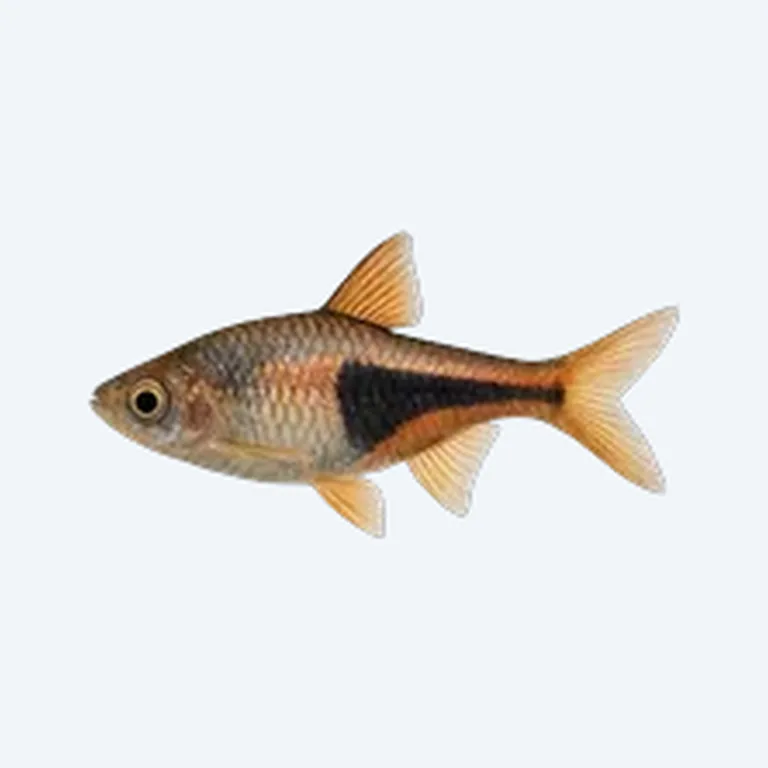
- Species: Trigonostigma heteromorpha - one of the best community fish available, and genuinely beginner-friendly.
- Tank size: 60 L (16 US gal) minimum, but 80-100 L (21-26 US gal) gives a school room to behave naturally.
- Water: 22-27°C (72-81°F), pH 6.0-7.5, soft to moderately hard. They're more flexible than most guides admit, but they thrive in soft, slightly acidic water.
- Schooling: Keep at least 6 - fewer and they stay stressed and washed out. Ten or more is when they really look good.
- Diet: Omnivore with no special requirements. Accept flake, micro pellets, and small frozen or live foods without complaint.
- Care level: Easy. If you're new to the hobby, these are a solid first shoaling fish - see the best fish for beginners for how they compare to the alternatives.
What harlequin rasboras actually are
Trigonostigma heteromorpha comes from the slow-moving, heavily vegetated streams and peat swamps of Thailand, Malaysia, and Singapore. That origin matters more than most care sheets acknowledge: wild habitats are warm, low in dissolved minerals, and stained dark with tannins from rotting leaf litter. The fish you buy is farmed, which makes it more adaptable, but the conditions it evolved in explain why it looks best - and breeds most readily - in soft, slightly acidic, amber-tinted water.
The defining feature is the black wedge (or "hatchet" shape) that covers the rear half of the body. It's larger in females than males, which is one of the more reliable ways to sex them. The copper-orange base colour can look dull under harsh lighting or in a plain white-walled tank. Put the same fish over dark substrate with floating plants filtering the light and they look like a completely different animal.
Most harlequins reach 3.5-4.5 cm (1.4-1.8 in) in home aquaria - only the best-fed, long-lived specimens push 5 cm (2 in).
Tank setup
Size and layout
A 60 L (16 US gal) tank works for a group of six, but you'll notice a real difference in behaviour if you can go to 80 L (21 US gal) or larger. Harlequins are active midwater swimmers and they spend a lot of time moving laterally - a tank with more length matters more than one with extra height. A 80 × 35 cm footprint beats a tall 60 L every time.
Leave open swimming space in the middle, plant the sides and back, and add a few floating plants to break up the surface light. You don't need a biotope setup, but the fish genuinely respond to denser planting. A bare, brightly lit tank with no cover produces a pale, anxious school. Dark substrate (black gravel or fine dark sand) makes the copper and black markings pop and keeps the fish calmer.
Water parameters
The published range of 22-27°C (72-81°F) is accurate. Keep temperature stable - swings of more than 2°C in 24 hours are more harmful than sitting at the lower end of the range. pH between 6.0 and 7.5 covers the full spectrum, but 6.5-7.0 is the sweet spot for everyday maintenance. Hardness can run from very soft (1-5 dGH) up to about 12 dGH without causing problems. Most tap water in the UK and mid-range US cities falls right in that window.
For details on what these numbers mean and how to test for them, the aquarium water parameters guide covers it properly.
Adding a handful of dried Indian almond leaves or a small bag of peat in the filter does two things: it softens and slightly acidifies the water, and the tannins it releases are genuinely beneficial to T. heteromorpha. The water turns tea-coloured, which bothers some hobbyists more than it bothers the fish.
Filtration and flow
Harlequins need clean water but they don't want a strong current. They come from slow-moving streams, and a filter that creates a powerful flow through the midwater is going to stress them. An internal filter or a hang-on-back with a spray bar pointed at the glass surface is fine. If you have a canister filter, deflect the outlet so it doesn't create a direct current across the swimming space.
Ammonia and nitrite should always read zero. Nitrate below 20 ppm is the target - weekly water changes of 25-30% will handle this in a sensibly stocked tank. If you're not sure how often to change water in practice, the water change frequency guide gives you a clear framework.
Feeding
Harlequin rasboras are easy to feed. They accept good-quality flake and micro pellets without hesitation and show no signs of nutritional deficiency on a varied commercial diet. That said, they look noticeably better - brighter colour, more active behaviour - when you supplement with small frozen or live foods two or three times a week. Daphnia, baby brine shrimp, and micro worms all work well. Their mouths are small, so keep food particle size in mind: anything much larger than 1 mm and they'll struggle or reject it.
Feed small amounts once or twice a day. They're not aggressive feeders and won't outcompete slower tank mates at the surface, but they also won't scavenge from the substrate, so make sure food reaches the midwater where they're actually swimming.
Overfeeding a harlequin tank because the fish look like they want more. They're opportunistic and will feed continuously if you keep dropping food in. Excess food rots, drives up ammonia and nitrate, and the fish end up bloated and short-lived. One small feeding per day is enough for healthy adults.
Schooling behaviour - the part most guides underexplain
The "keep at least 6" advice is correct, but it doesn't tell you what you're actually looking for. A group of 6 in a 60 L tank will school loosely and spend time near cover. A group of 10-15 in a well-planted 100 L tank will school tightly, display to each other, explore confidently, and use the full tank. The difference is significant - it's the difference between fish that are just surviving and fish that are actually doing well.
Tight schooling also serves a diagnostic function: a school that splinters and hides is usually reacting to something. Check your water first. If parameters are fine, look for a tank mate that's harassing them - even a fish you'd expect to be peaceful (a large gourami in a bad mood, for instance) can scatter a harlequin school.
Most aquarium retailers keep harlequins in groups of 4-6 in busy display tanks under bright light with no cover. These fish often look faded and skittish, which leads people to think they're just a dull fish. They're not. Get 10 into a planted tank with appropriate lighting and you'll see why they've been a hobby staple for over a century.
Tank mates
Harlequins are peaceful, midwater fish that get along with almost anything that won't eat them or harass them. The practical rule: avoid anything large enough to swallow a 4 cm fish, anything highly territorial in the midwater, and anything with a long history of fin-nipping.
Good combinations include other small rasboras, tetras (ember, neon, cardinal), small corydoras for the bottom layer, otocinclus, and dwarf gouramis - though watch the gourami once it settles in. Celestial pearl danios and chili rasboras work well in softer-water setups. Peaceful nano species in general tend to coexist without incident.
Avoid tiger barbs (fin nippers), large cichlids, aggressive bettas, and anything territorial that will claim the midwater zone. You can cross-check specific combinations using the free stocking calculator, which flags temperament conflicts.
Harlequins and bettas - the real answer
This comes up constantly. The answer is: sometimes, but not always. A calm male betta in a well-planted tank of 60 L or larger may coexist fine with a school of 8-10 harlequins. An aggressive individual will harass or kill them. There's no way to guarantee it before you try, and the harlequins will be the ones that suffer. If you attempt it, have a backup plan for the betta.
Health and disease
What to watch for
Harlequins are hardy, but they're susceptible to the same diseases as any small tropical fish. Ich (Ichthyophthirius multifiliis) is the most common issue - look for white salt-grain spots, increased scratching against objects, and rapid gill movement. Velvet (Oodinium) is harder to spot: use a torch held to the side of the tank in a darkened room and look for a dusty gold sheen on the body. Early-stage velvet is frequently misdiagnosed because fishkeepers don't check for it correctly.
The black wedge pattern is actually useful here: a healthy harlequin has a crisp, high-contrast wedge. Edges that look blurry, faded, or have a slightly rough texture around the border can indicate a developing skin infection or early velvet before other signs appear. It's not a diagnosis on its own, but it's worth investigating with a torch before reaching for medication.
Harlequins are sensitive to copper-based medications. If you're treating for ich or velvet and your medication contains copper (many do), use it at the lowest effective dose and monitor closely. Some fishkeepers prefer heat treatment for ich in rasbora tanks - raising temperature to 30°C (86°F) gradually while maintaining strong oxygenation can clear ich without chemical risk, but confirm your other tank inhabitants can tolerate the heat first.
Wasting disease
Skinny, hollow-bellied fish that eat normally but don't gain weight are showing signs of internal parasites or mycobacterial infection (fish TB). This is more common in fish kept in poor conditions for extended periods - stressed stock from a retailer's tank that was overcrowded or underfed. There's no reliable home treatment for fish TB. Quarantine affected fish and don't add them to your main tank.
Breeding
Harlequin rasboras breed in the wild on the undersides of broad-leaved plants - they deposit eggs directly onto leaves, which is unusual among rasboras and part of what makes them interesting. In captivity, breeding is achievable but requires specific conditions: very soft, acidic water (pH 5.5-6.5, hardness under 4 dGH), temperatures toward the upper end of the range (26-28°C / 79-82°F), and broadleaf plants like Cryptocoryne or Microsorum.
Condition adults on live or frozen foods for a week or two before transferring a small group (a ratio of two males per female works well) to a dedicated breeding tank. Eggs are light-sensitive, so keep the tank dimly lit. Parents will eat eggs and fry, so remove adults after spawning. Fry are tiny and need infusoria or commercial fry food for the first week before they can take baby brine shrimp.
Getting a spawn isn't difficult once you hit the water parameters. Getting the fry to survive past two weeks is where most attempts fail - the bottleneck is fry food availability and water quality in the first 10 days.
The nitrogen cycle - before you buy
Harlequins are hardy, but they're not a fish to add to an uncycled tank. An established nitrogen cycle is non-negotiable. New fishkeepers who lose harlequins in the first two weeks almost always trace it back to ammonia or nitrite poisoning in an uncycled aquarium - the fish just quietly stop eating, clamp their fins, and die without obvious symptoms until it's too late. Make sure your tank is fully cycled before you stock it. If you need to understand the process, start with how to cycle a fish tank and the nitrogen cycle explained.
Track your parameters and get care reminders with App-aquatic.
Get the free appHow many harlequin rasboras should I keep together?
Six is the practical minimum - fewer and they school loosely, stay near cover, and often look faded. Ten or more in a tank of 80 L (21 US gal) or larger is where you'll see genuine schooling behaviour and the fish at their best. There's no upper limit as long as you have the tank space and filtration to support them.
Can harlequin rasboras live with bettas?
Sometimes. A calm betta in a well-planted tank of 60 L or more may coexist with a school of 8-10 harlequins without issue. An aggressive individual will harass or injure them. There's no reliable way to predict which type of betta you have until they're in together, so only attempt it if you have a backup plan for the betta.
Why do my harlequin rasboras look pale and washed out?
Usually one of three things: insufficient school size (fewer than 6-8), lighting that's too bright with no floating cover to diffuse it, or light-coloured substrate with no contrast. Stress from water quality issues or an incompatible tank mate will also cause colour loss. Dark substrate, natural or warm-spectrum lighting, and a group of 10+ almost always fixes a pale school - assuming water parameters are in range.
What do harlequin rasboras eat?
They accept most small commercial foods - quality flake, micro pellets, and crushed small granules all work. Supplement two or three times a week with small frozen or live foods: daphnia, baby brine shrimp, or micro worms. Keep particle size small; they have small mouths and will ignore or spit out food that's too large. One or two small feedings per day is sufficient.
Are harlequin rasboras good for beginners?
Yes - they're one of the best schooling fish for a first community tank. They're hardy and peaceful, eat ordinary flake and micro pellets, and are more flexible than their soft-water origins suggest: 22-27°C (72-81°F) and pH 6.0-7.5. The one firm condition is a fully cycled tank. Most early losses are ammonia or nitrite poisoning in a new aquarium, not anything specific to the species. Keep a group of ten or more in 80 L (21 US gal) or larger to see them at their best.